|
I made it to the actual Jive Time Records in Fremont on Sunday, but aside from some overpriced items in the just-in section, there wasn’t much that piqued my interest. I recall a similar experience visiting this store the last time I was in Seattle; that time I went to the Sonic Boom vinyl annex down the street, this time I went across the street to the Vintage Mall with an impressive stockpile of cheaper vinyl. I probably would have picked up a few more albums (the Reach the Rock soundtrack, for one) if I wasn’t concerned about the impending problem of bringing all of my recent scores back to Boston. Definitely go to the Jive Time Annexes before the main store, especially if you’re not consumed with finding a mint copy of a given album.
41. No Knife – Fire in the City of Automatons LP – Dim Mak Japan, 1999 – $5
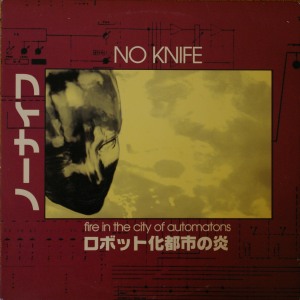
I first heard this album when searching for “Academy Fight Song” on SoulSeek; I downloaded a No Knife track by that name expecting a Mission of Burma cover and got a mislabeled homage (“Academy Flight Song”) from Fire in the City of Automatons. The combination of stop-start rhythms, racing guitar lines, and melodic vocals make a strong argument with me, so I grabbed the recent of the album and enjoyed it a great deal. No Knife is too smooth and too melodic to fit in with the post-hardcore crowd, but has too much depth to be written off as alternative rock, which I imagine caused some difficulties when they were trying to fit in with their native San Diego scene. I have their debut album, Drunk on the Moon, which isn’t as catchy or tight as this one, and I’ve heard their last album, 2002’s Riot for Romance!, which has some excellent moments (the title track, the lilting “Feathers and Furs”) that match anything found here, but Fire in the City of Automatons has always been my favorite of their albums, so finding the Japanese LP pressing was quite a coup. No Knife recently played their first shows since 2003 in support of Jimmy Eat World’s Clarity anniversary tour, so a new album or a longer tour may be forthcoming.
|
|
Having an iPhone with the Yelp app at my side is a huge boon to my record shopping impulses, since I can wander around a city far more effectively now. I’d searched for stores near Neumos and found a record-selling thrift store around the corner, but I never got over there. Instead I was sucked into the Jive Time Records annex in Atlas Clothing, a trove of vinyl that felt less picked over than some of the other used records stores I’d visited here. The bins of $.99 and $3.00 LPs consisted of well-worn favorites, but the regular-priced lots had some finds amid the complete discography of Steely Dan. Like any number of other record-collector oriented spots, these records had a tendency to be a touch overpriced, like the Afghan Whigs’ Turn on the Water 12” going for $15, but I was happy with the price of the two albums I picked up.
39. Steve Reich – Tehillim LP – ECM, 1982 – $8
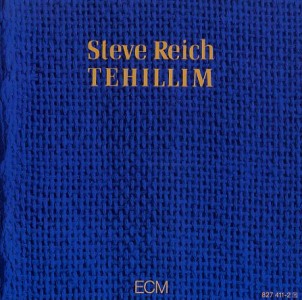
Aside from a copy of Different Trains / Electric Counterpoint, I’ve had a hard time finding Steve Reich LPs. Record stores switch between lumping him and his peers (Glass, Riley) in with traditional classical music, putting them in a contemporary composers section, or slotting them in an experimental bin. If I manage to find that location, it’s typically comprised of Philip Glass’s Glassworks and Songs from Liquid Days (his collaboration with pop songwriters like Paul Simon, Suzanne Vega, David Byrne, and Lori Anderson), not Reich’s Music for 18 Musicians or Octet – Music for a Large Ensemble – Violin Phase. Those Glass records are the popular entry point to this style of repetitive minimalism, so it’s hardly a surprise that there are more of them floating around (and that people are more likely to get rid of them). When Jon pulled a copy of Tehillim, a 1982 composition inspired by Hebrew psalms, out of the contemporary composers section, I gladly snapped it up. Would I have been more excited with one of those aforementioned LPs? Of course, but beggars can’t be choosers.
40. Table – Table LP – Humble, 1995 – $6
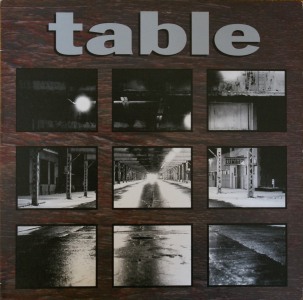
Having found one of Table’s singles at Mystery Train last summer, I figured that I might finally stumble across their long out-of-print full-length album after years of searching. I just didn’t expect it to be in Seattle. There’s a certain logic in finding a Chicago math-rock LP on the other side of the country after striking out numerous times in Chicago—Chicagoans are more likely to grab it when they see it, since they know what it is, even though there are more copies floating around in that area—but my instincts are always to look for local acts like Joel R. L. Phelps or Kilmer, not Midwestern rarities. The flip side of this equation is how many Live Skull LPs I saw in all four record stores; I thought that they were relegated to the northeast.
|
|
I’d visited Everyday Music during my last trip to Seattle, although it’s moved locations since that visit. Last time I got Chavez’s Ride the Fader LP, Hot Snakes’ Audit in Progress LP, and at least one more album if memory serves. This time around I found my two LP purchases (and the vast majority of things I considered purchasing but passed on buying ) in the just-in bin, which was organized by day (!). The general rock LP stock felt somewhat picked-over, perhaps because of the prime location by the Jimi Hendrix statue, but the seven-inches had some fine stragglers from the glory days of 1990s indie rock.
34. Cocteau Twins – Lullabies LP – 4AD, 1982 – $6
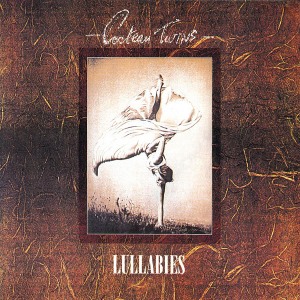
After seeing an LP copy of Blue Bell Knoll for $20 at Sonic Boom, I was a bit concerned that any Cocteau Twins material I’d find in town would be grossly overpriced, but six bucks for this EP seems entirely reasonable. I couldn’t remember if the songs on Lullabies were included on The Pink Opaque, their early singles compilation, but I checked their Wikipedia and found out that they’re not. I’ve passed on a few of the EPs because of that reason—as much as I love “The Spangle Maker,” I don’t need it on multiple LPs—but I I’m glad to have more of their early work. I still need to track down Garlands, which I found at Looney Tunes in Cambridge, but it turned out to be sleeve-only, since the LP inside was a different Cocteau Twins release. Maybe I’ll even find a copy of Heaven or Las Vegas one of these days.
As for Lullabies, it’s more aggressive than I anticipated, perhaps because of original bassist Will Heggie. “Feathered Oar Blades” is downright driving, with a nearly cacophonous drum conclusion, “Alas Dies Laughing” is woozy concoction of edgy guitar leads and Liz Fraser’s repetitive phrases, and “All but an Ark Lark” pushes forward for eight minutes before finishing off with Fraser’s whoops and Robin Guthrie’s guitar feedback.
35. Modest Mouse / 764-Hero – Whenever You See Fit LP – Up / Suicide Squeeze, 1998 – $8
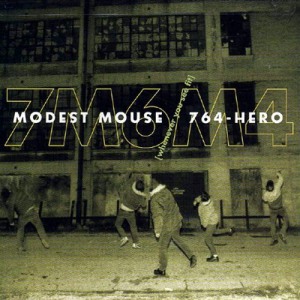
Modest Mouse vinyl goes for gross amounts on eBay, especially the double LP, double sleeve edition of Lonesome Crowded West (I recently saw an auction for just one of these LPs), but I’m not sure of the value of this release, especially since the store had two copies of it for eight bucks apiece. I grabbed Everywhere and His Nasty Parlour Tricks from Mystery Train last summer with the intent of selling it, but it’s becoming quite apparent that I’m not particularly apt at the money-making aspects of collecting records, unless I have absolutely no interest in the group.
That isn’t the case here, since I am fond of early Modest Mouse. I don’t, however, recall having heard this collaborative release between them and the forgettable 764-Hero. I saw 764-Hero and a pre-Oh Inverted World version of The Shins open) for Modest Mouse at the Highdive in Champaign and heard at least one of their records, but my only impression of the group was generic Northwestern indie rock, like some extrapolation of Built to Spill and Modest Mouse’s aesthetic without the charisma. Maybe time has been kinder to 764-Hero than I imagine, but I have a feeling this will be the only release of theirs I pick up. Having now listened to the song (not the two remixes, I’ll save those for a rainy day), it’s an endearingly shambling combination of both bands, with Isaac Brock’s vocals and guitar trumping most other elements in the song. I am disappointed that these two groups could only string “Whenever You See Fit” along for fourteen and a half minutes.
36. Shiner – “Sleep It Off” b/w “Half Empty” 7” – Sub Pop, 1997 – $1
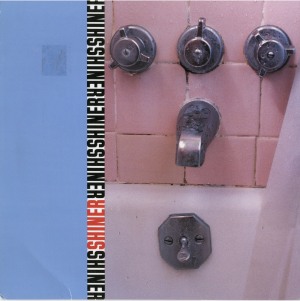
For a group that only pressed one of their full-lengths (their debut Splay) on vinyl, Shiner managed to put out a number of great singles, especially their Sub Pop single for “Sleep It Off” and “Half Empty.” The former made the re-release of Lula Divinia along with “Two Black Eyes” (which was originally included on a Law of Inertia compilation that also featured an early version of Durian’s “Four Mile Drop”), but “Half Empty” is just as good. “Brooks” b/w “Released” isn’t as essential, since both songs were on Splay, but “Cowboy” b/w “Floodwater” is worth hearing if you enjoy Splay-era Shiner. The split singles with Molly McGuire (“Crush”) and The Farewell Bend (“Spinning”) aren’t essential, but the former is exclusive and the latter is a slightly different version from the one on Starless. Ditto for “Semper Fi,” the best song from that album, but “A Sailor’s Fate” is a woozy, somewhat Louisville-influenced take on that era of Shiner’s sound. I tend to think of Shiner foremost as a live band, then an album band, but there’s good material on these singles and it’s a shame that some of them can be hard to track down.
A potential Shiner singles and rarities compilation could also include “Dirty Jazz” and “I’ll Leave Without You” from the Japanese pressing of The Egg, their cover of “Only Shallow” from the Grand Theft Autumn compilation, and a few unreleased tracks. It would provide fitting closure for Shiner, especially if they paired it with a DVD of their final performance in Kansas City. Considering that the group is working on a DVD release at the moment, this suggestion doesn’t seem to be unrealistic.
It shouldn’t be any surprise that I already owned this single, having ordered it from Parasol when it came out, but buying a second copy of a buck seemed like a no-brainer. I passed on a second copy of the Molly McGuire split single since I’m not exactly wearing out Shiner’s “Crush.”
37. Vitreous Humor – “My Midget” b/w “New Victoria Theater” 7” – Mute, 1996 – $2
I have Vitreous Humor’s first single, but I can’t remember much about it beyond a vague recollection of that Crank!-style of Midwestern indie/emo. I had no idea that they’d signed to a major until I saw this single, but apparently their time on Mute was limited to this slice of wax. Neither of these songs sounds remotely like a cash-grab and “My Midget” even begins with some lengthy instrumental interplay. Time to check out their self-titled EP and aptly titled Posthumous CD.
After Vitreous Humor broke up, three of the members reconvened in the short-lived The Regrets, whose lone CD, New Directions: Result Beat Boasts, was pulled out of the Reckless dollar bin a few years ago. I have even less recollection of that CD except that it was somewhat poppier than the Vitreous Humor single. A year after the Regrets split, one-hit wonders Nada Surf covered Vitreous Humor’s “Why Are You So Mean to Me?” at the behest of their label, which even slotted it as the lead single for their second album. Please cover this obscure indie rock band’s song. We know it’ll be a hit. It sounds like they hired me as an A&R guy.
38. Wider – “Main” b/w “Strapping ½” 7” – Third Gear, 1995 – $0.50
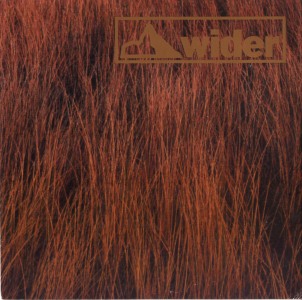
I’d seen Wider cross-referenced a number of times in relation to Chavez, since James Lo played drums and Matt Sweeney played bass in this group prior to joining Chavez (although the latter doesn’t appear on this single). I’d never actually heard Wider, though, and it’s entirely possible that I’d never seen one of their singles before, either. There’s another 7” floating around for “Triangle” b/w “Bloom,” which seems to come up exclusively through eBay searches. Is there a full-length floating around as well? Wider isn’t the most Google-friendly band name.
The music, to my expectations, is typical early-to-mid 1990s aggressive math-rock, with vocals only on the A side. Buying this single right after Don Caballero’s For Respect makes a lot of sense to me.
|
|
I was disappointed to learn that the Fremont location of Sonic Boom Records closed in February, since it had a vinyl annex that provided me with two Lungfish LPs in my previous trip to Seattle. The vinyl annex was divided up between the remaining stores in Capitol Hill and Ballard, which helped bolster this store’s stock. No jaw-droppers, but a number of nice finds. Bonus points for nice employees who played the Jealous Sound’s Kill Them with Kindness and talked about how they’d recently gotten into the now-disbanded Aereogramme. I wish the staff at Newbury Comics in Harvard Square played older records more often instead of their usual hip new bands, but I imagine you sell more records their way.
28. Don Caballero – For Respect LP – Touch & Go, 1993 – $9

Between Don Caballero and Thee Speaking Canaries, I’ve written quite a bit about Damon Che lately, but I hopefully haven’t exhausted my reserves of 1990s math-rock banter. For Respect is comprised primarily of short, forceful songs, many not passing the three-minute mark, which comes in stark contrast to their later efforts. I tend to prefer the longer tracks like “Well Built Road” and “New Laws” that stretch out and explore a few different moods, but the shorter tracks show some variety, like the aptly titled “Subdued Confections.”
What stands out is how “traditional” the guitars sound in comparison to what Ian Williams and Mike Banfield throw together for 2. I use traditional with no slight to the technical accomplishments here, but these songs use beefy chord progressions and more typical lead lines, not the finger-tapped leads, feedback bursts, and disorienting chord battles of their next record. (The air raid siren effect that begins “Dick Suffers Is Furious with You” is still terrifying.) In retrospect it’s amusing how long it took for other math-rock groups to make that transition, since For Respect, not 2, is the blueprint for most 1990s math-rock, but that’s why they’re the Don.
29. Bedhead – WhatFunLifeWas LP – Trance Syndicate, 1993 – $9
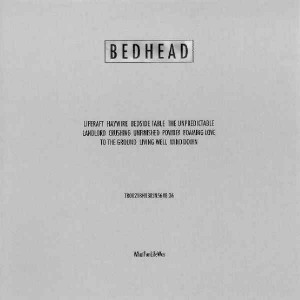
The subtlety and low-key nature of the Kadane Brothers took ages to grow on me, but after seeing The New Year open for Bottomless Pit last year, I was finally converted. I’ve been working backwards through their catalog, progressing from The New Year’s solid self-titled LP to their excellent The End Is Near (the anti-title track “The End’s Not Near” is astonishingly good) to their debut, Newness Ends, which I had apparently purchased on CD when it first came out. Taking the next step back to Bedhead was harder, since Transaction de Novo was my stumbling block for years, but I’ve found similar rewards with their releases. Transaction balances Seam-like indie rock (“Psychosomatica”) with their signature slow crawl (“Lepidoptera”) better than I remembered.
I hadn’t made it back to the beginning when I found this copy of their debut LP, but I didn’t know whether Touch and Go had recently repressed the vinyl or if this was a lingering copy of the original Trance Syndicate pressing, so I snapped it up for a cheap nine bucks. (Trance Syndicate ended around the time of the big Butthole Surfers / Touch and Go feud, but I’ve seen plenty of copies of the self-titled Trail of Dead LP floating around lately.) WhatFunLifeWas isn’t too far off from Transaction de Novo. It betrays a larger debt to the Velvet Underground, occasionally thrashes about (“Haywire”), and lacks some of their carefully arranged guitar patterns, but it’s a Kadane Brothers album through and through. The production sounds close to Seam’s gloriously fuzzy The Problem with Me, but it never comes off quite as wistful as Sooyoung Park’s group.
30. Mr. Bungle – Disco Volante LP – Plain, 2008 (1995) – $17
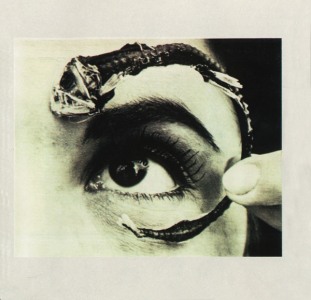
Fun fact: I remember seeing the original pressing of Disco Volante (with the bonus 7”) during one of my first trips to Reckless Records, but scoffed at the $18 price tag. Whoops. It rocketed up to $70 to $100 on eBay shortly thereafter. I’d waited patiently for this reissue to come out, so I gladly did my double-dipping duty when I found it in Seattle. Smart move, right?
Wait a second, there’s another pressing of this reissue LP with the bonus 7” included? That one’s colored vinyl, too. I can’t justify triple-dipping, even with a premier reissue pressing floating around. Screw you, Plain Recordings.
Disco Volante is certainly the most challenging Mr. Bungle album, veering between dramatically different styles and approaches, but it’s hard to call it my favorite. I have to be in a very particular mood to hear “Violenza Domestica,” for instance, whereas I can play California in most mental states. Hopefully that album will earn a vinyl pressing to coincide with the reissues of Mr. Bungle and Disco Volante, since I’ll gladly own all three.
31. Tar – Toast LP – Touch & Go, 1993 – $5
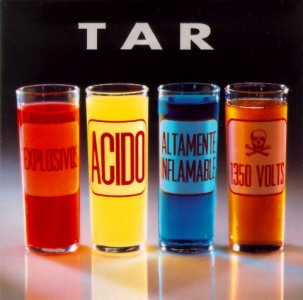
I was indirectly familiar with Tar because of their split single with Jawbox, in which they covered each other’s songs (Jawbox’s cover of “Static” appears on My Scrapbook of Fatal Accidents), but Tar’s history leaves little doubt to their aesthetic. Having released albums on both Amphetamine Reptile and Touch and Go, I expected aggressive songs with heavy, metallic riffs, pounding rhythms and monotone vocals and Tar delivers in spades. They even played custom aluminum guitars. The Touch and Go albums are unsurprisingly a bit more melodic than the AmRep releases according to Amazon reviews, but don’t think that Toast isn’t littered with handclaps and falsetto background hooks. This is muscular, abrasive stuff, like a harder-edged sibling to fellow Touch and Go band Arcwelder. This pressing of Toast is a picture disc LP with a blowtorched piece of toast on one side and the normal cover image of hazardous chemicals on the other. Inviting.
32. Dumptruck – D Is for Dumptruck LP – Incas, 1983 – $2
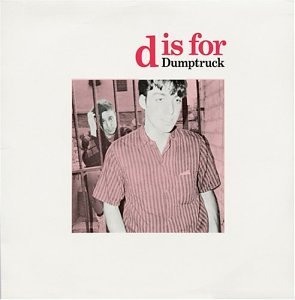
I’ve seen a few Dumptruck LPs in Boston-area record stores, but never for two bucks, so I snapped up this worn copy of their 1983 debut. A few of the songs sound like a less abrasive version of Mission of Burma, especially the great opener “How Come,” but usually they’re closer to the jangle of early R.E.M. than the art-punk of their fellow Massachusetts natives. Other dominant 1980s indie/college rock touchstones like the Feelies also apply, but there’s enough tension in the songwriting to let me look past the occasionally dry instrumental mix. I’d expected more of a jangle-pop sound, but the fringes of post-punk keep me interested.
This excellent article on Perfect Sound Forever relates the group’s label troubles: Bigtime Records tried to sell the band’s contract to a major label, despite that contract having already expired. The band and its lawyer reported this situation to the major, but Bigtime sued the group for five million dollars. While the band ultimately prevailed in court, being tied up in litigation sapped virtually all of their energy and killed any buzz from their successful 1988 album, For the Country. Its follow-up, Days of Fear, was recorded in 1991 but not released until 1995. Their first three LPs and a best-of have been issued on Rykodisc.
33. Joel R. L. Phelps & the Downer Trio – Inland Empires CD – Moneyshot, 2000 – $6
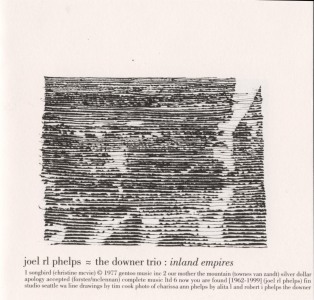
I’d talked about the wildly underappreciated Joel R. L. Phelps with a friend of mine prior to leaving for this trip, so finding a copy of Inland Empires, which she ranked as one of her favorites, was a nice semi-surprise. (Phelps is based in the Northwest, so I half-expected to find this CD.) I usually prefer Phelps’s more rocking, Crazy Horse–influenced albums, especially Blackbird, but Inland Empires proves that he's equally good at gut-wrenching ballads.
Inland Empires came out shortly after the death of Phelps’s sister, to whom the heartbreaking “Now You Are Found” is dedicated. The song traces the signposts of their relationship and I can’t fathom the level of care he put into the lyrics and performance. Fittingly, it’s the only Phelps original on the EP, accompanied by six covers of songs, including Fleetwood Mac’s “Songbird,” which is the second song from Rumours Phelps has covered. Silkworm recorded an enthusiastic version of “The Chain” for an early single during Phelps’s tenure in that group. The other five covers include excellent cover of the Go-Betweens’ “Apology Accepted” and songs by Townes Van Zandt, Iris Dement, and Steve Earle. I’d put off listening to this EP in its entirety for years, knowing the story about Phelps’s sister and how painful that song would be, but Inland Empires is a remarkably cohesive album for having six covers and one tremendously personal original.
Those interested in more Joel R. L. Phelps covers would be wise to track down the 2CD edition of Customs, which features a bonus disc with covers of Joy Division’s “Twenty Four Hours,” The Chills’ “Pink Frost,” and three others. Phelps also covered The Clash’s “Guns of Brixton” on his self-titled EP and Comsat Angels’ “Lost Continent” on Blackbird, to mention a few highlights. I’d love to hear new material from Phelps, who’s gone into hiding since Customs, but even another batch of covers would be quite welcome.
|
|
I hadn’t visited Easy Street on my first trip to Seattle, but it came recommended and had positive reviews on Yelp. (Whether Yelp reviews accurately correlate to my level of record-collector scum has yet to be determined.) Maybe it was the enormous, spinning sign or the paintings of recent album art on the side of the building (the eagle from Mogwai’s The Hawk Is Howling looked a bit confused), but Easy Street seemed like a very particular type of record store, the event store. It reminded me of the now-closed Record Service on Green Street in Champaign, a store which had a good stock of new and used music, threw release night parties, and held occasional in-store performances. I appreciate the existence of event stores, since they get people excited about buying music, but as this meme demonstrates, I do not have that problem. I’m more concerned about finding some out-of-print LP for sub-eBay prices.
The strength of event stores is the stock of new releases and used CDs. If you’re drawing customers because of an in-store or a big new release, it’s crucial that any other recent release and staple artist/album is available for you to buy. The problem with event stores from a record collector’s standpoint is that this emphasis on the new and classic (plus all of foot traffic) decreases the possibility that anything rare or obscure is in stock. Easy Street had a great array of new LPs, especially electronic/house/techno, but I’m hesitant to buy those when I have to fly them across country in a few days. I’m simply less excited by browsing a store when I have a good idea of what will be in stock and more excited by digging through crates of dusty LPs that might hold a gem. I chose to hold out and see what the other Seattle stores had to offer instead of loading up on records that I should own by now, but if I lived in Seattle, I’d frequent Easy Street on a regular basis, much like I frequent Newbury Comics in Boston.
25. The Wicked Farleys – Make It It LP – Big Top Records, 1999 – $2
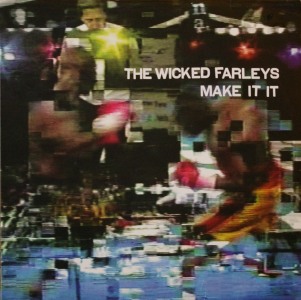
If memory serves—and for the two bucks I spent on this LP, I wouldn’t be heartbroken if it didn’t—the Wicked Farleys were Boston’s answer to the spazzy indie rock of the Dismemberment Plan. After Googling some background information, they existed around the same timeframe as the Dismemberment Plan, so it wasn’t a direct line of influence, but I remember them getting lumped in with the nervous twitches of early Dismemberment Plan more so than their actual influences. The reliable Built on a Weak Spot mentions Swirlies/My Bloody Valentine/math-rock influence, which makes sense given their geography. I also recognize Michael Brodeur’s name from numerous record reviews and interviews in the Weekly Dig and the Phoenix. All of this background bodes well, better than my lone Dismemberment Plan connection.
Having spun the first side of Make It It, most of my touchstones have proven accurate. Brodeur’s vocals come close to the melodic, higher register pipes of Travis Morrison, but he doesn’t have the same level of vocal charisma (or lyrical ingenuity) and the falsetto occasionally wears thin. A few more songs with the energy of the appropriately titled “Find Shit Break Shit!” (I’m amazed Limp Bizkit never covered it) might help, but I prefer their mid-tempo tracks musically. The guitars are definitely on the Swirlies tip, taking the combination of shiftiness and heaviness from a song like “San Cristobal de Las Casas” and exploring it in depth. There’s a bit of North of America’s angularity floating around, too, cementing the Wicked Farleys’ place in the soup of late 1990s indie rock. It would be great if I could lose sight of the contemporary references, but even without a groundbreaking streak there are enough solid, well-made songs on Make It It to justify the purchase.
26. Kilmer – Reason Can Deceive, Faith May Be Misplaced, But Love… CD – West of January, 2002 – $1
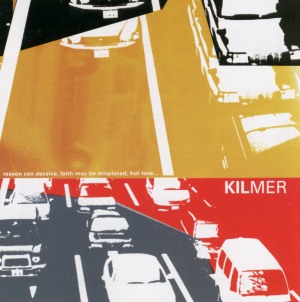
I received Kilmer’s self-released first album, 1998’s The Highlands and the Lowlands, as a promo during the Signal Drench days, leading to a positive review of its blend of emo-core and indie rock and an interview shortly thereafter. Its closing track, “How the Fifth Column Fell,” outshined its counterparts, presumably taking inspiration from WWI poetry (Owen, Sassoon) with the multiple narrator approach to its war story. I’ve gone back to “How the Fifth Column Fell” a number of times since Signal Drench folded, and the song holds up. It’s emotional without falling prey to many of the emo clichés of the era. I haven’t gone back to the other songs in ages, although I recall using one of the shorter tracks (“Three Sixty”) on a mix tape. Skimming through the lyrics now it’s pretty clear that they were one of those vaguely Christian rock groups particular to the Northwest, not that Sunny Day Real Estate and Pedro the Lion set a bad example.
By the time Kilmer released Reason Can Deceive… in 2002, Signal Drench was gone and my desire to keep tabs on groups I’d first heard because of the magazine had largely vanished. Plus, the record didn’t make enough waves to show up in Midwestern record stores. I imagine their support in the Northwest scene was limited, since they weren’t based out of Seattle, they weren’t on a nationally recognized label, and their mix of introspective guitar rock and lighter, more romantic piano-based tracks didn’t align them with a single movement or genre at the time. A common story among bands I enjoy, but it doesn’t necessarily mean the music’s great.
So is Reason Can Deceive a lost gem? That depends on how much you like Radiohead’s The Bends and OK Computer, since many these songs owe a large debt to those records. The production and performances are considerably improved from their roughhewn debut, but this ultimately trades spontaneity for polish. I prefer when the songs stick closer to the emo-core leanings of The Highlands and the Lowlands, like “Mediterranean Postscript,” “Arthur I,” “Fundamental Principle” and the interlocked guitar outro of “Spilling Summer.” Lead singer Peter Nelson often veers toward flowery lyrics and fluttering delivery (a criticism of his more recent group, August Anchor, as well) and Brian Ward’s grittier vocals don’t come to the forefront very often. I owe Reason Can Deceive a full listen one of these days, but I’ll probably stick with the standouts for now.
If you want to hear either of Kilmer’s albums, Brian Ward has MP3s posted on his photography website. You’ll have to right click the links and fix the typo in “photography,” but it’s worth doing if you enjoy the specific songs linked properly above.
27. Accelera Deck – Addict CD – Blackbean and Placenta, 1999 – $1
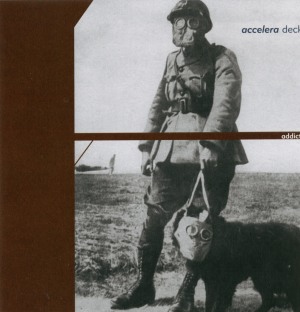
After getting hooked on a few songs from Accelera Deck’s Narcotic Beats—still one of my favorite electronic albums—thanks to Epitonic.com (a site that appears to have been left for the wolves), I picked up a bargain priced copy of Exhalera Deck’s superb “Exhale” 12" and started an obsessive journey into Chris Jeely’s ever-expanding catalog. Unfortunately, only his first few releases displayed this shoegaze/electronic hybrid (September Plateau’s Occasional Light is another good example), since he dropped the fuzzed-out guitar textures in favor of drum-and-bass and glitch styles. Thankfully, I learned about this development from SoulSeek, not my local record store, so I could safely sample Jeely’s immense discography and track down the records that appeal to me. (I still hope to stumble upon the 2LP pressing of Narcotic Beats.)
I technically didn’t need to track down Addict, since it was available for full-price at Parasol for years, but I never fell in love with this stylistic direction. While Jeely’s melodic touch comes through on a few of these songs, its drum and bass approach feels like a distant cousin several times removed to Accelera Deck’s early work. Addict’s predecessor, Conviction and Crack, is a much better midpoint between these styles.
Even though he left me behind in many stages of his evolution (his affair with Guided by Voices styled acoustic songwriting was quite a curveball), I’ve kept tabs on Chris Jeely and was rewarded with the gorgeous pointillist landscapes of Pop Polling, the traditional indie rock of Skulllike’s Eggs on Equators, and the billowing live instrumentation of A Landslide of Stars. I haven’t tracked down any of his more recent work after he “retired” the Accelera Deck mantle, but I imagine more name changes, stylistic changes, and limited pressings are in order.
|
|
This purchase marked the first time that I’d bought MP3s since I had an eMusic account for a few months in college. Those mp3s from eMusic (courtesy of a bulk-download monthly subscription) are absolutely worthless to me now—if not entirely deleted—since they were all 128 kpbs files and I’ve since upped my minimum standard to 192 kbps. While that subscription got me interested in a few bands (Swirlies, Pilot to Gunner), the actual music had to be replaced by physical copies in order to get listenable sound quality. (The scourge of over-compressed cymbals!) How do I know that’s not going to happen with the current standards? What if iPods make a huge jump in capacity, encouraging use of lossless files? Do I get to re-download my files? I doubt it. There’s no flexibility with digital downloads. Don’t get me started on my fear of a permanent hard drive crash, since I already had to pull the freezer trick to rescue files from my drive back in 2005.
I understand the benefits of having a purely digital musical collection, the foremost being the headache I’d avoid when I move out of this apartment in the next year, but I just love the physical thing too much. If this EP had been pressed to CD I would have already bought it, but stomaching the exchange of money for files caused a two-year delay. I’m mad just thinking that National Skyline’s new album is MP3-only, since I’d gladly buy a pressing with artwork, but that’s unlikely to happen.

24. National Skyline – The Last Day EP – iTunes Store, 2007 – $3
A few people told me that this National Skyline EP was back up to Garber’s old standards when it was originally released, but at the time I was still smarting from the overly L.A. output of The Joy Circuit. (“Hey you / I know you / This is not where you belong” from “They Know Where You Live” could not be a more accurate assessment.) Ever since he half-joked in a Milk Magazine interview that he’d break Castor up so he could start a band that sounds like the Offspring (only to break up Castor within the year), I suspected Garber would make a push for a major label contract. The Joy Circuit was that push. He extracted the mid-1980s U2 fetish from the National Skyline records, put Year of the Rabbit’s rhythm section to work, removed the icy electronics of the first three National Skyline releases, and dropped the depth of his past songwriting.
Garber’s always adapted to his surroundings or prevailing indie rock winds: the first Castor CD was a mix of C-Clamp and Braid with Seam-styled hushed vocals; Days in December took up Sunny Day Real Estate’s emo-core; Morning Becomes Electric was straight lo-fi indie rock; Castor’s “Miss Atlantic” brought in some of Polvo’s abrasive math-rock influence; Castor’s Tracking Sounds Alone appropriated some of Shiner’s heaviness to balance out Garber’s exploded vocal hooks; Big Bright Lights tried out a number of styles including post-rock, acoustic singer-songwriter, and post-grunge; and National Skyline primarily stuck with a U2-informed version of Antarctica’s icy electro-rock, but inexplicable aped Beck on “Identity Crisis” from the Exit Now EP. Pointing this pattern out in no way dismisses the success of those albums. Braid and C-Clamp never matched the fluidity of Castor’s “Pontiac,” Shiner never wrote a vocal hook like Castor’s “Moving Backgrounds” or “Tracking Sounds Alone,” Antarctica never channeled the emotion of “Kandles” or the effortless pop of “October.” Garber is a shape-shifter, to be sure, but there was an underlying honesty and creativity to the majority of that material, which is why I still love it and continue to listen to it. His vocals changed, his style changed, his collaborators changed, but he remained compelling. That stopped with the mush-mouthed modern rock of The Joy Circuit. He finally found a vocal style that annoyed me. He finally lost the creativity that buoyed his other work. He did not find Offspring-type success, however.
Stealing a Jimi Hendrix reference from Polvo’s Shapes, The Last Day is “National Skyline, Slight Return.” The aesthetic depth is back and Garber spit out the marbles from his cheeks, but the songwriting itself isn’t an improvement on The Joy Circuit’s EP1. The first two songs feature saccharine optimistic peaks (“How do I know where to begin? / And how do I know if it’s real?” from the title track) reminiscent of the musical cues on commercials for Grey’s Anatomy. Gross.
I downloaded this EP to compare it with this year’s Bliss & Death, a record that I initially disliked but has quickly grown on me, and when I think about how far Garber has come since The Last Day, it brings the new LP up another notch. The main problem with that LP—pacing—has nothing to do with the problems here, which is a huge cause for optimism, and not even the TV melodrama variety. If you’re going to drop money on MP3s, buy Bliss & Death.
|
|
Going two weeks in between trips to Newbury Comics feels like less of an accomplishment when it’s put in writing. This purchase also included an issue of Magnet, a magazine I hadn’t purchased a stray issue of in a few years. This particular issue is their fifteenth anniversary issue, which is impressive for a glossy magazine ostensibly covering alternative/indie music, but their broad scope is large enough to interest casual scenesters on a bi-monthly basis. That scope contributes to my hesitation for subscribing to the magazine, since too many of the issues focus a Big Indie Band of the Moment or a Classic Indie Standby. The fifteenth anniversary celebration acts as a compendium of the latter artists, but it’s interesting to get a perspective on which artists they still want to talk about a decade later.
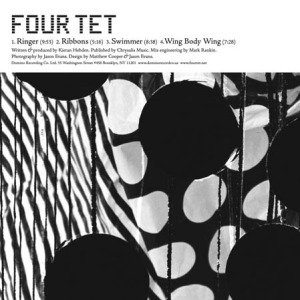
23. Four Tet – Ringer LP – Domino, 2008 – $10
Someone please explain this vinyl pressing to me. Ringer has four tracks spanning a total of 31:33, with neither half lasting longer than sixteen minutes. Yet it was pressed on two LPs with one song per side. I would have understood this decision if the sides played at 45 rpm like the audiophile-oriented vinyl pressings from Bottomless Pit (and those more expensive Metallica reissues), but instead they run at 33 rpm. Is this format what DJs prefer? That might make sense, since Ringer is more “techno” in nature than other Four Tet releases, but some of the DJ-styled twelve-inches in my collection have multiple tracks per side. The record certainly sounds great, but $10 should be the regular price, not the mark-down price for Ringer, and a single LP would justify that price.
|
The wife and I had agreed not to buy presents for each other for Valentine’s Day, but since she never buys records on her own (apparently someone in this household buys enough for two people), I figured I’d pick up one of her recent favorites (and one of mine) now that the vinyl had been released. All of her albums are filed alongside mine, meaning that Death Cab for Cutie, Iron & Wine, Jenny Lewis, and their ilk have not been segregated in a girl-friendly indie section, which makes sense since I’m in charge of finding new bands that she might enjoy and putting them on her iPod. In a way, I only have myself to blame for most artists she enjoys—except for Regina Spektor, I had nothing to do with my wife’s fondness for her most recent album—but sadly the “You’d really love the new Isis album!” doesn’t seem to work with her. Thankfully there’s enough cross-over in tastes with the non-noise tendencies of my record collection that she’ll listen to most of my new purchases.
21. M83 – Saturdays = Youth 2LP – Mute, 2008 – $20
When I first heard this album, I thought that the modernized Tears of Fears pop of “Kim & Jessie” and the electronic pulse and sheen of “Couleurs” should be a single in lieu of the unnecessary album tracks. I’m going to pull back from that statement, to a degree. Even given the strength of Dead Cities, Red Seas & Lost Ghosts, I view M83 as a singles band, since the album cuts often indulge Gonzalez’s more irritating tendencies like ultra-falsetto cooing, melodramatic voiceovers, and new age-aping schlock. Yet Gonzalez approaches each record as an album (eye roll for the critic cliché), with Saturdays = Youth his clearest concept album yet. That Tears for Fears reference earlier connects specifically to the use of “Head Over Heels” in Donnie Darko and that movie’s ’80s nostalgia as a whole. While Donnie Darko is too plot-oriented to be confused with a classic John Hughes movie, Kelly’s soundtrack included all of the songs he wished were in those movies. “Wouldn’t it be great if Echo & the Bunnymen made it into one of those films?” It’s not pure nostalgia—Kelly could never pull that off, since he’d end up meddling too much (see, or preferably don’t see, the overwrought Southland Tales)—but it’s nostalgia revived, reimagined.
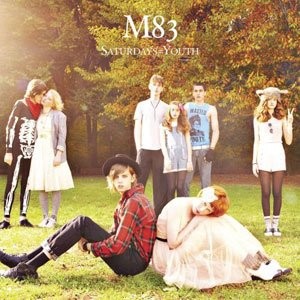
A quick look at the cover of Saturdays = Youth underscores how Gonzalez and Kelly are kindred spirits. That Molly Ringwald lookalike makes Gonzalez’s back-sleeve shout-out to the music, movies, and friends of his teenage years completely irrelevant. Could anyone mistake his intentions? Donnie Darko is the John Hughes film Richard Kelly envisioned, Saturdays = Youth is the soundtrack to the John Hughes film Anthony Gonzalez envisioned. The minimal piano arrangement of “You, Appearing,” the club focus of “Couleurs,” and the electronic sighs of “Midnight Souls Still Remain” wouldn’t make an actual John Hughes film, much like Richard Kelly’s time-travel theories, but those elements make their respective tributes interesting. If the rest of the album consisted of singles as strong as “Kim & Jessie” and “We Own the Sky” (“Up!” and “Skin of the Night” pale in comparison), it would have easily been Gonzalez’s finest, but the lesser songs rely too much on nostalgia. It makes sense as an album, but it doesn’t hold up as an album.
A key difference between Anthony Gonzalez and Richard Kelly, however, is that the former knows what makes his work compelling, and the latter, judging from the Donnie Darko director’s cut (“Being open for interpretation? No thanks, let me explain everything”) / director’s commentary (in which Kevin Smith understood the strengths of the film better than its director), Southland Tales, and the script for Domino, seemed to make an interesting film thanks in large part to his production limitations. Given that M83’s singles have gotten better as they’ve gotten bigger, I imagine the opposite is true with regard to Anthony Gonzalez’s production limitations.
 22. Deerhunter– Microcastle / Weird Era Continued LP+CD – Kranky, 2008 – $15
Dear Kranky Records,
I waited quite a while for the LP edition of Deerhunter’s excellent Microcastle to reach stores. Even after it was officially released, it took months before I found a copy at Newbury Comics, despite checking every time I ventured in a store. When I finally found a copy, I gladly snapped it up, having already read on your site that the vinyl would include a CD of Weird Era Continued. Strange, considering that Cryptograms included the Fluorescent Grey EP on vinyl, but I’ll live with it. Imagine my surprise when I find a double LP edition of the record at Sonic Boom in Seattle just a month after I buy the single LP edition. I could understand pressing the 2LP edition first, making it a limited collector’s edition, and then switching to the single LP edition, but the order of these pressings just baffles me. I look forward to a triple gatefold pressing of Stars of the Lid’s And Their Refinement of the Decline in the next year, or perhaps a quintuple LP set including their recent tour CD on two more slabs of wax.
Best, Sebastian.
P.S. That new Tim Hecker album is great. Please let me know if you’re planning anything special for the second pressing of that album.
|
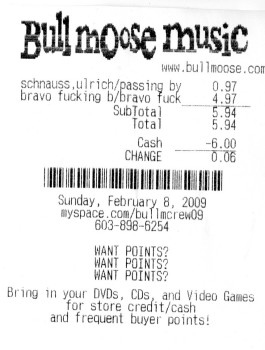
I went up to Salem, NH to buy a tax-free iPhone (please don’t tell Deval Patrick), not tax-free records. But when I noticed that there was a Bull Moose Music location along the main drag, I convinced my friends to let me browse for a few minutes. I had a brief chat with the owner as he let me look through some just-in crates. When asked what I was interested in, I responded “post-punk” (“Midwestern indie rock” might be more accurate, but I’ve learned my lesson about relating micro-genres), and he recommended going to their Portsmouth location, since it had more vinyl stock. No, I did not immediately head up to Portsmouth.
This particular Bull Moose location had a solid punk/hardcore/metal vinyl section, as evidenced by my first purchase, and some tempting mark-down records, as evidenced by my second purchase. The used vinyl was all too familiar, however, consisting primarily of overpriced classic rock wax and those just-in crates of 1970s disco and 1980s dance-pop that a Madonna fan was thrilled to donate to the store. If only she’d liked Wire…
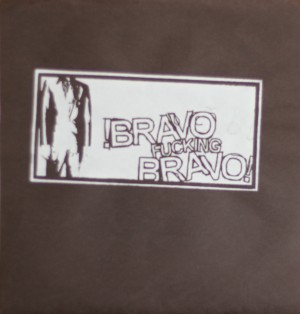
19. Bravo Fucking Bravo – Bravo Fucking Bravo LP – Friends Forever, 2003 – $5
Here’s how I knew of Bravo Fucking Bravo: my friend Charlie from This Flood Covers the Earth joined up with three of this group’s former members in Luau, but departed from that band before they played more than a few shows. Between the five-dollar price tag and the etched lyrics on the flip side, I was willing to take a rare shot at a hardcore record. I enjoyed This Flood Covers the Earth because of the prevailing Drive Like Jehu post-hardcore influence (they were from San Diego, after all), but Bravo Fucking Bravo relies less on those dynamic shifts and more on unrelenting forward propulsion. Apparently Bravo Fucking Bravo II, which came out in 2005, is the superior album, but I didn’t see that one at Bull Moose. I wish I had something more substantial to say about the music, but most hardcore (excluding some key 1980s groups like Bad Brains, Black Flag, Minor Threat) tends to blur together for me unless their prevailing outside influences are noticeable and something I’m more interested in.
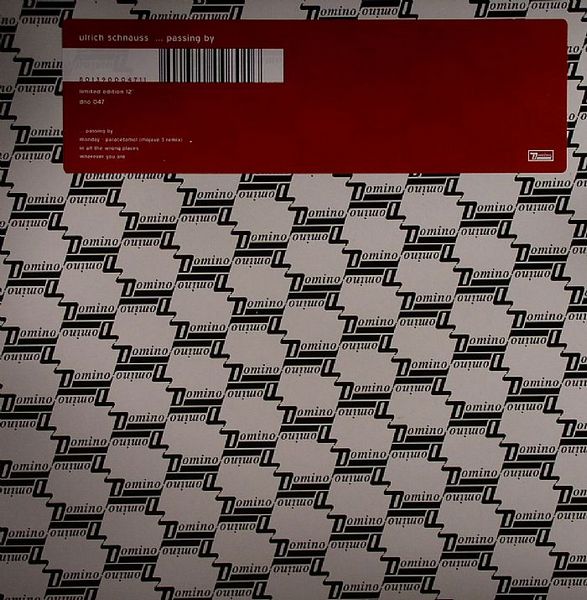
20. Ulrich Schnauss – …Passing By LP – Domino, 2006 – $1
An Ulrich Schnauss twelve-inch marked down to $0.99 involves no decision-making brainpower—I didn’t even look at which songs were included—but I’ll apply some after the fact. “…Passing By” was originally included on Schnauss’s 2001 album Far Away Trains Passing By, so it’s hardly a logical candidate to push an EP five years later. The EP includes a song from his 2003 album A Strangely Isolated Place (which I recommend checking out) and from the Morr Music Slowdive tribute, but it’s not his cover of Slowdive, it’s his song inspired by Slowdive. Newsflash, Schnaussages: all of his songs are inspired by Slowdive. To cap this off, there’s a remix of a Strangely Isolated Place track by Mojave 3, i.e. the members of Slowdive. I understand that Schnauss hadn’t released an album in a few years and probably needed to remind audiences that he still existed before his vocal-equipped shoegaze album Goodbye came out in 2007, but typically these sampler EPs (Afghan Whigs’ Historectomy, Silkworm’s New School / Old School) are promo-only. Maybe what Domino needed to do was pull a Watery, Domestic or a Fake Train and just draw all over the cover of Slowdive’s Just for a Day. I would pay more than a dollar for that EP.
|
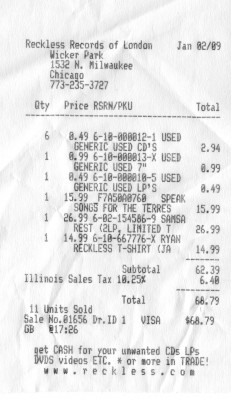
When greeted with the Milwaukee Avenue location’s prodigious cheap bins of seven-inches and CDs, I quickly reverted to typical Reckless Records form, reveling in the bulk of materials I trekked around the store. Yet the first thing I did after checking out was call Jon Mount to relay a depressing realization about my dollar bin CDs. I know people involved in all of almost all of these bands. Ambulette features Stephen Howard of Pinebender, who I’ve talked with at several shows. My friend Joe Martin did promotions for Brief Candles. The Midsummer/Coastal CD was released on Sun.Sea.Sky. by my friend and former Signal Drench collaborator Shawn Schultz. Del Cielo features Beauty Pill bassist Basla Andolsun, who was incredibly nice when I saw that band in St. Louis. And the Juno album was just a heartbreaker. Not only is that one of my favorite albums of all-time, I am making a documentary about the group. It simply doesn’t bode well when their album is lumped into “Generic Used CDs.”
Jon certainly understood my quandary about purchasing these albums, but I tried my best to put a more positive spin on this situation, even if it ignores the blunt truth that these bands are defunct, profoundly unknown, and/or unlikely to sell for full used price. First, in the case of the Juno CD, which I already own, I’m likely to pass it along to a friend who’s never heard of the group outside of my involvement in the documentary. If they enjoy it, they might buy A Future Lived in Past Tense or the split EP with the Dismemberment Plan. I’ve done this before with similar “I need to save this great album from the injustice of the dollar bin” finds and a few of their recipients have seen the band live or purchased another album. Second, if someone else is looking for any of these albums, they’re more likely to pay full price for them. Suckers. Third, if I enjoy one of these albums, I’m more likely to buy a full-price disc from one of these bands in the future, which might not have happened if not for this situation. I didn’t go into Reckless hoping to find Brief Candles or Midsummer albums, but their newfound place in my collection makes it more likely that I’ll check them out in the future. Finally, I do my best to buy releases from bands I enjoy at their shows, from their labels, or new from independent record stores. These points are all trumped by the blunt truth stated above, but that’s the harsh toke about much of the music I enjoy: most people don’t care as much as I do about it. In a perverse way, I appreciate that fact, since it allows me to make connections with people like Stephen Howard, Basla Andolsun, and the members of Juno, but it still pains me to be presented with the economic reality of their situation.
This internal debate between the morality of my music fandom and the quantity-loving impulse of my record collector urges will likely continue throughout The Haul. I remember being taken aback by the shock of Parasol Records’ promotions guy Michael Roux when I revealed that I downloaded music and purchased used CDs, since both methods circumvent artist compensation, but I’ve done my best to reconcile my positions since that conversation. Even this predominantly used purchase has one notable new release on it.
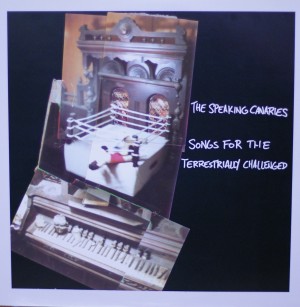
8. Thee Speaking Canaries – Songs for the Terrestrially Challenged – Mind Cure, 1994 – $16
My friend Scott had mailed me Thee Speaking Canaries’ Songs for the Terrestrially Challenged and Life-Like Homes back in September and I enjoyed the latter so much it was discussed in two unfinished posts for this site. (Yes, I have some catching-up to do.) At the time I couldn’t remember which Speaking Canaries LP I’d previously seen up at RRRecords in Lowell, so Scott asked if it was the original lo-fi pressing of Songs for the Terrestrially Challenged. “Lo-fi pressing? I’m intrigued!” I replied, but by the time I returned to RRRecords, they’d sold whichever Speaking Canaries album I’d seen. I’d since seen this version of the album on eBay once or twice, but didn’t pull the trigger. When I found it in the Reckless online catalog, I put it in the must-buy pile. I can’t pass on a limited edition alternate version of a Speaking Canaries album with a hand-made sleeve (Damon Che’s hand-written liner notes, random photos glued to the gatefold), even if I greatly prefer Life-Like Homes. I still need to pick up their most recent album, Get Out Alive, which, true to form, has both a long-form CD version and a pared-down LP version. If only Damon Che would devote more time to this project and spend less time making “Don Caballero” records without Ian Williams.
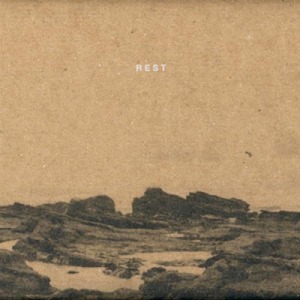
9. Gregor Samsa – Rest – Kora, 2008 – $27
I had originally hoped to buy this album from the band when they performed over by Berklee in the summer, but the vinyl wasn’t finished by then and I ended up missing the show. I put off buying it at Amoeba Records in Los Angeles, thinking I’d buy it from Parasol when I placed an order with them later in the winter (still hasn’t happened), but when I picked it up at the Broadway Reckless and realized how nice the packaging was, how much care the group and Kora put into this release, I figured that I should put it high on my list for my trip to the Milwaukee location. It’s one of most expensive new albums that I’ve purchased (not that it’s overpriced*), rivaled by Pelican’s gatefold 2LP for The Fire in Our Throats Will Beckon the Thaw, but I’ve never regretted picking up that Pelican album and I doubt I’ll regret buying Rest. I did question my LPs-whenever-possible policy for a moment, given that the CD has equally nice packaging and costs half as much, but the vinyl sounds superb. This album nearly topped my best-of-2008 list, so definitely buy one of the pressings.
*With regard to the seemingly high cost of this album, I learned a valuable lesson about micro-pressings of LPs when talking with Stephen Howard of Pinebender about their 2LP pressing of Things Are About to Get Weird (200 copies; get yours soon). Even without the custom artwork of this Gregor Samsa record, Pinebender was barely breaking even by charging $20 for their album. Granted, Gregor Samsa pressed 500 copies of Rest, so the vinyl itself likely cost slightly less, but the packaging certainly cost more. Given how often I pine for lesser-known bands to press their albums on vinyl, I feel compelled to support them when they go through with it, even if it’s pricier than the CD.
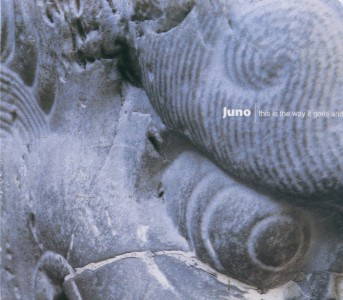
9. Juno – This Is the Way It Goes and Goes and Goes – DeSoto/Pacifico, 1999 – $0.50
Juno waited five years into their existence to record and release a full-length album. They did three U.S. tours on seven-inch singles. They weighed their options on labels, turning away quite a few major label scouts interested in mining any Seattle-area talent. They dropped early songs that didn’t meet their standards. They changed from their name indie producer (Steve Fisk) to the in-house engineer at the studio (Kip Beelman) midway through recording because the former was rarely in the studio and pressed the group to release an EP and the latter understood the intended scope of the record and had already done the bulk of the recording.
Too many bands rush into recording their debut album. This Is the Way It Goes and Goes and Goes is a prime example why bands should wait, road-test material, record singles, weigh their options, take time in the studio. The rush of instant gratification from a hastily recorded tour CD-R might sell some $5 CDs at your local gigs and help you buy a slightly better van, but will people still love your debut album a decade later? Or will it be something you sweep under the rug? Take your damn time.
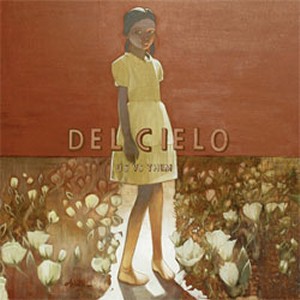
10. Del Cielo – Us Vs. Them – Lovitt, 2004 – $0.50
I was going to completely wing it on Del Cielo by mentioning how nice it was to see Beauty Pill and how I hope that Chad Clark’s doing better after his heart surgery and then going into how I wish Bald Rapunzel had recorded a second album (they shared drummer Katy Otto with Del Cielo), but I felt compelled to put the CD in my computer’s drive and actually listen to it. Not sure what I expected from Us Vs. Them, but the first few songs have been of the dynamic rockers with a bit of pop-punk creeping in on the edges and diary-styled lyrics. Andrea Lisi goes overboard on vocals a bit and doesn’t have the range of Bald Rapunzel’s singer Bonnie Schlegel, but there’s no lack of melody or energy. Faint praise perhaps, but I just felt like hearing Bald Rapunzel’s “Sun Drop” again, which is one of the better forgotten D.C. rockers.
Side note: When googling Beauty Pill to find their web site, I came across this horrible, horrible review of The Unsustainable Lifestyle at Coke Machine Glow. It's hard to imagine a reviewer missing the joke that much, but I doubt they heard Smart Went Crazy or have the slightest idea on how Chad Clark's bands do or do not fit into the D.C. scene.
11. Midsummer/Coastal – This Ageless Night –Sun.Sea.Sky., 2002 – $0.50
I recall receiving Catch and Blur, the first Midsummer EP for review when I was doing Signal Drench and genuinely enjoying their brand of lush indie rock/shoegaze, so it didn’t shock me when Shawn Schultz signed them to Sun.Sea.Sky. for a release. I fell out of touch with Shawn after Signal Drench closed up shop, which partially explains why I never heard this split release with Coastal, but I’m interested in seeing how Midsummer progressed. I may have to track down their first full-length, Inside the Trees, which was released last year.
I’ve largely avoided returning to a few of the groups I enjoyed reviewing in the early Signal Drench days, in part because I’d usually learn of whichever bands they were ripping off a few years later and think “Oh, that’s where they got it from.” Since the majority of the promos I received were mediocre indie rock or mediocre emo, I was probably too easily impressed, but every now and then I’d find a band like Durian (Jawbox/Shudder to Think-influenced D.C. group) or Tungsten74 that I was willing to stand behind. In the case of Tungsten74, they kept getting better and better.
12. Des Ark / Ben Davis and the Jetts– Battle of the Beards – Lovitt, 2006 - $0.50
Jon Mount has been pushing Des Ark for quite some time, but this split CD is the only release I’ve tracked down, since I haven’t found the LP pressing of Loose Lips Sink Ships. He played this split album for me the last time I was in St. Louis, scoffing at some of Ben Davis’s contributions but heralding Des Ark’s side and involvement in the two collaborative tracks. Des Ark has the whole sassy titling thing going, which is a plus (“If by ‘Gay’ You Mean ‘Totally Freaking Awesome,’ then Yeah, I Guess It’s Pretty Gay” for one), but any reason for me to remember the sheer horror of Elton John’s “Bennie and the Jets” should be publically denounced. By necessity (no drummer), these songs swing more toward the folk side of Des Ark, losing the Faraquet-esque bite of the aforementioned Loose Lips Sink Ships (a solid record despite some overbearing lyrics) and sounding a bit more like Cat Power in the process. Not recent Cat Power, but What Would the Community Think/Moon Pix era. You know, the good stuff.
13. Brief Candles – They Live We Sleep – Latest Flame, 2006 – $0.50
Brief Candles were based out of Peoria (they’ve since moved to Milwaukee, Wisconsin) and played at least one show with personal favorites Rectangle, but I didn’t catch them during my years in Champaign. That’s a shame, since judging from the first few songs on They Live We Sleep, I would have enjoyed their blend of male/female vocals, energetic rhythms, shoegaze-inspired guitars, and occasional bursts of Sonic Youth noise. That description sounds an awful lot like what I wrote about Film School below, but Brief Candles sound far less serious than Film School, whose gravity veers close to Interpol territory. That is meant to be a compliment for Brief Candles, since they manage to keep things light despite some epic guitar crests. I’ll definitely catch them if they tour the east coast.
14. Ambulette – The Lottery – Astralwerks, 2006 – $0.50
Ambulette is (was?) the post-Denali project for Maura Davis, originally named Bella Lea, featuring former Pinebender guitarist Matt Clark, current Pinebender guitarist Stephen Howard, and prolific drummer Ryan Rapsys (Euphone, Heroic Doses, and Sweater Weather, who shared a Polyvinyl seven-inch with Days in December [Jeff Garber and a few members of Very Secetrary]). Stephen Howard was in Denali when I saw them, so it didn’t shock me that he was recruited to Davis’s new group. I’d heard this EP when it was released and wasn’t hugely impressed—Davis has always struck me as someone with more raw talent than songwriting chops, with a few exceptions on Denali’s The Instinct—but I figured I’d give it another shot. I’m unsure if Ambulette is even a band anymore, since Davis moved onto Glös, which featured her brother and Engine Down/Cursive drummer Cornbread Compton before briefly reuniting Denali last year. I’d be interested in hearing new music from her, but I’m certainly not waiting with baited breath.
A brief anecdote from that Pinebender/Denali show, which was the only concert I caught at the now-closed Nargile Lounge / hookah bar in Champaign: I remember getting to the show early and hanging out with the Pinebender guys, since I’d met them at their show at the Prairie House in Bloomington, and being introduced to the Denali crew. Davis quickly noticed that a Denali super-fan (“stalkerazzi”) had come to yet another show and quickly shuffled downstairs to avoid him. During their set it was impossible not to stare at this guy, since he was pounding his fist in the air with every syllable and belting out the lyrics. Since this show, I’ve been completely terrified of being that guy, but given that I have video documentation of the Juno reunion shows and do not exhibit stalkerazzi tendencies, I think I’m safe.
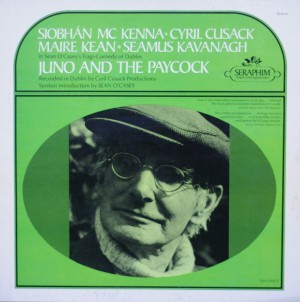
15. Cyril Cusack Productions – Juno and the Paycock 2LP – Seraphim, 1955 – $0.50
I have a small handful of literary LPs—Robert Frost reading poetry, Dylan Thomas reading poetry, Joseph Heller reading parts of Catch-22—all of which were released on Caedmon and purchased at similar prices from cheap bins. I’d gladly pick up quite a few of these albums at the right price—Camus, Pound, Faulkner, Cummings, Eliot, Auden—even though I still haven’t dropped the needle on any of the ones I already own. I learned during undergraduate that some poets are far, far better at reading their works than others and I’m not one to attend local poetry readings, but there’s a definite appeal to hearing the author recite his own work, especially when all of the authors mentioned have passed away. Caedmon is now part of HarperCollins Audio Books, but there’s a difference between hearing a sampling of work as you’ll find on an LP or hearing the entire book. I’ve never listened to an audio book in my life and, fingers crossed, never will. I’ve passed on complete performances of Shakespeare plays for that reason.
I made an exception on for this play, since it was fifty cents and I’ve put off reading any O’Casey for quite a while. I’m unsure of the official publishing date for this performance of Sean O’Casey’s play Juno and the Paycock, but the performance itself occurred in Dublin during June, 1955. It was definitely published after O’Casey’s death in 1964, since the liner notes mention it, but they fail to mention the date of release. Certainly a future candidate for Record Collection Reconciliation.
16. Jessica Bailiff – Live at VPRO Radio – Brainwashed, 2006 – $0.33
I must have seen the back of this single as I was hastily flipping through the cheap singles, since there’s no artist info on the front and Brainwashed in huge letters on the back. This acts as a positive barometer of its quality, since The Brain is usually on point in its record reviews, and gives away some vague idea of the aesthetics (Thrill Jockey/Kranky, avant-garde, possible post-[genre]). As it turns out, Bailiff now records for Kranky in a droning, somewhat post-rock-informed style of slowcore. I’m awfully proud of myself on this one, although if I’d noticed that she’d covered Flying Saucer Attack at the store I could have more accurately made those assumptions.
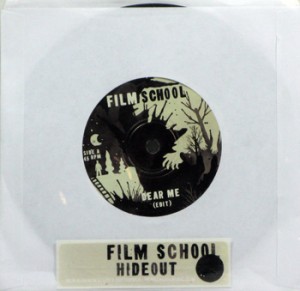
17. Film School – “Dear Me (Edit)” b/w “March Hike” – Beggars Banquet, 2007 – $0.33
Bradley’s Almanac mentions Film School on a semi-regular basis, but I’ve yet to see one of their shows or pick up one of their albums. (Sorry Brad.) I had downloaded Hideout, their 2007 album featuring “Dear Me,” but it’s one of those albums that I grabbed and skimmed a bit, enjoying said single but not making too deep into the album. Hideout apparently features a guest appearance from Colm Ó Cíosóig of My Bloody Valentine, which makes sense given the group’s mix of shoegazer tendencies and indie rock propulsion. This promotional single includes a non-album b-side and a sticker, the latter of which is headed for my big bag of stickers unlikely to ever be stuck to anything.
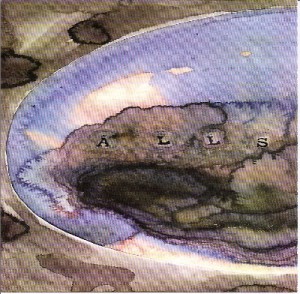
18. All Scars – “The Lineage of Time” +2 – Ace Fu, 1998 – $0.33
After seeing Ace Fu on the label, I checked out who was in All Scars in the liner notes, since I’d never heard of the group before. Guitarist James Canty comes with quite a bit of name recognition from his tenure in Nation of Ulysses, The Make-Up, Ted Leo and the Pharmacists, and French Toast and his relation to Fugazi drummer Brendan Canty (who drums for All Scars on a different release) and novelist Kevin Canty (one of Jon Mount’s favorites; I have Into the Great Wide Open sitting in the to-read queue above my desk). Brendan doesn’t appear here, but auxiliary Fugazi drummer/roadie Jerry Busher does. James Canty and Busher currently make up French Toast, who I recall seeing at the IDF in Urbana when they opened up for Q & Not U, although I can’t say I remember anything about their music.
I also bought a Reckless Records t-shirt designed by Jay Ryan. Wearing a record store t-shirt is prime evidence that you are a record-shopping degenerate, and I believe in truth in advertising.
|
|