Beginning my string of year- and decade-end content, here is my 2CD mix for 2009. (Yes, each of these will fit on a CD. Turn off the two-second gap in between songs.) You can download disc one here, and then download disc two here. Both ZIPs contain the iTunes album art. If either of these links goes down, let me know and I will repost. The track listings are below, which include links to individual YouTubes when available (click the song title), earlier writing on the album in question (click the album title), and additional commentary for albums or songs I haven’t beaten to death already (or will beat to death in the coming weeks in future entries of The Haul; quite a few of these are in the discussion queue).
I consider 2009 a strong year for music, especially considering that this mix doesn’t include many common picks for best songs or albums, i.e. Animal Collective, Grizzly Bear, Dirty Projectors, Phoenix, St. Vincent, Bat for Lashes, the XX. If you have a strong case for any of these bands, post it in the comment section and I may give them another shot.
Now for the music I do like.
101. Superchunk – “Learned to Surf” (3:50) – Leaves in the Gutter EP
Superchunk is apparently eschewing LPs and instead using EPs and singles as a feeder system for their future greatest hits compilation. I am fine with this development.
102. We Were Promised Jetpacks – “Quiet Little Voices” (4:18) – These Four Walls
103. Deerhunter – “Disappearing Ink” (2:22) – Rainwater Cassette Exchange EP
Just an EP and a single this year? You’re slacking, Deerhunter. (Yes, I know Atlas Sound released an album.)
104. Bill Callahan – “Eid Ma Clack Shaw” (4:15) – Sometimes I Wish We Were an Eagle
105. National Skyline – “Bloom (Single Edit)” (5:35) – Bloom EP
106. Systems Officer – “East” (3:36) – Underslept
Pinback’s Zach Smith puts out a solo album that sounds remarkably like Pinback, yet I enjoy this considerably more than the last few Pinback albums.
107. Clark – “Future Daniel” (4:03) – Totems Flare
108. J Dilla – “Mythsysizer” (1:44) – Jay Stay Paid
109. Hammer No More the Fingers – “Radiation” (4:04) – Looking for Bruce
For a band that reminds me of the all-too-forgettable Schatzi, I do enjoy Hammer No More the Fingers’ mix of Archers of Loaf indie rock and cleaner hooks. You can read more about Looking for Bruce at Built on a Weak Spot.
110. Wye Oak – “For Prayer” (3:49) – The Knot
I’m on the fence on whether Wye Oak’s sophomore release is better than its predecessor and if it’s one of the top 20 albums of the year. My tentative answers are “Yes” and “No” respectively. The guitar work is considerably better, as “For Prayer” demonstrates, but the album misses the occasional levity of If Children.
111. Wilco – “One Wing” (3:41) – Wilco (The Album)
Wilco’s semi-self-titled LP is unlikely to drop jaws, but it’s a nice halfway point between the dad rock of Sky Blue Sky and the more explicitly postmodern LPs that preceded it. (Halfway might be an exaggeration. It's still dad rock.) I enjoy a few of its songs a lot, “One Wing” in particular, but I rarely listen to the album as a whole.
112. Boston Spaceships – “The Town That's After Me” (1:16) – The Planets Are Busted
At first I was surprised Bob Pollard had released two separate full-lengths with Boston Spaceships (The Planets Are Busted and Zero to 99) this year, but then I remembered that he’s Bob Pollard and that’s par for the course. Both albums are consistently good and will eventually be grabbed on vinyl.
113. Rachel Grimes – “Starwhite” (1:24) – Book of Leaves
114. The Twilight Sad – “The Neighbours Can't Breathe” (5:24) – Forget the Night Ahead
115. Heroes of the Kingdom – “Disasterol” (2:52) – HOTK
116. Tortoise – “Prepare Your Coffin” (3:36) – Beacons of Ancestorship
Pitchfork talks about how Beacons of Ancestorship features more of the dancier side of Tortoise. I knew my issues with this album could be condensed into one sentence!
117. Deleted Scenes – “Ithaca” (4:09) – Birdseed Shirt
I still like the songs, but the mix of this record is criminal. They were so much better live. Have J Robbins do the whole thing next time. He has restraint.
118. Fuck Buttons – “The Lisbon Maru” (8:15) – Tarot Sport
119. Jesu – “Losing Streak” (6:13) – Opiate Sun
Justin Broadrick’s biggest problem is quantity over quality, so a four-track EP of actual songs is a welcome return to the days of Silver.
120. Tim Hecker – “Borderlands” (4:30) – An Imaginary Country
201. Future of the Left – “Arming Eritrea” (2:57) – Travels with Myself and Another
202. Part Chimp – “Sweet T” (3:05) – Thriller
203. Obits – “Widow of My Dreams” (4:21) – I Blame You
204. Raekwon – “House of Flying Daggers Ft Inspectah Deck, Ghostface, and Method Man” (3:51) – Only Built 4 Cuban Linx Pt. 2
It’s a Wu Tang reunion with J Dilla beats. Method Man is in rare form.
205. Dinosaur Jr. – “Your Weather” (3:05) – Farm
I recently mentioned my malaise with Farm, but that doesn’t extend to the Lou Barlow songs, which continue to be excellent.
206. Built to Spill – “Pat” (2:36) – There Is No Enemy
My first listen to There Is No Enemy sputtered out before the halfway mark, but there’s some surprisingly inspired material on the back half, especially “Pat” and “Done.” I admittedly need to give this album more of a chance.
207. CFCF – “Crystal Mines” (3:58) – Panesian Nights EP
CFCF’s full-length Continent features deeper hues of the 1980s electronic revival, but I enjoy the 8-bit feel of the EP more. Both are worth checking out.
208. A Place to Bury Strangers – “Exploding Head” (3:32) – Exploding Head
The guitars are straight shoegaze, but everything else sounds like 1986, which predates shoegaze. Strangely jarring.
209. Constants – “Genetics Like Chess Pieces” (5:45) – The Foundation, The Machine, The Ascension
210. Port-Royal – “Balding Generation (Jatun Remix)” (5:02) – Balding Generation EP
Port-Royal’s Dying in Time is two steps forward, two steps back from Afraid to Dance. For every new texture, there’s a recapitulation of the Moog melody from “Anya: Sehnsucht.” For every compelling vocal delivery (“Anna Ustinova”), there’s one that goes too far into electro-pop (“The Photoshopped Prince”). Yet despite these setbacks (and a bloated runtime), I’ve still listened to it an awful lot. “Balding Generation (Losing Hair as We Lose Hope)” is a highlight, but I prefer the stuttering glitch of Jatun’s remix, which condenses the song’s emotional crest into a more digestible package. Additionally, it got me excited for Jatun’s Blanket of Ash LP, which comes out in March.
211. Russian Circles – “Malko” (4:33) – Geneva
Russian Circles officially passed Pelican this year.
212. Polvo – “Beggar's Bowl” (4:59) – In Prism
213. Mastodon – “Divinations” (3:28) – Crack the Skye
214. Gordon Withers – “Defenestrations of Prague” (6:06) – Gordon Withers
215. Mission of Burma – “Comes Undone” (3:08) – The Sound The Speed The Light
216. Isis – “20 Minutes / 40 Years” (7:04) – Wavering Radiant
217. Last Days – “Life Support” (5:27) – The Safety of the North
218. The Life and Times – “The Politics of Driving” (5:01) – Tragic Boogie
Noted exclusions include Neko Case, Shannon Wright, Pelican, Sonic Youth, and the Flaming Lips. Who else did I miss?
|
117. Polvo – In Prism 2LP – Merge, 2009 – $24
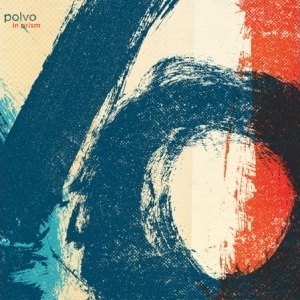
In Prism was by far my most anticipated album of 2009. It was a big enough surprise that Polvo played reunion shows last year, but when they unveiled a few new songs along with greatly revamped classics, I was stunned. I became hopeful that they’d record a new album, which soon enough became reality. By the time that “Beggar’s Bowl” appeared as an advance mp3, I was practically frothing at the mouth. Response to “Beggar’s Bowl” was a bit mixed—the general response was that it was a good song, but it didn’t feel Polvo enough—but I make no qualms about my affection. It’s a stomping, metallic update of their old sound. When I saw Polvo at Brooklyn Bowl in July, I didn't think I could wait much longer for In Prism, yet it would be a few more weeks for the full album to leak and until September 8 for the vinyl. It’s now January, which should be enough time for me to process In Prism.
I won’t make any bones about it: I love In Prism. Is it the best Polvo album? Probably not. Does it sound exactly like vintage Polvo? Not really. Is it far, far better than Shapes? Yes! The last question was the softball I’d lobbed to the album when I first heard it—be better than Shapes, come on, you can do it—but that’s selling In Prism wildly short. They’re simply not going to be the same band they were twelve years ago, which is entirely understandable given their musical experiences since then, the group’s new drummer, and their own ideas about not merely rehashing the past. The biggest difference between In Prism and vintage Polvo is the approach to their guitars. The queasy mid-fi chimes and swoops of Today’s Active Lifestyles and Exploded Drawing had been polished up a bit for Shapes, but the change is far more noticeable now. Guitarist Dave Brylawski even admits to playing in standard tunings on In Prism, which is shocking considering the bonkers alternate tunings they used for those earlier albums. The two big results of this change are 1. a diminished emphasis on those wonky guitar licks as foundations for their songs 2. a higher level of control for song structures and layering. It’s a give and take, but if these developments are the manifestation of the dreaded “maturity,” Polvo has aged marvelously.
The second biggest difference between In Prism and older Polvo albums is the split between Ash Bowie songs and Dave Brylawski songs. By This Eclipse and Shapes, Brylawski’s classic rock influences were readily apparent in his songs, but since Polvo’s original demise, Brylawski’s been keeping busy, most recently as the frontman for Black Taj. That band’s 2008 release Beyonder felt a lot like Brylawski’s later Polvo songs, with an occasional swagger added from being the primary frontman. I expected his songs on In Prism to be close to Black Taj songs, perhaps even repurposed riffs, but that’s not entirely the case. They don’t feel disconnected from the rest of the album, but they do maintain their own separate flavor. “D.C. Trails” ambles along like some of the mellower songs on Fugazi’s The Argument before concluding with some impressive guitar pyrotechnics. “City Birds” has a touch of a classic Polvo riff in its wandering, warbling lead guitar, which flirts with the vocal melody. “Dream Residue/Work” is the most sonically interesting of Brylawski’s songs, starting with an overdub-heavy introduction before hitting a push and pull between driving vocal melodies and moody guitar passages. With more energy, these songs would be highlights of the album, but as is, Brylawski’s laid-back vocal performance relegates these songs to solid album tracks.
Whereas Brylawski’s kept busy with Idyll Swords and Black Taj, Ash Bowie’s songwriting output has been minimal since Polvo’s initial split. His 2000 solo debut, Libraness’s Yesterday and Tomorrow’s Shells, was a cleaning-out-his-closet collection of sketches and demos, which was nice for obsessives but not particularly memorable. He’s spent time as a bassist for the BQs and a touring guitarist for the Fan Modine, but neither of those low-profile gigs even matches his previous stint as Helium’s bassist. This period of compositional silence (he’s supposedly close to finishing two Libraness albums, but I’ll believe that when I hear them) could’ve resulted in a rusty comeback, but Bowie’s five songs on In Prism are all exceptional, like he’d cashed in twelve years of inspiration to prove that he’s still got it. “Right the Relation” is the closest to classic Polvo, starting with a bent-note riff that leads into new drummer Brian Quast’s confident, muscular beat. It’s loaded with stops and starts, left-turn riff changes, nimble bass lines from Steve Popson, and a charged Bowie vocal performance. “I killed my creation / To right the relation” could easily apply to the reunion itself, and after that opening salvo, consider the relation righted.
Three more points about the previously discussed “Beggar’s Bowl”: First, even if Popson and Quast bit the thump-thump-thump bassline and drum breaks from Queen’s “Another One Bites the Dust,” it's a smart theft. Second, the lyrics and vocals update earlier Polvo dream narratives like “Fast Canoe” and “When Will You Die for the Last Time in My Dreams,” which was always my favorite style of Ash Bowie lyrics. Third, the dramatic build-up is still enthralling, and the seamless transition back to the main riff is impressive. Whether “Beggar’s Bowl” sounds like classic Polvo is irrelevant; if this song is the start of the next chapter, I can’t wait to read more.
“The Pedlar” is Bowie’s pop song on In Prism. It somehow turns a jittery guitar noodle into a workable lead, then rewards your patience with an atypically flowing chorus melody and layered synth flourishes in its outro. “The Pedlar” splits the difference between new Polvo and the catchier parts of Magic City-era Helium (dragons not included). I’m surprised it wasn’t released as a single, but it’s not 1994 anymore, so indie rock seven-inches aren’t compulsory.
As great as those three songs are, Bowie’s finest achievements on In Prism are its two longest songs, “Lucia” and “A Link in the Chain.” The former begins with a mournful, reserved introduction, with Bowie’s quivering voice reflecting on “The color of leaves on October trees” before a dramatic crash of guitar. For most bands, this shift from quiet to loud would be enough to carry the song, but at the 2:25 mark, “Lucia” changes course completely, pulling in dueling guitar leads, an enthusiastic Bowie vocal (“New moon / Shadows the sky / Open your eyes and tell them goodbye”) before hinting at the reticent chorus of “Lucia / I thought you were gone.” Midway through, the song splits the difference, building back up with hand percussion, cello, and Bowie’s ghostly titular evocation. Those knotty guitars keep pace, leading the song back to its original charging tempo. It’s a constant tug of war between these elements, but it never feels out of control. Unlike the aforementioned “When Will You Die” from Exploded Drawing, which rambled on far too long for my liking, “Lucia” earns every second of its 8:15 runtime. It’s not quite as long as the album closer, “A Link in the Chain,” which weighs in at 8:47, a ponderous exploration of Polvo’s new motifs. There’s Brylawski’s mid-tempo fetish, which Bowie anoits with restrained emotion on “Now with a gentle word / You send a chariot to send me home,” the woozy sonic burst of “Dream Residue/Work,” the emotional range of “Lucia,” and the layered guitars of “Beggar’s Bowl.” It’s essentially 1970s progressive rock in range and structure, but unlike the classic rock appropriations on Shapes, it always feels natural. The tides of guitar that conclude the song are as majestic as anything Polvo’s done before.
Comparing Polvo’s reformation to those of Mission of Burma and Dinosaur Jr. is surprisingly favorable for Polvo. Mission of Burma’s comeback has been remarkably rewarding (see below), equaling the energy and passion of their earlier work if not quite the same level of inspiration, although The Obliterati by no means lacks inspiration. Dinosaur Jr.’s comeback has been universally acclaimed and I certainly enjoyed Beyond, but I felt diminishing returns on Farm for the very reason people have praised it. Dinosaur Jr. is too comfortable playing what they think a classic Dinosaur Jr. song should sound like, even if the band dynamics nowadays are 180 degrees different from that classic era. Isn’t there an inherent laziness in choosing not to progress and instead giving listeners exactly what they expect? Polvo’s reunion shows demonstrated a welcome unwillingness to cede to those expectations, choosing to tear older songs apart and build them up anew, and In Prism features a similar view of the past. There are ties to their past sound—“Right the Relation,” especially—but most of the record takes new directions, new approaches, some of which you may very well not like as much as Exploded Drawing. If the crowning achievement of the new Dinosaur Jr. albums is that they sound like their vintage SST albums, doesn’t that imply that you still prefer You’re Living All Over Me and Bug? I do. Even with Mission of Burma, my fondness for The Obliterati never threatens to surpass my appreciation of Signals, Calls, and Marches or Vs. Even though I answered it in negative, my earlier question about whether In Prism is the best Polvo record still matters, since I had to debate it. In Prism might not equal Today’s Active Lifestyles or Cor Crane Secret, but five months in, I prefer it to Exploded Drawing, which is still quite an achievement. Who knows how these albums will rank in another twelve years.
118. Mission of Burma – “Innermost” b/w “… And Here It Comes” 7” – Matador, 2009 – $6
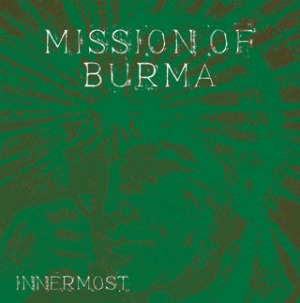
I had to double-check Matador’s web site to be sure that this double A-side single wasn’t an advanced shot from Burma’s upcoming The Speed The Sound The Light LP, since Burma did that series of one-sided twelve-inch records in advance of The Obliterati without including any new material. Sure enough, “Innermost” and “…And Here It Comes” will not appear on the album.
I do take issue with calling it a double A-side, however, since “…And Here It Comes” has all of the direction, melody, and momentum on this single. The chorus is as good as anything on The Obliterati, which seriously whets my appetite for the new album. “Innermost” feels downright wonky in comparison, pushed forward by a big bass sound and an off-tempo. Maybe it’ll grow on me, but for now I’ll keep the single on “…And Here It Comes.”
119. J Dilla – Donuts 2LP – Stones Throw, 2006 – $15
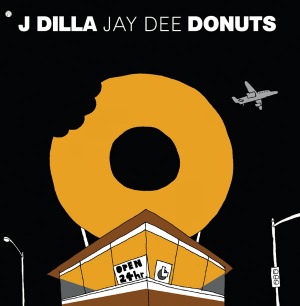
I went to Newbury Comics hoping that another big recent release—Raekwon’s Only Built 4 Cuban Linx… Pt II—would be pressed on vinyl and available for purchase, but that didn’t happen (and to my knowledge, still hasn’t). It did get me flipping through the hip-hop vinyl, in which I found J Dilla’s Donuts. I’d recently skimmed it and felt interested enough to merit the purchase, so I went with an increasingly rare impulse buy of a new LP.
If I paid more attention to hip-hop, I would’ve known about J Dilla (Jay Dee) years ago, since he was quite busy in the mid 1990s producing tracks for artists like the Pharcyde and A Tribe Called Quest. Instead, I only heard about his solo albums after the fact. J Dilla died of the blood disease TTP in 2006 at the age of 32, just three days after the release of Donuts. It’s the sort of life story that could cloud my judgment of an artist’s work, but Donuts would be surprisingly affecting even without its tragic context.
Donuts’ closest aesthetic match in my collection is DJ Shadow’s Endtroducing, another instrumental hip-hop album, but J Dilla takes an entirely different approach to sonics and song structures. Vocals and samples are chopped up and looped, creating a swirl of syllables that eliminates any need for an MC. Soul samples dominate the underbelly, but almost every song has some ingenious touch that turns my ear. The most arresting aspect of Donuts is its architecture. At 45 minutes and 31 songs, song ideas never overstay their welcome and frequently leave me wanting more. Yet it’s how these pieces fit together that truly impresses. It reminds me of Guided by Voices’ Bee Thousand and Alien Lanes in how most tracks make far more sense within the context of the whole, how tracks reflect upon each other, how a switch in tone or tempo makes one song sound that much better. One comment on Stylus’s review of Donuts mentioned how the reviewer failed to mention a single song title, but that makes complete sense to me. Directing a listener to sample one song in the middle of the album defeats the purpose.
31 short songs without structural doubling or tripling is a veritable pupu platter of production treatments, so it’s no surprise that most tracks from Donuts have been utilized by MCs on their albums and mix tapes. Yet right now, I’m not itching to hear the rapped-over versions. No slight to any MC choosing one of these beats—good taste, at least—but being able to hear these songs once and figure out more of the overall puzzle is a more enticing proposition.
|
|
Jeff Garber’s been clearing the National Skyline vaults this year with a series of EPs, proving that the eight years between This = Everything and Bliss & Death (which I covered here and here) weren’t comprised solely of Year of the Rabbit, the Joy Circuit, and National Skyline’s The Last Day EP. These EP tracks are culled from a cast-aside National Skyline album called Faux Evil, a brief foray as the Black Swan, and b-sides from the Bliss & Death sessions. I anticipate the third EP to be more of the same, but he may very well be working on some all-new material for that one. [Editor’s note: No idea if this third EP will ever come into existence.]
The barometer for success on both of these EPs is straightforward: the closer to Bliss & Death and the further away from The Last Day the better. I’m not expecting anything like the National Skyline EP or This = Everything, but I don’t want to relive the yearning modern rock of “The Last Day.”
As I mentioned before, I hate buying MP3s and would’ve bought physical copies of these EPs long before their digital counterparts, but I had $10 of Amazon MP3 store credit to spend and only one logical use. If Garber decides to press all of this stuff on vinyl I’ll gladly fork over the money for it (hint hint).
115. National Skyline – Bloom EP MP3s – Adventure Broadcasting, 2009 – $4.99
With two alternate versions of songs from Bliss & Death, the Bloom EP feels like a standard CD5 from the mid 1990s. The title track gets a single edit, done for its video, which will make it easier to slot into my year-end mix, but I probably could’ve done a reasonable edit on my own. “Edge of the World” appears in an acoustic take, which is pleasant but hardly necessary. So the EP comes down to its three unreleased songs. You can read Garber’s origins for the songs here, but it’s worth making those comments a bit more transparent.
“Gravity (I-IV)” is the clear winner, a nearly eight-minute-long take on shoegaze-informed 1990s rock that Garber deemed too heavy for Bliss & Death. While I think the 1990s part would make “Gravity” stick out on the album more than its comparative heft, it’s a nice venture into Fantastic Planet-era Failure and probably more interesting than anything that came out of Garber’s collaboration with Ken Andrews himself, Year of the Rabbit. (Don’t expect me to return to that album anytime soon.)
“Lights Out” and “Silence” are more mixed. The former was deemed too poppy for the album (accurate) and ultimately comes off as a more musically interesting version of “The Last Day.” Trite lyrics like “Wearing all the things that nobody wears / Whoa-oh” don’t do Garber any favors, but the post-U2 guitar textures are fine. “Silence” starts out as a muffled piano ballad before bursting out multi-tracked guitar leads. It ends with a return to the minimal aesthetic of the intro, but I’d prefer if he’d stuck with that style the whole song.
116. National Skyline – Look into My Eyes EP MP3s – Adventure Broadcasting, 2009 – $4.99
Look into My Eyes features four new songs and one alternate take of a Bliss & Death song. The latter is a drum-programming-happy version of “Glimmer,” which sounds more like This = Everything but the aesthetic doesn’t quite fit the song.
The rest of Look into My Eyes stresses something that first came to me regarding Bliss & Death: the outros are almost always the most interesting part of the song. The title track is a zero-sum game, as negilible modern rock guitars and trite lyrics are balanaced out by intriguing outro and some better vocal melodies. “Hope?” starts with more of the mid-tempo semi-acoustic foundation from much of Bliss and Death, but its extended outro is a great payoff, layering synth trumpets, a focused guitar arpeggio, hand claps, and strummed acoustics with aplomb. It could have easily been on the LP. The two-minute “In Flight Movie” bucks the trend by being a short instrumental, but I could argue that it’s an outro waiting to happen. Finally, “Someone Else’s Dream” technically kicks in during the bridge, but the second half of the song is so much better than the relatively bland beginning.
I have to wonder if Garber salvaged these songs by tacking on the interesting parts. While that may sound cynical, I look at it this way: imagine how good his next LP will be if he starts with the outros.
|
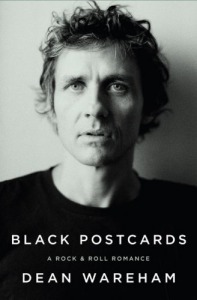
Shortly after its March 2008 release, my friend Scott recommended Dean Wareham’s Black Postcards, his memoir about growing up in New Zealand and New York, getting into music, and recording and touring with both Galaxie 500 and Luna. The only hold-up was that I was almost completely unfamiliar with Wareham’s music, despite being inundated with references to Galaxie 500 when I was getting into second generation slow-core bands like Codeine, Rex, and Low. When I found a remainder copy of Black Postcards, I figured, “What the hell,” snapped it up, and read it over a few days.
Black Postcards is an entertaining read, even if Wareham isn’t always the most likeable narrator. The early sections on growing up in New York and getting into punk rock and post-punk were the most appealing, but I also enjoyed his trip up to Boston to attend college at Harvard and the formation of his first “real” band, the slow-core forefathers Galaxie 500. His tours of duty with Galaxie 500 and Luna provide excellent inside information on what it was like to be an indie rock band in the late 1980s and a struggling major label band in the mid 1990s, but they also paint an occasionally unflattering picture of Wareham as a motivated, unbending band leader. Wareham can’t disguise how his personality clashes with in-band couple Damon and Naomi led to the break-up of Galaxie 500. He also can’t gloss over how his on-tour affair with new Luna bassist Britta Phillips (once the singing voice of 1980s cartoon singer Jem) broke up his marriage with the mother of his child, which leads to some painful recollections of his life around the time of his divorce. Wareham’s glib sense of humor provides some levity during this part of the book, but tabloid fodder rock and roll cliché of that event is difficult to ignore.
If you’re interested in the three distinct era of rock music covered, Black Postcards is worth a read, but knowing the songs he discusses ahead of time would be a help for the Galaxie 500 and Luna specific sections. My recourse for this knowledge gap was to quickly run out and grab On Fire, the Wareham album that carries the most critical acclaim and came off the best within Black Postcards.
114. Galaxie 500 – On Fire LP – 20 20 20, 2009 [1989] – $18
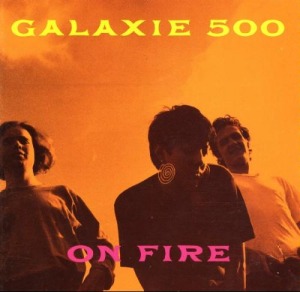
I’ve dabbled with Galaxie 500 and Luna before, specifically this album for an incarnation of iPod Chicanery, but the only thing I actually owned from either group was the one-track promotional single for “Chinatown.” (Side note: Is any format more loathsome than the one-track promotional single? I know I have a few of these floating around from my used CD bin days, and every time I was excited enough about a dollar CD not to look at the songs included until I got home. Potential match: the four song promotional single, which includes the album mix, the single mix, and two call-out hooks.) The Galaxie 500 template is relatively simple: loping tempos, reaching, falsetto vocals, low-key lyrics, vaguely autobiographical lyrics, lightly psychedelic guitar solos, and a general debt to the Velvet Underground. That group is a notable blind spot for me, but I still know a mid-tempo Velvet Underground song when I hear one, and Galaxie 500’s songs aren’t usually that far off from it. The best element is Wareham’s guitar work; he fills a lot of space with relatively few chords, treating the canvas with light brush strokes and muted reverb.
On Fire is a nice addition to my Sunday afternoon listening pile, but two things keep me from pulling it out more often and/or buying more of Wareham’s music. First, Wareham’s voice is fine when he isn’t reaching too much, but when his falsetto begins to crack on “Strange,” I long for the Naomi-fronted “Another Day,” which comes much closer to traditional lilting dream pop vocals. (If Black Postcards taught me anything, it’s that Wareham would never cede control of the vocals for fear of losing his stranglehold on the band.) Wareham’s vocals are likely an acquired taste, but I’ve listened to On Fire enough times to accept that I’m never going to love them. Second—and this point will either sound harsh or long-overdue—Galaxie 500 is not an exciting band. Like most mid-tempo slow-core, the threat of boredom is strong, and after a side of On Fire, I’m just about there. Having a vague sense of Wareham’s typical sound while reading Black Postcards made me scratch my head about his major label deal. While I can’t deny that there were some leftfield hit singles in the 1990s alternative scene (Mazzy Star’s “Fade into You” might be the closest stylistic kin), it’s hard to imagine one of his songs becoming a hit in anything other than adult alternative, which isn’t the easiest format to break a song. Potentially irritable vocals? Not remotely exciting? Let’s sign them right now!
|
|
A late-summer trip to the greater Gloucester area justified by my wife’s trip to a nearby craft fair. I won’t complain.
112. Miles Davis – In a Silent Way LP – Columbia, 1969 – $5.50
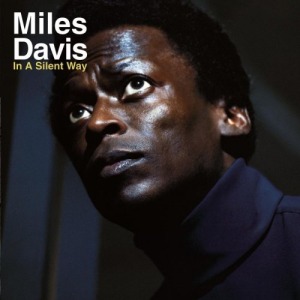
It’s unclear why I didn’t connect the dots and realize that yes, I enjoy the fusion-era Miles Davis that I’ve heard, and yes, I really enjoy the fusion-era Herbie Hancock that I’ve heard, so picking up In a Silent Way, which started Davis’s fusion era and on which Hancock plays electric piano, was just too logical. The answer is likely that Davis’s discography is downright overwhelming. Beyond some of the obvious touchstones, like the birth-issued copy of Kind of Blue, the fusion staple Bitches Brew, and the light, folk-influenced Sketches of Spain, it’s easy to get lost in such a sea of albums. I’m profoundly lucky that I washed up on In a Silent Way, since it’s filled me with a renewed vigor for the early days of jazz fusion.
What strikes me the most about In a Silent Way is how well each side flows, which is a credit to Davis and producer Teo Macero, who chopped up the initial recordings into moe manageable structures. Each side still has a definite flavor throughout, but the imposed structure keeps the soloing on point. The electric piano of Hancock, Joe Zawinul, and Chick Corea and the guitar of John McLaughlin create a constantly shifting foundation for each piece. Tony Williams’ drumming remains minimal throughout, which prevents the album from sounding too “rock,” but it also contributes to the drifting atmosphere of the LP.
I’ve seen a few mentions of this album’s impact on ambient music (Brian Eno named the instrumental “Zawinul” on Another Green World after this album’s organist, Joe Zawinul), and having just listened to a few Eno albums in the past few days, I can see some similarities. There’s too much going on, too much structure, too many solos to say that it’s anything more than an influence, but during the build-up of “In a Silent Way,” it’s hard to deny the similarity in atmosphere.
113. Cluster & Brian Eno– Old Land LP – Relativity, 1985 – $9.50
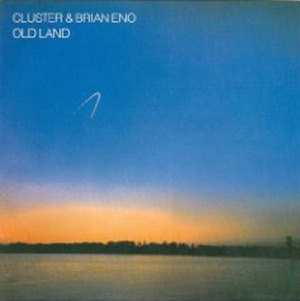
A compilation of the two earlier collaborations between Brian Eno and German experimental/ambient/electronic group Cluster, Old Land features songs from their 1977 release Cluster & Eno and their 1978 release After the Heat. Given that I’ll probably end up buying both of those releases down the line, this purchase was likely a mistake, but I needed my Eno fix.
Old Land does a remarkably good job with its sequencing; it feels like a well-thought out album, not a hastily put-together cash-in. Side A is heavier on both synths and Eno’s vocals, side B pulls things back for more of a somber, lonely feel. “Broken Head” sounds like the lurking futuristic background music of a mid-1980s science fiction film until Eno’s typically bizarre lyrics add another strange layer to the mix. “The Belldog” has a twinkling, descending melody, but it’s Eno’s lyrics that grabbed my attention: “I held the levers that guided the signals to the radio / But the words I receive, random code, broken fragments from before.” The song peaks with “I lose control and at last I am part of the machinery,” which involves such a bizarre joy for being one with technology that makes perfect sense for Eno. The introduction of strings in the song’s final minute is wonderful. The backwards vocals in “Tzima N’arki” are both beautiful and alienating, which is the best description for side A. Side B features a couple of lovely moments in the piano of “Warmut” and the strings of “Old Land.” I expect to play side B more often, since it’s among the finer sides of background music in Eno’s catalog, but “The Belldog” ranks among his best vocal tracks.
|
111. Killing Joke – Almost Red LP – Island, 1979 – $12
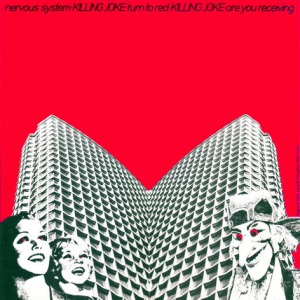
Considering that I have nineteen other Killing Joke releases, it’s a minor miracle when I stumble across something that appeals to me beyond a vinyl-doubling itch or pure cover art yearning. I have two of these songs on compilations—“Turn to Red” is on Laugh? I Nearly Bought One!, their 1992 best-of compilation which I found helpful at the time of purchase but now looks downright curious (Okay, the live version of “Pssyche” from the Ha! EP is an inspired choice, but nothing from Fire Dances? No “Adorations” (the linked official music video is a hysterically funny reason why) from Brighter than a Thousand Suns? Half of What’s This For…!?), and “Are You Receiving” is on Wilful Days, a 1995 odds-and-sods compilation that has a few stray highlights (the title track) and too many extended dance takes (if [x] is greater than zero, then…)—but “Almost Red” and “Nervous System” were somehow unfamiliar. Its iconic cover art was adapted for the later compilation, but the picture looks more menacing in black, white, and red than colorized with yellows and greens.
It’s striking how different this EP is from their 1980 self-titled LP and the eleven other full-lengths in their discography. There are elements in every song that were handed down to future generations of Killing Joke tracks, but its 1979 release date seems crucially important, since they grapple with trends like disco, punk, prog, and dub without a true commitment to any of them. To put it more clearly, Almost Red is prototypical post-punk from a group I usually associated with the beginnings of industrial. The spare “Almost Red” features a repetitive electronic lead and a cymbal-heavy disco beat. “Nervous System” takes a rarely used mid-tempo pace and relies on an almost funky bassline. “Are You Receiving” couples a charging guitar line somewhat reminiscent of the Ramones with a 1970s prog organ line. “Turn to Red” ends the EP with a comparatively amorphous structure recalling What’s This For…!, tossing that organ, some repetitive slogan shouts, and dub influences into the stew before ending on a ghostly locked groove.
So what’s missing? Foremost is Jaz Coleman’s aggressive, threatening presence; aside from one mid-song rant reminiscent of “Age of Greed” from Extremities, Dirt, and Various Repressed Emotions, he doesn’t take a strangehold on these songs. The lack of abrasive guitar noise is the big gap between this EP and Killing Joke, the disco-oriented drumming the gap between this EP and the tribal thump of “Wardance” and What’s This For…!. The lack of these signature elements is curious, but not damning; these four songs are more interesting, if not throat-grabbingly compelling, than I’d expected.
Almost Red is perhaps most interesting for the path not chosen. Killing Joke could have logically tightened up this sound without throwing away most of the post-punk motifs and been an interesting, timely band. That would’ve been the safe route. But they’re a far more interesting band on Killing Joke and What’s This For…! because those albums are so firmly against type and free of the clear late 1970s touchstones found here.
|
110. Steve Reich – Octet / Music for a Large Ensemble / Violin Phase LP – ECM, 1980 – $10
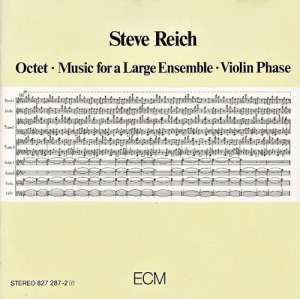
I first heard Steve Reich during my final year of graduate school, or early 2007 for those of you who don’t keep track of things based on events in my personal life. I can’t remember if there was a specific recommendation that I followed or just a general sense of “I like Philip Glass, Steve Reich seems to be the next logical step” afoot after getting the former’s Glassworks from the Got Books Charity Sale, but Music for 18 Musicians (view linked YouTube of the first ten minutes for a taste) was immediately impressive. It’s telling that I rarely go back to Glassworks now, since I so greatly prefer Reich’s Music for 18 Musicians, Six Marimbas, and Octet / Music for a Large Ensemble / Violin Phase. It’s remarkably flexible music: it helped me maintain focus while writing the final few academic papers of my life (I presume); it’s fast-paced enough for driving music (“Violin Phase” excluded); and it’s detailed enough for general sitting and listening. It’s also unlikely to offend anyone, a consideration that I occasionally recognize.
Returning to the specific genre tag, it’s difficult to reconcile the interlocked layers of “Octet” or “Music for a Large Ensemble” with my preexisting notions of minimalism. There’s certainly a reduction at work here; each repeated phrase is relatively short and the larger changes in the music come from the gradual shifts of each layer. Yet unlike something like Arvo Pärt’s Alina, which takes minimal in a more literal, barren meaning, Reich’s compositions never feel spartan. They’re both minimal and buzzing with life. Even on a piece like “Violin Phase,” which contains only three phased violin performances, there are no moments of pause, no breaks from the action.
If I had to choose a favorite pieces from this set, it’s “Octet.” Whereas the individual instruments in “Music for a Large Ensemble” are more locked into the piece’s overall structure, individual performances stand out in “Octet.” Whether it’s the droning cello lines anchoring the piece, the intricate bass clarinet parts that taking focus every few minutes, or the melodic dominance of the flutes, the increased separation between the instruments helps separate “Octet” from both Music for 18 Musicians and “Music for a Large Ensemble.” Does that mean that I’d recommend starting with this LP before Music for 18 Musicians? No, but it’s a nice second choice.
Wait! If you’re not interested in hunting down out-of-print vinyl, Reich’s Phases box set is a great deal. $35 (or less) for five discs, it contains newer recordings of Music for 18 Musicians, Drumming, and “Octet” (presented here as “Eight Lines”), and the original recordings of Desert Music, Tehillim and Different Trains / Electric Counterpoint (the latter with Pat Metheny, although both are excellent), among many other pieces. It’s hard to imagine a better gateway to Reich’s various approaches, even if it’s not comprehensive.
|
|
I hadn’t planned on doing any record shopping during a one-day trip to Manhattan, but when the free Polvo/Obits show at the Seaport was moved over to the Brooklyn Bowl, I found myself strolling through Williamsburg with time to kill. I briefly visited Academy Records’ Manhattan location last fall during a similar day trip to NYC, but I don’t remember that location being anywhere near as stocked as this one. (If memory serves, I only purchased a copy of Faith No More’s The Real Thing for $5 on LP.) Perhaps bolstered by hipsters selling their LP collections for a given night’s PBR intake, Academy in Williamsburg had a solid array of vinyl, especially in the just-in bin. Pricing was mixed; bigger names like the Smiths, the Clash, and Joy Division tended to be overpriced, less iconic artists like those I purchased were reasonable, and lower profile records were downright cheap. I anticipate being down in the city (growing up a few hours north of NYC means that “the city” will always apply to New York, even though I’ve spent considerably more time in Chicago and currently live near Boston) a few times over the fall, so I’ll be sure to spend more time combing through their used bins for Adlai Stevenson speech compilation LPs.
I’d passed on a copy of Depths at In Your Ear in Harvard Square for $20 a few weeks back, so being able to get both of these LPs for that price seemed like a logical compromise. I put aside Squirrel Bait, Caesura, and Sonora Pine LPs, so if you’re looking for a copy of Sonora Pine II on vinyl, they should still have two.
108. Silkworm - Lifestyle LP - Touch and Go, 2000 - $8
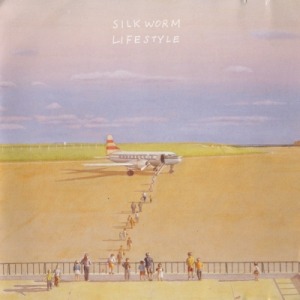
Although I’ve made no secret of my affinity for Silkworm (or Midgett and Cohen’s current outfit, the similarly excellent Bottomless Pit), I suspect that I might have given Lifestyle the short shrift on this website. Placing 2004’s It’ll Be Cool in the upper reaches of my top 40 of 2000 through 2004 wasn’t a regrettable decision on its own regard, since that album certainly holds up and contains some of their finest songs (“Don’t Look Back,” “Xian Undertaker,” “Shitty Little Yacht”), but Lifestyle deserves similar consideration, if not a higher overall placement. (Especially since Do Make Say Think got three albums in the top fifteen.) I’ll contend that all of the post-Phelps Silkworm albums are a touch unassuming, since their style of power trio, classic-rock-informed indie rock preceded more hip applications of that era. Lacking the retro orientation and NYC swagger of the Strokes and the boozy Replacements homage of every Hold Steady song, the musical and lyrical sincerity of Lifestyle will never be mistaken for sexy, but classic? I’ll vouch for that.
Lifestyle is the most explicit classic rock album in Silkworm’s discography and not just because of the cover of the Faces’ “Ooh La La” that appears on its back-end. These twelve songs are instantly digestible and permanently resonant for a number of reasons—short running times, yearning melodies, Tim Midgett’s small town, blue collar lyrics—but foremost is the comparatively muted musical palette. It sounds like it could have come out in 1970. Lifestyle doesn’t feature any of Firewater’s dramatic guitar solos, doesn’t creep into the spacious confines of Developer’s quieter moments, doesn’t venture into It’ll Be Cool’s instrumental variety. (I won’t bother to compare it to the grunge-era bluster of the Phelps albums.) The album title is particularly a propos, since these songs feel so comfortable in their skin. Between Andy Cohen’s evocation of Jean-Luc Godard’s Contempt and Tim Midgett’s strangely romantic acoustic ode “Bones” (“We’re all gonna live a long time before we go”), Lifestyle touches upon the past without being limited to it. Side A outshines side B by a touch, since it features Cohen’s humorously touching “When you run into the night / Ain’t you ever been alone in your life? / Motorhead is coming for you / You gotta treat the new guy right” chorus in “Treat the New Guy Right” and Midgett’s affecting “Time’s passed / I’m becoming a man” realization in his Missoula memoir “Plain,” but listening to the album again dispels my notion that it suffers from a Developer-styled frontloading. All of these songs are above average and most are downright great. Its musical restraint is perhaps antithetical to the indulgences typical to 1970s classic rock, but Lifestyle simply feels classic in a way that few contemporary albums do. I can’t see it becoming dated in ten, twenty, or thirty years. I can only see it getting better and better.
109. Windy & Carl - Depths 2LP – Kranky, 1998 - $12
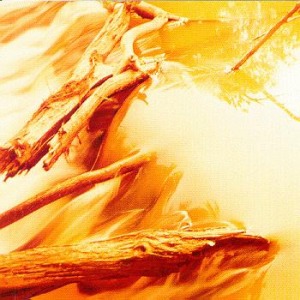
I enjoy Windy & Carl, but my existing stock of 1997’s Antarctica EP (their contribution to Darla’s Bliss Out Series) and 2001’s clearer Consciousness seemed sufficient for the last eight years. The epic title track of Antarctica garnered 90% of my listens, so why mess with a good thing? Yet given my increasing appreciation for ambient releases from Brian Eno, Last Days, and Kranky standbys like Stars of the Lid, Labradford, and the Dead Texan, I figured it was time to revisit W&C’s guitar-based drones, especially the heralded Depths.
I certainly got my money’s worth with Depths, with three songs stretching past thirteen minutes and all seven lasting for almost seventy. Two of the shorter songs, “Set Adrift” and “The Silent Ocean,” stand out, with the former’s guitar tones achieving supreme bliss and the latter’s submerged vocal melodies calling for excavation. I could do without all fifteen minutes of “Aquatica,” since it lacks textures interesting enough to merit its runtime, but the other six tracks certainly accomplish their intended aim of thoroughly zoning me out. I prefer the wavering, gauzy sonics found here over the occasionally crystal clear separation of Consciousness; while it’s nice to know what Windy and/or Carl is doing in a given song, I’d prefer not to be confronted with the specifics.
|
|
I put off getting Clark’s Growls Garden EP, which has an excellent Vertigo-inspired cover, because aside from the title track and the blissfully ambient “Farewell Mining Town,” too much of the EP felt like filler. Fortunately, Totems Flare includes “Growls Garden,” so the EP can go further down my list of eventual purchases.
107. Clark – Totems Flare 2LP – Warp, 2009 – $20
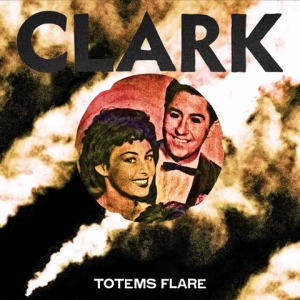
Totems Flare has received mixed reviews, but I view it as a return to form after 2008’s Turning Dragon. I use “return to form” here with a very specific meaning. Turning Dragon wasn’t a bad album, but its up-front blasts of techno valued aggression too highly, losing the range of the exceptional Body Riddle. If I enjoyed that style of electronic music more, I’d likely recommend it, but it simply didn’t have what appealed to me about Empty the Bones of You and Body Riddle. Totems Flare does. It returns to the range of Body Riddle, but brings the driving synth lines from Turning Dragon and a surprising amount of vocals along. (This paragraph would be much clearer as a graph.)
Those vocals are the love-it-or-leave-it aspect of Totems Flare. On “Growls Garden,” they switch between a gothic voiceover and a calm singing voice; on “Rainbow Voodoo” they get precariously close to electro-jive; on “Look into the Heart Now” they’re masked by vocoder; on “Talis” and “Suns of Temper” they’re delivered with a surprising level of emotional resignation. The distance between these deliveries is enormous and so is my response to them; I love the vocals on “Talis,” begrudgingly endure them on “Rainbow Voodoo,” and barely notice them on “Look into the Heart Now.” Yet a big reason why I enjoyed Body Riddle so much is the unpredictability of its structure and sonics. Can I fault Clark for taking the same approach for his vocals?
The music on Totems Flare is full of left turns as well. I was all ready to declare side B, which contains “Look into the Heart Now,” the creepy funhouse music of “Luxman Furs,” and the revolving electronic door of “Totem Crackerjack,” a future skip, but all three of these songs change course in interesting, unexpected ways. The final minute of “Totem Crackerjack” alone goes from pulsing electronic resolve to ambient outro to echoing piano close. The constant melodic escalation/acceleration in “Future Daniel” is a highlight of Totems Flare, but even that song spends 30 seconds of its runtime dissolving into a pale reflection of itself. The acoustic guitar closer “Absence” might be the biggest surprise on the album, since, as its title indicates, there are no beats, no synthesizers, no vocals.
Totems Flare isn’t a perfect album, nor does it surpass Body Riddle for my favorite Clark release. (Editor's note 10/3/2010: It sure has.) Yet it’s constantly challenging, constantly interesting. I suspect that I’d ignored side B in part because of its lack of prominent vocals, since negotiating with these elements is a huge part of the Clark listening experience. I’d love to successfully predict where he’ll go next, but like Chris Jeely of Accelera Deck, there’s almost no limit to the possibilities.
|
|
One thing I love about T.T. the Bear’s: they post set times on the calendar page of their web site. Seven or eight years ago I would’ve been to the venue early, ready to get my money’s worth and see every band, but as I approach 30, I just want to see the band I care about and go home. Sure, I’ll see the occasional opener, since it’s easy enough to listen to a minute of an unknown opener’s song on MySpace and decide if they’re worth an hour of my time, but I’ve stood through enough excruciatingly boring/derivative/awful bands in my life to gladly accept any way out of that situation. Hell, for this show I didn’t even have to stay out too late, since New Zealand garage rockers the Datsuns headlined, and I was all too happy missing out on their set. Crotchety old man night!
As I mentioned in my review of Future of the Left’s Travels with Myself or Another, I’m regrettably late to the Andy Falkous party, which means that he’s going to spear my back with his headstock, bellow some foul things about immediate family members, and use my name as evidence in a future song. Not that I’d mind any of that, since Mclusky and Future of the Left are founded upon an intoxicating combination of dark humor and impending violence, and the latter’s tendency to use real names in their songs might earn me indie rock infamy.
Future of the Left’s set initially stumbled due to sound issues during personal favorite “Arming Eritrea,” but they soon plowed through an excellent set of songs from both LPs. “Land of My Formers” was a particular highlight, but the periodic bursts of incoherent noise coming from Falco’s mouth can make any song memorable.
A brief anecdote about the crowd: to little surprise, a Future of the Left show is a total sausage party, even devolving into a mosh pit later in the set. Yet the highlight came from one of the few ladies in attendance. A couple was standing near me, and it was painfully obvious that he’d probably said something like “Hey you’ll love this band! They’re right up your alley!” knowing full well they’re not or “But I went to see the Great Lake Swimmers with you!” resulting in his girlfriend being dragged along. Her pouting faces culminated in a great under-the-breath comment: after Andy Falkous made another humorous, likely insulting aside between songs, she scoffed, “You know, not everything is funny when you have an accent!” It’s too bad she didn’t say it loud enough for Falkous to hear, or perhaps good for her boyfriend, whose shame would’ve filled T.T.’s.
106. Future of the Left – Curses LP – Too Pure, 2007 – $15

As great as Travels with Myself and Another is, I suspect that part of the critical fondness for it stems from sleeping on Curses, a great album on its own accord. Switching from the departed Mclusky to his new group, Future of the Left, Andy Falkous must’ve suffered through brand development and recognition issues. “You mean there are keyboards now? And the name is different?” Beyond those betrayals, the differences between Mclusky and FOTL are relatively minor: drummer Jack Eggleston remains, but former Jarcrew bassist Kelson Mathia takes over for Jonathan Chapple, who formed Shooting at Unarmed Men. The songs are cleaner and tighter. That’s about it. If you enjoyed the snotty indie punk of Mclusky and Falkous’s sense of humor, you’re bound to like Future of the Left.
Curses starts off with the grinding, abrasive “The Lord Hates a Coward,” which contains both a choice non-sequitur (“She’s got a lot of pickled onions / Hanging from her thighs”) and a potentially inflammatory chant of “Violence she solved everything.” Single “Manchasm” uses that dreaded keyboard in a tale about Welsh recording studio owner Mark Foley, which changes midway to embrace a vocal round of “Colin is a pussy / A very pretty pussy cat.” “Suddenly It’s a Folk Song” turns a woozy keyboard part into a surprisingly melodic admission that “Suddenly folk songs are part of our future.” “Kept by Bees” thumps along with vocals and drums only for most of its runtime, a minimalistic songwriting trick that sounds a bit like an evil Broadway song. “Adeadenemyalwayssmellsgood” is a highlight of their live set and sounds equally enormous here, starting with a layered “Roll on…” and swooping in for the kill with a Kelson Mathias scream.
Curses isn’t quite as consistent as Travels with Myself and Another—“Fuck the Country Alliance” plods too much, “Team : Seed” would be better off as a b-side, and the aptly titled piano closer “The Contrarian” is more of a temporary amusement—but I’ve gone back to it countless times, so these missteps aren't too damaging. If you enjoy Mclusky Do Dallas or Future of the Left’s Travels, there’s no reason to avoid this album.
|
|
