56. Dr. Billy James Hargis - The United Nations Hoax - Key Records, 1962
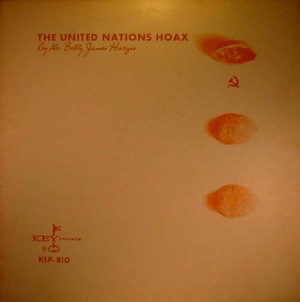
Why I Bought It: There’s really no doubt as to what will be on this LP—anti-communist rhetoric, check—and the cover is vague enough to be foreboding, so there goes a dollar. I didn’t know who Dr. Billy James Hargis was when I bought it, but it’s hardly a surprise that “the world’s leading anti-communist evangelist” was also one of the founders of the Religious Right. If nothing else, this record could be filed away with a number of other “Party’s over, folks, let’s get out of here” curiosities.
Verdict: This “fact-packed album” (thanks, Matt Cvetic, former FBI counterspy and liner-note scribe) is just as infuriating as I expected. Hargis, as paraphrased so effectively by Cvetic, argues that the United Nations is a “Soviet-controlled predatory monster—housed, clothed, and fed by those it plans to consume... the American people!” This alarmism isn’t backed up by anything other than basic facts about the constituency of the United Nations at the time, so he’s not rolling out evidence of damning policy change. I’m tempted to type out the liner notes, since they’re loaded with overblown rhetoric, but I’m sure you get the drift. I admittedly only listened to one side of this LP, which is against my usual “suffer through all of it” policy, but it’s not like Hargis is likely to save his hottest tracks for the flip.
I’m sure this issue will come up again with a few more novelty LPs, but political rantings like The United Nations Hoax no longer garner vinyl pressings thanks to the rise of television (FoxNews), the internet, and specifically podcasts. It would be rather amusing if Keith Olbermann took advantage of the recent resurgence in vinyl (and the liberal leaning I presume accompanies it) by releasing a gatefold pressing of his special comments. Maybe Ben Affleck could write the liner notes.
57. New Wet Kojak - Extended Tongue and Miramax - Akashic, 1997
Why I Bought It: My rabid Girls Against Boys fandom was coming to a fever pitch around the time of New Wet Kojak’s second LP, 1997’s Nasty International. The Touch and Go catalog called it “4:00 am basement lounge,” which is an astonishingly accurate assessment of the music’s creation and its designated listening environment. Subtract GVSB’s rhythmic drive, add some skronking horns, turn Scott McCloud’s vocals down to backroom whispers, and you have a New Wet Kojak song. It’s a self-indulgent mess, but hey, it’s a side project.
Their self-titled debut was decidedly half-baked, but Nasty International felt almost like a real album, if not a particularly memorable one. Switching between leering, mid-tempo rock songs and slow-grind ballads, Scott McCloud and Johnny Temple found a new formula to exploit. Following GVSB’s disappointing major label debut, the grossly over-produced Freak*on*ica, New Wet Kojak’s next album, 2000’s Do Things, perfected McCloud’s late-night come-ons and sloganeering. Sometimes it sounded great (4:00 am), sometimes I was embarrassed to listen to it (daytime), sometimes lines like “Don’t miss sexy fun! Do things!” became ironic catch phrases during road trips, but it felt like a real band. Too much like a real band, in fact.
By this point, Girls Against Boys was frustrated by the aftermath of their Geffen deal and slowing down their pace. They did a few soundtracks (the New Order-esque “One Dose of Truth” from the Series 7 OST being the overwhelming highlight) and came back to the independent life with 2002’s Jade Tree outing You Can’t Fight What You Can’t See, a nice return to formula, but the writing was on the wall. Underlining that writing was how professional New Wet Kojak’s next two releases sounded, the 2001 No. 4 EP and the 2003 This Is the Glamorous LP. No longer did the group evoke “4:00 am basement lounge.” It was a strange, unbecoming evolution, since the more New Wet Kojak tried to rock, the more I longed for GVSB.
GVSB’s been on permanent hiatus since 2003, coming out of hiding only to perform a few key gigs. New Wet Kojak must’ve suffered the same fate shortly thereafter, but I simply never cared enough to note their demise.
This particular LP is a fine document of that malaise. A limited edition 12” with extended cuts of two New Wet Kojak songs should be marked directly to a GVSB fanboy like myself, but I waited until Reckless marked it down to a few bucks before grabbing it. By that point, New Wet Kojak had gone professional and I’d stopped listening to their earlier records, so this LP was filed away with my other completionist urges.
Verdict: I should have been wary of the word “extended” in the loose world of New Wet Kojak. “Stick Out Your Tongue” already earned an aimless, unnecessary remix on New Wet Kojak, but the group found it prudent to release an interminable cut of this remix on this EP. I don’t view this song as a remix, however, since it’s too organic to sound like anything other than “Tape’s rolling, let’s fuck around before we leave for breakfast.” Nasty International’s uninteresting minute-long snippet “Miramax #1” is dragged out over the entire flipside at 33 rpm. There’s a brief moment when a sampled female vocal fits with the ramshackle groove in a compelling way, but they ruin it within seconds. Any critic citing New Wet Kojak as one of the most embarrassing side projects in recent memory has ample evidence here. These extended cuts make their first few records seem enticingly focused in comparison, but also gave me enough New Wet Kojak to last for a few years. I’ll stick with Girls Against Boys, thanks.
58. Cheap Trick - Dream Police - Epic, 1979
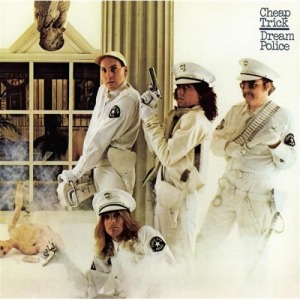
Why I Bought It: The first ten seconds of “Dream Police.” I must’ve seen this LP fifty times before “The dream police they live inside of my head” finally convinced me to drop a dollar on this Cheap Trick LP. Too bad “Surrender” and “I Want You to Want Me” aren’t on this record.
Verdict: I honestly can’t recall if I’d ever heard the entirety of “Dream Police” the song, but Dream Police the album is overblown in the biggest, most ’70s ways possible, whether it’s in synthesizer/string flourishes or epic track lengths. “Gonna Raise Hell” drags on for a seemingly interminable 9:20! The otherwise solid “Need Your Love” carries on for 7:20! I expected more of a power-pop feel to the record, but only “Dream Police,” “Voices,” and “Need Your Love” deliver. The other songs suffer from forced aggression (“This House Is Rockin’ [With Domestic Problems]”), too much soloing, and/or a lack of humor, which surprised me given “Surrender.” Hardly a surprise, then, that Dream Police is usually regarded as a drop-off in quality after their first three releases.
59. Terje Rypdal - Waves - ECM, 1978
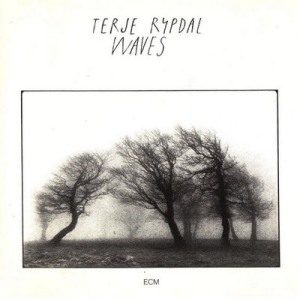
Why I Bought It: I decided to take a chance on a completely unfamiliar ECM title and artist because it was a dollar and I’d been listening to a lot of Steve Reich’s ECM recordings at the time. I never thought, “This album is going to be just like Music for 18 Musicians,” nor did I have a strong sense of what it would sound like. Understandably, it took me a while to muster up the gumption to give this album a listen, but this excellent article from Perfect Sound Forever gave me a much better sense of what to expect from Waves and how it fit into Rypdal’s catalog.
Verdict: Trying to get a handle on Rypdal’s style, even with that article in mind, is a difficult process. Opener “Per Ulv” combines bop jazz and prog-rock guitar, sounding a bit like Santana joining a jazz trio onstage. Closer “Charisma” drops most of the jazz overtones, merging prog explorations and the atmospheric spaces of Tangerine Dream for the first song that sounds stereotypically Nordic. Most songs are dominated by trumpeter Palle Mikkelborg rather than guitarist/keyboardist Rypdal, which keeps things on the jazz side of the equation more often than not, but the compositions splay out like 1970s prog. The key word for Waves is “intriguing,” since I even as the record progressed I never got a handle on what to expect next.
60. Nitzer Ebb - That Total Age - Mute, 1987
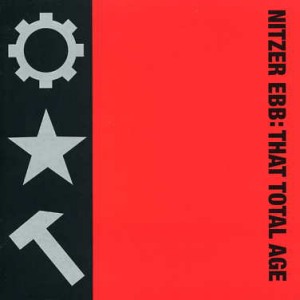
Why I Bought It: I knew that Nitzer Ebb fit into the late 1980s and early 1990s industrial scene, presumably from my bathroom reading sessions of The Trouser Press Guide to 1990s Rock. I’d gone through a brief and by no means comprehensive industrial phase my freshman year of high school prompted by Killing Joke’s Pandemonium and Nine Inch Nails’ Nothing Records, but my fondness for the genre expired before I did any major backwards exploration. When I stumbled across a number of 1980s industrial LPs in the dollar bin, including Nitzer Ebb, Skinny Puppy, and Einstürzende Neubauten, I snapped them all up, intending to fill the gaps in my 1994-1995 listening pile. I even had a decent idea of what to expect from each artist—electronic-heavy, somewhat pop industrial from Nitzer Ebb; abrasive and aggressive industrial from Skinny Puppy, and actual industrial sounds from Neubauten. I say actual since so much industrial ends up sounding like mean, heavy synth-rock. Nine Inch Nails’ Pretty Hate Machine broke in the mainstream because it was ostensibly mean, heavy synth-pop. It makes sense to start with Nitzer Ebb, since they’re closest to my industrial experience, but those Skinny Puppy and Einstürzende Neubauten LPs will come up later in RCR.
Verdict: That Total Age punishes the listener with a minimal combination of electronic beats, repeated phrases, and up-front bass for maximum damage. Wikipedia informs me of an industrial sub-genre called electronic body music, which isn’t far off from my initial take on songs like “Fitness to Purpose” and “Let Your Body Learn”: an S&M fetishist drill sergeant remaking Olivia Newton John’s “Physical.” A few of the songs diverge from the murderous repetition, paying off my pop expectations, but most chug along with endlessly repeated shouted slogans. At one point I thought “It’s like an entire record of extended 12” takes!” but only the aptly titled “Join the Chant” goes past six minutes. By the end of That Total Age I was exhausted from Douglas McCarthy’s barked vocals, so a single 12” EP might’ve been a better pick-up. Nitzer Ebb confirmed by expectations, sure, but they also underscored why Nine Inch Nails needed to incorporate more traditional synth-pop hooks and structures to cross over.
|
|
I’m fighting Sonic Youth burn-out at the moment, midway through the decidedly trying SYR series. Thankfully the following 2010 releases have kept me going.
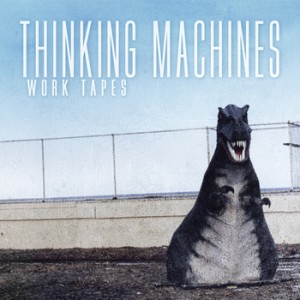
Thinking Machines – Work Tapes: The follow-up to their superb 2008 album The Complete History of Urban Archaeology has a street date of June 4, but it’s already slotted itself into my eventual year-end list. Adding a second guitarist to the muscular indie rock of its predecessor, Work Tapes makes a slight trade-off of immediacy for depth, but the payoff came by the second listen. That spin came at top volume in the car, which is exactly where I’d recommend playing Work Tapes. The initial highlights are the taunt rhythms of “Pays to Know,” the emotional vocals of “Parallax,” and the ascendant melodies of the instrumental closer “Loop,” but every song on Work Tapes stands out with a monster riff, a gorgeous breakdown, or an urgent vocal hook. You’ll hear more about this one, I assure you.
From what I can gather, TMvFM will release Work Tapes, presumably through digital distribution, but I’d absolutely love a physical pressing. Perhaps taking a cue from Gordon Withers’ album and doing a Kickstarter drive for funding would make it happen, but I’d gladly drop $25 for a 2LP of Complete History and Work Tapes. Any tour dates outside of Philly would also be appreciated.
Hoquiam – Hoquiam: Fans of Damien Jurado get a double dose this year. His proper follow-up to 2008’s Caught in the Trees, Saint Bartlett, will come out on Secretly Canadian on May 25th. You can hear “Arkansas” from Secretly Canadian’s site. Presumably its overtones of ’50s and ’60s pop will extend to the rest of Saint Bartlett, giving the album an oldies vibe separate from the rock and folk of Caught in the Trees. The difference in personnel is notable, since producer Richard Swift is the only other contributing musician, leaving usual Jurado cohorts like Eric Fisher and Jenna Conrad to help out with the long-awaited Ghost Wars album from Arlie Carstens of Juno.
First, however, Jurado fans should track down Hoquiam’s self-titled LP, his collaboration with his brother Drake. Its seventeen short tracks vary nicely between up-tempo stomps, layered folk, and the hushed personal tales at which Jurado excels. It finds the perfect middle ground between spontaneity and polish. It’s entirely conceivable that Hoquiam could surpass Saint Bartlett.
There are only 500 LPs to go around, so I recommend ordering soon from St. Ives or elsewhere. Each cover is handmade, so even if there’s a repress I’d venture it’ll be less unique.
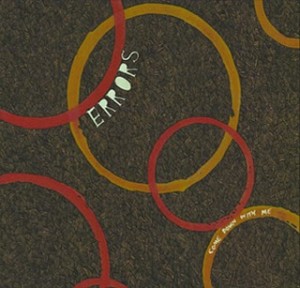
Errors – Come Down with Me: Errors’ second full-length stresses what was already their foremost strength: it’s difficult to come up with a more listenable band in my regular rotation. Come Down with Me isn’t marked by any huge departures in their usual post-electro-sound, but rather an ongoing honing of their melodic instincts and textual layers. Lead single “A Rumour in Africa” (check out the vaguely creepy video on YouTube) and “Supertribe” follow up the lighthearted jaunt of “Salut! France”; “Antipode,” “The Erskine Bridge,” and “The Black Tent” emphasize the group’s drifting atmosphere; while closer “Beards” comes close to Stereolab’s lounge territory. It’s a consistently solid album, precisely what I expect from Errors. Is that a soft sell? Sure. But Errors has never struck me as a group that would blow someone away, rather casually yet insistently insinuate themselves into your regular listening habits.
Foals – “Spanish Sahara”: Foals’ sophomore effort, Total Life Forever, is slated for May, but if its first taste is any indication, it’ll be worth the wait. “Spanish Sahara” takes a measured, patient approach to its build-up, initially avoiding any trace of the energetic dance-punk of Antidotes, but its refrain lingers. It’s a step toward Radiohead, sure, but the pay-off applies the interlocked guitars of earlier Foals to this new template.
|
|
Rounding out my Sonic Youth coverage after handling their 1980s albums and 1990s albums in prior posts, this entry covers their five full-lengths from the 2000s: NYC Ghosts & Flowers, Murray Street, Sonic Nurse, Rather Ripped, and The Eternal.
Despite being unheathily obsessed with indie rock for the entirety of the 2000s, I come to Sonic Youth’s most recent five LPs with the least amount of background. Sure, I remember Pitchfork’s 0.0 slap in the face to NYC Ghosts & Flowers. I picked up Rather Ripped last year. I’ve heard that Murray Street, Sonic Nurse, and The Eternal are all quality records. But without singles like “Teen Age Riot,” “Kool Thing,” “100%,” “Bull in the Heather,” “The Diamond Sea,” and “Sunday” filtering into the long-gone 120 Minutes, it was particularly easy to let these records pass me by. Certainly I’m not alone here, but there’s a remarkable amount of quality material from this decade for a band in their third decade of action.
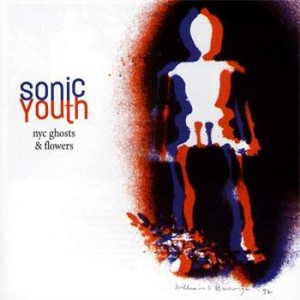
NYC Ghosts & Flowers – Geffen, 2000
Highlights: “Free City Rhymes,” “NYC Ghosts & Flowers”
Low Points: Everything else
Overall: As much as I try to reject the numerical scores Pitchfork brandishes in its reviews, certain ones stick. My favorite album got a 6.7, after all. They used to be more biased, more reactionary with the digits, handing out perfect scores to staff favorites like Walt Mink and 12 Rods, dropping the 0.0 bomb on figureheads like the Flaming Lips and Sonic Youth. Nowadays their foremost concern is saving face, sending potentially embarrassing scores and creative-writing-class-reject reviews out for re-education while giving virtually everything new a 7.2. (You can still track down head-shakers like Ryan Schreiber’s blackfaced John Coltrane review. Shit, cat.) The recent recipients of those pole positions have been safer bets—reissues from the Beatles, Neil Young, and Stone Roses get 10.0s, almost no 0.0s since the bomb dropped on Travistan derailed the solo career Travis Morrison of Pitchfork’s former favorites the Dismemberment Plan. Despite the recent cleansing of their archives and dulling of their pointy stick, the aforementioned 0.0 given to Sonic Youth stands. It hardly killed Sonic Youth’s career, but it did set NYC Ghosts & Flowers up as a mighty roadblock in this overview.
It might not be that daunting. The 0.0 sets NYC Ghosts & Flowers up with the most flattering case of diminished expectations in history. Even if other reviews are mixed on the record and almost no one heralds it as one of Sonic Youth’s best records, it can’t be one of the worst albums ever. Right?
Mostly right. NYC Ghosts & Flowers will test almost anyone’s patience with its Beat poetry set to mellowed-out noodling. It’s the worst Sonic Youth full-length to date. But its saving grace, if you can give it that much credit, is that it could be easily condensed down to a nice seven-inch. Put “Free City Rhymes” on the a-side, “NYC Ghosts & Flowers” on the flip, and you’ve got an involving dose of this era of Sonic Youth. “Free City Rhymes” reminds me of Storm & Stress’s Under Thunder and Flourescent Light (released five months before NYC Ghosts & Flowers), specifically its speak-sung opening track “The Sky's the Ground, the Bombs Plants, and We're the Sun, Love.” Ian Williams’ side-project from Don Caballero pulled its song structures apart until only fragments remained, sounding, for better and worse, like a splatter painting of notes and rhythms. Yet there was something remarkably placid about the gurgling “The Sky’s the Ground,” specifically how it lingered on ghosting melodies long enough for you to know the song initially had them. “Free City Rhymes” is considerably more structurally sound, but the languid vocals from Thurston Moore and gradual volume swell still feel abstracted from its original plan. (Producer Jim O’Rourke must have been the anti-Vig for NYC Ghosts.) The title track is closer in spirit to the rest of the album, given Lee Ranaldo’s poetry-reading delivery, but the minimal, echoing chimes and patient storytelling fit well with the song’s glacial crescendo into roaring noise and cymbal washes. If it had been an instrumental, it would compare favorably to contemporary post-rock songs. Put these two songs on a one-side twelve-inch with an etched flip, presumably a Mount Rushmore of their Beat heroes, and I’ll snap it up in a heartbeat.
Sadly, I’d consider dropping the 0.0 on the remaining six songs. “Renegade Princess” switches from pretense-heavy spoken word to an up-tempo chant of “Renegades fight for life,” sounding like an art-school take on West Side Story. It ends with an abstract wash of noise, one of many to come. “Nevermind (What Was It Anyway)” dumbs down Kim Gordon’s usual feminist outrage to Neanderthal insights like “Boys go to Jupiter to get more stupider / Girls go to mars, become rock stars.” Newsflash: this was the single. (Looks like Geffen didn’t go through with it.) “Small Flowers Crack Concrete” is a Thurston Moore poetry reading dripping with beatnik over-annunciation. There’s some neat guitar noise near the end but good luck getting to it. Kim Gordon tries to make the “What’s the first thing that comes into your head when I say this word?” game into poetry in “Side2Side.” Not to be outdone, Thurston Moore one-ups her with the endlessly irritating “StreamXSonik Subway,” a poisonous dose of avant-garde storytelling set to a cringe-inducing backdrop of toy gun sounds and cartoonish, lurking rhythms. Kim Gordon curses listeners with both tuneless trumpet bleating and tiresome reports of a much-earned lighting strike. These songs are straight terrible.
NYC Ghosts & Flowers ignores the most salient fact about Sonic Youth: they are a rock and roll band. They are more creative, more experimental than most rock and roll bands, but their “official” full-length albums stick, in various degrees, to basic rock and roll norms. Filtering out their most experimental tendencies to the SYR EP series establishes a dividing line within their own discography. A post-EVOL Sonic Youth LP bears an implicit agreement that it will have the most basic element of rock and roll—songs—even if the songs themselves favor texture and noise over principle rock and roll elements like melody and rhythm. The group itself is certainly in communication with the avant-garde, cribbing notes from John Cage and Glenn Branca throughout its existence, but its primary output—think of Goo, Dirty, even Daydream Nation—are rock albums. They do not get a free pass because of their avant-garde leanings, especially not on NYC Ghosts & Flowers. Aside from “Free City Rhymes” and “NYC Ghosts & Flowers,” the combination of experimental rock and Beat homage on these songs does not hold together. It is possible that the cultural critique here is valid and timely, but without basic elements like songs working in its favor, it will fall on tone-deaf ears.
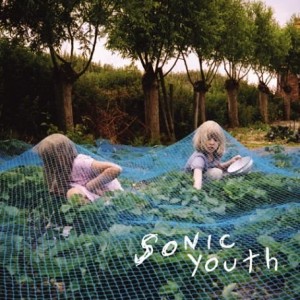
Murray Street – Geffen, 2002
Highlights: “Rain on Tin,” “Karen Revisited,” “Radical Adults Live Godhead Style,” “Sympathy for the Strawberry”
Low Points: “Plastic Sun”
Overall: One element that’s lost in this high-speed trip through Sonic Youth’s catalog is the time in-between albums. I can quickly depart from NYC Ghosts & Flowers and arrive at Murray Street, breathing a sigh of relief that they’re back to writing actual songs, but the two-year period in between the albums was monumental. First, NYC Ghosts producer Jim O’Rourke became an official member of the group, the first line-up change since Steve Shelley replaced Bob Bert in 1985. O’Rourke had collaborated on the generally well received SYR3: Invito Al Ĉielo, but it’s not like NYC Ghosts was a rousing success. Second, the September 11th attacks happened very close to the group’s home base in New York City, specifically their studio Echo Canyon (located on Murray Street). These songs were largely written and partially recorded by the time of the attacks, but between the title and the renewed focus, it’s worth noting the connection.
“Return to form” seems to be a mantra with these later DGC albums, since certain albums (Experimental Jet Set and NYC Ghosts & Flowers) caused fans to lose track of the band and get back on at a later date. I question both the “return” and the “form” of that statement, however, since they imply that Sonic Youth merely recall earlier blueprints on these critically approved albums. Later albums recall old elements or revive a lost balance, but don’t sound like EVOL or Sister re-dos. The difference between albums varies and the notion of continual improvement dropped out of the picture after Daydream Nation, but Sonic Youth is not simply repeating themselves. They’re tinkering with a very broad formula.
What sets Murray Street apart from its predecessors is its proximity to 1970s guitar rock, specifically laid-back classic rock. I’ve compared the group to Television a few times before, but it’s mainly been a spiritual, not a sonic connection. Murray Street has both. Wilco also comes to mind, a comparison which might seem too obvious given Jim O’Rourke’s presence. That group got a critical shot in the arm after O’Rourke mixed Yankee Hotel Foxtrot and then joined as a studio-only contributor. Yet it’s not Yankee Hotel Foxtrot or A Ghost Is Born that Murray Street reminds me of, it’s the dad-rocker Sky Blue Sky. Beyond sharing 1970s classic rock tempos, both groups rely on the interplay between three clean guitar parts for their extended jams. The loping boogie in “Disconnection Notice” isn’t as precisely interlocked as the outro of Wilco’s “Impossible Germany,” but the mellow, unforced jams in these songs feel related. It feels odd to pull Sonic Youth into the swirl of O’Rourke/Tweedy crossovers (Tweedy’s involvement with O’Rourke’s superb 2001 LP Insignificance, the pair’s Loose Fur LPs), but Murray Street would easily slot alongside these records for a Saturday afternoon playlist. Is this proximity to laid-back 1970s guitar rock a real surprise? After all, Sonic Youth has done mellow rock (A Thousand Leaves) and 1970s-inspired epics (Daydream Nation’s progressive overtones) before. It’s the combination that’s new.
The other striking element of Murray Street is its comparative lack of pretense, or less tactfully, bullshit. Their Geffen output has suffered from too many must-skip songs, particularly Kim Gordon’s confrontational riot grrrl punk-rockers. Murray Street is the first album since Sister that I’ve gladly listened to straight-through multiple times during this project. (Sorry Daydream Nation, I’ve got places to be.) Gordon’s “Plastic Sun,” a Moore-penned diatribe against pop icons like Britney Spears, is the lone potential irritant, but its scant 2:15 runtime and Gordon’s restrained delivery are welcome after the interminably awful “Panty Lines” and “The Ineffable Me.”
The jams remain on Murray Street, but the end results have improved considerably. According to a 2002 Nude as the News interview, five of these songs began as Thurston Moore’s acoustic solo songs, which provides a stable foundation for the restrained experimentation. Moore begins the record with “The Empty Page,” “Disconnection Notice,” and “Rain on Tin,” which each get incrementally longer with no sign of wear. “Rain on Tin” has the most inspired instrumental passage of the trio, but all three are casually addictive. Lee Ranaldo’s “Karen Koltrane” sequel, “Karen Revisited,” switches from easy-going poetic remembrance to spaced-out noise explorations at the three-minute mark of an eleven minute song, but it holds my attention until it peters out into echoes. (And I was even driving at the time!) Kim Gordon’s nine-minute closer “Sympathy for the Strawberry” is a floating take on krautrock’s insistent rhythms, recalling A Thousand Leaves’ gentle epic, “Wildflower Soul.” The title of Moore’s “Radical Adults Live Godhead Style” could slot into the Beat-friendly NYC Ghosts, but its ice-cool lyrics and sax-skronk crescendo make it the highlight of the LP. These songs find the right balance between experimentation and listenability.
Murray Street is the true beneficiary of NYC Ghosts & Flowers’ mistakes. No album-to-album transition in their catalog is marked with lower expectations, so almost anything would have been a marked improvement over the beatnik poetry readings of its predecessor, especially the sturdy, compelling songwriting found here. It’s certainly possible to go overboard with praise of this album because of that comparison, but I’m not going to slot it over EVOL, Sister, or Daydream Nation. It does, however, earn a position in the top tier of their Geffen output alongside the higher highs and lower lows of Washing Machine.
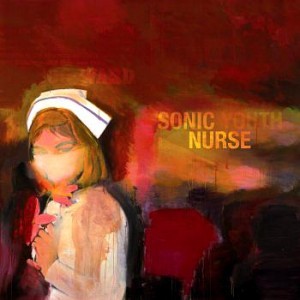
Sonic Nurse – Geffen, 2004
Highlights: “Pattern Recognition,” “Unmade Bed,” “New Hampshire,” “I Love You Golden Blue”
Low Points: “Mariah Carey and the Arthur Doyle Hand Creme”
Overall: For the first time in my journey through their catalog, I’m torn on a Sonic Youth album. I’ve spun Sonic Nurse at least five times now and there are two very logical, rather conflicting conclusions.
First, the negative. After the disastrous NYC Ghosts & Flowers, the group has come very close to something I would have never thought possible back with the chaotic Confusion Is Sex: boredom. My fondness for Murray Street can’t cover up the obvious—it’s a classic-rock-informed album with plenty of mid-tempo jam sessions. Not the most exciting description. It even reminded me of Wilco’s dad-rock opus Sky Blue Sky, which should have been a ringing alarm for boredom. My point about Washing Machine managing to sound both comfortable and exciting resurfaces here as well. Both Murray Street and Sonic Nurse are comfortable and consistent in their songwriting and delivery, but lack the visceral excitement of their earlier records.
Perhaps the bigger issue is that Sonic Nurse is an incremental change from Murray Street. Kim Gordon’s back in a bigger role and the classic rock overtones aren’t as apparent, but as a whole, the album sounds like an extension of Murray Street. To repeat, I enjoyed Murray Street, but a big part of what’s kept me moving forward through Sonic Youth’s catalog is the anticipation of a something new. Their big missteps so far—Experimental Jet Set and NYC Ghosts & Flowers—provided that newness, even if it wasn’t on target. Sonic Nurse merely tweaks the formula. Part of me is tempted to overlook Sonic Nurse’s strengths and criticize it for not advancing their sound further, but there’s another view to consider.
The second, more positive take stems from a vital question: What expectations should I have for the fourteenth LP from a group twenty-three years into their existence? This territory is typically reserved for classic rock groups, who are expected to make subtle changes to their formula and rely on the continuing strength of their songwriting. If a classic rock artist makes a huge left turn, like Neil Young did with Trans (side note: Sonic Youth covered “Computer Age” from this LP on their Daydream Nation tour), they’re vilified (or sued!) for making unrepresentative music. See NYC Ghosts & Flowers. On the contrary, when Neil Young returned to his Crazy Horse days for Freedom and his folk-rock days for Harvest Moon, he’s heralded for returning to form. See Murray Street. Once the artist is back on the straight-and-narrow, the excitement dies away, but the critical appraisal from traditional outlets like Rolling Stone (or Pitchfork) remains. See Sonic Nurse. It’s the start of their classic (indie) rock era of expectations.
By the standards of classic indie rock, Sonic Nurse is a success. Subtle changes to the sound? Check. Consistent, representative songwriting? Check. It’s not as tightly constructed as Murray Street, nor does it have an engrossing noise passage like “Karen Revisted,” but its ten songs lack a true stinker and display some wonderful emotional range. It leads off with its two best songs, “Pattern Recognition” and “Unmade Bed.” The former finds Kim Gordon sounding cooler than anything since Goo, as her gravelly coos fit perfectly with the album’s most propulsive bass lines. Steve Shelley quietly drums up a storm; his versatility on “Pattern Recognition” is worth a few extra listens. “Unmade Bed” makes a convincing argument for replacing the old noise bridge with the new intertwined solos, since the bob and weave of the parts is both effective and concise. Thurston Moore’s resigned delivery is devastating. Helped out straightforward lyrics like “Cause now that you’re in his arms babe / You know you’re just in his way / Suckered by his fatal charm, oh girl / It's time we get away,” Moore finds subtle layers of emotion in “Unmade Bed,” something I’d never associated with the band. Of the group’s three songwriters, Moore is the most natural in this classic indie rock stage.
Past its excellent first two tracks, Sonic Nurse slides comfortably into a mid-tempo pace. Thurston Moore’s four remaining songs are likeable, if familiar. “Dripping Dream” oozes nonchalant cool, but it’s the song’s stately rebuild that’s most impressive. The classic rock pulse of “Stones” would fit nicely after “Rain on Tin” on Murray Street. The confident lead riff of “New Hampshire” segues marvelously into the delicate outro. Album closer “Peace Attack” has an easy-going temper, with more Wilco-esque intertwined solos. Gordon’s other three tracks cover both mellow, Nico-esque plateaus and her lingering punk tendencies. “Dude Ranch Nurse” and “I Love You Golden Blue” represent the former; I prefer the dream-pop whispers and longing ambience of “Golden Blue” to the mid-tempo anesthesia of “Nurse.” Representing the latter, “Mariah Carey and the Arthur Doyle Hand Crème” is the album’s most likely annoyance, marking the return of an older, if not wiser, retching affectation from Kim Gordon. The lyrics pick up where the Britney Spears critique “Plastic Sun” left off, but the driving chorus melody and the pre-verse chiming passages make up for Gordon’s straining verse vocals. To put it in perspective, I’d listen to an album consisting solely of “Mariah Carey” before willingly hearing “Panty Lines” or “The Ineffable Me” again. Finally, Lee Ranaldo’s lone contribution, “Paper Cup Exit,” is a fine album track, but lacks the standout status of most of his songs since Goo. Sonic Nurse could really use a “Mote,” “Wish Fulfillment,” or “Hoarfrost,” too.
Whether you view Sonic Nurse as a success or a disappointment depends on how far you are to either side of the progress/classic divide. If you’re thrilled to have another consistent Sonic Youth record that you can sit through without itching to skip songs, Sonic Nurse fits the bill. Along with Murray Street, it’s one of the rare albums in their catalog which doesn’t suffer from irritable song syndrome. Yet if you’re not happy with more of the same, if you crave a stylistic shift like Bad Moon Rising to EVOL or Experimental Jet Set to Washing Machine, Sonic Nurse will leave you wanting more. If you believe that Sonic Youth should bring something distinctly new to each record, you will likely tune Sonic Nurse out.
Personally, I’m still waffling between these poles. I do appreciate being able to sit through an entire Sonic Youth album without worrying about which landmines are coming up on the next side. That concern is gone, but now there are songs that simply don’t do much for me—“Paper Cup Exit,” “Dude Ranch Nurse,” “Stones.” Being able to tune out Sonic Youth songs seems strange to me. I’m willing to grant Sonic Youth their passage into classic indie rock expectations—after all, Kim Gordon turned 50 in 2003 and Thurston Moore and Lee Ranaldo passed that milestone since Sonic Nurse—willing to appreciate Sonic Nurse for what it is, willing to continue onto their more recent albums, but I still want a little more.
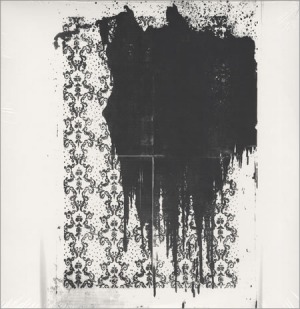
Rather Ripped – Geffen, 2006
Highlights: “Incinerate,” “Do You Believe in Rapture,” “Jams Run Free,” “Pink Steam”
Low Points: “Sleepin’ Around,” “What a Waste”
Overall: My initial reaction to Rather Ripped, before this chronological dive into Sonic Youth’s discography, was that it felt stripped-down and tidy in relation to the other Sonic Youth records that I’d heard at the time. Certain elements felt atypical to Sonic Youth’s style: the majority of the songs are four minutes or less; the noise passages are minimal; and the hooks are clear. That impression remains, but what’s changed is how Rather Ripped fits into their catalog. It feels particularly energetic in comparison to the two Jim O’Rourke albums which preceded it. Both Murray Street and Sonic Nurse are primarily mid-tempo affairs, defined by heavily intertwined guitar tracks. Rather Ripped has clearer separation between Thurston Moore and Lee Ranaldo’s guitar tracks, and Kim Gordon sounds more assured back in her usual role on bass. The shorter track lengths recall early 1990s albums like Dirty and Experimental Jet Set, when they trimmed the explorative passages in favor of more direct songwriting. Its chiming, buzzing guitar leads sound streamlined and minimal in contrast with their predecessors on EVOL and Sister. Rather Ripped isn’t about standing in stark contrast to what’s come before it; it’s about conversing with those records—trying alternate routes, cribbing ideas, bridging gaps between eras—and producing something that seems atypical at first, but reveals itself to be a natural component of their sound all along.
The resulting product has been called their “pop” album, which strikes me as an ironic farewell to their major label era. (Technically, the primarily instrumental b-side collection The Destroyed Room was their last Geffen album, which is considerably less ironic in this context.) Goo and Dirty in particular are conflicted with how to reconcile their artistic progression with major-label expectations, which results in some ill-fitting reaches for pop hooks or melodies kept at arm’s length. It’s not that Sonic Youth didn’t write melodic, near-pop songs (“Bull in the Heather” is a great example) during this time (or before it), but an entire album of them? A few came close—Dirty is too grunge-oriented, Murray Street and Sonic Nurse are too languid, Sister rocks too much and loves its noise passages—but the group always seemed more interested in what was going on in the periphery of their songs than the verses or choruses. Rather Ripped is song-centric, melody-centric throughout—I hesitate to call it pop, since they’re still Sonic Youth songs—and it’s strange how their natural progression to this point coalesces with Geffen’s own desires.
Rather Ripped starts off with a trio of keepers. Gordon’s “Reena” embodies the album title in its lean architecture, sending out a clear message: the jam sessions with O’Rourke are over. Gordon’s vocals and lyrics are charged and focused, especially the “You keep me coming home again” chorus. Moore follows suit with “Incinerate,” a pyromaniac love song kept lighthearted by Moore’s riff exchanges with Lee Ranaldo. “Do You Believe in Rapture?” is a lovely, mellow song jabbing back at Christian fundamentalism and President Bush, but it’s open-ended enough to remain vital in the new administration, proving they’ve gotten significantly better at protest songs since Dirty. There’s also a noise track buried in the first half of the song, one that begs for proper excavation.
The next two songs, “Sleepin’ Around” and “What a Waste,” stunk when I heard them the first time and remain stinkers. At least they’re neighbors on side A of the LP. It’s interesting to note that a bad song on Rather Ripped isn’t a shrill attack of aggro-feminism or a uncharacteristic bout of tough rock, but simply a melodic irritant.
The rest of the album regains the consistency of Murray Street and Sonic Nurse. Gordon’s “Jams Run Free” is almost too short at 3:53, baiting listeners with “We love the jams / And jams run free,” then keeping its noisy bridge anchored by Gordon’s solid bass line. Her delivery is a wiser, older version of the alluring whispers of EVOL. Ranaldo’s “Rats” feels more expansive than its 4:25, bolstered by growling background noise and breaks of acoustic guitars. His poetic storytelling is back to the “Hoarfrost” level of picturesque detail. “Let me place you in my past / With other precious toys / But if you’re ever feeling low, down / In the fractured sunshine / I'll help you feel the noise” might be the best lyrical summation of his contributions to Sonic Youth. Gordon again channels Nico on “Turquoise Boy,” more faithfully here than on “Dude Ranch Nurse” and “I Love You Golden Blue,” and the group bolsters it with a lovely harmonic cluster and a stately reemergence of the main melody after a brief noise interlude. “Lights Out” is a pleasant Moore whisper-fest that would be better without his trademarked “sing the guitar line” trick. “The Neutral” finds Gordon embracing the ordinary guy, recognizing the downfalls of all the hip archetypes and praising how “He’s neutral, yeah, he’s weary / And he’s so in love with you.” I’d never expected Gordon to champion the normal this convincingly; shouldn’t she be lusting ironically after a Jonas brother? “Pink Steam” starts with a welcome, five-minute-long instrumental of snaking guitar before a few short minutes of Moore’s sexually charged lyrics. It’s the perfect long song for Rather Ripped; even during its instrumental passage, it’s tautly chiseled. “Or” closes the album with a muted heartbeat of tour stories (involving strippers, so likely fictional), its guitar rattles and chimes echoing in the distance.
In line with the classic rock expectations that came into view with Sonic Nurse, Rather Ripped doesn’t expand or explode the Sonic Youth brand. It makes subtle changes and relies on solid songwriting. It carves out a spot within their existing discography, whether that niche is deemed their “pop album” or simply a focused set of melodic (almost) indie rock, and traces lines to many of their previous efforts. One point I’ll recant from my earlier take of Rather Ripped is a longing for their usual sprawl. There are plenty of Sonic Youth albums that have an abundance of such sprawl—Washing Machine and A Thousand Leaves for starters—so if I’m in the mood for elongated noise passages, I’ll get my fix elsewhere. Rather Ripped, meanwhile, serves its purpose, a modern update of the tight Sister. Whether you need such an update depends on how much you’re onboard with those classic rock expectations, but for now at least, I’m fine with Sonic Youth filling in the gaps.
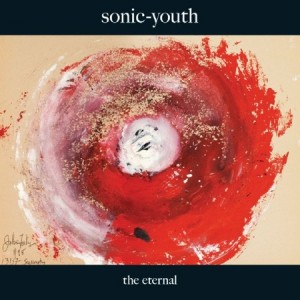
The Eternal – Matador, 2009
Highlights: “Sacred Trickster,” “Antenna,” “What We Know,” “Malibu Gas Station”
Low Points: “Anti-Orgasm,” “Leaky Lifeboat,” “Thunderclap for Bobby Pyn”
Overall: Sonic Youth’s completion of their Geffen contract sends them back to an independent record label for the first time in two decades. There’s even a sense of familiarity to the label, since Matador co-owner/operator Gerard Cosloy recruited the band to Homestead for Bad Moon Rising thirteen albums ago. Even though Sonic Youth demonstrated little damage from major-label intrusions in the last decade (being able to release NYC Ghosts & Flowers suggests almost no oversight from Big Brother, while the last three records felt more mature on their own terms), The Eternal still celebrates its freedom from the bonds of white male David Geffen’s corporate oppression.
Joining the celebration is another Matador mainstay, once-and-future Pavement bassist Mark Ibold. The second version of the five-piece Sonic Youth seems less affected by the newcomer; unlike Jim O’Rourke, who brought his own songwriting style to the mix, Mark Ibold is a bassist, plain and simple. In addition to the Pavement/Sonic Youth relationship from the mid-1990s, Ibold was also a member of Kim Gordon’s side-project Free Kitten. This comfort level allows Sonic Youth to do what makes the most sense at this stage of their career: art-damaged punk rock!
Yes, The Eternal brings back the punk leanings of Confusion Is Sex, “Death Valley ’69,” and Dirty. Not exclusively, of course—there’s enough Rather Ripped-style rock to keep me satiated—but the reemergence of their punk side is the most notable aspect of The Eternal. To reiterate a point that became apparent during my trip through their 1990s output, I am not partial to the punk side of Sonic Youth. I prefer the strangely tuned guitar rock of their late 1980s trilogy, the epics on Washing Machine and A Thousand Leaves, the measured classic rock influence on Murray Street, and the tidy rock of Rather Ripped. It makes sense that they’d return to the punk aggression—they haven’t utilized it much this decade, it’s a good fit with their independent freedom, it levels-up the melodic Rather Ripped—but it detracts from the focused songwriting of their last three albums.
The Eternal wastes no time getting into it. “Sacred Trickster” revives 1980s hardcore with a dose of vintage Gordon aggro-feminism. The group certainly sounds confident with Ibold in the pocket, tearing through “Sacred Trickster” in 2:11 with none of Gordon’s irritating vocal contortions. The first half of “Anti-Orgasm” follows suit, aping the Stooges and returning to art-school sloganeering, like the call-and-response of “Anti-war is anti-orgasm.” There goes the introspective streak of their last few albums. The second half turns into a moody instrumental, highlighted by Ibold’s nimble bass. The gang-vocal approach featured here appears on a few of the remaining songs, making the usual Moore/Gordon/Ranaldo differentiation slightly more difficult, but most songs carry the definite character of one of the songwriters.
The punk dies down for a few songs after the “Anti-Orgasm” outro. “Leaky Lifeboat (For Gregory Corso)” manages to pay tribute to a beat poet without any actual beat poetry—proof that a merciful God is out there, perhaps—but the song floats along without its la-las catching hold. Moore’s strum-heavy “Antenna” is a mellowed-out “Sugar Kane” with backing vocals from Lee Ranaldo that runs through some squiggly guitar feedback in its extended solo/bridge. Ranaldo’s strutting “What We Know” is his hardest rocking song in ages. It’s another example of how well Ibold and Steve Shelley lock in together. I suspect Shelley’s thrilled to have a dedicated bassist in the line-up, given how Kim keeps gravitating back to guitar.
The next few songs continue with twisting the punk approach. “Calming the Snake” teases with a Krautrock rhythm and some escalating riff battles, but Gordon’s straining vocals pull me out of the song. “Poison Arrow” imagines Lou Reed fronting the Stooges. “Malibu Gas Station” threatens to revisit the danger/safety split of “Pacific Coast Highway,” but it’s mostly focused on a cultural criticism of Hollywood (see also: “Plastic Sun”). Its sneaky guitar lines and massive ending certainly stand out, however. “Thunderclap (For Bobby Pyn)” name-checks another influence, Darby Crash of the Germs (that band’s guitarist, Pat Smear, was name-checked in “Screaming Skull”), although its straightforward punk whoas and yeahs do the trick without the dedication. Moore’s “No Way” brings more energy and hey-heys to The Eternal, but the “sing the guitar line” trick is officially driving me nuts. Don’t worry, Thurston, it only took sixteen albums.
The final two songs end The Eternal on a curious note. First, Lee Ranaldo’s “Walkin’ Blue” is an electric/acoustic strummer—with three guitarists, it makes sense one of them would play an acoustic sooner or later—with a chorus that echoing the carefree vibes of the Grateful Dead. The extended solo/jam at the end of the song won’t disagree. Finally, Gordon’s nearly ten minute “Massage the History” sways from drifting acoustics and mumbled vocals (which still manage to miss notes) into a dense, droning build-up before closing with more mumbled vocals. Ostensibly commenting on the music industry with lines like “All the money's gone, all the money's gone / Funny, it was never here, it was never here,” “Here's a song, here's a song / To the massage the history,” and “Come with me to the other side / Not everyone makes it out alive,” “Massage the History” dramatizes Sonic Youth’s escape from Geffen, but the song’s foggy visions hardly depict sunshine on the other side.
The problem with The Eternal is that each song has great parts—Ibold’s thoroughly welcome grooves, the vintage guitar noise tangles, John Agnello’s superb production, Shelley’s ever underrated drumming, the occasional ace vocal hook—but the songwriting can’t quite hold these parts together. The result is an album I want to like more than I actually do. The Eternal is harder, more energetic, more fun than anything Sonic Youth has done since Dirty, but it gives up a lot of the songwriting gains those seven albums, particularly the last three, brought about. It’s entirely conceivable that one day a few months from now it’ll click, but right now I can’t help but repeat what I said about Goo: Sonic Youth simply didn’t bring their best material to The Eternal.
Click here to read about Sonic Youth's experimental SYR series.
|
|
Following my entry on Sonic Youth’s six major 1980s releases, this post covers their five full-lengths from the 1990s: Goo, Dirty, Experimental Jet Set, Trash and No Star, Washing Machine, and A Thousand Leaves. The critical and fan response to these records varies wildly, so I expect certain readers to bristle at my conclusions. That’s completely understandable, though. As I discuss below, these records were the default starting place for my age group, so emotional attachment to your first taste is expected. Signing to DGC put their CDs in malls. The videos from Goo, Dirty, and Experimental Jet Set made the rounds on MTV. The group headlined the 1995 Lollapalooza tour, which prompted a 1996 appearance on The Simpsons. Even though these records didn’t go multi-platinum, they still exposed the group to a new audience. What I’m more concerned about is how well these records hold up in 2010, how much their songwriting was compromised by this exposure, how they were or weren’t able to maintain the momentum of the EVOL/Sister/Daydream Nation trilogy. I have a noted fondness for discussing flawed albums, so please bear with me.

Goo – DGC, 1990
Highlights: “Mote,” “Disappearer,” “Titanium Expose”
Low Points: “Mary-Christ,” “My Friend Goo,” “Mildred Pierce,” “Scooter + Jinx”
Overall: I wish I could travel back through time to 1989 to properly express my disgust with Sonic Youth’s deal with Geffen’s new DGC subsidiary. “Is 300 grand worth your creative soul? Do your freshly bought fans enjoy EVOL as much as I do, Thurston? Did you spend a month dressing up in fashionable clothing for glossy photo shoots?” The last one is a genuine question prompted by my recent purchase of the 4LP Goo vinyl reissue, which includes an enormous booklet with Byron Coley’s slurping liner notes and about a thousand full color press photographs of the band. But the others, they’re genuinely fake outrage!
The reality is that some groups benefit from higher production budgets (Hum’s You’d Prefer an Astronaut, Shudder to Think’s Pony Express Record, Jawbox’s For Your Own Special Sweetheart, Built to Spill’s Perfect from Now On, Afghan Whigs’ Gentlemen), while other falter with more money to spend and the impetus to change their sound (Girls Against Boys’ Freak*on*ica). Sonic Youth’s Goo falls somewhere in between these extremes. The production values have improved noticeably—perhaps too much, depending on your preferences for overdubbed vocals and polished guitars—but I can’t say that the songwriting on Goo betters Daydream Nation (or Sister or EVOL). Two-thirds of the album is solid, but other songs suffer from too-cool impulses and irritating attempts to maintain their edge. It’s the first Sonic Youth album that doesn’t advance the group, but how many bands record six albums without taking a step back?
“Dirty Boots” and “Tunic (“Song for Karen)” lead off Goo, giving Thurston and Kim their respective shots at this new aesthetic. Thurston’s “Dirty Boots” features an absolutely enormous chorus that curiously isn’t repeated, but once is enough for that chorus to sound completely out of place. The extended outro benefits from the glistening production and its structure, chorus aside, isn’t that far off from Daydream Nation. Gordon’s “Tunic” is a semi-ode to the Carpenters’ Karen Carpenter and her death from stress-induced anorexia, which parallels Sonic Youth’s precarious position on a major label. Gordon’s ghostly delivery does the subject justice, but the lyrics, especially the “Karen talking down from heaven” notes, take cheap jokes at Carpenter’s expense. (Headphone alert: the background features Gordon and Dinosaur Jr’s J Mascis singing Carpenters songs.) I can fully understand a revolt against the songwriting decisions and increased polish of “Dirty Boots” and “Karen,” but in terms of answering the “What would Sonic Youth sound like on a major label” question, they could have done a lot worse.
”Kool Thing” utilizes the major label experience in an entirely different way. There’s no question that Sonic Youth, particularly Kim Gordon, wants to be on the cutting edge of cool, and “Kool Thing” is the proof. A heavily streamlined rocker (Guitar Hero III! Rock Band!) about the differences between white and black subcultures and Gordon’s own lusting for rappers like LL Cool J (and Jane Fonda’s lusting after black men during the Black Panther days, etc.), “Kool Thing” is Gordon’s most overt feminist track to date. It’s most notable for the Chuck D guest spot (preceding the 1991 Public Enemy/Anthrax crossover and Sonic Youth’s 1993 collaboration with Cypress Hill on the Judgment Night soundtrack), but real talk: that guest spot is non-consequential. (I was tempted to say wack, I really was.) From Coley’s Goo liner notes:
"We talked about some ideas for his rap," says Kim. "But when he got to the mike he didn't really pursue any of them."
In other, less tactful words, Chuck D was willing to appear, but not to provide any substance or cater to their whims, only to mutter things in the background. There’s no spark of mutual creativity. “Kool Thing” is a decent tune, but anyone mourning the fact that Sonic Youth didn’t break rap-rock needs to think about just how much rapping is actually involved here. It’s not the underground answer to “Walk this Way.”
The remaining songs fall into three categories: guitar rock, antsy punk, and noise experiments. Guess which one of those I prefer? Sure enough, it’s the guitar rock. Lee Ranaldo’s “Mote” was already one of my favorite Sonic Youth songs, but I was taken aback by how much more emotional his vocals are here than on his previous songs. The vocal effect is dated, but the noise outro is far more natural than the dissolve in “Pipeline/Kill Time.” Moore’s “Disappearer” is a Sonic Youth version of a Dinosaur Jr song. Not groundbreaking, but certainly enjoyable. Gordon’s “Cinderella’s Big Score” is a focused blast of mangled guitar leads with atypically straightforward vocals. Moore’s closing track “Titanium Exposé” has some superb guitar tones and dynamic twists. Those four guitar rockers plus “Dirty Boots,” “Tunic,” and “Kool Thing” would make a good mini-album.
Too bad Sonic Youth had to ruin the flow of the album by adding four more songs. Moore’s “Mary-Christ” is a blast of irritating punk, like Pavement’s “Brinx Job” or “Best Friend’s Arm” from Wowee Zowee with interjected Gordon vocals. Not to be outdone, Gordon contributes the sing-song punk of “My Friend Goo,” which features interjected male vocals. Remember how much I hated Gordon’s delivery of “I won’t hurt you / As much as you hurt me” in “Pacific Coast Highway” from Sister? Well, “My Friend Goo” is the song-length version of that hatred. I can’t stand either of those songs, but at least they’re songs. According to Wikipedia, “Mildred Pierce” (a.k.a. “Blowjob?”) was one of the first Sonic Youth songs ever written, which made me wonder, “Why is it on their seventh album?” The album’s liner notes go into great detail about how Sonic Youth tested Geffen’s resolve with the working album title of Blowjob?, which was later cast aside by a very logical argument from DGC (“What good will that do, exactly?”). The first two minutes of driving, instrumental post-punk are solid, but the last minute is all formless noise and incoherent yelling. I suspect the lyrics involve a lot of “We didn’t sell out! This song is the brutal proof!” but damned if I’m going to find out. Finally, the minute-long “Scooter + Jinx” is a guitar noise instrumental. It’s not terrible, but “Lee Is Free” from Confusion Is Sex had more interesting sounds. Why the regression?
If I view Goo as a ten-track album, discarding the “Scooter + Jinx” interlude, a 65% success rate isn’t that far off from their previous albums. (The Chuck D half of “Kool Thing” brings that song down to half-success.) Yet beyond Ranaldo’s “Mote” and Moore’s “Titanium Exposé,” there’s not much greatness to be found. To conflate a few songwriting deficits with “selling out” is ludicrous; Sonic Youth simply didn’t bring their best material to Goo.
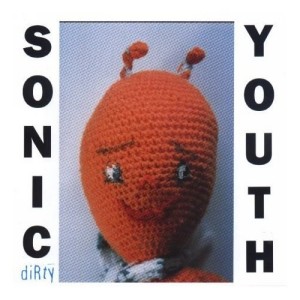
Dirty – DGC, 1992
Highlights: “Theresa’s Sound-world,” “Wish Fulfillment,” “On the Strip,” “JC”
Low Points: “100%,” “Swimsuit Issue,” “Drunken Butterfly,” “Shoot”
Overall: Key realization: I enjoy Sonic Youth the noisy guitar rock band far more than Sonic Youth the noisy punk band. There were inklings of the latter dating all the way back to Confusion Is Sex, more explicit evidence like the cover of “Hot Wire Your Heart” on Sister, and two snotty punk songs on Goo. And I like none of it! They’re better at guitar rock! But Dirty gives each side of the group roughly equal footing for the first time. Shockingly enough, I like half of the album.
Bringing in alternative rock guru Butch Vig—post-Nevermind, pre-Siamese Dream—to produce the album certainly predicts the shorter, more direct songs. (No “Silverfuck” here.) It would be easy to vilify Vig for Dirty’s faults, but the shorter songs here are more substantial than those on Goo. This might be the remaster talking, but the guitars are huge, with the scraping noise kept in control and shaped into near hooks, and Steve Shelley’s kit sounds great. It’s the group’s attitude, specifically Kim Gordon’s, which kills the momentum of the album. Does the punk attitude come more naturally with those shorter track times? Is that the setting they go to when they can’t exclusively write guitar jams? This attitude reveals Dirty’s fatal flaw:
Kim Gordon sings like she’s retching.
Yes, her loathed delivery from “My Friend Goo” makes a return on most of Gordon’s seven songs. It’s a sneering, petulant lip-curl that sounds like she’s throwing up. Gordon’s vocal versatility is often a blessing—the regretful sing-speak of “Beauty Lies in the Eye,” the intimate whispers of “Shadow of a Doubt,” the desperate warnings of “Brave Men Run (In My Family),” the urgent cries of “’Cross the Breeze”—but just as often, it’s a curse—the anti-melodic shouting in “Making the Nature Scene,” the theatrical moaning of “Ghost Bitch,” the strained syllables of “Pacific Coast Highway.” Here’s the rub: her most irritating affectations are driven by the feminist messages in her lyrics. Sometimes she wants to sound sexy and alluring (“Kool Thing”), other times she wants to scare off potential suitors (“Pacific Coast Highway”) with a distinctly feminine threat of violence. From an academic standpoint, it’s daring and original. To my ears, it can be awfully irritating.
The specific difference between the likeable vocal styles mentioned above and the retching affectation on Dirty involves the songs’ respective lyrical approaches. Many of Gordon’s best songs in the 1980s involved her embodying characters and giving voice to their perspectives, using them as vessels for her feminist confrontations. Some of that still happens on her Dirty tracks, but the retching affectation itself is the confrontation. It’s up front, it’s in your face, it’s not conforming to your traditional ideas of feminine sexuality or passivity. I understand the point of this affectation; I just cannot stand listening to it. The message is killed by the messenger. “Swimsuit Issue” starts off with a hypnotic combination of pounding drums and throbbing, nearly industrial guitars, but soon enough Gordon’s ranting “Don't touch my breast / I’m just working at my desk.” “Drunken Butterfly” starts off with a truckload of palm-muting and Gordon’s lurking vocals, but the chorus is intentionally irritating. Gordon goes full-retch during the “I won’t be asking” part of the ode to feminist defiance, “Shoot.” “Orange Rolls, Angel’s Spit” has Gordon’s inviting coos and an excellent noisy breakdown, but the chorus strains too much for emotion. Those are four of the first eight songs on Dirty and I itch to skip each one of them. They’re musically inventive and lyrically provocative at times, but Gordon’s insistence on that damned affectation prevents me from caring.
Gordon thankfully drops the act during Dirty’s second half. “On the Strip” is an album highlight driven by Steve Shelley’s furious performance. “JC” starts with some gloriously fuzzy guitar feedback before Gordon comes in with a poetic tribute to murdered Black Flag / Rollins Band roadie Joe Cole. (Rollins wrote two books about his relationship with Cole, See a Grown Man Cry and Now Watch Him Die.) Unlike “Tunic (Song for Karen),” there are no ill-fitting attempts at humor. Gordon closes out Dirty with the loping “Créme Brûlèe,” a country ballad played by noise-rockers. It’s half-assed, sure, but endearing. If only her first four songs were so likeable.
Thurston Moore fares better on the whole, suffering from a few stumbles instead of a reoccurring issue. “100%” recounts the story of Cole’s murder (and reenacted it with then-skateboarder Jason Lee for its video), but its screeching guitar leads can’t make up for its dumbed-down rhythms. It plods. “Theresa’s Sound-world” is a much, much needed dose of epic guitar rock, modernizing the crystalline beauty of Daydream Nation. “Sugar Kane” is a catchy dose of (no longer) indie rock with a dynamic bridge, sounding like the cousin to the Dinosaur Jr lineage of “Disappearer.” Moore checks his punk cred on “Youth Against Fascism” and “Nic Fit.” The former is an openly political song denouncing Reagan/Bush politics, featuring a guest guitar track from Ian MacKaye. The Anita Hill reference shows why Fugazi’s better at political rock; the most effective protest songs are timeless, not timely. “Youth Against Fascism” still shames the previous punk attempt of “Mary-Christ.” The latter is a straightforward lo-fi cover of the Untouchables’ “Nic Fit,” an early DC hardcore punk group who featured Alec MacKaye, Ian’s younger brother. Thurston just leveled up his credibility! Happy Go Licky patch now available! If these songs helped kids get into Fugazi and Minor Threat, great, but it’s hard to view that end as a primary motivation eighteen years later. “Chapel Hill” proves that Thurston can make his melodic indie rock political as well, covering the recent murder of an African-American bookstore owner in North Carolina. “Purr” split the difference between the punk energy of “Youth Against Fascism” and the guitar rock of “Chapel Hill.” Not bad, but not a favorite, either. I’ll take “Theresa’s Sound-world,” “Sugar Kane,” “Chapel Hill,” and “Youth Against Facism” on weekends and leave the rest with their mother.
Poor Lee Ranaldo. Even with fifteen songs, he’s limited to one selection. “Wish Fulfillment” demonstrates another quantum leap in his melodic skills, joining his stellar run of “Eric’s Trip,” “Hey Joni,” and “Mote.” It even sounds more like a 1990s alternative rock hit (alright, stand-out album track) than any of the other songs here—Kim’s songs are too abrasive or indirect, Thurston either hits his 1980s college rock button or stretches for alternative punk directness—and yet his other track from the sessions (the typically likeable “Genetic”) was cut from the album by Gordon, Moore, and A&R rep Gary Gersh, prompting Ranaldo to consider leaving the group. It later appeared on the soundtrack to My So-Called Life. With that kind of exposure, he’ll get plenty of songs next time! Oh wait.
Beyond Kim Gordon’s verbal heaves, Dirty’s biggest weaknesses are its sequencing and single selection. I’m likely to skip five of the first eight tracks, including two of the album’s singles. Hindsight is 20/20, but “100%,” “Drunken Butterfly,” and “Youth Against Fascism” don’t sound like crossover hits to me, even in the supposed free-for-all of post-Nevermind alternative radio, and “Sugar Kane” is too long and lacks an ear-drum-drilling hook. For a group making concessions to the mainstream—Butch Vig, shorter songs—it’s not paying off in big time commercial success. The fifteen-year-old version of me would say that the mainstream just doesn’t understand what’s good, but the nearly thirty-year-old version of me flips that statement around on the artist.
Oh, if only I’d heard Dirty when I was fifteen. I’m sure that readers who did hear it then have more patience for Gordon’s vocals, for the punk sloganeering, for the too-cool posturing. All of that seems perfect for teenagers. Given its release date, I suspect Dirty was also the first Sonic Youth album many fans heard, and it’s hard to shake that nostalgic fondness of the first taste. My take, coming to Dirty long after the fact and fresh off a chronological run through its predecessors, lacks such nostalgia. It’s a flawed album. Gordon’s vocals kill four would-be-good songs. Two of Moore’s singles aren’t keepers. The rest of the album varies from good to great, with a few songs matching the highs set on Goo. If nothing else, Sonic Youth’s 1990s output will be easier to condense into a best-of mix.
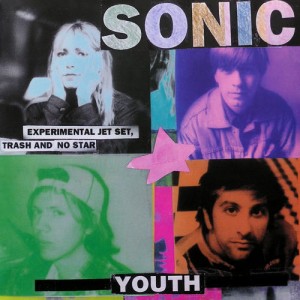
Experimental Jet Set, Trash, and No Star – DGC, 1994
Highlights: “Winner’s Blues,” “Bull in the Heather,” “Skink”
Low Points: “Androgynous Mind,” “Quest for the Cup,” “Waist”
Overall: There are so many different angles that I can take with each of these albums that I often ignore the most obvious ones. “Hello! Dirty is their grunge album!” Goo predicted the touchstones of the alt-rock sound, but Dirty cashed in on them. The production, the big riffs, the attitude: early 1990s alt-rock all the way. Granted, I listened to a lot of early 1990s alt-rock growing up, a lot of it nowhere near as good as Dirty (ahem, Dig), but it’s still not a flattering genre tag.
There’s such a noticeable change in approach for this album that I can only put it in grossly inaccurate genre tags: Goo and Dirty sound like alt-rock records and Experimental Jet Set sounds like a polished indie rock record. It’s still a major label record recorded by Butch Vig, but after the beefy guitars and up-front attitude of Dirty, EJTANS serves as a welcome palette cleanser. It’s their version of the switch from the compressed rock of Nevermind to the Albini-ified brutality of In Utero—an attempt to separate themselves from the prevailing sonic blueprint of mainstream alternative. At times, it feels like a return to the chiming backdrop of EVOL. Yet the aesthetics alone don’t make for interesting songs, which each member of the group struggles to understand.
At the very least, Kim Gordon drops the extroverted act and returns to the EVOL days. Welcome back, Kim. By dumping the retching affectation in favor of less confrontational approaches, you’re back in my good graces. “Bull in the Heather” outshines the Goo and Dirty singles, since it relies on a few of their strengths—chiming guitars, curiously evocative vocals—instead of forcing their way into brawny or cool alt-rock. “Skink” is wonderfully spacious, reminding of the quieter moments on Girls Against Boys’ Venus Luxure No. 1 Baby. Those two songs are superb, but the remaining Gordon songs get progressively less interesting until a redemptive closer. In between blasts of ill-fitting rock, “Bone” sketches a more structurally sound version of the drifting southwestern evenings of Bad Moon Rising. (Cat Power owes her some royalties for this one.) “Doctor’s Orders” is another retro song, but it only gets interesting with its ghostly outro. “Sweet Shine” closes out the record with another mid-tempo song that rips open with a passionate Gordon cry midway through. Except for “Quest for the Cup,” a go-nowhere mid-tempo punk song reminiscent of the more aimless moments on Pavement’s Wowee Zowee, Gordon’s contributions to EJTANS are remarkably mellow, perhaps more fitting for her first solo album than the follow-up to Dirty.
Thurston Moore doesn’t fare as well as Gordon on Experimental Jet Set, in large part because his foremost strength as a songwriter—epic guitar rock—is still compromised by the shorter songs. Not since Confusion Is Sex has Moore lacked one of the album’s true standouts—“Death Valley ’69,” “Expressway to Yr Skull,” “Stereo Sanctity,” “Teen Age Riot,” “Titanium Expose,” “Theresa’s Sound-world” is quite a stretch—but too many of his EJTANS contributions feel slight. Acoustic opener “Winner’s Blues” comes the closest to standout status: the first instance of delicate acoustics in the group’s major catalog, carried by Moore’s yearning vocal melody. “Starfield Road” is a tight rocker with an annoying flanger effect. “Screaming Skull” is a catchy ode to record shopping and good musical taste—both things I highly endorse—but Moore’s name-checking shopping list would be more useful for someone unaware of Superchunk, Hüsker Dü, the Lemonheads, and Pat Smear. “Self-Obsessed And Sexxee” is another laconic rocker that doesn’t stick with me. “Waist” is its up-tempo counterpart. “Androgynous Mind” is an irritating blast of noise-punk. Moore takes a stab at Gordon’s spaciousness with “Tokyo Eye,” punctuating it with a blast of guitar noise, but the song itself feels under-baked. “In The Mind of the Bourgeois Reader” is “Waist” part two. Given that Moore has a record eight songs on EJTANS, one paragraph seems remarkably speedy for their discussions, but too many of them go in one ear and out the other.
And Lee Ranaldo? Just playin’ guitar this time. Considering that he was better than Thurston and Kim at grungy alt-rock, perhaps he was more resistant to leave it behind. Whatever the reasoning, Experimental Jet Set suffers from its lack of a solid Lee song.
Experimental Jet Set simply doesn’t stay with me. It’s more intimate, but there’s no reward for the intimacy. In Sonic Youth’s eagerness to leave grunge bluster behind, they forgot to have a clear idea of what to do with the songs. It’s the opposite of Dirty: instead of primarily good songs crippled by a forced aesthetic/posture and ill-fitting singles, it’s primarily forgettable songs made somewhat more endearing by toned-down production and a superb single. It could have been a great EP or half of a reasonably good Gordon solo album, but instead it’s a stop-gap LP.
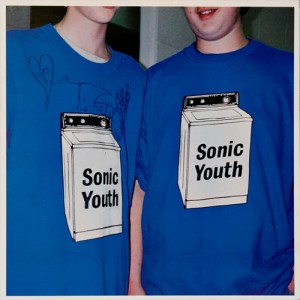
Washing Machine – DGC, 1995
Highlights: “Becuz,” “Unwind,” "Little Girl Trouble," “Skip Tracer,” “The Diamond Sea”
Low Points: “Panty Lines,” vocals on “Washing Machine” and “Junkie’s Promise”
Overall: Washing Machine should begin with a public service announcement. Attention, citizens: Sonic Youth, your guitar rock overlords, have returned from our journey through the alternative nation. We come bearing gifts. After all, would this return-to-form be so sweet without outward push of Goo, the embrace of foreign cultures of Dirty, and the longing for home of Experimental Jet Set? Doubtful. The missteps along the way make Washing Machine come off as the second coming of Daydream Nation, which it isn’t, but it is my favorite Sonic Youth album of the 1990s.
The nearly twenty-minute epic “The Diamond Sea” is one of the group’s finest achievements, a rare combination of mesmerizing storytelling, haunting melodies, and elongated experimentation. Songs like “Mote” and “Theresa’s Sound-world” kept the spirit of Daydream Nation’s navel-gazing “The Trilogy” alive, but “The Diamond Sea” advances it. The first eight minutes compete with Television’s “Marquee Moon” and Juno’s “The French Letter” for my favorite guitar epics. The final twelve minutes aren’t entirely disconnected, but I do view them as optional. Sometimes I want to drift into the void, 2001-style, other times I just want the narrative. Yet I’d never argue that the instrumental ending is unnecessary. (I’ve made that argument for the wandering instrumental passages closing Modest Mouse’s “Trucker’s Atlas,” Polvo’s “When Will You Die for the Last Time in My Dreams,” and June of 44’s “Sharks and Sailors,” all fine songs otherwise.) Since Confusion Is Sex’s “Lee Is Free,” the experimental guitar passages have been pushed into smaller and smaller confines. By Dirty and Experimental Jet Set, those passages had been largely tucked away within the songs’ natural verse and chorus sections. Yet the ending of “The Diamond Sea” shows just how involving those passages can be when unencumbered by rock and roll formulas. (It even makes me want to listen to all of those SYR EPs!) “The Diamond Sea” pulls off an impossible double move by conquering both the traditional and experimental sides of the group’s aesthetic.
It’s understandable, then, if you overlook the rest of the album in favor of its monumental closer. I certainly did after receiving Washing Machine from Columbia House in high school. Yet Washing Machine’s loving exploration of guitar rock isn’t limited to “The Diamond Sea.” Kim Gordon plays guitar, not bass, on the majority of these songs, eliminating some of the low-end grooves in favor of spiraling leads and additional textures. Opener “Becuz” gives much needed energy to Gordon’s largely sedate contributions from EJTANS, lacing its post-punk with a biting feedback section. It’s reprised later in the album by its displaced instrumental outro, “Untitled.” Lee Ranaldo’s “Saucer-like” morphs its initially queasy alternate tuning into inviting, affecting melodies. Moore’s effortlessly melodic “Unwind” gradually accelerates into a frenzy, but its careful harmonics never lose their appeal. Kim Gordon and Kim Deal continue the lovely nonchalance of “Unwind” for duet on the girl-group revival “Little Trouble Girl,” which would be perfect if not for its similarity to Gordon’s letters from heaven in “Tunic (Song for Karen).” Ranaldo’s “Skip Tracer” pulses along in his old spoken word style before breaking for the emotional couplet “Where are you now? / When your broken eyes are closed.” These songs aren’t “The Diamond Sea,” but they’re compelling on their own accord, adding interesting elements to the Sonic Youth catalog.
A few critical mistakes separate Washing Machine from the top tier of Sonic Youth albums. The diminished-chord display case “Panty Lines” is downright obnoxious. Its four minutes seem interminable. The title track commits another familiar Kim Gordon sin by nearly ruining an otherwise great song with irritating vocals and lyrics. The nearly ten minutes of twisting guitar rock is welcome, but someone should have checked Gordon’s vocals at the door. Moore’s “Junkie Promise” and “No Queen Blues” each feature some great guitar work, but the angst feels forced. Ranaldo’s generally excellent contributions do mark the return of his spoken word/beat poetry, which I enjoy in small doses.
In one way, what I enjoy so much about Washing Machine—its return to epic guitar soundscapes—is less daring than the flirtation with the mainstream on Goo and the heavy petting with the alternative nation of Dirty. Experimental guitar rock is their comfort zone. Those records pulled Sonic Youth out of their natural habitat, forced them to reconcile their song structures with the prevailing tides, and turned art-scenesters into alt-rock extroverts. Washing Machine, for the most part, puts them back in their natural artistic progression. There’s far less risk of fan revolt or critical disgust. In another way, it’s more daring. There are no overt singles, no forced hooks, and no tidied runtimes. Washing Machine is the album when Sonic Youth decided to set their own major label agenda (except for the “Becuz” instrumental passage and the radio edit of “The Diamond Sea,” changes which are largely irrelevant in retrospect). As DGC’s resident cred-band, they can explore the bounds of artistic freedom within the major label world, something they’d tried to do in a less mature, less productive way with Goo’s working title (Blowjob?). Is it possible to be both comfortable and exciting? Washing Machine certainly makes a case for it.
Too bad “Panty Lines” is part of it.
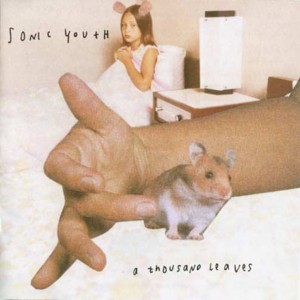
A Thousand Leaves – DGC, 1998
Highlights: “Sunday,” “Wildflower Soul,” “Hoarfrost,” “Karen Koltrane,” “Snare, Girl”
Low Points: “Contre le Sexisme,” “Hits of Sunshine (For Allen Ginsberg),” “The Ineffable Me”
Overall: Between the mellow, drifting songs on Washing Machine and the first three SYR EPs, Sonic Youth had gotten accustomed to indulging their experimental tendencies prior to A Thousand Leaves. Washing Machine’s biggest indulgence was also its greatest achievement, but there’s no “The Diamond Sea” on A Thousand Leaves to comprise twenty minutes of its record seventy-three minute runtime, only ambient tendencies and songwriting debris. These elements are the products of the stretching-out I heralded on the last record, the unsurprising result of the group’s recognition that they can now do whatever they want.
It’s not what Sonic Youth wants, but what A Thousand Leaves truly needs is an editor. Recorded at their own studio with old friend Wharton Tiers, who’d produced Confusion Is Sex and a few scattered EPs along the way, A Thousand Leaves is an insular product. I doubt that DGC, which was folded back into Geffen proper the following year, was overseeing the recording sessions. Such intrusions by the suits are frowned upon, much like the hands-on approach taken by producers like Butch Vig, but A Thousand Leaves demonstrates what can happen when experimentally inclined groups are left to their own devices. Three songs linger beyond nine minutes, three more beyond six minutes. These songs aren’t structured like the crystalline riff-factories on Daydream Nation, either. A few of them feature formless passages that prompt a look at the clock.
The obvious counter-argument I brought up earlier resurfaces: “Isn’t stretching out exactly what you wanted from Sonic Youth?” Yes, but I want it to be inspired. Much like the guitar noise interlude “Scooter + Jinx” disappointed me because its guitar noise wasn’t very interesting, I know Sonic Youth can do better than the eight minutes of minimalist hippie jamming in “Hits of Sunshine (For Allen Ginsberg).” I know Kim Gordon can evoke a nervous breakdown better than “Contre le Sexisme,” an ambient tone poem about Alice in Wonderland. I know Gordon can write “Heather Angel” without the boho-art jam session that riddles its midsection, thereby solidifying its otherwise favorable comparison to Pavement’s “Fight this Generation.” I’m not suggesting that A Thousand Leaves needs a Vig-level edit, since there’s some wonderfully laid-back material here that’s worth keeping. But seventy-three minutes of it? No way.
Lee Ranaldo and Thurston Moore have a better grasp of this mellowed-out style. Ranaldo’s “Hoarfrost” demonstrates previously unseen gentleness, a prog-pop walk through the woods that’s casually commanding. “Karen Koltrane” isn’t as tightly structured, but it covers a variety of intriguing textures during its nine minutes, including an ace interlocked passage. Moore’s “Sunday” turns its laconic pop into an involving dose of chugging guitars and scaling feedback. Moore and Gordon’s daughter Coco gets a marvelous epic in “Wildflower Soul,” at least until the ill-fitting power drill sound near the end. Leave that to “The Burning Spear,” guys. The dreamy lilt of “Snare, Girl” would have been perfect as an album closer, sending the listener off to sleep like Hum’s “Songs of Farewell and Departure.” These five songs show how great A Thousand Leaves can be when its space is filled effectively.
While Ranaldo and Moore largely succeed at this lazy Sunday afternoon version of Sonic Youth, Kim Gordon either fails to settle into a groove or fights to make the record energetic, both of which involve many of her old, irritating tricks. Her aggro-feminist tendencies make “The Ineffable Me” absolutely unsalvageable. The aforementioned “Contre le Sexisme” brings back her overwrought theatrics. “Heather Angel” feels unnecessary after “Snare, Girl,” although its closing rock-out is solid. “Female Mechanic Now on Duty” pairs Gordon’s unfocused feminist critiques (ostensibly a response to Meredith Brooks’ “Bitch”) with a gloriously vague final few minutes. “French Tickler” mixes the laconic charm of Moore and Ranaldo’s songs with a few dissonant rock-out passages that have a slight return of Gordon’s retching affectation. I’ll live with it, though, since it’s the best Gordon song on A Thousand Leaves by a wide margin.
It’s not like past Sonic Youth albums haven’t been spotty or needed more editorial control. All of them—even the trilogy of excellent LPs closing out the 1980s—suffer from extraneous or irritating material. A Thousand Leaves has five genuinely great songs, which is no slouch, but those songs are lumped in with too much aimless noodling and Kim Gordon drama. I’ve avoided the old Stylus Magazine trick of Playing God with these albums, but since I own the 2LP set of A Thousand Leaves and every side has a misstep, I can’t stop myself from wondering what could have been.
Here’s my hack-and-slash edit. First, trim “Contre le Sexisme” down to two minutes, tops. Keep “Sunday” second. Make the final three minutes of “Female Mechanic” into its own song and drop the rest. I’ll let the power drill wails of “Wildflower Soul” slide. “Hoarfrost” is perfect. “French Tickler” gets my lone Kim Gordon pass for the album. “Hits of Sunshine” would be a better tribute to Allen Ginsberg without seven minutes of its Grateful Dead jamming. “Karen Koltrane” is probably too long, but I’ll overlook it for my pal Lee Ranaldo. Drop “The Ineffable Me” completely off the face of the earth. Don’t even put it on a b-side. Cut two minutes out of “Heather Angel,” move it up to the penultimate slot. Close the record with “Snare, Girl.” At ten songs and roughly 53 minutes, the New Artillery rough cut of A Thousand Leaves is still ponderously laconic, maintaining the spirit of the original, but Seven-Hundred-and-Twenty-Six Leaves will let you enjoy that hazy Sunday afternoon without constant trips to the turntable.
Click here to read about Sonic Youth's albums from the 2000s.
|
|
Sonic Youth is the perfect candidate for the first round of Discographied. As I’ve mentioned before, I enjoy them, but haven’t spent time with a solid chunk of their catalog. At fifteen full-length LPs, that’s no surprise, but given the variance of opinion on their albums past Daydream Nation and Sister, it’s understandable. Fifteen is even a conservative number, excluding the eight EPs of experimental recordings released under the SYR banner, their self-titled debut EP, seven other EPs, soundtracks, singles, bootlegs, solo releases, and the Ciccone Youth side project LP. Needless to say, this endeavor will not be comprehensive. If you want a more comprehensive take on Sonic Youth, consult Mark Prindle.
I’ve chosen to listen to the fifteen LPs and their self-titled debut EP, disregarding any bonus tracks appearing on reissues. Will I miss out on some great songs by ignoring all of those other releases? Sure. Would hearing the noisier, more experimental side of Sonic Youth give me a better sense of their overall aesthetic? Naturally. Would listening to every last song drive me completely insane? Dear God, yes. If you’d like to suggest a few essential peripheral releases, I’m all ears, and will get to them in a bonus round once I’m through with their full-lengths.
This entry will cover their first EP and their first five LPs: Confusion Is Sex, Bad Moon Rising, EVOL, Sister, and Daydream Nation, which is a nice arc covering their 1980s releases and ending before their signing with Geffen.
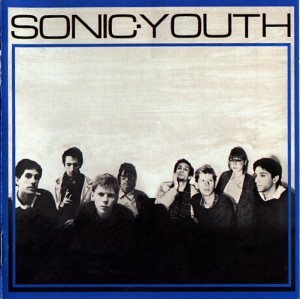
Sonic Youth EP – Neutral, 1982
Highlights: “The Burning Spear,” roughly half of “The Good and the Bad.”
Low Points: The other three songs.
Overall: My prior idea of early Sonic Youth being “unbridled noise that slowly formed into more discernable songs” is completely destroyed by their debut EP. Their lone release featuring original drummer Richard Edson*, Sonic Youth is remarkably mellow. This EP has virtually no guitar noise or feedback and instead emphasizes rototom-heavy drumming, giving it a beatnik vibe in spots. Much like Killing Joke’s debut EP, Sonic Youth feels more in line with the prevailing musical tendencies of the post-punk era than with the signature style featured on their debut full-length. “The Burning Spear,” in spite of a notable Gang of Four influence, is the most memorable track, pushing the guitar chimes to the front and even adding a power-drill wail. “I Dreamed I Dream” features the earliest instance of Kim Gordon’s penchant for artistic sloganeering when she mumbles “Fucking youth / Working youth,” but this blueprint that got significantly better upon reuse. “She Is Not Alone” and “I Don’t Want to Push It” are purely for Edson fans, since the former plods along with only a few guitar chimes and some laconic Thurston Moore vocals keeping me awake and the latter actually features a drum solo. “The Good and the Bad” is an eight-minute long instrumental that begs for more guitar noise and less busy drumming. Gordon keeps it afloat at times, but it’s a losing cause. Cut in half, it would’ve been a solid track, but their guitar textures are simply not interesting enough at this stage to justify such aimless drifting.
Have I mentioned that this EP primarily features standard guitar tunings? Yes, that’s a big sign that Sonic Youth is a false start at the beginning of their catalog. Elements of their signature sound are present, but only “The Burning Spear” brings them to the forefront. Richard Edson simply doesn’t mesh with the group’s style and throws off the tone of these songs. Fortunately, they make some significant progress over their next fifteen LPs, so I won’t judge them too harshly for this one.
*Fun fact: I had no idea that Richard Edson was the parking attendant in Ferris Bueller’s Day Off and Vito in Do the Right Thing.
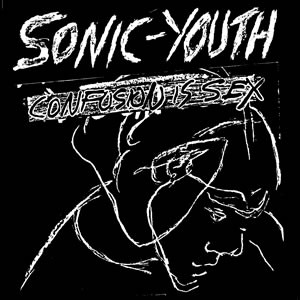
Confusion Is Sex – Neutral, 1983
Highlights: “(She’s in a) Bad Mood,” “Protect Me You,” “The World Looks Red”
Low Points: “Confusion Is Next,” “Making the Nature Scene”
Overall: From its queasy opening chords, Confusion Is Sex opens the proper Sonic Youth era. Gone is the beatnik vibe of the Richard Edson days; enter a newfound emphasis on confrontation and noise as bastions of their approach. Confrontation too often feels forced within music, but it makes an enormous amount of sense within Sonic Youth’s historical and cultural context circa 1983. It’s profoundly different from the more literal take on confrontation favored by hardcore bands like Black Flag and Minor Threat, but no less visceral. This context doesn’t excuse the too-frequent indulges of performance art dramatics, but I’ll take those over the boredom of “She Is Not Alone” in a heartbeat.
The Moore-sung “(She’s in a) Bad Mood” and the Gordon-fronted “Protect Me You” start Confusion Is Sex with an overwhelming sense of doom and gloom. There’s not much structure to be found, but the guitars chime and clang with spooky energy, the bass rumble amplifies the tension, and temporary drummer Jim Sclavunos’s performance is recorded poorly enough to sound menacing. Maintaining this atmosphere proves to be an issue, however. Feedback experiment “Freezer Burn” leads into a live take of the Stooges’ “I Wanna Be Your Dog,” which is a head-shaking drop in fidelity, but at least the latter features Bob Bert’s powerful drumming. “Shaking Hell” starts off with the Gang of Four-esque funkiness from the Sonic Youth EP, but quickly takes a turn down the dark alley where Kim Gordon chants “Shake off your flesh” like a bloodthirsty vagrant. “Inhuman” is defiantly lo-fi rocker with an energy that I hardly anticipated during the first two songs. “The World Looks Red” features lyrics from Swans’ Michael Gira, but it’s Moore’s clear vocal performance and the dueling guitar noises—one sounds like a music box being played backwards at half-speed—that set the song apart. Sadly, the last two proper songs shit the proverbial bed.
“Confusion Is Next” is a clanging, tuneless headache that’s not excused by the punk blast in its final minute. “Making the Nature Scene” is a rambling, Kim-Gordon-yells-things track. At least the instrumental “Lee Is Free” ends Confusion on an interesting note, compiling an array of guitar textures that sound like malformed church bells and frog calls. Its impact is lessened, however, by my utmost certainty that Moore and Ranaldo have thousands of hours of practice tapes with similarly wonky tones.
I’ll commend Confusion Is Sex for being a record of intriguing ideas, but without structure and focus, too many of these ideas veer off course. I was foolish to expect the album to maintain the portentous clamor of its first two songs, but the chaotic flow and weaker tracks diminish the genuinely disorienting feeling of songs like “Protect Me You” and “Shaking Hell.”
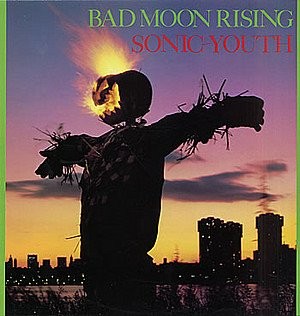
Bad Moon Rising – Homestead, 1985
Highlights: “Brave Men Run (In My Family),” “I Love Her All the Time,” “Death Valley ’69”
Low Points: “Society Is a Hole,” “Ghost Bitch”
Overall: True to its title, Bad Moon Rising feels like a late-night drive down a west Texas highway, as sleeplessness slowly turns into insanity, everyone turns on each other, and morning never arrives. Without the chaotic bits interrupting the sense of portentous doom that began Confusion Is Sex, this mood can actually ebb and flow on Bad Moon Rising, much like the back-half of Wipers’ Youth of America. A consistent rhythmic drone and brief segues between songs tie the album together as a single piece. It’s a marked improvement over Confusion and a proper, timely statement (much like the Wipers’ album), but the individual songs settle into the whole instead of standing apart.
Bad Moon Rising starts on a high note with the mesmerizing arpeggios of “Intro” leading seamlessly into the relatively bright chords of Gordon’s “Brave Men Run (In My Family).” Gordon’s vocals capture the perfect level of distanced danger and violence, matching the song’s transition from its optimistically bright beginning to the heightened caution of its fade-out. Sticking with the highlights, “I Love Her All the Time” is a buzzing love song occasionally punctuated by bursts of distorted guitars and drums. “I’m Insane” appropriates industrial rhythms for Moore’s focused delivery of lines from the back covers of pulp fiction novels.
Moore and Gordon each provides a misstep. Moore’s “Society Is a Hole” demonstrates the album’s biggest strength—cohesion—also contributes to a notable weakness: at six minutes, it’s simply too long for a one-chord drone dismissal of modern society. “Ghost Bitch” is the album’s requisite dose of Kim Gordon irritation, her melody-free vocals chanting over rudimentary industrial pounding. The beginning of the song provides some interesting ambient feedback, but once the Gordon vocals come in, that’s all I hear.
The majority of the record falls into this rhythmic drone, but album closer “Death Valley ’69” breaks the tension with a much-needed dose of energy. (Can’t help but think, “We made it to the tire fire, guys! We did it!”) No Wave pioneer Lydia Lunch is the rare vocalist who is able to out-pretense Kim Gordon, which is an accomplishment on an album containing the pained drone poetry of “Ghost Bitch,” but her mirrored duet with Moore is less irritating and more intense than I’d expect. No surprise that this song is one of the hallmark tracks of early Sonic Youth.
Considering that “Death Valley ’69” and “Brave Men Run (In My Family)” comprised a pre-album single, I’m inclined to bring Bad Moon Rising down a notch, but its overall atmosphere is worth hearing as a whole. While those songs are the clear highlights, they also feed into a compelling album arc. Bad Moon Rising would, however, be better off as a mini-LP, trimming some of the fat from “Society Is a Hole” and “Ghost Bitch.”
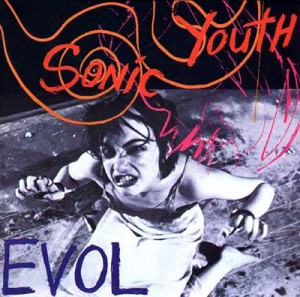
EVOL – SST, 1986
Highlights: “Tom Violence,” “Shadow of a Doubt,” “Star Power,” “Expressway to Yr Skull”
Low Points: “Death to Our Friends” isn’t necessary, but it’s not bad either
Overall: I haven’t stressed this point until now, but pre-EVOL Sonic Youth suffers from the “You had to be there” syndrome of certain groundbreaking art. Those early records were particularly exciting because they caught a genre in transition—moving away from prevailing contemporary ideas, pulling in outside influences, expunging tired clichés. 25 years later, the shock value of that movement is largely gone, but those documents remain. I can appreciate those albums for what they are—for the 2010 listening experience of Confusion Is Sex or Bad Moon Rising documented above—but I can’t fully appreciate what it was like hearing those albums in the context of 1980s underground rock. So much of what Sonic Youth brought into underground rock has since been normalized, so things like wonky alternate tunings (Polvo, ahem), prepared guitar treatments, drone-oriented soundscapes (Kranky Records), and postmodern nightmares (Godspeed You Black Emperor’s F# A# Infinity would be an apt companion piece for Bad Moon Rising) now seem strangely commonplace. I can’t blame Sonic Youth for their timeliness and innovation, but I can prefer the more timeless material those early experimental records evolved into, starting with this aptly titled album.
Bad Moon Rising demonstrated Sonic Youth’s newfound ability to shape their avant-garde influences into an actual album arc, but excluding “Death Valley ’69” and “Brave Men Run (In My Family),” its songs were still dominated by their experimental lineage and their confrontational stance toward rock and roll norms (melody, for one). EVOL opts to subvert from within by embracing shorter songs and memorable melodies, trading confrontation for listenability. Those elements still take a backseat to the creative approaches to guitar and song structures, but their presence helps EVOL tremendously.
I’ll hand it to Kim Gordon; barring the first 1:15 of “Secret Girl”—an unnecessary soundscape delaying the entrance of the disturbingly pretty piano part—her three songs on EVOL are all top notch. “Secret Girl” shows that ornate beauty can still be unnerving. “Starpower” limits the vocals, letting the disorienting guitar and bass parts dominate the song. And “Shadow of a Doubt”? I’ll be stunned if I come across a better Kim Gordon song on one of the remaining albums. The layered harmonics—pulled lower than usual thanks to those alternate tunings—would alone make for a wonderful song, but it’s Gordon’s alternately hushed and feverish delivery that sets the song apart, reciting the combination of sex and murder inspired by Hitchcock’s Shadow of a Doubt and Strangers on a Train. The intimacy in “Shadow of a Doubt” is truly impressive; even in a song about two films, there’s no distance between the Gordon and the subject matter.
Thurston Moore also has three excellent songs—the excellent opener “Tom Violence,” the woozily propulsive “Green Light,” and the notoriously great closer “Expressway to Yr Skull.” Moore opens the last with “We’re gonna kill the California girls,” but unlike the threats of violence on Bad Moon Rising, this sentiment is marked by its nonchalance. It’s supposedly about Madonna and Sean Penn, but the lyrics are so vague that any cultural criticism is effectively irrelevent. “Expressway to Yr Skull” is all about the rise and fall of its guitar-driven rollercoaster. After a few ups and downs, the final two minutes of ambient echoes closing out the album feel earned. (I know I vowed not to listen to the bonus tracks, but a few times the cover of “Bubblegum” has come up after “Expressway” and it’s unendurably terrible.)
Another strength of EVOL is how even its weaker songs aren’t particularly bad, they just don’t measure up to “Shadow of a Doubt” and “Expressway to Yr Skull.” Lee Ranaldo’s “In the Kingdom #19” is a poem about a car crash with Mike Watt on bass (shortly after the D. Boon car crash, even). Its engine-revving guitars are neat, but after a few spins of EVOL I’m tempted to skip it. “Death to Our Friends” is a decidedly competent instrumental. Moore’s “Marilyn Moore” is essentially one of the droning cultural critiques from Bad Moon Rising performed with the cleaner aesthetic of EVOL, but there are a few moments when the buzzing guitar noises gives way to an affecting calm.
I can appreciate Bad Moon Rising, but I don’t anticipate ever loving it. EVOL, however, floored me on the first listen and kept me coming back for more. I’m almost reluctant to move onto Sister, since I’d rather stick with “Shadow of a Doubt,” “Starpower,” and “Expressway to Yr Skull” for a few more days. For the first time in their catalog, there’s no need to reconcile the difference in eras. EVOL has lost nothing in the last 24 years.
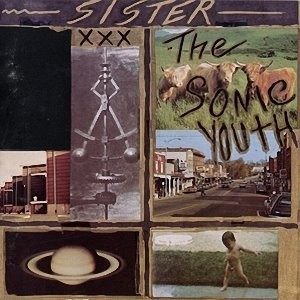
Sister – SST, 1987
Highlights: “Schizophrenia,” “Beauty Lies in the Eye,” “Stereo Sanctity,” “Cotton Crown”
Low Points: “Hot Wire My Heart,” the “Kill Time” part of “Pipeline/Kill Time”
Overall: The fundamental question about Sonic Youth albums changes with Sister. It’s no longer “Is this stage of their development interesting out of its historical context?” EVOL answered that one definitively. Now it’s “Is the songwriting on this album consistently good?” Sure, there may be a sharper change in the approach to the songwriting on a given album, presumably Dirty and NYC Ghosts & Flowers, but most of their avant-garde impulses will be pushed to non-album material from here on out, whether it’s the Ciccone Youth album, the Fall covers EP, or the SYR series of EPs. This divide maintains Sonic Youth’s experimental side (and their street cred), but it also means that their official LPs are now known quantities with a certain level of expected quality.
Sister certainly exceeds such expectations, both fitting into the prevailing sound of late 1980s indie rock and dictating what groups would rip off in the years to come. Virtually every one of these songs offers at least one of the following, if not all of them: a tricky verse guitar part; an insistent vocal hook; a mesmerizing noise bridge; a dramatically effective change of pace. If pure songwriting is the determinant of success, Sonic Youth nailed it. I spent far longer with this album than I anticipated, since every time I’d hear something new, some new song would stand out from the fray.
The majority of those highlights are Thurston Moore tracks, which vaults him to the top of the SY totem pole for this go-around. Although “Expressway to Yr Skull” is the most notorious song from EVOL, Kim Gordon contributed “Shadow of a Doubt”—its best song—and two other solid tracks, giving her a higher success rate than Moore. (Lee Ranaldo, buddy, you need more than one song to get in this fight.) This time it’s Moore with the tremendous success rate. Opener “Schizophrenia” is primarily a Moore song, a mid-tempo demonstration of their newfound melodic instincts and their invitingly warm guitar tone, but Gordon does appear midway through with a dreamy embodiment of the song’s titular theme. “(I Got a) Catholic Block” is a nervy post-punk song that covers a remarkable amount of ground in less than three and a half minutes. “Stereo Sanctity” features some excellent surf-inspired drumming from Steve Shelley, which forms a pounding underbelly for Ranaldo and Moore’s strafing. “Tuff Gnarl” wrote a good amount of 1990s indie rock with its opening verse (including at least one Rectangle song), but Moore doesn’t wear out its welcome, making the descent into noise even more noticeable. “Cotton Crown” is a Moore/Gordon duet—I’m surprised that there haven’t been more of these—that gradually twists its carefree lilt into the best noise bridge on the album. “White Cross” is one final blast of tricky indie rock to close out the album. Six original Moore songs (two with Gordon assistance), six winners.
Moore hardly has the exclusive rights to Sister, since Gordon and Ranaldo each contribute a great song of their own. Gordon’s “Beauty Lies in the Eye” is shockingly lovely, an even more drugged-up version of Mazzy Star’s desert shoegaze. Ranaldo’s “Pipeline/Kill Time” starts with two minutes of a downright boogie that easily makes up for the growing distance between his vocal performance and the increasingly melodic deliveries of Moore and Gordon.
There are a few slight issues. The cover of Crime’s “Hot Wire My Heart” gives some 1980s scene recognition to an early California punk band, but the song’s punk minimalism ultimately sounds too removed from the rest of the album. Making the song a b-side or hidden track would have been preferred. As much as I dig the “Pipeline” half of Ranaldo’s lone track, the “Kill Time” half does just that, wandering for about for two and a half minutes. Yes, it makes sense thematically in the song, but it takes away some of the momentum from “Stereo Sanctity” and “Tuff Gnarl.” Finally, Gordon’s “Pacific Coast Highway” is a love/hate affair; I love how they brought back the industrial nightmare of Bad Moon Rising with more focus, I love the switch to the floating instrumental mid-section, but I cannot stand how Kim Gordon says, “I won’t hurt you / As much as you hurt me.” Words cannot express how much her delivery of “me” irks me. If that’s the point, kudos, but that one syllable makes me itch to skip the song.
Sister lacks a definitive song like “Death Valley ’69,” “Expressway to Yr Skull,” or “Teen Age Riot,” but its consistency is remarkable, even with those minor missteps. It’s not the edgy early stuff, the first instance of excellent songwriting, or their double-album epic, but Sister’s comparatively less exciting dominant trait—being a great single LP—shouldn’t be undervalued. I suspect Sister will stick around my playlist for a while.
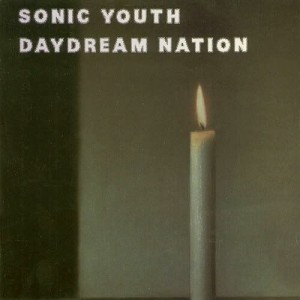
Daydream Nation – Enigma, 1988
Highlights: “Teen Age Riot,” “’Cross the Breeze,” “Total Trash,” “Hey Joni,” first two parts of “The Trilogy”
Low Points: “Eliminator Jr.,” “Providence,” lyrics in “The Sprawl”
Overall: Sonic Youth had certainly been important, exciting, and influential prior to Daydream Nation, but this album made them icons of alternative/independent rock. (That sentence was auto-completed by Microsoft Word once I typed Daydream Nation.) To put it in more personal terms, there was no debate as to the first Sonic Youth album to pick up when I was in high school. I doubt that I’d heard any of the album prior to buying it, even “Teen Age Riot,” because of my lack of indie-oriented friends, but I’d done enough reading to know which one to buy.
Being confronted with a double LP as my first taste of the group, however, seems foolhardy in retrospect. Loved “Teen Age Riot,” sure, but I could probably count my total spins of the entire album on one hand prior to this week. Getting stuck on a particularly great first track is a specific problem of mine (Rex’s Rex, Pinebender’s Things Are About to Get Weird), and the difference between the inviting riffs of “Teen Age Riot” and the dissonant propulsion of “Silver Rocket” was enough to make it happen. The latter features the noise bridge that so many EVOL and Sister songs utilize, but since I hadn’t heard those records, I couldn’t recognize that trick. Now that I can pick up on Sonic Youth’s structural tendencies, the album doesn’t seem so daunting. (I’m also thirteen years older, so I’d imagine that plays into it as well, but let’s return to the actual album.)
There’s no point to saying that Daydream Nation is great. It is. Any devil’s advocate arguments seem like pointless trolling. The most scathing criticisms (only 8/10 from Prindle!) I’ve found mention that a few of the songs don’t measure up to the highlights. I’d argue that it’s true, but ultimately irrelevant. “Eliminator Jr.,” the Kim Gordon punk conclusion to “The Trilogy,” is most frequently cited, but I don’t think its lady cock-rock is inherently bad, just a strange tonal switch following “Hyperstation.” The noise collage “Providence” is unnecessary, but reality check: is Sonic Youth really going to record a double album without including at least one formless noise collage? Come on. Fewer people critique Kim Gordon’s feminist, proto-riot grrrl lyrics in “The Sprawl,” but some, including myself, find them a touch tedious. Yet the song itself is great and most of it is instrumental. Finally, most “critical” reviews have issue with one of the three Lee Ranaldo songs, usually “Eric’s Trip” or “Rain King,” but I felt like all three of his songs are marked improvements over his past output, especially “Hey Joni.” On an album with fourteen tracks (counting “The Trilogy” as separate songs), two or three low points is expected. The overall quality remains superb.
The high points of Daydream Nation are almost unfairly assured as forward-thinking rock songs. The riffs feel more traditional, based more often on crystalline arpeggios and roaring chord progressions than the wonky noise leads that dominate those earlier records, but none of them feel dumbed down in the slightest. Even with its dreamy Kim Gordon open, “Teen Age Riot” never veers off course into a noise bridge. Prior to Daydream Nation, Sonic Youth reveled in those noise parts of the songs, even presenting them as the true attractions to the songs. This approach gradually evolved over the previous two records, but “Teen Age Riot” is when they recognize how great their hooks can be. Gordon’s “The Sprawl” and “’Cross the Breeze” each stretch out past seven minutes, but it’s hard to find a moment in “The Sprawl” when the melody isn’t floating along in its closing mist or one in “’Cross the Breeze” when its considerably momentum is completely gone. The beginning of “Total Trash” is so casually endearing, predicting countless Stephen Malkmus deliveries. “Hey Joni” is the relentless Ranaldo rocker that “In the Kingdom” and “Pipeline” could only hit at, choosing to accelerate rather than drift into aimless noise. The first two parts of “The Trilogy” cash in on the epic dynamics of “Expressway to Yr Skull” with even greater peaks and valleys. A few more songs merit mention as highlights, but that’s what happens with a classic double LP.
I keep thinking of Television’s Marquee Moon, one of the towering achievements of 1970s NYC punk, and it’s a telling, flattering comparison. Sonic Youth emerged from the fringes of this scene, initially embracing its more avant-garde tendencies, but the compelling lyrics and confidently creative guitar work on Daydream Nation refers back to that album’s combination of storytelling and songwriting. Sonic Youth took a strange, interesting journey to get to Daydream Nation, whereas Marquee Moon was Television’s debut LP, but each album manages to bring in the past, define the present, and look to the future. Daydream Nation is undoubtedly Sonic Youth’s greatest achievement. How many bands can pull off a double album with minimal fluff? Almost none. What about double albums that crystallize a genre and capture an era at the same time? Even fewer. Its monumental stature, however, doesn’t guarantee that it’s the best album to start with or that it will ultimately be your favorite Sonic Youth album. I may very well prefer Sister, since it’s simply easier to pick up and spin in the car, but that doesn’t take anything away from Daydream Nation.
Clcik here to read about Sonic Youth's 1990s albums
|
|
How great are Amazon wish lists? I no longer have to feel guilty about having relatively esoteric tastes when it comes to gift-receiving, since the givers, in this case my in-laws (thanks!), don’t have to track down some hard-to-find LPs. There are limits to what you can find on Amazon, of course, but I enjoy hunting the out-of-print albums, so in-print albums or recent reissues make a nice foundation.
124. The Dead Texan – The Dead Texan CD+DVD – Kranky, 2004
I just finished writing my entry for The Dead Texan for my decade-end album list (spoiler alert!), which means three things: first, I enjoy the album a great deal; owning it was long-overdue; and it’ll be difficult to write about the album without rehashing everything I just wrote. Instead I’ll focus on an aspect of this release that I failed to mention in that blurb: the accompanying DVD. Consisting of seven videos done by Christina Vantzos and Adam Wiltzie, the video portion is very pleasant, if not as memorable or affecting as the music, although I suspect that wasn’t the aim. The repeated motifs, casual animation, and vivid colors are more of a jumping-off point for your own imagination. If only MTV had a late-night show like 120 Minutes/Subterranean for ambient music, but that seems rather unlikely. You can watch a number of these videos on YouTube, including “Aegina Airlines,” “The Six Million Dollar Sandwich,” and personal favorite “The Struggle,” although none of them quite match up to this fan-made clip of Stars of the Lid’s “Requiem for Dying Mothers, Part 1” starring Alf.
125. Tom Waits – Swordfishtrombones LP – Island, 1983
I own three albums from earlier in Tom Waits’ career (Closing Time, Nighthawks at the Diner, and Foreign Affairs) and I’ve heard a few of his later junkyard-percussion and gravel-voiced albums (Rain Dogs and Mule Variations), but I hadn’t ventured into a commitment with any of them for a very specific reason: I know when I should listen to Tom Waits, but I’m never in that situation. Here’s the ideal situation for putting Tom Waits on my turntable: it’s 3am, I don’t know what day it is, I live in a musty apartment above a bar in run-town part of town, and I am drinking whiskey. Oh, and I’m heartbroken, but it’s been a while since the break-up, so it’s a more general sense of heartbreak. That’s the perfect storm for Tom Waits, as I imagined it, and the odds of it ever happening for me are about one in eight million. Yet Waits seems so perfect for that mood that I’ve struggled to find a replacement setting.
This morning I gave up trying to match Waits to the proper mood and put my newly acquired copy of Swordfishtrombones on the turntable. It’s 11am on a Saturday morning in December. I’m wrapping presents for my wife and watching USPS trucks swarm the neighborhood. It’s a far cry from the parade of misfits Waits invokes, but these songs still manage to set their moods. I expected a greater emphasis on the clanging, junkyard songs, but what impressed me so much about Swordfishtrombones on my first listen was the variation. The instrumentation, the production values, the moods, the vocal styles—the album switches character from song to song, yet still holds together. This feeling sunk in when “Town with No Cheer” and “In the Neighborhood” closed out side A. Those songs are closer in spirit to his earlier recordings, but the mix, the lyrics, and the delivery all separate them.
What hasn’t sunk in yet is the content of the songs. There’s no lyric sheet included with this reissue of Swordfishtrombones—I don’t know if there ever was one—and a few of Waits’ more dramatic vocal inflections prevent easy transcription of his words. The recourse for this issue may be David Smay’s 33 1/3 book on the album, which I’ve added to my to-buy list, but until then, I’ll give Swordfishtrombones a few more listens to iron out the details. I’ve long respected Tom Waits for being such a profoundly original artist, but Swordfishtrombones marks the first time that my respect wasn’t accompanied by an equal level of distance.
126. The Feelies – Crazy Rhythms LP – Bar None, 1980 [Reissue]
I’ve listened to Crazy Rhythms a few times over the years, most recently in conjunction with my post about its 1986 follow-up, The Good Earth, but it’s never fully sunk in. I understand the appeal of the record—it’s an inspired blend of post-punk, new wave, and the nascent strains of college rock—but transitioning that recognition into genuine fondness has been tricky. Here’s my theory: I’ve encountered all of their typical elements too many times outside of the context of this specific band to be surprised by them. Mid-fi production values, hyper-strummed clean guitars, casually melodic vocals that occasionally skip toward an impassioned yelp, a live-sounding drum kit; all of these elements have filtered down into later indie rock bands as building blocks of the sound, particularly in the 1980s but also (more selectively) in the 1990s and 2000s, so their combination here sounds too familiar. The Good Earth sounds more stereotypically college rock, in part because that sound officially existed by the time of its release, in part because the group’s rhythm section had changed and was less idiosyncratic. Yet that record doesn’t carry the same acclaim as Crazy Rhythms, an album I could no longer ignore now that there’s a nice vinyl reissue out.
Scott at Pretty Goes with Pretty also recently picked this album up, having noted its countless references in Dean Wareham’s Black Postcards memoir, which I’d also read late this summer. He primarily discusses the Feelies’ peers in the 1970s, namely Talking Heads and Devo, both of which make sense as points of comparison, but the key word he uses in relation to Crazy Rhythms is “hypnotic.” That’s the quality that’s stuck out to me as I keep flipping the slab of vinyl over. The rhythm section is both jittery and insistent, the fast-strummed guitars sound like 33rpm parts played at 45rpm, and Glenn Mercer’s vocals often chant lyrics fast enough to sound like an incantation. It’s a recipe for a rapidly vibrating hypnotic disk. The other point that Scott made that clicked with me is that it takes a few listens for songs to differentiate themselves from the whole, likely because of the hypnotic quality I just described. Yet after a few listens, I’m itching to hear specific songs again (“Loveless Love,” “Moscow Nights,” “Raised Eyebrows”). Perhaps Crazy Rhythms was a grower all along, but my advice would be to give it a few extra spins before passing judgment.
|
|
I feel dirty buying LPs from Amazon, since I’d much rather support a local record store or a mail-order place like Parasol, but in this particular case it was my only option. After going into home-buying mode and saying goodbye to discretionary spending for a few months, I looked at my credit card reward certificates as the only viable option for a fix.
It’s a little surprise that such a niche product has become regular business on Amazon, but even Best Buy stocks select vinyl nowadays. The music industry recognizes that they can’t afford to ignore any money-making possibility since CD sales continue to decline, so if anything, the vinyl resurgence should continue. I saw the LP for the new Pearl Jam album in Target; is Walmart next?
122. Mastodon – Crack the Skye LP – Reprise, 2009 – $15.49
I’ve made half-hearted, ultimately failed attempts in the past to get into Mastodon, but I’d read enough tempting descriptions of this album to merit a spin. Moodier than older Mastodon? Sure, I’d like that! Their prog-rock impulses take over? Why, that doesn’t sound too bad. Two epic songs? Yes, sign me up. Put two ten-minute-plus songs on an album and I’ll give it a chance.
All of these factors suggest Crack the Skye is another fringe metal title that appeals to me because of the ways it’s not metal. Faith No More’s equal parts hard rock and metal. Mr. Bungle’s self-titled LP is probably their most metal effort, but its avant-garde, ska, and cartoonish impulses are a huge draw. I didn’t get into Isis until Oceanic, when they let post-rock dynamics surpass Aaron Turner’s gutteral bellow. (Floodwatchmusic, my source of genuine metal criticism, called Isis “snooze metal,” which I can certainly understand from his perspective.) Pelican’s essentially an instrumental version of Isis, drifting further and further away from the doom metal tides of their first EP and Australasia and exposing their drummer’s limitations in the process. Those are the big names in my fringe metal collection.
By all means Crack the Skye waters down the group’s original ferocity—melodic vocals; clean guitars, overt prog-rock references—but I wouldn’t call it fringe metal. Mastodon is too driven by their decidedly prog-metal storyline to be anything but metal. For those unaware of Crack the Skye’s story, here’s Brann Dailor’s description from an interview with Metal Hall eZine:
“There is a paraplegic and the only way that he can go anywhere is if he astral travels. He goes out of his body, into outer space and a bit like Icarus, he goes too close to the sun, burning off the golden umbilical cord that is attached to his solar plexus. So he is in outer space and he is lost, he gets sucked into a wormhole, he ends up in the spirit realm and he talks to spirits telling them that he is not really dead. So they send him to the Russian cult, they use him in a divination and they find out his problem. They decide they are going to help him. They put his soul inside Rasputin's body. Rasputin goes to usurp the czar and he is murdered. The two souls fly out of Rasputin's body through the crack in the sky(e) and Rasputin is the wise man that is trying to lead the child home to his body because his parents have discovered him by now and think that he is dead. Rasputin needs to get him back into his body before it's too late. But they end up running into the Devil along the way and the Devil tries to steal their souls and bring them down…there are some obstacles along the way.”
What Dailor doesn’t mention within that brain-melting recap is how the death of his sister fits in, since she inspired the album title and a few songs have explicit lyrical references to her passing. Without this emotional undercurrent, I suspect Crack the Skye would come off as an impossible-to-follow exercise in astral travel, like a quickly fleeting memory of last night’s dream. Is it possible that the title allows me (or even encourages me) to read more into this connection than Dailor intended? Certainly, but I wouldn’t say that’s a drawback.
Crack the Skye’s biggest challenge is balancing the new and the old: the sung vocals and the guttural incantations, the mid-tempo melodies and the heavy riffs. Opener “Oblivion” has been compared to Alice in Chains in several places, which is telling. Much like Isis moving more toward sung vocals on In the Absence of Truth and overtly sounding like Tool, Mastodon can’t quite control what their less metal vocals reference. That doesn’t mean I necessarily dislike the melodic vocals throughout—Mastodon has a surprising ear for vocal harmonies—but “Crack the Skye” stands out so much because of the guest vocals from Neurosis’ Scott Kelly.
With regard to the riffs, the heavy, churning guitar parts in “Divinations,” “The Last Baron,” “Crack the Skye,” and “The Czar” stand out so much that I wonder why there aren’t more of them. The drifting, mid-tempo passages are fine, but there are simply too many of them. The natural recourse for this issue is getting into earlier Mastodon albums, specifically Leviathan and Remission. These two albums, especially the former, have surpassed Crack the Skye by a wide margin at this point. They’re crammed with complex, brutal parts and don’t have the bloat of Crack the Skye.
My ultimate take on Crack the Skye surprised me. I ended up preferring the elements that had held me back from getting into Mastodon in the past, not the moodiness and epic song lengths that enticed me this time. I suspect that if I’d already gotten into Remission and Leviathan first, I’d have a much higher inclination to dismiss Crack the Skye outright. Yet its bloat and moodiness come with the territory of its increased emphasis on prog-rock tropes, so I’m willing to overlook them to some degree. I certainly hope that Mastodon can split the difference on their next LP, but the biggest credit I can give to Crack the Skye is making me care about that next album.
123. The Twilight Sad – Forget the Night Ahead LP –FatCat, 2009 – $18
I passed on seeing Young Scottish Indie Rock in person back in October, when the Twilight Sad and We Were Promised Jetpacks held a Battle of the Poorly Named Bands competition at Great Scott. Clicky Clicky favorites Frightened Rabbit did not attend, but it was two-thirds of the recent resurgence in solid Scottish indie rock. I’ll likely buy the WWPJ album down the line and reserve longer commentary on it until then, but their combination of dynamic swells, Gang of Four rhythms, and youthful energy is a nice palette-clenser for the thoroughly dour Twilight Sad, who I saw with Great Northern at the Middle East Upstairs a while back.
I enjoyed most of the first Twilight Sad full-length, 2007’s Fourteen Autumns and Fifteen Winters, but it took a number of spins for Forget the Night Ahead to sink in. Three key hurdles: 1. James Graham’s accent makes the already opaque lyrics downright intractable 2. The removal of additional instrumentation like the accordion makes the wind-tunnel guitar roar awfully samey after a few songs 3. Their attempts at quieter songs and up-tempo “pop” songs pale in comparison to the dramatic mid-tempo highlights. Essentially, I’d get through remarkable opener “Reflection of the Television” and solid first single “I Became a Prostitute” only to see my attention peter out by the middle of the album.
It took “The Neighbours Can’t Breathe” coming up on shuffle for me to give Forget the Night Ahead another shot, but it’s the key to the album. (Apparently it was included as a demo on their 2008 odds-and-sods collection The Twilight Sad Killed My Parents and Hit the Road, but that’s for super fans, which I’m not. “Untitled #28” has considerably clearer vocals and a greater emphasis on the organ part, but overall feels like a demo.) It has a compelling combination of urgency and obfuscation, as Graham mixes understandably pressing lines like “You keep pulling my heartstrings” with cloaked confessions like “And I’m not in the white when we play hide and seek.” Forget the Night Ahead comes down to this push/pull tactic—every hint of clarity, whether sonic or lyrical, is quickly combated with a swell of guitar feedback or a baffling line that’s repeated until you accept that it’s crucially important to Graham’s state of mind.
Forget isn’t as inviting as Fourteen Autumns, but its claws dig in deeper, its impact lingers longer. I suspect the change in aesthetic was driven by their live show, which left earlier material sounding too skeletal without its instrumental flourishes, but the songs certainly support this suffocating emphasis on guitar bluster. Would I appreciate some daylight on their next album? Certainly. But the constant dusk on Forget the Night Ahead is fine for the time being.
|

My long-overdue best of 2009 list is now up. You can sample these twenty fine records with links (YouTube and mp3) for songs from each album, or download the two-CD Recidivistic Best of 2009 mix, which, surprisingly enough, features songs from each of these albums.
The top five became clear to me by early November. Six through twelve were in consideration most of the year. Beyond that, it was a crapshoot. I considered including albums from Boston Spaceships, Constants, Do Make Say Think, J Dilla, Mission of Burma, A Place to Bury Strangers, Ring, Cicada (opted for Heroes of the Kingdom—more on that decision soon), We Were Promised Jetpacks, and Wye Oak, all of whom could have easily made it. There is a handful of great recommendations I’ve barely processed (including Floodwatchmusic’s number one, Blut Aus Nord), which may very well top a number of these albums in the near future. If I’ve learned anything about list-making, it’s that the finished product is always temporary. These are the twenty albums I’d recommend first if someone asked me today.
I’m still planning on doing a top albums of the 2000s list, but given the frequency with which my views change as I track down more great albums, it may be a while.
|
|
Shortly after my previous post about Gordon Withers’ funding drive for the mastering and pressing of this album, Withers thankfully reached his goal, which resulted in the MP3s being delivered to my inbox a few months ago and the LP being delivered to my house earlier this week. It’s nice to see my name on the back of a vinyl sleeve, especially when it’s accompanied by such great music.
121. Gordon Withers – Gordon Withers LP/MP3 – Self-released, 2009 – $10
Most of the discussion of Gordon Withers’ music has been focused on the circumstances surrounding its release, whether it’s the Callum Robbins benefit album of Jawbox covers or the Kickstarter funding drive for this release, that the actual music might have been overlooked. While I’d be amiss to ignore the fact that such a blindspot might have happened anyway—after all, it’s instrumental solo cello that we’re talking about—Withers’ combination of covers and originals deserves more than a passing spin.
I’ll tackle the five covers first. I was familiar with four of the five songs—the Notwist’s “One with the Freaks” being the lone exception—and if step one for a successful covers record is having inspired material, Withers nailed it. The Notwist cover reminds me that I slept on Neon Golden for too long, but a viewing of the “One for the Freaks” video establishes two things: first, they’re far more rock and less electronic than I remembered, second, Withers does an excellent job cello-izing the song’s vocal melody. Chavez’s “Unreal Is Here” always struck me as overwhelmingly melodic and surprisingly mellow for such an angular indie rock group, a statement that, “Yes, we can also do this style of music better than you’d ever imagine.” Because of this emphasis on melody and mood, it’s an easy, yet rewarding translation. (Note: “Tight Around the Jaws” would make for a real badass cover, as well. And don’t get me started on “Wakeman’s Air.”) Don Caballero’s “For Respect” benefits from the absence of drums, since there’s more than enough to replicate from the guitars and bass. (Plus, forcing his brother Stephen to step into Damon Che’s shoes seems like cruel and unusual punishment.) It’s the most technically impressive cover here, handling both the rigid riffs of the opening and the strafing runs of its close with equal aplomb. Burning Airlines’ “Flood of Foreign Capital” features J. Robbins on glockenspiel (he produced the album and appears throughout, but helping cover his own song is a nice touch), but Stephen Withers’ layers of percussion steal the show. Finally, “Forget” isn’t the first Mission of Burma song I’d suspect to be covered, but it closes the album with involving interplay between Withers’ multitracked cello and Robbins’ piano. It also reminds me that I need to listen to more of those then-posthumous MOB compilations.
I’m interested to see how many people took Withers up on the “Pick a song for me to cover” option, since those songs could easily comprise a nice mini-album. I know Jon Mount tasked Withers with Juno’s “The Young Influentials,” which should be wonderful, and someone else signed him up for a Jets to Brazil cover, but if I can accurately extrapolate his taste in music to his audience’s, I bet there are some other excellent songs in the queue.
There’s a necessary give and take between the covers and the originals, since it’s hard not to get excited about hearing a new version of “Unreal Is Here” or “For Respect” and that’s likely what draws listeners like myself to Withers in the first place, but what impressed me the most about Gordon Withers was the strength of the original songs. These songs combine classical approaches and indie rock structures. “Cast into the Sky” builds into a cacophonous peak before distilling this dissonant streak into a somber ending. The first half of “Revolving Doors” could easily be a cover of a long-lost uptempo indie rock song, but it’s the mid-song course correction into flowing melodies and slower tempos that sets the song apart. “Memories of the Future” is the closest the LP comes to chamber music, turning its foreboding deep line into a swirling undertow before letting it drift off into regret. “Defenestrations of Prague” is the clear highlight of the LP, a six-minute-long track loaded with starts and stops, sawing countermelodies, and energetic crescendos. “Defenestrations” proves that Withers has absorbed compositional tricks from the artists he covers and determined their best usage for cello.
Returning to the surface view of this album, Withers has done a remarkable job of getting people interested in his music, which I can’t imagine is an easy task for a solo cellist. The Jawbox covers album was an excellent introduction to his performances, as well as being a benefit for Callum Robbins, and Gordon Withers is a perfect next step, balancing covers and originals with equal weight. It’ll be interesting to see how his own work progresses as
he spends more time as a member of J Robbins’ new band, Office of Future Plans, helming Quadruplestop, his four-person cello group, and contributing to We All Inherit the Moon, an ambient/post-rock group from various parts of the country, but if Gordon Withers is any indication, overlooking his own releases would be a huge mistake.
|
|
A few months prior to this visit, I’d wondered what was up in the world of Rachel’s. Since 2003’s superb Systems/Layers, their lone release was the Technology Is Killing Music EP, a scattershot eighteen-minute-long track in the spirit of the postmodern musings of its predecessor but lacking its emotional resonance. They had performed Systems/Layers with the SITI company in Urbana, Illinois in 2005, but since then, their only news items had been appearances on soundtracks like Hancock. (Director Peter Berg, who also helmed the Friday Night Lights film and still oversees the unbelieveably great Friday Night Lights television show, is no stranger to post-rock, having introduced the sporting world to Explosions in the Sky.) Last spring there were rumblings of a forthcoming Shipping News album, but those took a back seat to more pressing news.
As I mentioned on Twitter in the fall, Jason Noble’s been battling cancer since the late summer. You can read more about it on his Caring Bridge blog, and send him well-wishes. (Note: The donate link on the site appears to donate to Caring Bridge, not Jason Noble directly. They do provide an excellent service, but it’s worth noting.) I’ve only met Jason Noble once, at the Fugazi/Shipping News/Rachel’s show in Louisville back in 2002, but he was awfully nice to someone who was obnoxiously gushing at the time. Between Rodan’s Rusty, Shipping News’ Very Soon and in Pleasant Company, and Rachel’s Systems/Layers, he’s made some of my favorite music. I hope he continues to handle the treatment well and doesn’t suffer any setbacks. Get well soon, Jason.
In light of this development, I feel bad for Rachel’s pianist Rachel Grimes, whose solo debut Book of Leaves came out in September with little advance press. Seeing it in Newbury Comics was the first I’d heard about it, but since Rachel’s has a solid track record—except for the harpsichord song on Selenography, shudder—I eagerly picked it up.
120. Rachel Grimes – Book of Leaves LP – Karate Body, 2009 – $22

I had a reasonably accurate idea of what Book of Leaves would sound like—closest to Music for Egon Schiele or the minimal piano songs on Systems/Layers like “NY Snow Globe.” Although Rachel’s is a collective, the contributions of the three main members—Grimes, Noble, and viola player Christian Frederickson—are all unique enough that it’s noticeable when one takes lead on a song. I suspect that there’s a push and pull between Grimes/Frederickson and Noble for the balance between classical and rock elements, more often leaning toward the former (especially on Egon Schiele, but occasionally emphasizing the latter to great effect (“Full on Night [Recension Mix]”). What made Systems/Layers so compelling was how they circumvented this tug-of-war by choosing more postmodern approaches to song structures in lieu of their collaboration with SITI. There are more rock moments and more classical moments, but neither sticks out as much.
In a very literal sense, Book of Leaves picks up where Systems/Layers left off, since that album closed with “NY Snow Globe,” but on a broader scale, those intriguing postmodern approaches to song structures and sonics have been greatly reduced. Like Dusted mentioned, the most interesting songs are those that take off-kilter approaches: “Mossgrove” turns percussive punctuation into an absorbing drone, “Starwhite” takes the opposite approach and emphasizes the reverberating space in between chords, and “She Was Here” slates its repeated chords against field recordings. Such field recordings pop up a few other times on Book of Leaves, but more variety than just birds and insects would help the recording considerably. The other songs vary from reserved to exuberantly melodic, but my preferences lean toward the former, particularly for "The Corner Room" and “A Bed of Moss,” which closes out the album on a somber, emotional note.
Grimes’ biggest challenge was transitioning from the collective approach described above to a purely individual approach, and I don’t know if she conquered it on her first solo venture. I’ve spun Book of Leaves a number of times and too many tracks float by without clamping down, leaving me with a largely blank slate after the album’s over. I suspect that I’d like Book of Leaves more if she’d recruited a few key collaborators from the collective, but then it would essentially be another Rachel’s LP. I certainly wouldn’t mind getting another one of those, but I would also like to see how Grimes progresses as an individual performer. Hopefully one or both of these things happens.
Pressing note: The vinyl of Book of Leaves (which is in a gorgeous gatefold, by the way) was available in two editions at Newbury Comics, one with a book of sheet music (which was the case for the first 100 copies), one without. The price difference wasn’t enormous, so I opted for the sheet music. Who knows if I’ll ever practice the piano enough to actually learn these songs, but it was a unique option. This book of sheet music is still available direct from Rachel Grimes herself for $15.
|
|
