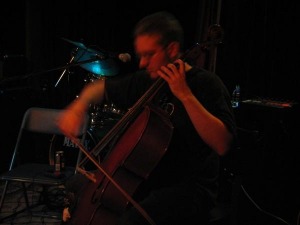
Back in 2007, cellist Gordon Withers recorded an album of Jawbox covers, showcasing the compositional strength of the group’s literate D.C. post-punk/hardcore. As someone who played the cello growing up (and occasionally since then), Withers’ talent and ingenuity made me green with envy. He captured their melodic grace, their stabs of dissonance, and their emotional core, taking interesting and unexpected approaches to translating J Robbins’ vocals, Robbins and Bill Barbot’s parrying guitars, and Kim Coletta’s rolling bass lines. It’s the sort of project that usually sounds more interesting on paper than in actuality, but Withers managed to make it compelling.
If the achievement alone wasn’t enough, all proceeds from Jawbox on Cello: A Benefit for Cal Robbins went to J’s son, Callum Robbins, who suffers from Spinal Muscular Atrophy. Withers wasn’t alone in his charity—there was a great 2CD compilation, bands like the Dismemberment Plan, Snapcase, and Arcwelder reunited for shows, and hey, you can donate directly as well—but his album was such a unique, personal tribute.
All of this lead-in brings me to his new album, which is now available for pre-order. But it’s no normal pre-order. The album has been recorded—by J. Robbins, of course—but the mastering and physical pressings still await funding. This is where you come in. If Withers gets $2,500 by October 14th, the album will happen. The range of donations is tantalizing— for starters, a buck gets your name’s in the liner notes, a fiver gets you the mp3s, eight bucks gets you the CD, ten gets you the vinyl and two bonus tracks. Past that, things get progressively more interesting. For $50 you can get the vinyl and either a custom piece of artwork from Dave Gonzalez or a cello-ized song of your choice. (Rodan’s “Darjeeling” is awfully tempting.) $100 gets you both. For $500, you get everything plus a solo performance from Withers in your house for you and your friends and even a cello lesson if you want. It’s an impressive array of options.
Withers is currently halfway there, leaving over $1200 to go. Not to sound like a broken record about supporting music, but this pre-order is a perfect opportunity to put your money where your mouth is. I’d love this sort of funding to become commonplace, so help Withers set a great, encouraging example.
|
Sunny Day Real Estate’s first reunion back in 1997 was monumental news. Given their internet-based break-up just a few years earlier and their numerous idiosyncrasies (Jeremy Enigk’s conversion to Christianity, not playing shows in California, the Nordstrom ad, the pink artwork of LP2)—not to mention their profoundly affecting music—a wide swath of the indie world viewed How It Feels to Be Something On as the second coming, religious implications intended. I wasn’t nearly as charged. I had only recently gotten into Diary and LP2, so I’d missed out on that cycle of despair and joy. As such, my response to their reunion was malaise: I passed on the SDRE mk. II tours, waited a few years to get around to How It Feels and even longer to forget about The Rising Tide. Bassist Nate Mendel’s absence from the latter incarnation is mammoth—even with a slew of standouts on How It Feels, SDRE sorely missed his fluid basslines, as the rotating cast of stand-ins could never fill his shoes. The group later swapped guitarist Dan Hoerner for Mendel in the three-piece semi-reunion of The Fire Theft, but the songs were underwhelming. It’s hard not to wonder if their legacy was better off cloaked in the inscrutable mysteries of their would-be swansong, LP2.
Yet even with the missteps of The Rising Tide and its prog-rock fetishism, The Fire Theft, and Jeremy Enigk’s decidedly milquetoast recent solo albums, history has favored Sunny Day Real Estate over virtually all of their emo contemporaries. (Jawbreaker is the only other group on par from that era.) Diary and LP2 just received well-earned reissues from Sub Pop, further cementing their respective statuses as the epochal second-wave emo debut and its mysterious follow-up. These albums aren’t quite perfect—the former suffers from a sagging back-end, the latter occasionally confirms Enigk and Hoerner’s barely finished lyrics—but they hold up. Do the Get-Up Kids? Do Christie Front Drive or Mineral? Do the Promise Ring? The list could go on, spiraling downward into later groups and smaller fan bases, but there’s little point.* Those groups were indebted to Sunny Day Real Estate’s blueprint, but rarely lived up to it. Is the Promise Ring’s “East Texas Avenue” anything other than their SDRE homage? Weren’t the Appleseed Cast (originally named December’s Tragic Drive) ostensibly a SDRE tribute band on their first album? What prevented these groups from approximating the charge of “Seven,” “In Circles,” or “Rodeo Jones” wasn’t just inspiration, it was also talent. When Mendel and drummer William Goldsmith joined the Foo Fighters, it felt like a genius coup by Dave Grohl: steal the best bass player and the best drummer from the Seattle indie scene. So many 1990s emo bands took the amateur status of lo-fi indie rock to the next level by embracing sloppy vocals and ragged instrumentation as trappings of the genre, writing them off as you know, being so emotional. SDRE were straight professionials; Diary and LP2 confirm emo’s origins in Washington, D.C. hardcore groups like Rites of Spring by living up to that city’s emphasis on technical precision. No surprise that they shared a split single with Shudder to Think.
Where Sunny Day Real Estate falls into the recent slew of reunited acts is unclear at the moment. Their 1997 reunion was initially focused on the music—first the intended rarities album, then How It Feels—not the shows, although those certainly came around. The 2009 reunion started out as a promotional tour for the reissues and may blossom into a new record, as the group keeps hinting. There’s a number of comparative examples to cite: the Pixies reunited for the money, Shudder to Think reunited for the shows, Mission of Burma, Dinosaur Jr., and Polvo reunited for the shows and then new material. Tossing aside the Pixies’ ongoing cash grab (Mendel’s making too much in the Foo Fighters to doubt his interest), SDRE is divided between the Shudder to Think and the Polvo paths. Will this tour end with a greatest hits live album or will the one new song multiply into a revitalized new album? Given how Shudder to Think played the Paradise and SDRE played the much larger House of Blues, SDRE has more encouragement to stick around, so my hopes for a new record might come true. Yet there’s no reason to continue if they don’t slay in concert, so this show was the first test of SDRE mk. III for me.
Considering how pervasive Sunny Day Real Estate’s influence was on mid-1990s emo, any number of second- or third-wave groups could’ve easily opened this show, which made the Jealous Sound a welcome selection. They’re not a groundbreaking or influential band, but a solid, melodic blend of late 1990s emo and catchy indie rock. Singer Blair Shehan formed the group after the dissolution of Knapsack in 2000, teaming up with Sunday’s Best** guitarist Pedro Benito and a shifting rhythm section, which may or may not still include former Jawbox/Shudder to Think drummer Adam Wade. Toning down the throat-shredding screams and dynamic range of Knapsack’s best songs (“Perfect,” “Courage Was Confused”) for a more polished version of their straight-ahead collisions of emo and pop-punk (“Skip the Details,” “Decorate the Spine,” “Katharine the Grateful”), the Jealous Sound’s first EP had a long stay in my discman back in 2000. Five songs, no filler, with three highlights: “What’s Wrong Is Everywhere” alternated between a big opening riff and a melancholy keyboard verse part as Shehan whisper-sung Sooyoung Park-style through his best melodies to date; “Priceless” added some needed urgency with a strafing solo and a circular chorus outro; and “Anxious Arms” threw major hooks out with reckless abandon over the half-time outro. When so many of their peers (The Promise Ring, the Get-Up Kids, Mineral, even Sunny Day Real Estate) were struggling with how to evolve without alienating their core audience of horned-rimmed emo kids, The Jealous Sound figured out how to polish their sound without losing their energy, ripping off U2, going prog-rock, or dabbling in indie-tronica.
Yet the follow-up LP, 2003’s Kill Them with Kindness, couldn’t match the EP. Maybe it was the push and pull from a major-label flirtation, but there’s a palpable weariness present. A decidedly subpar version of “Anxious Arms” suffered from a huskier Shehan vocal, the back-end of the record had a few snoozers, and the hooks seemed less natural and more forced. Just like the EP, there are three clear standouts: opener “Hope for Us” goes all-out with its enthusiastic “Oh-oh-oh” bridge vocals; the new wave keyboards of “The Fold Out” set up the racing drumming of its ending; and the album closer “Abandon! Abandon!” recalls the passionate strains of Knapsack. Yet three of twelve is a mediocre batting average at best.
What caused the delay between Kill Them and 2008’s Got Friends EP is unclear—this blog post insinuates that Shehan went crazy, the comments say that he tried starting a family—but the digital-only release was an odds-and-sods CD5 with two remixes of the title track. “Got Friends” is a nice enough pop song, but it’s a safe bet that no one on earth was pining for Jealous Sound remixes. This reunion turns this EP from a posthumous release to a stop-gap before a new album, which is supposedly underway.
Judging from their performance, Shehan and company seem reenergized, so I’m cautiously hopeful for the next album. They played the six highlights of their catalog, with the semi-screams of “Abandon! Abandon!” giving the set a much-needed edge and “Anxious Arms” closing their set on a high note. There’s a bit of the Hey Mercedes syndrome*** with Shehan’s rhythm guitar parts (staccato strums at the same tempo) and his Knapsack-style vocal strains need greater frequency (especially if they’re going to be so high in the mix), things I don’t expect to change, but reminiscing about circa-2000 post-emo will bring out the nitpicker in me.
To no surprise given the recent reissues of Diary and LP2, Sunny Day Real Estate did very little reminiscing about circa-2000 post-emo, or even post-1995 emo. Except for one song from How It Feels and their unnamed new song, the set was comprised of selections from those remastered albums, and I can’t argue with that decision. It felt less like crass promotion and more like a combination of nostalgia and revisionist history. “Remember when it was the four of us and we put out those two great albums? That sure was great, even if we didn’t appreciate it at the time. Let’s imagine all of the other stuff never happened.” That’s the rose-colored glasses version of their situation, sure, but there was no sense of SDRE sleepwalking through the classics like the Pixies did. (“Let’s play both versions of ‘Wave of Mutiliation,’ I mean, they want to hear them, right?”) SDRE played the classics, but they gave them the passion and respect they deserved.
Unlike Polvo, who essentially rewrote all of their old material for the new tours, Sunny Day Real Estate played the songs the way people knew them. The magic was remembering just how hard they rocked. My wife commented that SDRE was far more dude-rock than she remembered, which is certainly less the case on their later records (wait, is there anything more dude-rock than ripping off Rush?), but it’s hard to argue with how hard “Seven” hits, how the angular conclusion of “Theo B” recalls a Chavez riff factory, or how abrasive the chorus of “48” is. There are plenty of quiet moments, like the lilting ache of “Song About an Angel,” the gentle push of “Sometimes,” the verses of “Grendel” and “47,” and the graceful open of “Guitar and Video Games,” but all of those songs have big rock payoffs, too. Virtually every song made me appreciate it more, not an easy task considering my fondness for their albums. The new song (“10”) felt a bit breezier than its peers in the verses, but the chorus was excellent. This horrible YouTube clip of it will have to tide you over until its eventual release.
Not to take away from Dan Hoerner’s visible joy or Jeremy Enigk’s strong vocal performance, but there was no doubt who stole the show. William Goldsmith is an absolute joy to watch, combining the precision of proper posture drummers like the Dismemberment Plan’s Joe Easley, Juno’s Greg Ferguson, and Shiner’s Tim Dow (my favorite type of drummer to watch) with an absolutely ferocious attack for every fill. I remember seeing him on Saturday Night Live playing with the Foo Fighters and thinking “Damn, what a great drummer,” but he’s even better when he’s playing his own material. Apparently he had some issues later in the show, having to bail on LP2 bonus track “Spade and Parade,” but that’s the danger in giving it your all and then some.
It’s impossible not to mention the two unintentionally hilarious moments of the evening. First, Nate Mendel sounded downright bored during the verses of the lone How It Feels song, “Guitar and Video Games,” plodding through the root notes like he was carrying an albatross. He’s a downright great bass player—he was on Juno’s A Future Lived in Past Tense, after all—but don’t expect any more How It Feels songs to nudge their way into the set list without significant reworking. Second, Dan Hoerner had a spotlight during the jagged chord slashes of the elongated outro to “J’Nuh.” I laughed out loud at its appearance; I could imagine Hoerner thinking, “I love being back in this band, but this is what you guys get for keeping me out of the Fire Theft.” Less amusing was the inevitable encore for “In Circles,” but it’s not like I left early out of principle. My only other complaint was the absence of “Rodeo Jones” and “8,” two of my favorite songs from LP2, but I imagine the group still views those songs as leftovers to some capacity. But what leftovers!
Revisiting these songs made me realize just how far emo has come. Today’s popular emo groups do not emulate the obfuscated poetry of Enigk or his growling falsetto abstractions, and thinking of his vocal performance from “48” somehow filtering its way to modern rock radio brought a smile to my face after the show. Nor do they have the DC chops of Enigk, Hoerner, Mendel, or especially Goldsmith. If this tour, this reunion is about rebuilding their legacy, restarting the group from when they were last unquestionably great, it could have the potential of rebranding the whole genre? Associating emo with great songwriting, inspired performances, and technical precision as opposed to black fingernail polish and horned-rim glasses would be a good thing, right?
* For the sake of argument, I’ll vouch for Castor (who I usually lumped in with Midwestern rock like Shiner rather than emo contemporaries like Braid), a greatest-hits array from Braid, a handful of Knapsack songs, the similarly Midwestern Boys Life, and the key emo groups from DC. From this decade only Cursive (Domestica, Burst and Bloom, and The Ugly Organ) and the Casket Lottery (Survival Is for Cowards) stand out, although I’m not exactly devoting hours of my time to finding new, hip emo bands. There are probably other groups depending on your scope of the genre, but so many of the definite emo acts of the era have aged terribly. See: The Promise Ring.
** Sunday’s Best’s “Sons of the Second String” was so much better than anything that made it to their Polyvinyl debut LP, Poised to Break, that they earned the bitter irony of its title.
*** Hey Mercedes had a few great songs, especially “Bells,” but seeing them in concert a handful of times before their first LP stressed just how similar all of their songs were in tempo, guitar rhythm, and drumming starts and stops. It’s my go-to example for diminishing returns.
|
|
My prior experience with this In Your Ear location had not been great. The scourge of in-city overpricing is particularly apparent here, especially on the classic rock rarities they have hanging on the walls, and the selection usually feels tired. The title of their indie/imports section makes me think they haven’t re-examined it since the dying days of college rock. Plus, they have Philip Glass and Steve Reich filed alongside groups like Tangerine Dream and Cocteau Twins in a complete hodge-podge of experimental approaches. As much as I appreciate finding where Steve Reich resides in a record store without having to ask the clerk, I expect him to be in a contemporary composers section.
After flipping through their terrifyingly priced just-in bin and then seeing a used copy ofHüsker Dü’s Warehouse: Songs and Stories for $24.99 in the indie/imports section (I paid no more than $10 for it at Record Exchange in Salem and recall seeing it elsewhere for less a few months later), I debated giving up entirely. But finding two out-of-print Labradford LPs for genuinely reasonable prices reenergized me a bit. I dug through their bins $1 seven-inches, seeing quite a few familiar faces among the hordes of Boston rejects, and then skipped over to their CD dollar bin, which occupies a full corner of the store. If I had a few hours to kill, I would’ve scanned through every single disc there, hoping to find a dusty copy of Panel Donor’s Lobedom and Global, but my parking meter was running.
Side note: Putting a Goodwill two stores down from a used record store, which is also the case in Central Square in Cambridge, pretty much eliminates any chance you’ll find something good in the vinyl section of the Goodwill.
75. Labradford – Prazision LP 2LP – Flying Nun, 1996 (reissue) [1993] – $15
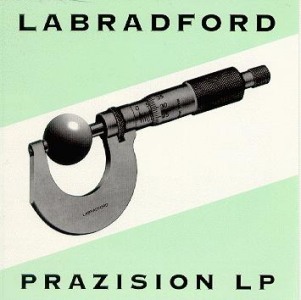
My only prior experience with Labradford came with their third album, 1996’s self-titled release. I picked it up during my obsessions with all things post-rock in the late 1990s, but my perceptions of the genre at the time were ill-suited to Labradford’s approach, so I just ended up baffled. Anyone expecting the crescendos of Mogwai, the tension and release of Slint, the jazzy shuffle of Tortoise, or the apocalyptic landscapes of Godspeed You! Black Emperor would be disappointed by the lack of those elements, or any other traditional structures. Had I been familiar with Talk Talk or Bark Psychosis at the time, perhaps I could’ve wrangled Labradford into that side of post-rock, but at most they’re half in that camp and half in the ambient arena with Kranky peers like Stars of the Lid and Windy & Carl. Labradford drifts between humming organs, reverberating guitar chords, mumbled vocals, and pure drones with scant amounts of forward momentum (“Pico,” “Lake Speed,” “Scenic Recovery,” and “Battered” moreso than the drone-heavy side A), but a larger sense of melody and slow-burning emotional resonance. Returning to Labradford now illuminates an album I’d largely dismissed a decade ago.
Labradford had certainly evolved to that stage over their first two records, which show nascent tendencies that were gladly discarded in a few years. Prazision LP, the very first Kranky Records release from 1993, shuffles between dark drones and skeletal vocal tracks like “Accelerating on a Smoother Road.” Picture a ghostly version of Spacemen 3 haunting a New England cottage, wondering where their drum kit is. Standouts include the lulling melodies of “Soft Return,” the icy vocals of “C of People,” and “Everlast,” which closes out the record with some crests of guitar feedback. (Brainwashed informs me that it was their first single and not included on the original Kranky pressing of the album.) “Gratitute” is a strange tangent, a drone with a modulated voice listing the album’s thank-you list. It’s not representative of its surroundings, but it is indicative of a band trying different approaches as they forge ahead in a new style, hitting some stumbling blocks along the way. Not all of Prazision is captivating, but as the rural origins of their sound, it’s certainly intriguing.
76. Labradford – A Stable Reference LP – Kranky, 1995 – $10
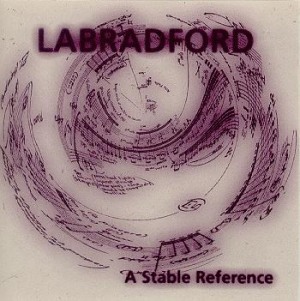
Labradford’s sophomore effort shows marked progress in their style, removing some of the debt to Spacemen 3’s minimalist drugged-out psych-rock and gaining a better sense of how to shape their amorphous songs. There are still a few drone-oriented pieces like “Mas,” “Eero,” and most of “Star City, Russia,” but the appearance of recognizable, reverb-heavy guitar lines makes an enormous difference. The interlocked synth, guitar, and bass in “Comfort” is their most indeliable concoction to date, made all the better by the absence of vocals. “SEDR 77” would be its match, if not for a skronking thread of feedback (I assume) that prevents me from drifting out with the down-beat atmosphere. (Unrelated anecdote: The last time I saw Centaur in Champaign [now roughly four years ago], they debuted a new song that featured a high-pitched loop throughout the entire track. I love Hum and all, but five minutes of a brain-splitting sound like that nearly drove me to murder.) There are plenty of comparably moments, however, like the emergence of the organ midway through “El Lago,” the glacial arpeggios of “Streamlining,” and the nearly optimistic melodic shifts in Banco.” I’ll reiterate how much better Labradford sound as an instrumental band; unlike Windy & Carl, when the vocals usually sift into the guitar drones, the mumbled vocals here rarely congeal properly. It’s a testament to their atmospheric prowess that a properly aligned organ line or a resonant guitar chord aches to be heard without vocal accompaniment.
77. The Wrens – “Napiers” b/w “What’s a Girl” 7” – Grass, 1994 – $1
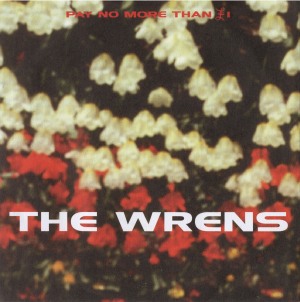
I’ve never been particularly fond of the Wrens, whose brand of indie rock seems a bit too tepid for my tastes (at least my taste of it at the inaugural Pitchfork festival), but I have been fond of their seven-inches for other purposes. Six or seven years ago I dug a dusty copy of the Wrens’ split single with pre-Bright Eyes group Park Ave from the cheap bin at Reckless Records, knowing of Park Ave from the recent reissue CD of their early material on Urinine Records, a similar dollar bin find. A few years later I sold that now out-of-print Park Ave CD for around $30 on eBay and that split single for around $70. I don’t anticipate selling this single for anything close to the split with Park Ave, since their fans are nowhere near as rabid as Bright Eyes devotees, but I figured that it might be worth a shot. If not, it’s only $1. Hell, I might even enjoy it.
I wouldn’t say that these songs converted me into a huge Wrens fan, but there’s something endearingly slapdash about these two tracks culled from their 1994 debut Silver. “Napiers” is considerably more energetic than expected, riding a pounding drumbeat and an unhinged vocal performance to solid ends. I can’t quite place who the vocals remind me of, but it’s half late 90s emo and half modern rock. The flip starts out with some daytime TV soundtrack twinkling, but builds into a churning climax. It’s hard to take feedback-laden catharsis seriously when they interrupt it for snippets of conversation and laughter, but even with that jarring studio trick, it’s a good listen. I imagine that I’ll hold onto this single, but whether I bother tracking down Silver, Secaucus, and The Meadowlands has yet to be determined.
78. Wider – “Triangle” b/w “Bloom” 7” – Stickshift, 1993 – $1
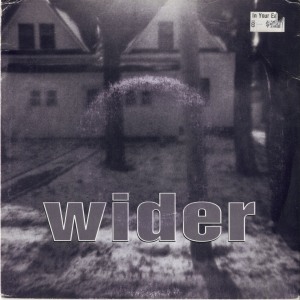
Another dollar, another Wider single. These songs feature Matt Sweeney on bass, which means that it’s been a big week for Sweeney’s pre-Chavez output entering my collection, but I wouldn’t count on Skunk’s sophomore effort Laid finding its way into my CD cabinet by Friday. At least I can be fairly certain that Sweeney’s brief tenure in Wider does not approach the potential embarrassment of Skunk, since Billy Corgan never name-dropped the group during a guest-hosting gig on 120 Minutes. I doubt Corgan thinks too highly of mid 1990s math-rock.
As for the actual songs, the atonal vocals detract from the tricky rhythms and brute force of inspired by early 1990s Pittsburgh-based math-rock (Don Caballero, Hurl, etc.). Hardly a surprise, since Hurl’s vocals were their weak point, too, but I can imagine Matt Sweeney piping up and saying “Hey guys, I can sing a melody here if you want” and the guitarists responding with “No thanks, pal, that’s exactly what we don’t want.”
79. Red Stars Theory– Red Stars Theory CD – Suicide Squeeze, 2001 – $1
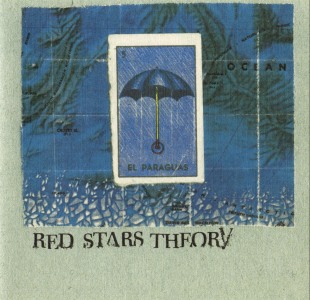
A few days before this trip to In Your Ear, I’d flipped through my LPs and noticed that I own two Red Stars Theory records, their 1997 full-length But Sleep Came Slowly and their 2000 self-titled EP, in addition to a CD copy of Life in a Bubble Is Beautiful. For a band I own three, now four releases from, I can only recall the general approach of their music—a more dream-pop informed version of Codeine’s slow-core, with occasional trips down contemporary post-rock pathways—not any particular songs, although I do remember spinning Life in a Bubble a number of times as a pleasant pre-sleep soundtrack. I purchased this CD knowing full-well I may never listen to it, but part of me was shocked that the group had another release that I didn’t own. The gall of them! As it turns out, this self-titled CD is comprised of their first single and their first EP, a somewhat thankless reissue from Suicide Squeeze, so I’d actually been missing out on two Red Stars Theory releases. How had I survived?
Giving another listen to Life in a Bubble Is Beautiful, the Lois Maffeo guest-spot on “A Sailor’s Warning” and the languid chimes and drifting chords of “An Alarm Goes Off” stand out to some degree, but the album still seems best suited to coax me to sleep, given that two songs have done most of that work. Kip Beelman’s engineering credit sounds well-earned, however, since the layers of sound help make up for lack of hooks. I still have to give this particular album a listen, but first, sleep.
|
|
Like Mystery Train, I hadn’t been up to Record Exchange since last fall, and yet unlike Mystery Train, it didn’t feel like their stock had changed since then. I recall seeing these two LPs in past visits and made similar re-encounters to other old friends that hadn’t moved in the last six months and aren’t likely to move anytime soon. (Hello again, vinyl pressings of Matthew Sweet’s first two forgettable LPs!) Part of the reason why I picked up these two records was because I didn’t know when (or if) I’ll return to Record Exchange. It’s roughly on the way back from Gloucester, but my trips to Mystery Train or RRRecords in Lowell always seem so much more fruitful. Nothing against the proprietors of Record Exchange, since they’ve been nothing but helpful whenever I’ve stopped in, but the residents of Salem need to trade in some classic vinyl pronto to help change the stock.
72. Skunk– Last American Virgin – Twin/Tone, 1989 – $5
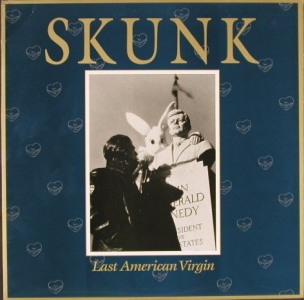
Morbid curiosity finally got the better of me with Skunk’s Last American Virgin, which features future Chavez singer/guitarist Matt Sweeney. Thanks to my 1994-1996 fandom of the Smashing Pumpkins, I knew of Skunk before I’d heard Chavez, since Billy Corgan regularly name-dropped the band as one of his all-time favorites (and later recruited Sweeney for the ill-fated Zwan). Unfortunately for Skunk, the twelve years since the fall-out of Mellon Collie and the Infinite Sadness have involved a gradual acceptance that Billy Corgan has terrible taste in music, putting quite the damper on this record.
So is Last American Virgin the lost Chavez album we’ve all hoped would surface? Is it worth spending $15 on a custom-burned CD-R from Twin/Tone to get this out-of-print album? No and no. Skunk sounds like an amped-up cousin to groups like the Replacements, early Soul Asylum, late Hüsker Dü, i.e. very Minneapolis, very late 1980s. Much like Clay Tarver’s past in Bullet Lavolta, Skunk doesn’t hold up to modern ears, since there’s too much vaguely hair metal shredding filtering into the abrasive side of 1980s college rock. The big, complex riffs of Chavez threaten to surface from time to time, but they’re usually submarined by another string of hot licks. Only “Hots on 4 Suzy” and the Meat Puppets-esque first half of “Rosie” come recommended. The rest sounds exactly like what you’d expect (dread) to hear with such an artifact. If you come across Last American Virgin in a dollar bin, it might be worth the lark for a Chavez fan, but otherwise, laugh at the big hair in the back cover photo and move on.
73. Idlewild – The Remote Part LP – Capitol, 2003 – $7
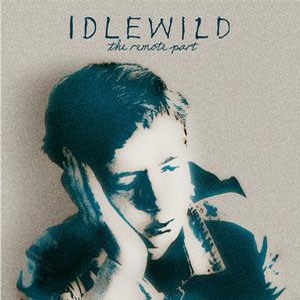
Idlewild is my go-to example for the arc of maturity for loose, energetic groups. Starting off with the scraggly noise pop of Captain, incorporating more distinct pop hooks amid the shrieking bursts of youth on Hope Is Important, toning down the violence without losing the energy on 100 Broken Windows, achieving a comfort level but still forcing some of the old charge on The Remote Part, losing an original member and debating whether or not to break up, calming down completely on Warnings/Promises, slight pause for a solo record by singer Roddy Woomble, trying to re-energize themselves on Make Another World, putting out a best-of compilation, debating whether or not to break up. (I wish I had a supporting graph.) The Narrator essentially mirrored this arc up until their 100 Broken Windows, 2007’s excellent All This to the Wall, but they opted to split up instead of becoming the new R.E.M.; part of me wishes that Idlewild had followed suit.
I saw Idlewild on their American tour for The Remote Part, which took an extra year to come out stateside. It was right before I graduated from college and I didn’t know what I was going to do next. Idlewild, however, did know what they were doing next—becoming professional artists.There was no scramble to the performance, even when they hit the distortion pedal or revived some of the older material. As Woomble dedicated an album to a search for identity and came up with Scotland’s Answer to R.E.M., he lost most of the group’s original personality.
Yet it didn’t surprise me that “American English” and The Remote Part broke through to a number of my non-elitist friends and garnered the group an opening spot for Pearl Jam; it’s an album geared toward mass appeal, trading the occasionally opaque lyrical approach of 100 Broken Windows for a broader, inspirational stroke. The “Support your local poet” campaign that accompanied the album furthered this take on the newly mature Idlewild; the idea of supporting an artist, especially a poet, purely based on locality doesn’t sit well with me. It’s one thing when your local poet is Scottish poet laureate Edwin Morgan, whose guest appearance miraculously avoids being cringe-worthy, but on a broad scale, it trades greatness for accessibility. Those two concepts aren’t mutually exclusive, but in terms of my preferences for Idlewild, there’s a point on that imaginary graph where my interest drops off completely. It’s when Idlewild knows the answers to the questions they’re asking.
So why did I re-buy an album that marked the end of my fondness for a group? Here’s a remarkably specific answer: my sister-in-law lost her copy of the CD and I was willing to trade up to the vinyl, which I knew was sitting in Salem. I could’ve just mailed her my copy of the CD, which I haven’t played in years, but I felt like I should hold onto The Remote Part, specifically its closing track, the poet-equipped “In Remote Part / Scottish Fiction.” Some of the arena-friendly rockers, like “You Held the World in Your Arms” (a more arena-friendly title could not be found), hold up alright, but it’s that closing track that manages to maintain the group’s dwindling personality, thanks to Morgan’s recitation of his “Scottish Fiction” poem and the acoustic/electric divide. It feels more inspired than inspiring.
While the overwhelmingly bland Warnings/Promises officially killed my future interest in the group, it did not kill my fondness for 100 Broken Windows, which sits precariously between youthful energy and musical maturity and is all the better for it. Idlewild just released another album, Post Electric Blues, and I’ll probably download it to see if they’ve somehow regained their youth and my interest, just like I’ve downloaded all of those other post-Remote Part albums. But I anticipate this album suffering the same fate as its recent predecessors in my recycle bin.
|
|
Mystery Train might be my favorite place to go record shopping. The trip to Gloucester is long enough (about 45 minutes from Somerville) that I can’t justify going very often, but every time I come back with a pile of great music I certainly wouldn’t find in Boston. The just-in bins are overflowing, the records are reasonably priced, and virtually every genre has great finds. Someday I’ll head up to Mystery Train with a Record Store Day budget and stock up on jazz, Cocteau Twins EPs, and contemporary composers, but for now I’ll make the trip every few months—it had been at least six since my last trip—spend a few hours there, and go through a painful process of elimination.
The key to Mystery Train is exploring all of the additional, unpriced stock under the bins and off to the side (and going on a day when the owner’s available to price them for you). Here’s the simple logic: certain things that were overwhelmingly stocked in 1988 are now much harder to track down. I remember one particular trip when I “hid” a number of understock finds (The Smiths’ The Queen Is Dead, Morrissey’s Viva Hate, Ghostface Killah’s Supreme Clientele, American Music Club’s California among others) because no one was able to price them for me, and thankfully my cache was still in its hiding place during my next visit. This trip’s understock find was The Moon and the Melodies, but I didn’t have as much time to explore as usual.
68. The Smiths – Hatful of Hollow – Rough Trade, 1984 – $12.50
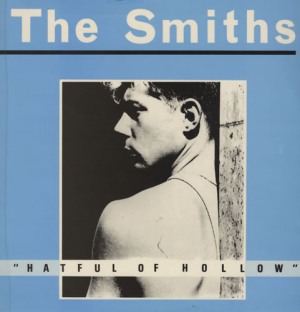
Virtually every record store has a plastic divider for the Smiths, but it’s becoming increasingly rare when anything actually occupies the slot. Judging by the reasonable prices on eBay, it’s not because the primary Smiths LPs are particularly scarce. There are plenty of singles, limited pressings, hard-to-find EPs, live bootlegs, and import editions to hunt down, but if you’re just interested in The Smiths, Meat Is Murder, The Queen Is Dead, Strangeways Here We Come, and Hatful of Hollow, you should be able to get them for around $10 apiece or cheaper if you can find a combination lot. Good luck finding any of those in a metropolitan store, however, unless there’s a pricey reissue in stock. The reason for this absence is that the Smiths are the vanguard artist for the 1980s division of the vinyl revival, much like Neutral Milk Hotel’s In the Aeroplane Over the Sea is the standard-bearer for 1990s indie vinyl nostalgia. Striking artwork, an ever-expanding cult audience, a comparatively limited catalog free of extended club mixes (cough, The Cure)—all of these help create an immediate, broad demand for the titles. “Oh, there’s a copy of The Smiths! Grab it!” The difference, of course, is that Aeroplane is still in print, which let it hit #6 on the top vinyl sellers for 2008. (Somehow, In Your Ear in Cambridge still has the gall to charge $25 for a used copy!) I’d previously mentioned the limited edition run of reissue Smiths singles, but they’d be wise to do entry-level priced copies of those major LPs and cash in huge. Forget these $18 picture discs and $27 colored vinyl editions; do $12 single LP pressings in 120 gram vinyl, and then switch to indulgent, 3LP collector’s editions a year later. (Edit: I see that Vinyl Collective is taking pre-orders for reissues of the Smiths' four full-lengths, with 2008 remasters courtesy of Johnny Marr, but at $24.49 they're twice what I'd recommend charging.)
It’s not like the Smiths are above cashing in. Hatful of Hollow was the first in a series of compilation releases to combine singles, b-sides, and alternate takes of their songs, catering to their fans’ desire for the original BBC Radio 1 recordings of early songs. I personally started out with the Smiths’ studio releases, but like Floodwatchmusic has discussed, such compilation releases may paint a more accurate picture of the group’s successes. I’m up in the air about my preferences, but the recordings of “Hand in Glove” and “What Difference Does It Make?” are more immediate here than on their self-titled LP and in total, six versions (and one completely exclusive song) aren’t available elsewhere. That’s not nearly as bad as the “Here’s our greatest hits compilation with one completely new song!” trick that so many bands pull. I’m not enough of a Smiths devotee for such a ruse to work on me, but if I come across Louder Than Bombs or Rank, you can guess what’s going to happen. I just know that it’s far more likely to happen in Lowell, Salem, or Gloucester than in Boston proper.
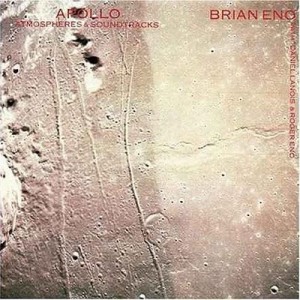
69. Brian Eno with Daniel Lanois and Roger Eno – Apollo: Atmospheres and Soundtracks –E.G., 1983 – $6.50
I recently attended a special performance of the Boston Pops for MIT’s Giant Leaps, a symposium on the 40th anniversary of the Apollo moon landing. The performance of four-sevenths of Gustav Holst’s “The Planets” featured narration from Buzz Aldrin and a series of short films for the respective planets. (Only Mars, Venus, Jupiter, and Uranus were performed.) Aside from a brief introduction relating his experience journeying to the moon, Aldrin’s narration was penned by a college professor, with the flowery language fitting the occasion but not the speaker. As a culmination of the symposium, the event made sense, especially the post-intermission set list of sci-fi theme music (Close Encounters of the Third Kind, Star Trek, Star Wars), but even with one of the first men to step foot on the moon helming the show, it felt strangely routine.
There are, of course, different ways to honor and represent the event, and my musical proclivities align more closely with Brian Eno’s 1983 Apollo: Atmospheres and Soundtracks LP. I debated whether to buy it, already owning four of Eno’s ambient LPs, but Apollo’s specific focus makes for a truly inspired listen, perhaps even more so than Eno’s ambient series. Originally recorded for use in Al Reinart’s For All Mankind documentary (eventually released in 1989, now available from the Criterion Collection), Apollo hardly requires a visual accompaniment to evoke mental images of space travel. Eno’s liner notes explain how “the television coverage left me unsatisfied… the fear of boring the public had led the editors and commentators to present the transmissions from space in an up tempo, ‘newsy’ manner that was unsympathetic.” Ultimately this “[obscured] the grandeur and strangeness of the event.” In line with that thinking, these twelve songs drift between wonder, somber perspective, eerie chills, and the overwhelming quiet that Aldrin mentioned during his introduction. The centerpiece is “An Ending (Ascent),” a calm suite of echoing beauty. I’m interested in seeing For All Mankind, but Apollo: Atmospheres and Soundtracks is a marvelous piece on its own accord.
70. New Order – Ceremony LP – Factory, 1981 – $6.50
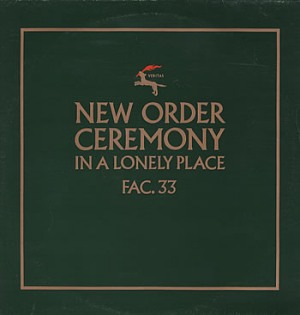
I always check the Joy Division and New Order slots in record stores, even though they’re usually filled with copies of the latter’s mid to late ’80s singles. (Yawn.) Finding the 12” for “Ceremony”—the original pressing, as it turns out—was a treat, like when I’d picked up the original Factory issue of Joy Division’s Closer from Record Exchange for eight bucks. The version of the single even matters, surprisingly enough, beyond its higher value. The first pressing of “Ceremony” features different performances than the second pressing or Substance, since Gillian Gilbert is present on the re-recordings (among other changes specified in the Wikipedia entry). It’s essentially a difference between sounding more like Closer on the original pressing and sounding slightly more like New Order’s Movement on the second. Not a huge difference, it’s an interesting evolution from Joy Division without Ian Curtis to New Order as its own entity, key since Ian Curtis penned both songs.
“Ceremony” is floating around in a few frustrating, if tantalizing forms with Curtis on vocals, including a live version from Joy Division’s final concert on Still and a salvaged rehearsal recording on the 4CD Heart and Soul box set. Blasphemy, perhaps, to prefer the New Order version over these rough Joy Division sketches, but having Curtis write his own eulogy is too perfect, too affecting to ignore.
71. Cocteau Twins and Harold Budd – The Moon and the Melodies LP – 4AD, 1986 – $6.50
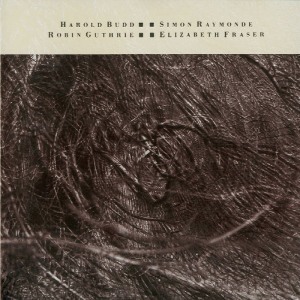
I’d initially pulled a copy of Harold Budd’s Lovely Thunder from the just-in stacks, recalling his collaboration with Brian Eno on Ambient 2: The Plateaux of Mirror, perhaps my favorite of Eno’s ambient series. I’d checked Amazon reviews to confirm that it was worth hearing and found out that “Flowered Knife Shadows” had appeared in a slightly different form as “Memory Gongs” on Budd’s collaboration with the members of the Cocteau Twins, The Moon and the Melodies. I thought, “Wouldn’t it be nice to find that album?” as I milled about the unpriced stock around the edges of the store, only to find a copy of The Moon and the Melodies just before leaving. Sorry Lovely Thunder, you’ll have to wait for another visit.
I credited Cocteau Twins for this album instead of the members’ names out of sheer laziness, but their biography mentions that they went to great lengths not to credit their band name, since they didn’t want The Moon and the Melodies to be misconstrued as a proper Cocteau Twins album. Yet the Cocteaus were dead-on when they mentioned in a 1989 Sound on Sound interview that “it turned out more like four songs that sounded like us and four songs that sounded like him.” For those keeping track, “Sea, Swallow Me,” “Eyes Are Mosaics,” “She Will Destroy You,” and “Ooze Out and Away, Onehow” sound like Cocteau Twins, “Memory Gongs,” “Why Do You Love Me,” “The Ghost Has No Home,” and “Bloody and Blunt” sound like Harold Budd. “Bloody and Blunt” and “Ooze Out and Away, Onehow” do the best job of merging their respective strengths, but with Liz Fraser only singing on the four “Cocteau Twins” songs, there’s only so much bridging that can occur. I’m not deriding this stylistic split, since drifting between the approaches adds to the half-asleep atmosphere, but Budd’s collaboration with Eno seems like a more natural combination of aesthetics.
|

My two favorite groups in high school, Hum and Girls Against Boys, represented a vast stylistic divide in 1990s alternative rock. Hum’s space-rock gazes longingly at the stars; Girls Against Boys’ bass-driven post-punk aims straight for the gut (if not lower). Hum represented the Midwest’s particular brand of introspective guitar rock; Girls Against Boys pulled a lineage of DC punk and hardcore into the postmodern affectations of New York City. Whereas Hum’s lyrical depth and emotional resonance appealed to the core principles of my musical tastes at the time, Girls Against Boys felt like the exception to those rules.
Substance? Girls Against Boys’ style is their substance. Unlike so many other groups dependent upon style, GVSB subvert any noticeable rock clichés through equal doses of brute force, postmodern ironic detachment, and electrifying urgency. Scott McCloud’s raspy charisma winks at any lyric that’s too neat, any setting that’s too clean. Out of context—hell, often in context—individual lyrics sound like mistranslated non sequiturs, come-ons from lounge crooner wannabes, or slurred threats from the menacing guy at the end of the bar. Yet somehow they make perfect sense in the moment of McCloud’s delivery, drawing you into the group’s precise, bass-heavy throb.

There are a few other notable two-bass line-ups from the 1990s—Ned’s Atomic Dustbin’s Grebo Brit-rock, Dianogah’s bass-only instrumentals, Ganger’s Krautrock-influenced post-rock—but Girls Against Boys’ post-hardcore style gels perfectly with Johnny Temple and Eli Janney’s low-end thrusts. Janney alternates between a sampler keyboard and his custom metal bass, and in both situations, his lines add melody and depth to Temple’s solid foundation. Alexis Fleisig’s floor-tom-heavy drumming combines equal parts power and precision, throttling each fill without going overboard or detracting from the group’s focus. It’s rare that a group’s guitarist can be overshadowed by its rhythm section, but McCloud made due, adding texture to the top of the mix, ducking into the lower registers for bonus rumble, and strafing the bassists with razor-wire riffs. Math-rock time-signature fetishists look elsewhere; Girls Against Boys songs locked into their savage grooves and pummeled them into submission.
Many critics now herald Girls Against Boys’ 1993 LP Venus Luxure #1 Baby as a classic of 1990s indie/alternative rock and dismiss the rest of their catalog as dry runs or pale imitation. I can’t disagree with the first part—Venus Luxure is their best record by a fair margin and among my top ten albums of the decade—what propelled me into obsession was the depth of GVSB’s catalog. Sure, their first two releases showed growing pains and Freak*on*ica was a major-label disaster, but even those albums have their rewards. Their Touch and Go years were remarkably fruitful for LPs, EPs, and singles. I’ve chosen to select songs from each major release and a few additional highlights, which means Venus Luxure and its Touch and Go brethren are sorely underrepresented, but you should go out and buy those three albums if you don’t already own them. I’ve included MP3s for the rarer material and YouTube links whenever possible.

“Stay in the Car” – For the start of the group and the Eighties half of this EP, DC-area producer Eli Janney joined Fugazi drummer Brendan Canty and Soulside singer Scott McCloud for some regrettable synth-/sample-heavy industrial post-punk. I view the Nineties half of this EP as the group’s true beginning, since Girls Against Boys immediately hit their stride once McCloud’s former Soulside band mates, drummer Alexis Fleisig and bassist Johnny Temple, joined the fold. “Stay in the Car” starts off with Janney’s shuddering sampler bass, but soon enough Fleisig’s forceful, swinging beat, Temple’s deep bass line, and Scott McCloud’s howling guitar create the first signature GVSB groove. The vague lyrics—“Step one / Stay in the car,” “A pat on the back from the president,” “We need some gun control / We need the Marlboro Man”—might not sound like much on paper, but combined with the group’s locked-down rhythmic drive, these stray phrases evoke an urgent, action movie dreamscape.

“Matching Wits with Flaming Frank” – Girls Against Boys reconvened for their 1992 debut LP, Tropic of Scorpio, but like its EP predecessor, it’s a mixed affair. Between lounge-flavored songs like the “Everything I Do Seems to Cost Me $20” and the noisy experimentation of “Plush,” there’s a lack of focus and consistency antithetical to their Touch and Go output, even if they’re intriguing diversions. Thankfully, the first three songs bridge the gap between this loose approach and the intensity of their later work. “Matching Wits with Flaming Frank” isn’t as dynamic as “My Night of Pleasure (with the Mudjacking Contractors)” or as catchy as “Wow Wow Wow,” but a powerhouse performance from Alexis Fleisig and Scott McCloud’s raspy delivery of “I had to burst into flames” and “Who loves you?” make it the highlight of Tropic of Scorpio.

“Bulletproof Cupid” –The best Girls Against Boys songs add a palpable sense of danger to Scott McCloud’s hedonistic domain, a point perfectly illustrated by the descent into chaos in “Bulletproof Cupid.” Setting the scene with another nighttime, sex-fueled car ride (“Stop the machine / If you see something you could like”) driven by McCloud’s cruise-control-at-85-mph guitar figure, “Bulletproof Cupid” escalates the tension with chants of “It’s a lot more physical right now” and “X-x-x-press it now” above the menacing rumble of Temple’s bass and Janney’s droning keyboard. Soon enough, it heightens to “It’s gonna paralyze you / By the shine of your head” before McCloud slurs “Paralyze you / Til I’m fuckin’ dead.” With that violent end-game on the table, the car veers off the road. Alexis Fleisig pummels everything in sight amidst Janney’s panicked yells of “Lies! Lies!” before the song jerks back into control. It’s a mesmerizing transition cemented by McCloud’s brutal dose of black humor: “Nobody’s perfect.” Anyone could get sucked into this chase for carnal physicality, anyone could veer off course into an unforeseen, violent end. Nobody’s perfect.
“Learned It” – There’s no heavier bass sound in Girls Against Boys’ discography than the initial sucker punch of “Learned It,” a murderous combination of Temple’s bass guitar and Janney’s sampler bass. The doubled bass line reloads its massive, two-note pattern with higher register runs at the end of each phrase, but it never loses its potency. The guitar line? Entirely irrelevant, but McCloud’s “I got one shot” is the perfect refrain for this beat-down. As much as I love this bass sound, I do enjoy this alternate live-in-studio take of the song from their Eight Rounds split EP with Guided by Voices that chooses clean piano over Janney’s usual distorted bass keyboard sound.
I could easily gone with any number of other V-Lux highlights, like the confident charm of “In Like Flynn” (“Say you like that you’re gonna love this”), the woozy pop of “Go Be Delighted,” the straight-ahead chug of “Let Me Come Back” (later turned into a cover of “Boogie Wonderland” for the group’s appearance as a bar band in 200 Cigarettes), or the dream-like calm of “Bug House,” but I’ll reluctantly move on.

“Tucked In” – Not just the opening track for Cruise Yourself, “Tucked In” is its public address announcement. “Is everybody tucked in / Is everybody tucked in / Now that’s what I like to see” posits Scott McCloud as steward on GVSB Comfort Air, hitting New York, Chicago (Chicago Chicago), and Los Angeles. The lyrical repetition is mirrored in the off-kilter, looped bass line and Fleisig’s tom-heavy pattern of the verses, the latter of which finally opens up with the chorus’s carefully controlled feedback and Janney’s panned “Comfort air / Comfort ride / Comfort flex / Comfort zone” backing vocals. Yet “opening up” is misleading—after all, “Way into the trance thing” is the dominant phrase—since the song eschews the chance for a Venus Luxure fever pitch in favor of a melancholic second half showing the wear and tear of the Cruise Yourself lifestyle. McCloud finds “No room to swing” in this new routine and the song ends with a vastly different intonation of the “Is everybody tucked in” mantra. The album switches gears to the double-bass body blow of “Cruise Your New Baby Fly Self,” but it’s telling that GVSB didn’t choose to start the album with “One more time with feeling / One more time with style.” “Tucked In” may not have the head-nodding, ass-shaking grooves of “Kill the Sexplayer,” the desperation of lead single “[I] Don’t Got a Place,” or lurid depths of “Explicitly Yours,” but its idea of GVSB as lifestyle runs through all of Cruise Yourself.
“Magattraction” – When I first saw Girls Against Boys at Mercury Lounge in New York City in the spring of 1998, I’d already picked up virtually everything they’d put out, so hearing them launch into a unfamiliar song was a huge surprise. “Magattraction” was the lead track on the 1994 Jabberjaw: Good to the Last Drop compilation, which also featured Unwound, Jawbox, and the loathed Hole, but it had been extracted as a b-side for the recent “Psycho Future” single. Presumably recorded during the 1993 recording sessions for the superb Venus Luxure #1 Baby, “Magattraction” matches the quality of that record, if not the atmosphere. “Magattraction” teases with ironic catharsis like “Got no rhythm, got no soul,” but with palm-muted pulses, a rumbling bass war, and a shouted climax of “Shake it / Shoot it,” hedonism wins out in the end.
Other Girls Against Boys rarities worth checking out include the lo-fi rocker “Red Bar,” which first appeared on the 1993 Enragez Vous! compilation and was later included as a one-sided single accompanying the initial vinyl pressing of Cruise Yourself, and their cover of Joy Division’s “She’s Lost Control” from the 1995 A Means to an End tribute album. Their CD singles aren’t rare by any means, but do feature some solid tracks, especially pre-Cruise Yourself single “Sexy Sam.” It’s the only other non-album cut that rivals “Magattraction.”

“Super-Fire” – Thanks to its light-bulb-smashing video appearing on 120 Minutes, Super-Fire” was the first GVSB song I heard. Between Scott McCloud’s nearly indecipherable phrases (“When you got nothing in the lemon,” “X-head is x-vibe”), Eli Janney’s wah’ed out bass, and the bizarre background noise/vocals in the chorus, it’s a great litmus test for the group’s allure. Not everything is so oblique: that rapid-fire, note-bending guitar lead is killer, the bass groove is seductive, and “Nothing satisfies” could easily be the title of a GVSB bio-pic. McCloud even throws in “Can you decide what the fuck is going on?” as a potentially self-referential lyric. It trades the danger of V-Lux for an endlessly listenable sheen, perfect for the lead single and track from their second-best LP. If memory serves, Girls Against Boys signed with Geffen under the agreement that House of GVSB would be their Touch & Go swansong. Missing out on the polish and poise of House must’ve been a thorn in the side of Geffen and a last laugh for Touch & Go, especially given the quality of what Geffen did release.

“Park Avenue” I’ll offer up a startling admission: I enjoyed Freak*on*ica when it came out. Sure, I missed the Ted Niceley production values, but as a seventeen-year-old participant on the group’s listserv (which netted me a vinyl copy of Freak*on*ica and a now ratty t-shirt from the resident Geffen rep), it was easy to get swept up in the rush of a new album. Did I think it was their best record yet? Of course not, but I sure played a lot of Top Gear on the Super Nintendo with Freak*on*ica as the soundtrack. These songs also sound much better in their set lists than on record, a point that initially made me like this record more. See, these songs aren’t that much different from their previous records! That view soon changed to a recognition that I’d rather listen to albums not utilizing Pitchshifter's aesthetic blueprint.
Despite not listening to Freak*on*ica in years, lead single “Park Avenue” recently crept into my workout mix. Scott McCloud’s opening line “Check your lifespan” was spat back in GVSB’s face by countless reviewers (ha ha, no, you check your lifespan, Girls Against Boys), but “Park Avenue” is still the best song from the record. Janney’s pulsating keyboard build-up, a doubled-up riff from Temple and McCloud, and a solid (if unspectacular) foundation from Fleisig push things forward with polished, mechanical efficiency. The issue with “Park Avenue,” and Freak*on*ica as a whole, is how Nick Launey’s production neuters GVSB’s style. Its predecessor, House of GVSB, was a well-oiled machine, but there were dark places on that album (“Life in Pink,” “Zodiac Love Team”), varied aesthetics, back-alley dealings. McCloud had a smokiness to his voice, like he’d been in the corner booth of a dive bar for the last week and a half. Launey pulled their aesthetic into prime-time, into the safe glitz of the new Times Square the band calls out on “One Firecracker.” Janney’s keyboards become the driving element, turning GVSB into another industrial-lite band. Stray effects clutter the mix, instantly dating the album. McCloud’s vocals are embarrassingly processed, smoothed down to a cartoonish whine. If the best GVSB songs are predicated upon the threat of danger, the worst songs eliminate this possibility entirely. Consider Freak*on*ica their PG record.
“One Dose of Truth” – Given a chance to switch up their routine, Girls Against Boys wrote their most new wave–inspired track for the soundtrack to Series 7: The Contenders, a reality television satire from 2001. Recalling Joy Division’s “Love Will Tear Us Apart,” one of the few non-GVSB songs in the film, “One Dose of Truth” combines plaintive synth-orchestra lines, atypically melodic guitar arpeggios, and Eli Janney’s soothing background vocals with some of the group’s most direct, Geffen-taunting hooks. Scott McCloud’s lyrical bent has skewered corrupt popular culture since House of GVSB, so the refrain of “All we need from you / Is one dose of truth” echoes throughout much of their catalog, especially their final album, 2002’s You Can’t Fight What You Can’t See. There’s also an alternate take on this melody on the soundtrack, the short instrumental “I Knew Her…,” which adds some acoustic guitar to nice effect.

“The Come Down” – Tipped off by "One Dose of Truth," Girls Against Boys’ final album completes the switch in Scott McCloud’s lyrics from creating and living in his own private, hyper-cool metropolitan universe to explicitly critiquing the quality of actual popular culture. While the lyrical approach may have changed, You Can’t Fight What You Can’t See returns to the musical template of those Touch and Go albums, loaded with sharp hooks and tight structures. “The Come Down” ventures closest to their old haunts, with McCloud opining “Around here night goes on too long” over a polished keyboard hook from Janney. The spaced-out bridge provides some rarified space for McCloud’s curious serenade of “Like a landslide / Through your mind / I like your style” before closing out with the elliptical guitar riff setting off one final round. “The Come Down” and the album-ending slow-jam “Let It Breathe” form such an evocative combination of bang and whimper that it seems fitting that they haven’t recorded a follow-up.
2009 Postscript – Although they’re officially on hiatus, GVSB still occasionally play shows, usually in Europe (they hit up Poland and Russia this spring). If they ever decide to properly tour the States again, I’ll have to fight the urge to stalk them up and down the East Coast. Scott McCloud released his first LP as Paramount Styles last year, an acoustically oriented project with Alexis Fleisig in tow. Fleisig replaced Damon Che as the drummer of Bellini, who released The Precious Prize of Gravity in May. Eli Janney still produces bands. Johnny Temple runs Akashic Books. If you want go backwards, you can check out Soulside’s Soon Come Happy for a taste of Scott, Johnny, and Alexis’s days in the DC hardcore scene, early Edsel singles for Eli’s falsetto background vocals and sampler, and New Wet Kojak for late-night moisture.
2013 Update - A recent string of European festival dates in honor of the 20th anniversary of Venus Luxure No. 1 Baby turns out to be more than an overseas vacation. Girls Against Boys announced three American dates in September (NYC, Philly, and DC) and, more importantly, a new EP. You can hear the new song "It's a Diamond Life" via Soundcloud.
Two added side gigs: Alexis Fleisig now drums in Obits alongside former Drive Like Jehu / Hot Snakes vocalist Rick Froberg and former Edsel frontman Sohrab Habibion. Eli Janney does the production-centric Input Output podcast with another former Edsel member, Geoff Sanoff. Closing that loop, Janney and Sanoff have produced both Obits LPs.
|
67. Isis – Wavering Radiant 2LP – Ipecac, 2009 – $25
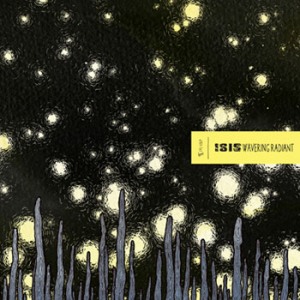
Ever since I learned my lesson about blind-buying $20 LPs with The Arcade Fire’s hugely disappointing Neon Bible, I’ve made a habit of giving a few spins to any recent releases before purchasing them new. (My used LP buying habits more than make up for this lack of unfamiliar ground.) Isis’s Wavering Radiant is a slight exception, since I’d listened to and enjoyed a few songs from it since the record first leaked, but I hadn’t given it a full listen. It’s not a matter of me not enjoying those songs—“Ghost Key” matches the highlights from In the Absence of Truth, “Holy Tears” and “Garden of Light”—but I just haven’t been in the mood to listen to a whole Isis album. Panopticon and Oceanic are absorbing, consistent LPs, but they’re also draining experiences. I’m still willing to drop a steep $25 on the double LP, however, trusting their consistent output a bit more than The Arcade Fire (even if In the Absence of Truth was a notch below Panopticon).
It’s unfortunate that Isis strayed from their usual fall release schedule, since the group’s oppressive post-metal begs for dark evenings and creeping frost. Judging from my scattered listens, Wavering Radiant returns to some of the pre-Oceanic riffs and aggression without losing those drifting, devastating instrumental passages (the bridge of “20 Minutes / 40 Years” certainly counts). There’s no shortage of chorus-laden, Peter Hook-style bass leads, atmospheric keyboards, or Aaron Turner’s vocals, but those guitar riffs keep things centered. I would prefer smaller doses of Turner’s guttural screams and Tool-informed singing voice, but the balance between those two approaches seems to be better than In the Absence of Truth, which relied too much on the melodic vocals. Check in with me in November to see how this album’s holding up.
|
|
It’s not the mammoth Record Store Day purchase that unnerves me with regard to my purchasing control, since I’d budgeted that one. It’s the return trip to Newbury Comics to pick up a few of the stragglers that had grown on me since the big event that makes me worry about whether this meme is a document of an uncontrollable addiction. I’d only planned to pick up the Fucked Up EP and the Obits LP, but finding that Smiths single suckered me into another buy. Just one more hit!
64. Fucked Up – Year of the Pig – Matador, 2008 – $10
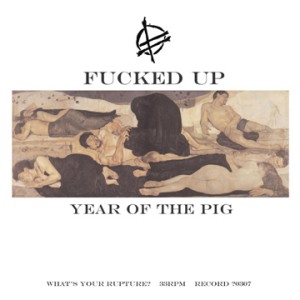
I doubt I’d given Fucked Up more than a dismissive skim before heading out to Seattle in March to interview the members of Juno. Both Arlie Carstens and Gabe Carter raved about the group (I can’t remember if Jason Guyer or Greg Ferguson did, so I’ll have to consult the tape), which prompted Jon to pick up a CD copy of their 2006 album Hidden World at Jive Time Records (from a former member of the band, no less). Damian Abraham’s (Pink Eyes) vocals immediately turned me off, all gruff shouting without enough melody, and I assumed that they weren’t for me. That is, of course, until I found out they had an eighteen-minute-long song.
“Year of the Pig” is a loose, pulsing epic, switching between soothing female vocals and Abraham’s guttural incantations. Piano, strings, and bongos all make appearances, but the song keeps pushing forward, even when it’s coming apart at the seams. Matador has released three different single edits for the song, which could sound like drastically different songs depending on the tempo for that four-minute chunk, but I’d rather stick with the eighteen-minute version. The flip is “The Black Hats,” a more traditional, guitar-heavy punk rock song.
I’ve since gotten into their 2008 LP The Chemistry of Common Life, or at least “Son the Father,” “Black Albino Bones,” and the title track. I was about to buy it at Newbury Comics when I’d noticed that it had jumped from $17.99 to $27.99. I’m sure I’ll pick it up sometime this year, but not at that price.
65. The Smiths – “The Headmaster Ritual” b/w “Oscillate Wildly” – Sire, 2009 – $7
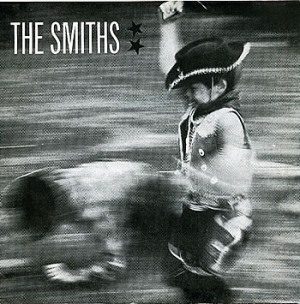
Call me a sucker for limited edition wares, but when I found this Record Store Day exclusive a few weeks after the big event, I quickly snapped it up. This single sold out at the Newbury Street location I visited on Record Store Day within the first ten minutes, so I’m a bit amazed that copies were floating around. This Newbury Comics location also had a few extra copies of the Pavement live LP, so either demand wasn’t as high as anticipated, particular locations had some additional stock after the event, or the “exclusive” and “limited edition” tags were designed purely to sucker me in to buying a reissue single I don’t need. Score one up for the record industry.
Perhaps the more astonishing aspect of this single is that even at seven dollars, it’s still cheaper than the other Smiths reissue singles currently available. Those sell for a whopping $11 apiece and I don’t think they were even pressed on 100% celibate vinyl. You could buy a box set of all twelve of those singles, not including this one, for around $100 (a steal!), but for the same price you could purchase the majority of the singles/best-of compilations the Smiths issued during or after their existence (Hatful of Hollow, Louder than Bombs, The World Won’t Listen, Singles, etc.) on compact disc. Choose wisely.
66. Obits – I Blame You LP – Sub Pop, 2009 – $15
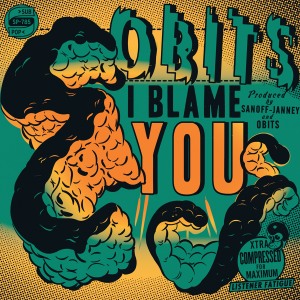
I blame The Night Marchers for the delay in my purchase of Obits’ debut full-length. The Night Marchers, helmed by Rick Froberg’s former partner in post-hardcore crime, John Reis, stumbled out of the gate with See You in Magic. Even Reis’s charisma couldn’t make up for the fact that the album has at most three memorable tracks, one of which they didn’t play at their concert last May. An auspicious beginning for his post-Hot Snakes career. Despite my relative fondness for Obits’ first single (“One Cross Apiece” b/w “Put It in Writing”), I was poised to be underwhelmed by I Blame You and the lack of Froberg’s signature throat-shredding screams.
Without the serrated edge of Drive Like Jehu or Hot Snakes, the surf-rock informed interplay between Froberg and former Edsel frontman Sohrab Habibion doesn’t pack the same immediate impact of Froberg’s past work or the coolly melodic touch of Edsel, but I Blame You proved to be a grower, especially once I put the LP on the turntable. The key track is the cover of Kokomo Arnold’s blues classic “Milk Cow Blues,” which incorporates a downright nasty rhythm guitar riff midway through the song. Once “Milk Cow Blues” sunk its claws in, the opening track, “Widow of My Dreams” and a number of other excellent album tracks clicked as well, like Sohrab Habibion’s excellent vocal contribution on “Run.” Closer “Back and Forth” starts out with a great, low-key 60s pop feel before ratcheting the energy up for the chorus, and I’d love a few more songs with that flavor.
|
|
It’s clear from my nearly non-existent concert photography feed that I’ve cut down greatly on the number of shows I see each year, but it’s hard for me to pass up seeing one of Allen Epley’s bands. Between Shiner (eleven times) and The Life and Times (eight times), I’ve seen Epley nineteen total times in eight different cities (St. Louis, Chicago, Champaign, Indianapolis, Newport, KY, Kansas City, New York, Boston). The biggest difference between this concert and their opening slot for the Hum reunion show in January was my familiarity with their new album, Tragic Boogie, and the highlights of that record sounded great. Still no “Mea Culpa” or “A Chorus of Crickets,” but they’ve got to plug the new wares, which I discuss at length below. Short take: behind Lula Divinia, The Egg, and Suburban Hymns, but still worth checking out.
I was running late the night of this concert and missed Constants, whose excellent “Passage” was leaking out onto Harvard Ave. as I entered Great Scott. Unfortunately, it was the last song of their set. I was looking forward to hearing some material from their upcoming album The Foundation, The Machine, The Ascension, but I’ll have to wait for the 3LP release on Mylene Sheath, which ships in late June. Six feet of artwork and two choices of vinyl color for pre-orders, so get in line.
I did get to hear the excellent Deleted Scenes for the first time, and damned if they didn’t put on a great show. Hard to pin them down to a single sub-genre, but the Dismemberment Plan, Talking Heads, indie pop, and even some math-rock came up during the set, never as a singular influence. Singer Dan Scheuerman has a captivating stage presence and their songs are even better live. I wouldn’t be surprised if their next record pushes them into headlining slots across the country, but I grabbed their debut full-length, Birdseed Shirt, and talked to Scheuerman after the show.
63. Deleted Scenes – Birdseed Shirt CD – What Delicate, 2009 – $8
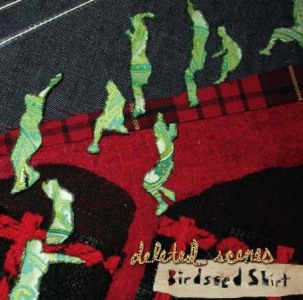
Deleted Scenes put on such a convincing performance that I had no choice but to pick up their debut full-length, Birdseed Shirt, on the loathed compact disc format. (It does not look like an LP is in the works, but my purchase of an album on CD almost assures it an eventual vinyl pressing.) Does Birdseed Shirt measure up to their live set? No, but it’s still a compelling album. There’s a considerable amount of production depth on these songs, but I’d argue that a few of the tricks (keeping vocals on one channel, for example), detract from the power of the songwriting. I keep meaning to give this album a few front-to-back spins, but I usually get stuck on highlights like the abrasive “Mortal Sin,” the gliding, melodic “Ithaca,” and the dourly triumphant “Turn to Sand.” They’ll be at TT the Bear’s on July 3rd, and I might just have to use that concert as an excuse to leave the house. Those live YouTubes are whetting my appetite.
64. The Life and Times – Tragic Boogie LP – Hawthorne Street, 2009 – $10
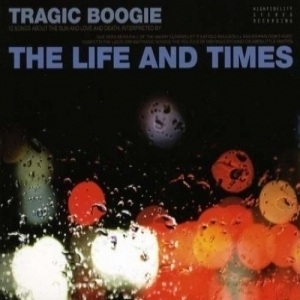
My fondness for Allen Epley’s massive, math-rock-influenced rock can admittedly affect my ability to assess his groups’ albums immediately after release, so excuse this long build-up to the discussion of Tragic Boogie. I remember claiming that Shiner’s Starless (2000) was an improvement upon Lula Divinia (1997) in a Signal Drench review, an opinion motivated by the initial surge of new music from one of my favorite groups and the desire to cement Shiner as one of the groups the magazine got behind, especially in light of a vicious Pitchfork review (which is now gone from the site). In hindsight, Starless was an occasionally awkward transitional record, suffering from too much deference from Epley’s guitar and Paul Malinowski’s bass to the second guitar being added by Joel Hamilton and Josh Newton. Whereas Lula Divinia felt mammoth with just three members, Starless feels strangely thin at points with four. The album felt less challenging than Lula as well, with both Epley’s songwriting and new drummer Jason Gerkin taking a more straightforward approach. I know there was a version floating around—either demos or an early studio cut—with Tim Dow still in the group, but I’ve never come close to hearing it, so it may very well be an urban legend. I doubt a change in drummers would have made “Too Much of Not Enough” a better song, however.
Starless took a full three years after Lula to come out, in part due to label changes. The record was originally slated for the New York label Zero Hour, who’d put out Swervedriver’s 99th Dream and a few other semi-notable records, but they folded and left Shiner in the lurch. Was there major label interest in the group during this time as well? Who knows, but I suspect Epley, a music lifer, would not have minded some financial security. Starless ended up being released on Owned & Operated, run by Descendents/All drummer Bill Stevenson, but they didn’t feel a part of O&O like they did on DeSoto. It felt like a stopgap solution, much like Starless now feels like a stopgap record.
Thankfully their follow-up record, 2001’s The Egg rectified all of these concerns. Back on DeSoto Records, Shiner seemed dead set on pushing themselves to the fullest on The Egg, making a nastier (“Surgery”), more technically challenging (“The Egg”), more inspired album (“The Simple Truth”) than Starless. Jason Gerkin’s syncopated drumming on the title track seemed like a direct response to any fans who longed for Tim Dow’s deft work on “My Life as a Housewife.” I’d seen the group enough times leading up to the CD’s release to know that those songs would hold up. Eight years later, The Egg is essentially a 1B option to Lula Divinia’s 1A, since the latter feels a little more natural, less forced. The set list for their final show backs me up. Three songs from Splay, five songs for Starless, seven from The Egg (including Japanese bonus track “Dirty Jazz”), and seven from Lula Divinia (eight if you include “Sleep It Off”). Maybe the presence of original drummer Tim Dow at the show encouraged more Lula songs, but I trust Epley’s ability to assess the strength of his own material in the live setting.
Shiner’s farewell concert was a bittersweet send-off, but I never questioned why they broke up—The Egg pushed that group as far, as hard as it would go and there was no logical follow-up. Bringing in new collaborators and starting again made sense; so much sense Epley did it twice with The Life and Times. The John Meredith / Mike Myers line-up only lasted for The Flat End of the Earth EP, but the Eric Abert / Chris Metcalf line-up has now released two full-lengths and two EPs on four different labels. I discussed Suburban Hymns and The Magician when I picked them up on vinyl back in January, but it’s been three long years since the latter came out, stretched out by an extended label search. Sound like a familiar situation?
According to the painstaking liner notes, Tragic Boogie was initially conceived in April 2007 after a tour with the Appleseed Cast. That group’s Low Level Owl albums must’ve inspired the Life and Times’ home-recording impulse, since without a label footing the bill, only a home studio would allow Epley and company enough time to equal the Appleseed Cast’s experimentation-laden three weeks in the studio for that double-disc affair. After building a home studio and convening for several big sessions, they’d finished mastering the record in April of 2008. It took a year of label-searching before the record was released on the New York-based Arena Rock Recording Company. I’d like to think that two months is enough time to let Tragic Boogie sink in, so here goes.
Tragic Boogie is undoubtedly a home-recorded album, but not for the reason you might expect. No, it doesn’t sound thin in comparison to Suburban Hymns (recorded primarily at Matt Talbott’s Great Western Record Recorders by J. Robbins and Paul Malinowski) or The Magician (recorded at the Magpie Cage by J. Robbins). In fact, it sounds remarkably full, filled with bells and whistles like textural guitar overdubs, vintage keyboards, swirling background vocals. Epley states that they were aiming to make “the larger-than-life record we’d been hearing in our heads” and there’s no doubt that they succeeded in that aim. Tragic Boogie passes on the traditional rock template used for Suburban Hymns songs like “Running Red Lights,” “Coat of Arms,” and “Charlotte St” in favor of the explorative shoegaze approach of “Thrill Ride” and “My Last Hostage.” But how it comes through as a home-recorded album (much like compatriots National Skyline’s Bliss & Death) is in the dominance of this aesthetic shift over the base songwriting on a number of songs. Give a band enough time to tinker with guitar textures, drum sounds, and additional instrumentation, and there’s a definite risk that those elements will define the record. It’s far less likely that a home studio will cause a group to reevaluate their songwriting practices, Unwound’s Leaves Turn Inside You being a rare example.
The relatively positive Pitchfork review of Tragic Boogie states that the first half of the album trumps a weaker second half on the merit of this massive, shoegaze-influenced aesthetic, but I’ll argue the opposite. The stretch of “The Lucid Dream,” “Tragic Boogie,” and “The Politics of Driving” is as strong as anything The Life and Times has done, since the meta-level storytelling feeds off of those echoing layers of guitar. “The Lucid Dream” is a woozy, My Bloody Valentine-esque (I don’t use the comparison lightly; they’ve earned it here) fever dream, drifting with violence, regret, and oblique perspectives on Epley’s continuing musical pursuits. The title track pulls things back into the light, connecting images of doomed astronauts to both the suburban lifestyle and the group’s ongoing difficulties in finding a label and a larger audience (“We’re floating in space in search of a home, with no radio”). The two-chord signal, the rubbery, expressive bass line, and the forceful drum fills propel this story onward. “The Politics of Driving” is the album’s highlight, giving enough space to the blend of Epley’s delay-heavy rhythm guitar, Metcalf’s keyboards, and Abert’s baritone guitar leads before kicking into gear with an ascendant, cathartic rush. The song sheds some insight into Epley’s desire to keep going in the face of those label difficulties, those personal changes, with lines like “But victory would fade / The winners felt their days had no meaning / And so they’d kneel and pray / For something new to chase / Into the deep blue sea” and “But we love them even more when they don’t return” recognizing the uncontrollable impulse to press forward, even if it means certain doom. Epley’s never shied away from meta-level songwriting—“The Situationist” has “I loved the time when a little clumsy rhyming could put the crown on your head,” “The Egg” is clearly about nurturing Shiner and pushing it forward, even as things break down—and these songs add to that ongoing, cross-band commentary.
Perhaps it’s my preference for Epley’s meta-commentary on his bands or his dark character studies (Shiner’s “Sleep It Off,” The Life and Times’ “Muscle Cars”), but my issue with the first half of the record is that a few of the songs seem content with vague imagistic lyrics without much meat to them. The first three songs are strong enough; “Que Sera Sera” works well as an equally triumphant and foreboding lead-off track; “The Fall of Angry Clowns” hits a rewarding chorus of “Strange feeling, growing older”; “Let It Eat” charges forward with aquatic vocals, “Regretting all the lost days… in a future world,” establishing a thematic consistency. But “Old Souls” wastes a nice vocal performance of “You wait for me and I will pick you up right here” with too many vocal effects on the other lines, “Dull Knives” loves/hates love with trite lines like “Push and shove, they fuck the pain away / They kiss the hurt away,” and “Confetti” is more memorable for its (admittedly awesome) descending guitar lead and acoustic outro than any of the lyrics. Add two solid instrumentals (“The Pain Don’t Hurt” and the album-closing “Li’l 4 Notes”) and a reasonably good song dating back to 2003 (“Catching Crumbs”) and I’m left wanting more to chew on. The three bonus tracks from the Japanese release—two remixes and the instrumental “Life Is Pleasure”—aren’t any help.
I’ve listened to Tragic Boogie a number of times and I’m still hearing new sonic touches, new overdubs, new vocal harmonies, so if you’re more interested in how the record sounds, it trumps anything else The Life and Times has released. Yet only half of the record has stayed with me from a lyrical perspective. I half-expected this change in musical priorities after the aesthetic-first approach for some of The Magician, but a large part of what appeals to me about Allen Epley’s music is how Shiner’s mammoth riffs and The Life and Times’ layered compositions interact with the lyrics. Epley’s three best records—Lula Divinia, The Egg, and Suburban Hymns—rely on this combination. Tragic Boogie, however, is only 75% there. I still rank it well above Starless, but it does remind me of the eventual disappointment over that record. Maybe I’m being too hard on one of my favorite musicians, but I personally hope The Life and Times will re-enter their home studio less enamored with the tricks of the trade and more comfortable thanks to a stabilized label situation, and with the critical insight of an external producer like Robbins or Malinowki, produce another album that ranks among Epley’s finest, not slightly below them. The aesthetic blueprint drafted here is ready and waiting.
|
|
I’d looked forward to the second annual Record Store Day for months, holding off on a few purchases because of the inevitable sale on vinyl. Last year I rushed from the Harvard Square location to the Newbury Street store in the hopes of crossing as many key titles off my list, but this year I opted to bring that list to the bigger location and press my luck.
What makes Record Store Day special for me? It’s not the throngs of people in the store at opening on a Saturday. It’s not the live performances spread across the chain’s various locations. It might be the countless vinyl exclusives, but as I found out later, they’re not as exclusive as I anticipated. Here’s the biggest treat: I had to get a basket. I can think of only one other scenario, which I’ve yet to discuss in full, where I’ve had to grab a basket for record shopping. Even with my list in hand, I still went through every record, pulling out every single option and adding to the bulk of my haul. Perhaps the best part was deciding which albums to buy and which albums to pass up at the end, since yes, I did have a budget, and yes, I managed to stay within that budget (even though I also picked up used copies of The Dark Knight and Mad Men Season One on Blu-Ray). There’s something profoundly satisfying about leaving a record store with a heavy bag sagging at the handles.
While I stayed focused on the albums, Record Store Day definitely seemed like more of an event this year. I got to the store at 10:07 am and a few of the exclusives were already snapped up. The range of people at the store was refreshing—thirteen year-old kids excited about buying Iggy and the Stooges vinyl, fifty-year-old guys with their wives picking out all of those grossly overpriced audiophile reissue pressings (“Hey do you want What’s Going On?” “Yes! Pull that one for me!”), and plenty of twenty-somethings like myself. The best moment came when I was standing next to a father with a stroller who was flipping through the T section and came across a 13th Floor Elevators LP. He made an unintelligible grunt of excitement before pulling the LP out and putting it on top of the stroller. That is what I hope everyone gets out of record shopping and Record Store Day reminds people that those moments occur, all the better.
46. Obits – “I Can’t Lose” b/w “Military Madness” 7” – Sub Pop, 2009 – $5.59
I opted to buy these two exclusive songs from Obits instead of their full-length for a number of questionable reasons—the LP was more expensive, it hadn’t fully clicked with me, maybe these songs are better than the album cuts, hello, they are exclusives. Both songs sound like the 50s/60s rock of I Blame You’s “Back and Forth,” with the flip side having a very good reason for it, being a cover from Graham Nash’s 1971 solo debut. Both songs are good, but wouldn’t quite fit on the LP, and if I’m going to choose one cover to appear on that record, it’s the completely badass version of “Milk Cow Blues” that’s on it. I wouldn’t mind an EP of this style of material from Obits, however, since Rick Froberg’s voice is so eerily perfect for retro-rock.
Of course, I bought the full-length a few weeks later. I still need to track down the “One Cross Apiece” single, but I don’t think I’ve ever seen a copy of it and it appears to be out of print, so I may be out of luck on that one.
47. Flight of the Conchords – “Pencils in the Wind” b/w “Albi the Racist Dragon” 7” – Sub Pop, 2009 – $5.59
After a lackluster second season, the Flight of the Conchords television series appears to be coming to a close. The biggest drop-off between seasons was the songs, since the first season benefited from their existing catalog of road-tested smirk-fests, even if the songs occasionally felt shoehorned into the plot of an episode, whereas the second season relied on freshly penned songs designed to fit into the context of the episode’s plot. Maybe they needed more time in between seasons to write songs, maybe they used up their most potent stylistic touchstones, maybe the novelty of a novelty group was wearing off, but by the end of the season I felt comfortable with a FOTC-less future, at least on HBO.
Still, I enjoy the first season’s dry humor quite a bit, enough to pick up these two leftovers from those episodes. “Pencils in the Wind” and “Albi the Racist Dragon” weren’t quite memorable enough to make the group’s self-titled Sub Pop debut, but I gladly picked up this single when I saw it by the register after initially checked out with my big Record Store Day haul. I blame the RSD exclusivity for this purchase, since I haven’t even picked up the album and that would have been a better use of my money, even though “Pencils in the Wind” is an enjoyably trite anti-racism ode.
48. Low – Songs for a Dead Pilot LP – Kranky, 1997 – $10.39
I made the mistake of trying to get into Low with their 2005 Sub Pop debut, The Great Destroyer, which starts off with a few atypically rocking songs, one of which (“Monkey”) reminds me a lot of Peter Gabriel—a reference point that works for TV on the Radio’s Young Liars, but not Low. I later checked out a few of their other releases, but the only one I actually own is a free remix single from their 2007 album Drums and Guns, which I’ve never list. My friend Scott encouraged me to give Low another shot, especially with vinyl reissues of their Kranky releases, and given his stellar track record with recommendations, I obliged. Songs for a Dead Pilot features one hell of an album cover and a song (“Landlord”) that Pinebender covered as a bonus track for the vinyl pressing of Things Are About to Get Weird, so it won out over their Kranky full-lengths. Dead Pilot is definitely closer to the standard Kranky aesthetic, taking some of Labradford’s skeletal songwriting approach and merging it with their existing slowcore style. Songs like “Landlord” and “Condescend” are commanding even with minimal arrangements. I’ll put their other Kranky releases (and their first few albums on Vernon Yard) on my want list, but those Sub Pop albums will have to wait a while.
49. Enablers – End Note LP – MidMarch, 2004 – $12.88
It’s rare that I’ll find something I wasn’t expecting to see at Newbury Comics, but this import copy of Enablers’ 2004 debut LP certainly qualifies as a surprise. I got sucked in foreboding atmosphere of their 2008 album, Tundra, after Arlie Carstens of Juno/Ghost Wars recommended it, but I haven’t seen that album anywhere, so I was thrilled to pick up End Note. There isn’t a huge stylistic difference between the records—both set intense spoken word stories to jarring June of 44-esque rock, but End Note has more raw energy and Tundra has more delicate corners. You won’t go wrong with either album.
I’d love to see the band in concert, but their summer tour schedule is all in Europe with June of 44 drummer Doug Scharin sitting in on the skins. They should also have an EP out later this year with some new material, but going with the group’s tradition, it looks like the vinyl will be import only. Just another reason for a US tour, Enablers.
50. Bill Callahan – Woke on a Whaleheart LP – Drag City, 2007 – $10
Chalk this one up to completist urges. Woke on a Whaleheart features a few of Bill Callahan’s usual highlights on his first album not utilizing some version of the Smog moniker, but as an album it’s a strange lull after its exceptional predecessor, Smog’s A River Ain’t Too Much to Love. Whereas that record left behind some of Callahan’s typical strife for a measured perspective on his life, Woke on a Whaleheart feels lighter because of Callahan’s ostensible happiness. Giving Royal Trux’s Neil Haggerty control of the arrangements results in some ’70s AM radio moments and makes Whaleheart feel less like a Smog album and more like a new chapter, but the distracting arrangements of “The Wheel,” “Footprints,” and “Diamond Dancer” make me long for a “If it ain’t broke, don’t fix it” ethos. It’s still strange that his first “solo” album sounds less like himself than those countless Smog releases, but the follow-up to Whaleheart thankfully corrects this concern.
51. Bill Callahan – Sometimes I Wish We Were an Eagle LP – Drag City, 2009 – $13.59
After the letdown of Woke on a Whaleheart’s influx of 1970s AM pop/folk, Bill Callahan returns to form with the excellent, highly personal Sometimes I Wish We Were an Eagle. Calling it “highly personal” puts it in a strange realm for Smog/Callahan. I remember reading an interview in which Callahan stated that he was writing new standards—songs that would survive as times and tastes changed—a task he felt his contemporaries were not pursuing. It’s easy to hear a song like “River Guard,” “Say Valley Maker,” and “I Could Drive Forever” and understand his point; his songwriting tackles universal themes from the perspective of characters who’d understand those themes best. This approach allows other singers to perform these songs (think of Cat Power covering “Bathysphere” and “Red Apples”) without having to pantomime Callahan’s personality in order to retain the songs’ power. Yet Sometimes I Wish We Were an Eagle has some strikingly unique moments in which Callahan’s recent break-up with harpstress Joanna Newsom shows through. It’s not a traditional break-up album by any means, but it’s hard to imagine the billowing tension of “All Thoughts Are Prey to Some Beast,” especially the refrain “Sweet desire and soft thoughts return to me,” coming from anyone else.
There are admittedly a few Smog/Callahan records that I need to spend more time with, namely Dongs of Sevotion and Wild Love, but this new LP already ranks among existing favorites Knock Knock, Red Apple Falls, and A River Ain’t Too Much to Love.
52. Tim Hecker – An Imaginary Country 2LP – Kranky, 2009 – $15.19
I don’t read nearly as many record reviews as I did a decade ago, but I’ll make an exception for Dusted Magazine. Their aggregate taste is admittedly more avant-garde than mine, but the writing is still approachable. (Unless it’s Andrew Beckerman, whose reviews too often barter with the watered-down cultural criticism Pop Matters cranks out.) So when Michael Ardaiolo damned An Imaginary Country with faint praise, calling it a solid but underwhelming record that doesn’t challenge the listener like Hecker’s previous efforts, I had to give the album another spin before picking up the vinyl. His criticism came too close to my initial positive take on An Imaginary Country.
When I first heard An Imaginary Country, I was pleasantly surprised by the absence of the abrasive noise that occasionally came up during his last full-length, 2006’s excellent Harmony in Ultraviolet. In search of another background album to join the ranks of Stars of the Lid and the Dead Texan in my reading soundtrack pile, the swirling layers of Hecker’s latest seemed perfectly suited for this task. But Ardaiolo is right: An Imaginary Country is not as challenging as its predecessors, even if it’s more inviting. Thanks to dynamic tracks like “Stags, Aircraft, Kings and Secretaries” and “Whitecaps of White Noise I,” the placid valleys of “Blood Rainbow” and “Chimeras” seem more rewarding on Harmony. In contrast, An Imaginary Country comes across as one cohesive piece, existing within a narrower landscape. Does that make it a bad album? No. I’ve already listened to it more times than Harmony in Ultraviolet (which just got repressed on vinyl), and it is an excellent addition to my reading pile. What Ardaiolo’s review did, however, is give me a renewed appreciation for Hecker’s earlier albums, especially Harmony in Ultraviolet.
53. Nas – Illmatic LP – Columbia, 1994 – $8
Illmatic was another long overdue purchase of a stone classic from a non-rock genre. I’d previously listened to it a few times on MP3 and there simply wasn’t anything that made me think “Wait, this is a classic?” There’s a stunning lack of fat: no filler skits, only one guest appearance, lean arrangements that never sound thin. How many rap albums only have ten tracks? Without any nitpicking to be found, I’m left with only agreeing with overwhelming consensus, a practice that I don’t find much fun.
I’m sure this is a major reason why it takes me so long to pick up great rap, jazz, and classical records. If I pick up the classic album from a major artist, I’m likely just to join the chorus on praising it. If I go for their lesser work, such contrarianism might spoil the artist’s greatness. If I abstain entirely, I’m missing out on a key artist. In most cases, I’ll either end up buying a cheaper copy of a lesser work used or eventually purchasing the classic after countless false starts. Maybe “New Artillery Suffers through the Classics” will be next year’s dominant meme. (Goodbye credibility, if that happens.)
So, Illmatic. It’s really good. “Represent” and “Memory Lane (Sittin' in Da Park)” are instant favorites. Yep.
54. Hüsker Dü – Flip Your Wig LP – SST, 1985 – $8
If there’s a logical way to get into Hüsker Dü’s catalog, it’s their double album Zen Arcade, which everyone and their crazy uncle heralds as one of the finest albums of the 1980s. I tried to take this route by including Zen Arcade in a round of iPod Chicanery, but the Hüskers’ mammoth beast doesn’t work when put on random with a thousand other songs. (“Oh, ‘Reoccuring Dreams.’ I wonder what this one’s like.”) In lieu of this obvious course, I’ve chosen an entirely different, largely illogical path. Having been indoctrinated to Bob Mould with Sugar and some his less dour solo material, I opted to go backwards from there and pick up Hüsker Dü’s swansong, the mixed Warehouse: Songs and Stories on a whim. Now I’ve jumped past their other Warner Brothers full-length, Candy Apple Gray, in part because of its lower critical reception, in part because their SST albums are cheaper on vinyl, and in part because Ghost Wars did an acoustic cover of “Divide and Conquer,” and moved onto Flip Your Wig. Chronological order is for suckers!
Aside from a few Grant Hart stinkers (Mark Prindle nails how awful “The Baby Song” is), Flip Your Wig is a solid album, considerably better and more consistent than Warehouse. The aforementioned “Divide and Conquer” is a clear highlight, along with “Green Eyes,” “Games,” and the closing instrumental “Don’t Know Yet.” Perhaps the biggest improvement over the earlier Hüsker Dü albums I’ve heard is in Mould’s guitar tone, no longer a trebly razor-wire shred without recognition of the mid-range knob on his amp. I’ll spend some time with this album before retrying New Day Rising or, perhaps, Zen Arcade.
56. Pavement – Live in Germany LP – Matador, 2009 – $12.79
Matador didn’t do themselves any favors by issuing this Pavement live LP with the same cover image—but in orange!—as the live LP included with preorders for the two-disc reissue of Brighten the Corners. Granted, both LPs are from their 1997 European tour, but since they’re both marketed to the limited-edition-seeking collector scum demographic, I’d expect more variety. I nearly second-guessed myself on whether I should purchase it before remembering that the other live LP had piss-takes on the band members’ names and song titles.
My other nitpick about these LPs is why they didn’t include this one with the BTC reissue, since it includes six Brighten the Corners songs and a rockin’ version of “And Then,” which popped up a few times in the bonus tracks for the reissue. (Not that I’m complaining; these rollicking, enthusiastic early takes on “The Hexx” allows me to avoid the dour version on Terror Twilight.) Still, they’re reasonably good live documents for a notoriously inconsistent live band, one I never saw, so I’m glad to own them.
57. Patton Oswalt – Feelin’ Kinda Patton LP – Stand Up, 2004 – $13.88
It’s rare that I’ll purchase a comedy DVD and rarer still that I’ll pick up a comedy album. Usually one or more of the following apply: the performance isn’t replayable; the performance discourages me from seeing the comedian live because that act will be all too familiar; the album suffers from missing visual cues; or the subject matter loses potency as it ages. Patton Oswalt’s managed to avoid most of these downfalls on Feelin’ Kinda Patton, the Patton Oswalt vs. Zach Galifianakis vs. Alcohol EP, and Werewolves and Lollipops, all of which I’ve listened to a few times, but the last caveat still applies here.
So much of the comedic fodder—whether shock, bewilderment, or ire—for the last eight years came from George W. Bush’s presidency. Oswalt may not rely on Bush for material as much as fellow alt-comic David Cross or spoken-word stand-up Henry Rollins, but the first few bits on this album still cover the absurdities of the Bush administration. Was this material hilariously cathartic during his administrations? Sure. Does it hold up? Not really. I’d rather hear about gay retards, the follies of 1980s metal videos, or Carvel cakes.
58. Swell Maps – International Rescue LP – Alive, [1999] – $11.19

I received and read Rob Jovanovic’s Perfect Sound Forever: The Story of Pavement this past Christmas. It’s a somewhat underwhelming history of Malkmus and company, floating by on too many readily available anecdotes and asking too few incisive questions into the group’s internal workings, but the zine extracts were a nice dose of nostalgia. One of the best cribbed pages was a list of Malkmus and Spiral Stairs’ favorite artists/records, most of which I’d already known about (you mean they like The Fall?), but seeing Swell Maps on that list reminded me that I still needed to give them a listen beyond the surf-rock instrumental “Loin of the Surf” from A Trip to Marinesville. I haven’t gotten that album or their other full length, Jane from Occupied Europe because those reissues are $25 apiece.
This Pitchfork review convinced me to try out International Rescue, a more recently compilation of their material that comes at half the price of their full-lengths. I’ve listened through it once and skipped around another time, but it’s hard to pull out highlights since a number of songs last little more than a minute, causing the album to blur together. (“Spitfire Parade,” “Vertical Slum”… I’m sure there are more.) Viewing Pavement as a pure conglomeration of their influences, the spontaneity of their early records is drawn from Swell Maps’ self-sabotaging approach to structure and momentum. A number of these songs sound like inspired piss-takes on punk-rock’s early days, a strange complement to Wire’s art-punk editing process. International Rescue isn’t going to supplant Pink Flag in my listening pile or encourage me to spend $50 on the reissues of their full lengths, but its slapdash approach is strangely endearing.
59. Wipers – Over the Edge LP – Jackpot, 1983 – $15.19
After picking up Youth of America on last year’s Record Store Day, I decided to grab the most recent Wipers reissue LP from Jackpot, 1983’s excellent Over the Edge for this year’s occasion. I’d been eyeing original copies on eBay for a few months, but eventually I realized that the record would earn a reissue, much like Is This Real? and Youth of America before it, and it thankfully hit stores in time for the big day. Next year I suppose I have to pick up Is This Real? to keep the tradition going, even if it doesn’t have enough post- in its punk for my liking.
It’s not difficult to separate Over the Edge from Youth of America; the songs are shorter, there’s more upfront intensity , there’s no dreamlike cloud hanging over the record, the guitar tones are more varied, and the rhythm section still takes a distant third to Sage’s guitar and emotional vocals. I still prefer Youth of America because of that dreamlike haze, but songs like the hard-charging title track, the desperate “So Young,” the downright mean “Romeo,” and the heartbreaking “No One Wants an Alien” and “The Lonely One” make a strong argument for Over the Edge. You won’t go wrong with either of them. The same can’t be said about their later records, but I’ll still pick up any LP copies I see in my travels.
60. Great Northern – “Houses” b/w “For Weeks” 7”– Eeenie Meenie, 2009 – $0
Part of the draw of Record Store Day is the free stuff, but unlike last year when I picked up a free Wye Oak/Destroyer split single, this year’s lot is slim pickings. (The Elvis Costello pint glass was a better grab than any of these free records.) I imagine the labels came to their senses and realized they could make actual money off of these vinyl exclusives. I wish this was a single from A Northern Chorus, the recently disbanded Canadian group. Sadly, Great Northern don’t barter in A Northern Chorus’s layered folk-rock, opting instead for very familiar female fronted alt-rock on the a-side “Houses,” sounding ready for a car commercial, and ghostly atmospherics on the flip, “For Weeks.” The latter is interesting enough, perhaps because it doesn’t feature the pseudo-U2 rush of “Houses,” but it didn’t increase the odds that I check out the album these songs came from, 2009’s Remind Me Where the Light Is. Their Wikipedia entry reveals that guitarist Solon Bixler has spent time in both indie poppers Earlimart and Jared Leto’s suck-rock 30 Seconds to Mars, which is a strange combination for a guy now contributing songs to the Grey’s Anatomy playlist.
61. Paper Route / Barcelona– Split Single 7” – Universal, 2009 – $0
I picked this seven-inch off the free table because I mistakenly thought Barcelona was major-label slow-core act Spain. It was free so I didn’t give it a second, fact-checking thought, so as penance I have to sit through this major label “indie” split. I’m rocking the scare quotes because both of these bands sound vaguely like recent indie rock trends, polished up for modern rock radio. Paper Route’s “Wish” (from their 2009 album Absence) starts off with some 1980s Brit-rock drums and chiming guitars, making me think I might get a New Order clone, but once the vocals kick in the “American Coldplay” comparison comes to mind. Note to self: instead of relying on the lazy journalism of calling up-and-coming bands “the American Radiohead,” flip that around and call groups things like “the English Nickelback” or “Israel’s answer to Creed.”
Flipping the single over isn’t any better. Barcelona waters down Death Cab for Cutie’s recent sound even further, thereby eliminating anything interesting from the mix. I can’t remember a damn thing about this song and it just finished playing.
62. Various Artists – Record Store Day 2009 – Sony, 2009 – $0
Last year’s Record Store Day compilation LP featured one side of modern rock and one side of (alt-) country with an embarrassing hit/miss ratio (three country songs were passable, all of the modern rock was decrepit). Letting the above seven-inches take over for the unknown modern rock market this year, this giveaway compilation features a strange array of semi-popular acts promoting their recent Sony albums with a few head-scratchers thrown in for good measure.
Side A is primarily comprised of relatively successful indie-informed rock—not just the album tracks, mind you, but extended remixes or alternate takes! Yes! My favorite! Glasvegas’s live on radio version of “Daddy’s Gone” still sounds like the Jesus and Mary Chain, snooze. Raphael Saadiq’s stylish but unaffecting modern soul is an outlier in this string of WFNX stand-bys, but “100 Yard Dash” is remixed just in case anyone questions its inclusion. Justice remixes MGMT’s “Electric Feel” but it still sounds like any other MGMT song. I haven’t heard the supposedly dance-oriented Tonight: Franz Ferdinand, but this remix of “No You Girls” is straight disco. None of these songs even remotely memorable, but I now look back at them fondly because…
…Black Kids’ “Look at Me (When I Rock Wichoo) (Kid Gloves Remix)” is the most annoying song I’ve heard in months. It makes me long for the soothing, unobtrusive sounds of Radio Disney. In comparison, Living Things’ tepid “Let It Rain” sounds downright palatable, at least until I saw that Robert Christgau compared them to Fugazi. Combine anger at George W. Bush with a little guitar feedback and the Village Voice thinks you’re Fugazi.
Side B leaves behind this slew of remixed rock. Q-Tip’s joyous rap-fusion “Even If It Is So” is pulled from his still unreleased 2001 album Kamaal the Abstract (the liner notes crediting his “Forthcoming… 2001 album” gets a painful laugh). It’s a welcome, surprising inclusion, since CD promos for the album have been floating around for years. Tiempo Libre’s Afro-Cuban Latin-jazz is an enthusiastic next track, but without the liner notes I wouldn’t have guessed “Tu Conga Bach” is from a concept record pulling melodies and harmonies from Johann Sebastian Bach called Bach in Havana. In spite of embarrassing companions like Black Kids and Glasvegas, Charles Mingus classes up the compilation with the yearning “Goodbye Pork Pie Hat” from the 50th anniversary reissue of Mingus Ah Um. (I’ll stick with the old LP pressing I bought at RRRecords, thanks.) Mingus’s presence allows me to site this embarrassing line from the Pitchfork review of the album—“ I’m sure I’m not versed enough in jazz to assess what it is that makes Mingus Mingus”—which flabbergasts me on why Pitchfork and Mike Powell opted to review it in the first place. I’m embarrassed to admit things like that on this site; imagine if I had an audience!
After three different shades of jazz to start side B, what’s a more logical fourth track than… Willie Nelson? The stripped-down re-mastering job on Nelson’s “Sunday Morning Coming Down” is both endearing and a blatant cash grab, removing the layers of unnecessary production from the original version for the new Naked Willie compilation, but how it fits in with this side is beyond me. Cage the Elephant’s “Ain’t No Rest for the Wicked” closes the side with some wretched country-inspired rock, sounding like Kid Rock’s understudies. No thanks.
Let’s recap: one great Q-Tip song, a fine Mingus song I already own, an intriguing exercise in Latin jazz, a handful of forgettable rock remixes, a Willie Nelson song, and two profoundly awful tracks. Better than I expected!
|
|
