|
Against the wishes of my team of advisers, I’ve decided to start a record-reviewing Twitter account. Given that this site has become ridiculously verbose—my Record Store Day post for The Haul is nearly 3000 words and I still need to finish discussing a few records before posting it—limiting myself to 140 characters (including artist name, album name, and release year) should be a nice change of pace. Its updates soon be crammed into the sidebar, but feel free to follow me and talk trash about the twenty words I use per album.
As penance for joining Twitter at this stage of its life cycle, here is the first shots from Polvo’s upcoming In Prism album, set for release in September on Merge. “Beggar’s Banquet” juxtaposes a dreamy guitar loop with some unusually upfront, fierce riffage, suggesting that Ash Bowie and Dave Brylawski have been taking the cream and the clear since 1997’s Shapes. Those riffs might be a holdover from Brylawski’s Black Taj albums, but the song’s polish is strangely unfamiliar to the creaky, mid-fi confines of Today’s Active Lifestyles. Bowie must’ve been saving up this ballsy vocal performance for years. Its ultimate build-up doesn't sound like Polvo, but I'd listen to whatever band it does sound like. (Edit: the other site switched over to "Beggar's Banquet.") The jury’s still out on this song, but I’m still looking forward reviewing In Prism on Twitter.
|
|
I hadn’t hit up this Looney Tunes location in months, in part because I’d stopped going to this area of Cambridge on a weekly basis and in part because I didn’t anticipate a sudden surge in great stock. Encountering a big “Store Closing” sign outside the store wasn’t a huge surprise or a tremendous personal disappointment, but I’m bummed whenever any independent record store closes, especially one that allows me to shoot the breeze with Mission of Burma drummer Peter Prescott. I usually found one or two things of interest in their just-in bin, like the vinyl pressing of Crappin’ You Negative by the Grifters, but the regular stock was worn out. There are too many used vinyl stores with that feeling of “Most of these LPs have been sitting here since 1989” (Record Swap in Urbana, please stand up) and it’s hard for me to justify regular trips to keep tabs on their new stock. The other Looney Tunes location in Boston by Berklee may not have a post-punk legend behind the counter (and when I talked with him, Prescott seemed excited about the end of his record-slinging days), but I usually find something good in their regular stock. Plus it has a better, bigger location. That also helps.
Everything in the store was 50% off, but even with the discount I couldn’t bring myself to purchase stragglers like David Grubbs’ The Thicket or This Mortal Coil’s Filigree and Shadow. I’ve been tempted by the latter because of the cover of Colin Newman’s “Alone,” but if I’m stocking up on early 1980s 4AD vinyl, I’d rather it be with Cocteau Twins LPs.
42. Bitch Magnet – Ben Hur LP+7” – Communion, 1990 – $5
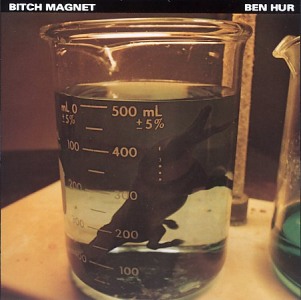
Considering that I already own both Bitch Magnet CDs (Ben Hur and the combo disc of Umber + Star Booty) and the single for “Mesentery” and never listen to any of them, I wasn’t exactly chomping at the bit to buy a vinyl copy of Ben Hur. Judging from how long the LP sat at the back of the B bin at Looney Tunes, I’m not alone in that sentiment. I considered buying it a number of times for the bonus single, but a Misfits cover doesn’t hold a candle to 50% off.
Bitch Magnet featured a number of indie rock notables, including guitarist David Grubbs of Squirrel Bait / Bastro / Gastr Del Sol and drummer Orestes Morfin of Walt Mink, but it’s the presence of bassist/vocalist Sooyoung Park that piqued my interest. I’d already gotten into Seam by the time I’d picked up Umber + Star Booty, so maybe my perspective on the two bands is skewed, but to say that Park was more suited to Seam’s fuzzed-out indie rock with whispered vocals than the Big Black-derived aggression of Bitch Magnet is an understatement. (Choice burn from Trouser Press: “Little Black.”) Morfin is a great, powerful drummer, but Ben Hur’s songwriting wanders off course on a regular basis, just like my attention. Even after I revisited Ben Hur with renewed interest from Built on a Weak Spot giving it some glowing praise, I’d still rather listen to Big Black or Seam, not a strange conglomeration of the two.
43. Kerosene 454 – Situation at Hand – Art Monk Construction, 1995 – $4
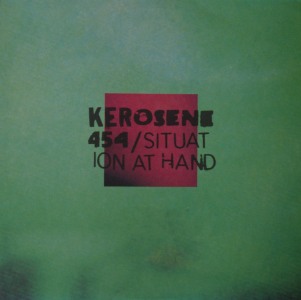
Perhaps because they weren’t on Dischord or DeSoto, Kerosene 454 isn’t mentioned in the same breath as the top tier DC acts of the mid 1990s like Fugazi, Jawbox, and Shudder to Think, or even the next set of solid groups like Dismemberment Plan, Smart Went Crazy, The Make-Up, Bluetip, and even Lungfish. It’s a common issue for DC bands, since anything not personally vouched for by Ian MacKaye or Kim Coletta could be misconstrued as a lesser light of the scene or an outcast from the typical sound. A few groups became respected on their own accord—Trans Am’s stylized future-rock found a home on Thrill Jockey; Pitchblende got critical acclaim, if not a lasting legacy for their art-punk with releases on Cargo and Jade Tree—but there’s a definite tendency for non-Dischord/DeSoto DC groups to get lost in the shuffle, like Durian’s excellent self-released Sometimes You Scare Me and Bald Rapunzel’s Resin-released Diazepam. I don’t hold anything against MacKaye for Dischord’s stated aim to document the history of the DC scene—imagine if more cities had the benefit of a long-term enabler and historian—but it’s important to remember that there are plenty of great bands and memorable records outside of its roster.
Kerosene 454 released three full-lengths and a number of singles, but prior to grabbing Situation at Hand, I only had Two for Flinching, their debut slab of wax from 1993. In the two years leading up to Situation at Hand, drummer Darren Zentek (now throttling his kit in Channels and Report Suspicious Activity) joined up and gave the group a centerpiece performer. I might’ve listened to Two for Flinching once and filed it away in the “mediocre DC post-hardcore” pile, but with Zentek in the fold, Kerosene 454 has a focused, muscular charge, utilizing some of the brutal force typical to early 1990s Touch and Go albums. Once I hit the fake-out feedback ending halfway through opener “Greener,” I knew I’d waited too long to get into this group. The epic closer “Year in Rails” clocks in at eight and a half minutes, pushing and pulling until fracturing into knotty strings of feedback. Vocals switch between the melodic arcs of “Rideout Health” and “June” and the strained bellow of “Pointer Ridge” and “Intro,” but there aren’t a lot of hooks lingering after Situation’s over. I suspect that their final two albums, 1996’s Came by to Kill Me and 1998’s At Zero, feature more polished vocals and crisper guitar hooks, but the raw energy of Situation at Hand is no mere dry run for future success.
Situation at Hand came out on Art Monk Construction, a now defunct Pennsylvania label focusing on post-hardcore and emo records, and was later reissued with the group’s early singles as Race on Polyvinyl Records. Came by to Kill Me was a split release from Slowdime, a label eventually co-run by K454 bassist John Wall, and Dischord, but those split releases aren’t Dischord canon. (Kerosene 454 and other split-release groups aren’t listed on the label’s own roster, but you can buy their last two records through the label’s online store.) At Zero went back to Slowdime exclusively. From an outsider’s perspective, associated or distributed labels like Slowdime feel like the DC minor leagues*, and it’s a shame I waited so long to check Kerosene 454 out because of this perception.
*One final note: I don’t mean to slight Slowdime, Resin, or Durian’s Diver City, but instead I’d like to thank them for putting out records I still enjoy. Running small indie labels is a particularly thankless job, especially in monetary compensation, but virtually every one I’ve dealt with continues because of their unwavering belief in the music they’re releasing. Not having the same profile as Dischord, Matador, or Kill Rock Stars doesn’t mean that belief is unfounded.
44. Camper Van Beethoven – Telephone Free Landslide Victory – Independent Project, 1985 – $5
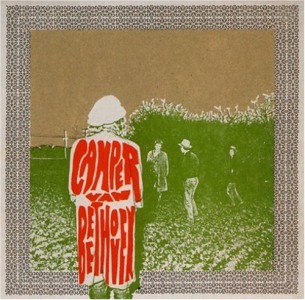
Camper Van Beethoven has benefitted from the “When it rains, it pours” philosophy to record shopping (cf. 1980s Wire LPs, Cocteau Twins LPs). I bought their third album, 1986’s Camper Van Beethoven, and their fourth album, 1988’s Our Beloved Revolutionary Sweetheart, last fall, but ended up listening more to my downloaded copy of II and III on my iPod than either of those physical pressings. I’d planned on spending time with those two albums before picking up their earlier work or 1989’s Key Lime Pie, but finding their debut Telephone Free Landslide Victory and the aforementioned II and III for 50% off was too good to pass up. (Their 1987 collaboration with eccentric free jazz protest singer Eugene Chadbourne, appropriately named Camper Van Chadbourne, wasn’t tempting enough to justify a trifecta.) Getting their first four LPs for approximately $25 total is a coup, but it’s a lot of CVB to digest.
Telephone Free Landslide Victory is far more accomplished debut than I anticipated. I’d expected their early records to demonstrate a variety of influences and styles, but not the songwriting needed to merge them into a cohesive album, but that’s not the case. For every Russian folk instrumental led by Jonathan Segel’s violin or short blast of Southwestern-influenced ska, there’s a bitingly sarcastic college rocker with those (and countless other) styles bleeding in on the edges. “Take the Skinheads Bowling,” “Opie Rides Again – Club Med Sucks” (which features the brilliant chorus “Club Med sucks / Authority sucks / I hate golf / I don’t wanna play lacrosse”), and “Where the Hell Is Bill?” provide plenty of incisive laughs and the requisite melodies to keep them from being mere novelty songs. (“Take the Skinheads Bowling” would have made for a great split single with the Dead Milkmen’s “Takin’ Retards to the Zoo.”) The countrified cover of Black Flag’s “Wasted” is another piss-take on the reigning youth culture, something Black Flag did in their own songs, but not to their own songs. Telephone Free Landslide Victory strikes a great balance between humor and stylistic exploration, like a collegiate version of the Dead Milkmen’s junior high shenanigans.
45. Camper Van Beethoven – II and III – Pitch-a-tent, 1986 – $6
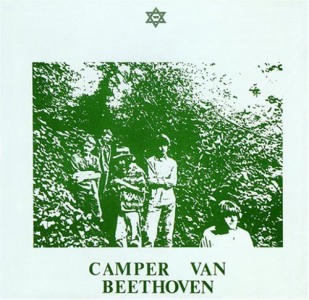
Camper Van Beethoven’s second album, the semi-appropriately titled II and III, takes a different approach to humor than its predecessor. Few, if any, of these songs are as openly jokey as “Take the Skinheads Bowling” or “Opie Rides Again – Club Med Sucks,” opting instead for a comparably subtler approach like naming an instrumental “ZZ Top Goes to Egypt,” reversing the vocals on “Circles,” or filling a song called “No More Bullshit” with plenty of bullshit classic rock noodling. Part of me misses the open humor (the part that listened to the Dead Milkmen obsessively in junior high), but II and III improves upon almost all other aspects of their debut. More interesting and varied instrumentals, more affecting songs (especially the plaintive country of “Sad Lovers Waltz”), and better pacing help the nineteen tracks (23 if you bought the 2004 Cooking Vinyl reissue CD) fly by. Still, nothing stood out quite as much as those two Telephone Free songs I mentioned earlier, meaning that II and III is a better album, but Telephone Free has better mix tape selections.
|
|
You may have noticed that I’ve been busy lately catching up on some months-old record shopping tales in The Haul. I’m still behind in that department, having gone to town on Record Store Day, but I’d like to map out a terrifying agenda for the next few months.
The Haul: No record shopping until I’ve caught up. (My wife rejoices.) Maybe a trip to the dollar bin if I’m going through withdrawal. This process slowed down after realizing that it’s a lot easier to write about these albums after listening to them, which, amazingly enough, takes time. Unfortunately, I realized that after missing a few big entries, meaning that I have a handful of completed posts waiting for chronological order.
Record Collection Reconciliation: I’ve selected 45 LPs and ten bonus seven-inch singles to tackle this summer. Expect new entries soon.
Compulsive List Making: I have about 30 unfinished top ten lists (J. Robbins songs, songs that sound like J Robbins songs, Rodan family tree songs, etc.) and I may very well finish a few of them.
Reading List: I’m formulating my summer reading list at the moment and hope to tackle at least ten novels this summer, several of the “it’s completely embarrassing that you’ve never read this book before” variety.
Feel free to encourage one meme over another.
|
|
I made it to the actual Jive Time Records in Fremont on Sunday, but aside from some overpriced items in the just-in section, there wasn’t much that piqued my interest. I recall a similar experience visiting this store the last time I was in Seattle; that time I went to the Sonic Boom vinyl annex down the street, this time I went across the street to the Vintage Mall with an impressive stockpile of cheaper vinyl. I probably would have picked up a few more albums (the Reach the Rock soundtrack, for one) if I wasn’t concerned about the impending problem of bringing all of my recent scores back to Boston. Definitely go to the Jive Time Annexes before the main store, especially if you’re not consumed with finding a mint copy of a given album.
41. No Knife – Fire in the City of Automatons LP – Dim Mak Japan, 1999 – $5
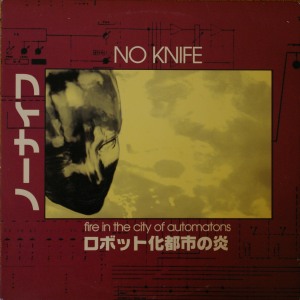
I first heard this album when searching for “Academy Fight Song” on SoulSeek; I downloaded a No Knife track by that name expecting a Mission of Burma cover and got a mislabeled homage (“Academy Flight Song”) from Fire in the City of Automatons. The combination of stop-start rhythms, racing guitar lines, and melodic vocals make a strong argument with me, so I grabbed the recent of the album and enjoyed it a great deal. No Knife is too smooth and too melodic to fit in with the post-hardcore crowd, but has too much depth to be written off as alternative rock, which I imagine caused some difficulties when they were trying to fit in with their native San Diego scene. I have their debut album, Drunk on the Moon, which isn’t as catchy or tight as this one, and I’ve heard their last album, 2002’s Riot for Romance!, which has some excellent moments (the title track, the lilting “Feathers and Furs”) that match anything found here, but Fire in the City of Automatons has always been my favorite of their albums, so finding the Japanese LP pressing was quite a coup. No Knife recently played their first shows since 2003 in support of Jimmy Eat World’s Clarity anniversary tour, so a new album or a longer tour may be forthcoming.
|
|
Having an iPhone with the Yelp app at my side is a huge boon to my record shopping impulses, since I can wander around a city far more effectively now. I’d searched for stores near Neumos and found a record-selling thrift store around the corner, but I never got over there. Instead I was sucked into the Jive Time Records annex in Atlas Clothing, a trove of vinyl that felt less picked over than some of the other used records stores I’d visited here. The bins of $.99 and $3.00 LPs consisted of well-worn favorites, but the regular-priced lots had some finds amid the complete discography of Steely Dan. Like any number of other record-collector oriented spots, these records had a tendency to be a touch overpriced, like the Afghan Whigs’ Turn on the Water 12” going for $15, but I was happy with the price of the two albums I picked up.
39. Steve Reich – Tehillim LP – ECM, 1982 – $8
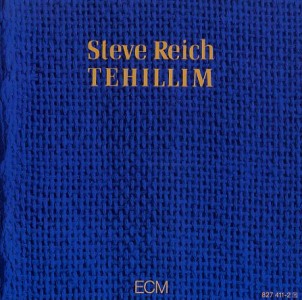
Aside from a copy of Different Trains / Electric Counterpoint, I’ve had a hard time finding Steve Reich LPs. Record stores switch between lumping him and his peers (Glass, Riley) in with traditional classical music, putting them in a contemporary composers section, or slotting them in an experimental bin. If I manage to find that location, it’s typically comprised of Philip Glass’s Glassworks and Songs from Liquid Days (his collaboration with pop songwriters like Paul Simon, Suzanne Vega, David Byrne, and Lori Anderson), not Reich’s Music for 18 Musicians or Octet – Music for a Large Ensemble – Violin Phase. Those Glass records are the popular entry point to this style of repetitive minimalism, so it’s hardly a surprise that there are more of them floating around (and that people are more likely to get rid of them). When Jon pulled a copy of Tehillim, a 1982 composition inspired by Hebrew psalms, out of the contemporary composers section, I gladly snapped it up. Would I have been more excited with one of those aforementioned LPs? Of course, but beggars can’t be choosers.
40. Table – Table LP – Humble, 1995 – $6
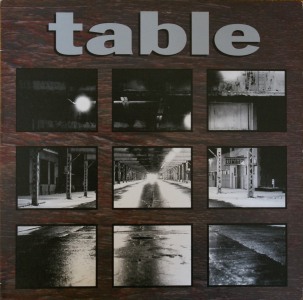
Having found one of Table’s singles at Mystery Train last summer, I figured that I might finally stumble across their long out-of-print full-length album after years of searching. I just didn’t expect it to be in Seattle. There’s a certain logic in finding a Chicago math-rock LP on the other side of the country after striking out numerous times in Chicago—Chicagoans are more likely to grab it when they see it, since they know what it is, even though there are more copies floating around in that area—but my instincts are always to look for local acts like Joel R. L. Phelps or Kilmer, not Midwestern rarities. The flip side of this equation is how many Live Skull LPs I saw in all four record stores; I thought that they were relegated to the northeast.
|
|
I’d visited Everyday Music during my last trip to Seattle, although it’s moved locations since that visit. Last time I got Chavez’s Ride the Fader LP, Hot Snakes’ Audit in Progress LP, and at least one more album if memory serves. This time around I found my two LP purchases (and the vast majority of things I considered purchasing but passed on buying ) in the just-in bin, which was organized by day (!). The general rock LP stock felt somewhat picked-over, perhaps because of the prime location by the Jimi Hendrix statue, but the seven-inches had some fine stragglers from the glory days of 1990s indie rock.
34. Cocteau Twins – Lullabies LP – 4AD, 1982 – $6
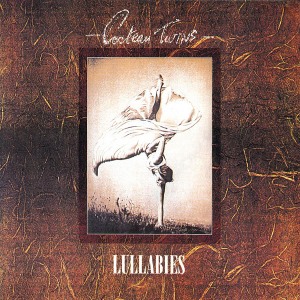
After seeing an LP copy of Blue Bell Knoll for $20 at Sonic Boom, I was a bit concerned that any Cocteau Twins material I’d find in town would be grossly overpriced, but six bucks for this EP seems entirely reasonable. I couldn’t remember if the songs on Lullabies were included on The Pink Opaque, their early singles compilation, but I checked their Wikipedia and found out that they’re not. I’ve passed on a few of the EPs because of that reason—as much as I love “The Spangle Maker,” I don’t need it on multiple LPs—but I I’m glad to have more of their early work. I still need to track down Garlands, which I found at Looney Tunes in Cambridge, but it turned out to be sleeve-only, since the LP inside was a different Cocteau Twins release. Maybe I’ll even find a copy of Heaven or Las Vegas one of these days.
As for Lullabies, it’s more aggressive than I anticipated, perhaps because of original bassist Will Heggie. “Feathered Oar Blades” is downright driving, with a nearly cacophonous drum conclusion, “Alas Dies Laughing” is woozy concoction of edgy guitar leads and Liz Fraser’s repetitive phrases, and “All but an Ark Lark” pushes forward for eight minutes before finishing off with Fraser’s whoops and Robin Guthrie’s guitar feedback.
35. Modest Mouse / 764-Hero – Whenever You See Fit LP – Up / Suicide Squeeze, 1998 – $8
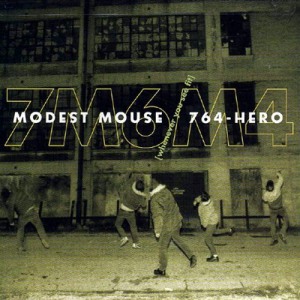
Modest Mouse vinyl goes for gross amounts on eBay, especially the double LP, double sleeve edition of Lonesome Crowded West (I recently saw an auction for just one of these LPs), but I’m not sure of the value of this release, especially since the store had two copies of it for eight bucks apiece. I grabbed Everywhere and His Nasty Parlour Tricks from Mystery Train last summer with the intent of selling it, but it’s becoming quite apparent that I’m not particularly apt at the money-making aspects of collecting records, unless I have absolutely no interest in the group.
That isn’t the case here, since I am fond of early Modest Mouse. I don’t, however, recall having heard this collaborative release between them and the forgettable 764-Hero. I saw 764-Hero and a pre-Oh Inverted World version of The Shins open) for Modest Mouse at the Highdive in Champaign and heard at least one of their records, but my only impression of the group was generic Northwestern indie rock, like some extrapolation of Built to Spill and Modest Mouse’s aesthetic without the charisma. Maybe time has been kinder to 764-Hero than I imagine, but I have a feeling this will be the only release of theirs I pick up. Having now listened to the song (not the two remixes, I’ll save those for a rainy day), it’s an endearingly shambling combination of both bands, with Isaac Brock’s vocals and guitar trumping most other elements in the song. I am disappointed that these two groups could only string “Whenever You See Fit” along for fourteen and a half minutes.
36. Shiner – “Sleep It Off” b/w “Half Empty” 7” – Sub Pop, 1997 – $1
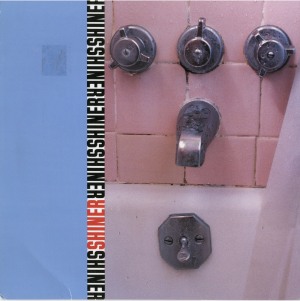
For a group that only pressed one of their full-lengths (their debut Splay) on vinyl, Shiner managed to put out a number of great singles, especially their Sub Pop single for “Sleep It Off” and “Half Empty.” The former made the re-release of Lula Divinia along with “Two Black Eyes” (which was originally included on a Law of Inertia compilation that also featured an early version of Durian’s “Four Mile Drop”), but “Half Empty” is just as good. “Brooks” b/w “Released” isn’t as essential, since both songs were on Splay, but “Cowboy” b/w “Floodwater” is worth hearing if you enjoy Splay-era Shiner. The split singles with Molly McGuire (“Crush”) and The Farewell Bend (“Spinning”) aren’t essential, but the former is exclusive and the latter is a slightly different version from the one on Starless. Ditto for “Semper Fi,” the best song from that album, but “A Sailor’s Fate” is a woozy, somewhat Louisville-influenced take on that era of Shiner’s sound. I tend to think of Shiner foremost as a live band, then an album band, but there’s good material on these singles and it’s a shame that some of them can be hard to track down.
A potential Shiner singles and rarities compilation could also include “Dirty Jazz” and “I’ll Leave Without You” from the Japanese pressing of The Egg, their cover of “Only Shallow” from the Grand Theft Autumn compilation, and a few unreleased tracks. It would provide fitting closure for Shiner, especially if they paired it with a DVD of their final performance in Kansas City. Considering that the group is working on a DVD release at the moment, this suggestion doesn’t seem to be unrealistic.
It shouldn’t be any surprise that I already owned this single, having ordered it from Parasol when it came out, but buying a second copy of a buck seemed like a no-brainer. I passed on a second copy of the Molly McGuire split single since I’m not exactly wearing out Shiner’s “Crush.”
37. Vitreous Humor – “My Midget” b/w “New Victoria Theater” 7” – Mute, 1996 – $2
I have Vitreous Humor’s first single, but I can’t remember much about it beyond a vague recollection of that Crank!-style of Midwestern indie/emo. I had no idea that they’d signed to a major until I saw this single, but apparently their time on Mute was limited to this slice of wax. Neither of these songs sounds remotely like a cash-grab and “My Midget” even begins with some lengthy instrumental interplay. Time to check out their self-titled EP and aptly titled Posthumous CD.
After Vitreous Humor broke up, three of the members reconvened in the short-lived The Regrets, whose lone CD, New Directions: Result Beat Boasts, was pulled out of the Reckless dollar bin a few years ago. I have even less recollection of that CD except that it was somewhat poppier than the Vitreous Humor single. A year after the Regrets split, one-hit wonders Nada Surf covered Vitreous Humor’s “Why Are You So Mean to Me?” at the behest of their label, which even slotted it as the lead single for their second album. Please cover this obscure indie rock band’s song. We know it’ll be a hit. It sounds like they hired me as an A&R guy.
38. Wider – “Main” b/w “Strapping ½” 7” – Third Gear, 1995 – $0.50
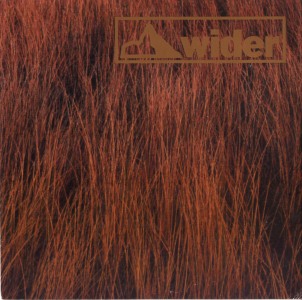
I’d seen Wider cross-referenced a number of times in relation to Chavez, since James Lo played drums and Matt Sweeney played bass in this group prior to joining Chavez (although the latter doesn’t appear on this single). I’d never actually heard Wider, though, and it’s entirely possible that I’d never seen one of their singles before, either. There’s another 7” floating around for “Triangle” b/w “Bloom,” which seems to come up exclusively through eBay searches. Is there a full-length floating around as well? Wider isn’t the most Google-friendly band name.
The music, to my expectations, is typical early-to-mid 1990s aggressive math-rock, with vocals only on the A side. Buying this single right after Don Caballero’s For Respect makes a lot of sense to me.
|
|
I was disappointed to learn that the Fremont location of Sonic Boom Records closed in February, since it had a vinyl annex that provided me with two Lungfish LPs in my previous trip to Seattle. The vinyl annex was divided up between the remaining stores in Capitol Hill and Ballard, which helped bolster this store’s stock. No jaw-droppers, but a number of nice finds. Bonus points for nice employees who played the Jealous Sound’s Kill Them with Kindness and talked about how they’d recently gotten into the now-disbanded Aereogramme. I wish the staff at Newbury Comics in Harvard Square played older records more often instead of their usual hip new bands, but I imagine you sell more records their way.
28. Don Caballero – For Respect LP – Touch & Go, 1993 – $9

Between Don Caballero and Thee Speaking Canaries, I’ve written quite a bit about Damon Che lately, but I hopefully haven’t exhausted my reserves of 1990s math-rock banter. For Respect is comprised primarily of short, forceful songs, many not passing the three-minute mark, which comes in stark contrast to their later efforts. I tend to prefer the longer tracks like “Well Built Road” and “New Laws” that stretch out and explore a few different moods, but the shorter tracks show some variety, like the aptly titled “Subdued Confections.”
What stands out is how “traditional” the guitars sound in comparison to what Ian Williams and Mike Banfield throw together for 2. I use traditional with no slight to the technical accomplishments here, but these songs use beefy chord progressions and more typical lead lines, not the finger-tapped leads, feedback bursts, and disorienting chord battles of their next record. (The air raid siren effect that begins “Dick Suffers Is Furious with You” is still terrifying.) In retrospect it’s amusing how long it took for other math-rock groups to make that transition, since For Respect, not 2, is the blueprint for most 1990s math-rock, but that’s why they’re the Don.
29. Bedhead – WhatFunLifeWas LP – Trance Syndicate, 1993 – $9
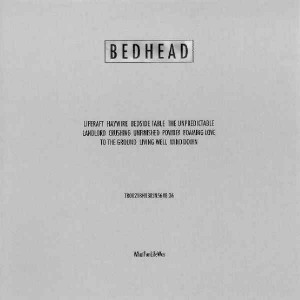
The subtlety and low-key nature of the Kadane Brothers took ages to grow on me, but after seeing The New Year open for Bottomless Pit last year, I was finally converted. I’ve been working backwards through their catalog, progressing from The New Year’s solid self-titled LP to their excellent The End Is Near (the anti-title track “The End’s Not Near” is astonishingly good) to their debut, Newness Ends, which I had apparently purchased on CD when it first came out. Taking the next step back to Bedhead was harder, since Transaction de Novo was my stumbling block for years, but I’ve found similar rewards with their releases. Transaction balances Seam-like indie rock (“Psychosomatica”) with their signature slow crawl (“Lepidoptera”) better than I remembered.
I hadn’t made it back to the beginning when I found this copy of their debut LP, but I didn’t know whether Touch and Go had recently repressed the vinyl or if this was a lingering copy of the original Trance Syndicate pressing, so I snapped it up for a cheap nine bucks. (Trance Syndicate ended around the time of the big Butthole Surfers / Touch and Go feud, but I’ve seen plenty of copies of the self-titled Trail of Dead LP floating around lately.) WhatFunLifeWas isn’t too far off from Transaction de Novo. It betrays a larger debt to the Velvet Underground, occasionally thrashes about (“Haywire”), and lacks some of their carefully arranged guitar patterns, but it’s a Kadane Brothers album through and through. The production sounds close to Seam’s gloriously fuzzy The Problem with Me, but it never comes off quite as wistful as Sooyoung Park’s group.
30. Mr. Bungle – Disco Volante LP – Plain, 2008 (1995) – $17
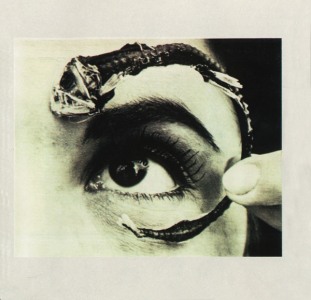
Fun fact: I remember seeing the original pressing of Disco Volante (with the bonus 7”) during one of my first trips to Reckless Records, but scoffed at the $18 price tag. Whoops. It rocketed up to $70 to $100 on eBay shortly thereafter. I’d waited patiently for this reissue to come out, so I gladly did my double-dipping duty when I found it in Seattle. Smart move, right?
Wait a second, there’s another pressing of this reissue LP with the bonus 7” included? That one’s colored vinyl, too. I can’t justify triple-dipping, even with a premier reissue pressing floating around. Screw you, Plain Recordings.
Disco Volante is certainly the most challenging Mr. Bungle album, veering between dramatically different styles and approaches, but it’s hard to call it my favorite. I have to be in a very particular mood to hear “Violenza Domestica,” for instance, whereas I can play California in most mental states. Hopefully that album will earn a vinyl pressing to coincide with the reissues of Mr. Bungle and Disco Volante, since I’ll gladly own all three.
31. Tar – Toast LP – Touch & Go, 1993 – $5
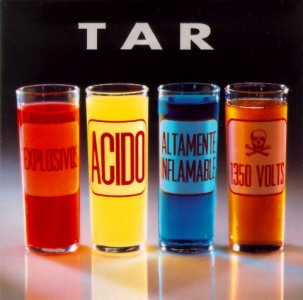
I was indirectly familiar with Tar because of their split single with Jawbox, in which they covered each other’s songs (Jawbox’s cover of “Static” appears on My Scrapbook of Fatal Accidents), but Tar’s history leaves little doubt to their aesthetic. Having released albums on both Amphetamine Reptile and Touch and Go, I expected aggressive songs with heavy, metallic riffs, pounding rhythms and monotone vocals and Tar delivers in spades. They even played custom aluminum guitars. The Touch and Go albums are unsurprisingly a bit more melodic than the AmRep releases according to Amazon reviews, but don’t think that Toast isn’t littered with handclaps and falsetto background hooks. This is muscular, abrasive stuff, like a harder-edged sibling to fellow Touch and Go band Arcwelder. This pressing of Toast is a picture disc LP with a blowtorched piece of toast on one side and the normal cover image of hazardous chemicals on the other. Inviting.
32. Dumptruck – D Is for Dumptruck LP – Incas, 1983 – $2
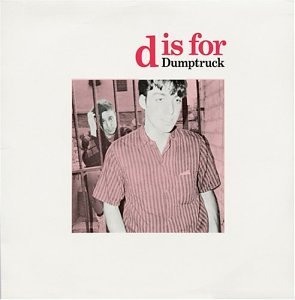
I’ve seen a few Dumptruck LPs in Boston-area record stores, but never for two bucks, so I snapped up this worn copy of their 1983 debut. A few of the songs sound like a less abrasive version of Mission of Burma, especially the great opener “How Come,” but usually they’re closer to the jangle of early R.E.M. than the art-punk of their fellow Massachusetts natives. Other dominant 1980s indie/college rock touchstones like the Feelies also apply, but there’s enough tension in the songwriting to let me look past the occasionally dry instrumental mix. I’d expected more of a jangle-pop sound, but the fringes of post-punk keep me interested.
This excellent article on Perfect Sound Forever relates the group’s label troubles: Bigtime Records tried to sell the band’s contract to a major label, despite that contract having already expired. The band and its lawyer reported this situation to the major, but Bigtime sued the group for five million dollars. While the band ultimately prevailed in court, being tied up in litigation sapped virtually all of their energy and killed any buzz from their successful 1988 album, For the Country. Its follow-up, Days of Fear, was recorded in 1991 but not released until 1995. Their first three LPs and a best-of have been issued on Rykodisc.
33. Joel R. L. Phelps & the Downer Trio – Inland Empires CD – Moneyshot, 2000 – $6
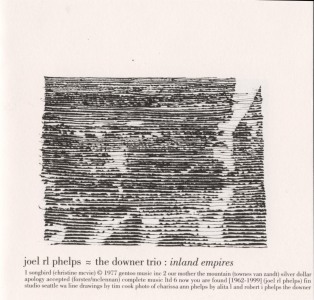
I’d talked about the wildly underappreciated Joel R. L. Phelps with a friend of mine prior to leaving for this trip, so finding a copy of Inland Empires, which she ranked as one of her favorites, was a nice semi-surprise. (Phelps is based in the Northwest, so I half-expected to find this CD.) I usually prefer Phelps’s more rocking, Crazy Horse–influenced albums, especially Blackbird, but Inland Empires proves that he's equally good at gut-wrenching ballads.
Inland Empires came out shortly after the death of Phelps’s sister, to whom the heartbreaking “Now You Are Found” is dedicated. The song traces the signposts of their relationship and I can’t fathom the level of care he put into the lyrics and performance. Fittingly, it’s the only Phelps original on the EP, accompanied by six covers of songs, including Fleetwood Mac’s “Songbird,” which is the second song from Rumours Phelps has covered. Silkworm recorded an enthusiastic version of “The Chain” for an early single during Phelps’s tenure in that group. The other five covers include excellent cover of the Go-Betweens’ “Apology Accepted” and songs by Townes Van Zandt, Iris Dement, and Steve Earle. I’d put off listening to this EP in its entirety for years, knowing the story about Phelps’s sister and how painful that song would be, but Inland Empires is a remarkably cohesive album for having six covers and one tremendously personal original.
Those interested in more Joel R. L. Phelps covers would be wise to track down the 2CD edition of Customs, which features a bonus disc with covers of Joy Division’s “Twenty Four Hours,” The Chills’ “Pink Frost,” and three others. Phelps also covered The Clash’s “Guns of Brixton” on his self-titled EP and Comsat Angels’ “Lost Continent” on Blackbird, to mention a few highlights. I’d love to hear new material from Phelps, who’s gone into hiding since Customs, but even another batch of covers would be quite welcome.
|
|
I hadn’t visited Easy Street on my first trip to Seattle, but it came recommended and had positive reviews on Yelp. (Whether Yelp reviews accurately correlate to my level of record-collector scum has yet to be determined.) Maybe it was the enormous, spinning sign or the paintings of recent album art on the side of the building (the eagle from Mogwai’s The Hawk Is Howling looked a bit confused), but Easy Street seemed like a very particular type of record store, the event store. It reminded me of the now-closed Record Service on Green Street in Champaign, a store which had a good stock of new and used music, threw release night parties, and held occasional in-store performances. I appreciate the existence of event stores, since they get people excited about buying music, but as this meme demonstrates, I do not have that problem. I’m more concerned about finding some out-of-print LP for sub-eBay prices.
The strength of event stores is the stock of new releases and used CDs. If you’re drawing customers because of an in-store or a big new release, it’s crucial that any other recent release and staple artist/album is available for you to buy. The problem with event stores from a record collector’s standpoint is that this emphasis on the new and classic (plus all of foot traffic) decreases the possibility that anything rare or obscure is in stock. Easy Street had a great array of new LPs, especially electronic/house/techno, but I’m hesitant to buy those when I have to fly them across country in a few days. I’m simply less excited by browsing a store when I have a good idea of what will be in stock and more excited by digging through crates of dusty LPs that might hold a gem. I chose to hold out and see what the other Seattle stores had to offer instead of loading up on records that I should own by now, but if I lived in Seattle, I’d frequent Easy Street on a regular basis, much like I frequent Newbury Comics in Boston.
25. The Wicked Farleys – Make It It LP – Big Top Records, 1999 – $2
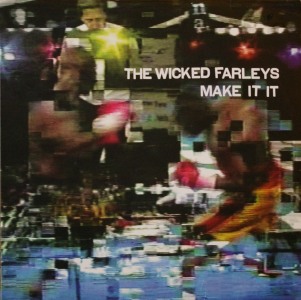
If memory serves—and for the two bucks I spent on this LP, I wouldn’t be heartbroken if it didn’t—the Wicked Farleys were Boston’s answer to the spazzy indie rock of the Dismemberment Plan. After Googling some background information, they existed around the same timeframe as the Dismemberment Plan, so it wasn’t a direct line of influence, but I remember them getting lumped in with the nervous twitches of early Dismemberment Plan more so than their actual influences. The reliable Built on a Weak Spot mentions Swirlies/My Bloody Valentine/math-rock influence, which makes sense given their geography. I also recognize Michael Brodeur’s name from numerous record reviews and interviews in the Weekly Dig and the Phoenix. All of this background bodes well, better than my lone Dismemberment Plan connection.
Having spun the first side of Make It It, most of my touchstones have proven accurate. Brodeur’s vocals come close to the melodic, higher register pipes of Travis Morrison, but he doesn’t have the same level of vocal charisma (or lyrical ingenuity) and the falsetto occasionally wears thin. A few more songs with the energy of the appropriately titled “Find Shit Break Shit!” (I’m amazed Limp Bizkit never covered it) might help, but I prefer their mid-tempo tracks musically. The guitars are definitely on the Swirlies tip, taking the combination of shiftiness and heaviness from a song like “San Cristobal de Las Casas” and exploring it in depth. There’s a bit of North of America’s angularity floating around, too, cementing the Wicked Farleys’ place in the soup of late 1990s indie rock. It would be great if I could lose sight of the contemporary references, but even without a groundbreaking streak there are enough solid, well-made songs on Make It It to justify the purchase.
26. Kilmer – Reason Can Deceive, Faith May Be Misplaced, But Love… CD – West of January, 2002 – $1
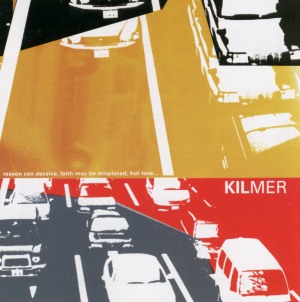
I received Kilmer’s self-released first album, 1998’s The Highlands and the Lowlands, as a promo during the Signal Drench days, leading to a positive review of its blend of emo-core and indie rock and an interview shortly thereafter. Its closing track, “How the Fifth Column Fell,” outshined its counterparts, presumably taking inspiration from WWI poetry (Owen, Sassoon) with the multiple narrator approach to its war story. I’ve gone back to “How the Fifth Column Fell” a number of times since Signal Drench folded, and the song holds up. It’s emotional without falling prey to many of the emo clichés of the era. I haven’t gone back to the other songs in ages, although I recall using one of the shorter tracks (“Three Sixty”) on a mix tape. Skimming through the lyrics now it’s pretty clear that they were one of those vaguely Christian rock groups particular to the Northwest, not that Sunny Day Real Estate and Pedro the Lion set a bad example.
By the time Kilmer released Reason Can Deceive… in 2002, Signal Drench was gone and my desire to keep tabs on groups I’d first heard because of the magazine had largely vanished. Plus, the record didn’t make enough waves to show up in Midwestern record stores. I imagine their support in the Northwest scene was limited, since they weren’t based out of Seattle, they weren’t on a nationally recognized label, and their mix of introspective guitar rock and lighter, more romantic piano-based tracks didn’t align them with a single movement or genre at the time. A common story among bands I enjoy, but it doesn’t necessarily mean the music’s great.
So is Reason Can Deceive a lost gem? That depends on how much you like Radiohead’s The Bends and OK Computer, since many these songs owe a large debt to those records. The production and performances are considerably improved from their roughhewn debut, but this ultimately trades spontaneity for polish. I prefer when the songs stick closer to the emo-core leanings of The Highlands and the Lowlands, like “Mediterranean Postscript,” “Arthur I,” “Fundamental Principle” and the interlocked guitar outro of “Spilling Summer.” Lead singer Peter Nelson often veers toward flowery lyrics and fluttering delivery (a criticism of his more recent group, August Anchor, as well) and Brian Ward’s grittier vocals don’t come to the forefront very often. I owe Reason Can Deceive a full listen one of these days, but I’ll probably stick with the standouts for now.
If you want to hear either of Kilmer’s albums, Brian Ward has MP3s posted on his photography website. You’ll have to right click the links and fix the typo in “photography,” but it’s worth doing if you enjoy the specific songs linked properly above.
27. Accelera Deck – Addict CD – Blackbean and Placenta, 1999 – $1
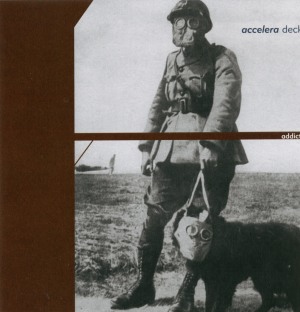
After getting hooked on a few songs from Accelera Deck’s Narcotic Beats—still one of my favorite electronic albums—thanks to Epitonic.com (a site that appears to have been left for the wolves), I picked up a bargain priced copy of Exhalera Deck’s superb “Exhale” 12" and started an obsessive journey into Chris Jeely’s ever-expanding catalog. Unfortunately, only his first few releases displayed this shoegaze/electronic hybrid (September Plateau’s Occasional Light is another good example), since he dropped the fuzzed-out guitar textures in favor of drum-and-bass and glitch styles. Thankfully, I learned about this development from SoulSeek, not my local record store, so I could safely sample Jeely’s immense discography and track down the records that appeal to me. (I still hope to stumble upon the 2LP pressing of Narcotic Beats.)
I technically didn’t need to track down Addict, since it was available for full-price at Parasol for years, but I never fell in love with this stylistic direction. While Jeely’s melodic touch comes through on a few of these songs, its drum and bass approach feels like a distant cousin several times removed to Accelera Deck’s early work. Addict’s predecessor, Conviction and Crack, is a much better midpoint between these styles.
Even though he left me behind in many stages of his evolution (his affair with Guided by Voices styled acoustic songwriting was quite a curveball), I’ve kept tabs on Chris Jeely and was rewarded with the gorgeous pointillist landscapes of Pop Polling, the traditional indie rock of Skulllike’s Eggs on Equators, and the billowing live instrumentation of A Landslide of Stars. I haven’t tracked down any of his more recent work after he “retired” the Accelera Deck mantle, but I imagine more name changes, stylistic changes, and limited pressings are in order.
|
51. Thee Speaking Canaries - Life-Like Homes - Scat, 1998

Why I Bought It: Even though I enjoy Don Caballero’s albums—Don Caballero II and What Burns Never Returns in particular—I’d never checked out Damon Che’s other group, Thee Speaking Canaries. Maybe I’d taken a thousand drummer jokes to heart, maybe I was concerned that Damon Che’s rather antagonistic stage demeanor (an understatement to say the least) wouldn’t translate well to his frontman role in this group, maybe those Van Halen comparisons (and covers!) scared me off, but no matter how many times I saw Songs for the Terrestrially Challenged in CD bins, I passed it up.
After seeing one of their LPs at RRRecords in Lowell, I told my friend Scott about it and he attested to Thee Speaking Canaries’ greatness. Shortly thereafter, he swung by Amoeba in San Francisco and picked up Songs for the Terrestrially Challenged and Life-Like Homes for me and mailed them out as a birthday gift. I don’t want to think of what I’d do with such close proximity to the heralded Amoeba—I’ve only been to San Francisco once and didn’t make it to the store—but I’d like to believe that I’d share the privilege as well as Scott does. More likely, I’d run up a ton of credit card debt and have to quit cold turkey.
Verdict: Given his propensity for dramatics—nailing down his drum kit, performing in his boxers, kicking out band members—it’s difficult to enjoy Damon Che’s music without appreciating the utmost gall with which he approaches it, and Life-Like Homes is no exception to this rule. Putting just three songs on a rock record requires some stones, especially when it requires splitting up the twenty-seven minutes of “The Last Side of Town” over side A and B. Proving that dealing with his gall isn’t unrewarded, the split even makes sense, with the song’s math-rock explorations and drifting noise segments coming on side A before blasting back to melodic, overdriven rock with part two on side B. It’s a bit of a shock to hear Damon Che yell “Woo!” before launching into a Van Halen–esque guitar solo on part two, but I’ll be damned if it doesn’t work.
It’s tempting to focus on how Che can switch between being a technically accomplished, powerhouse drummer in Don Caballero and a guitar-shredding frontman with surprisingly melodic vocals in Thee Speaking Canaries, to emphasize that he can pull off both roles, but that approach loses sight of what Life-Like Homes has to offer beyond Che’s signature gall. Between the enthusiastic arena/math hybrid of “The Last Side of Town (Completion),” the noisy bluster on the title track, and the mid-tempo melodies of “Song for Fucking Damon,” these songs hold up to multiple listens. (I already know this because I initially listened to side B first.) The combination of arena rock panache and math-rock precision is particularly compelling, making me wish that more ’90s math-oriented groups showed an extroverted side.
As much as I enjoy Life-Like Homes, I might have been better off ignoring Thee Speaking Canaries’ existence from a collector’s perspective. Che pressed both lo- and hi-fi versions of Songs for the Terrestrially Challenged (the former on Mind Cure, the latter on Scat), released the 1996 Opponents EP in an edition of 400 numbered copies (one is on eBay for $89 right now), and issued two versions of Get Out Alive, their 2004 album, a vinyl pressing of 39 minutes and a CD pressing of 76 minutes (which contains two songs from Life-Like Homes). Have I mentioned their long out-of-print 1992 debut The Joy of Wine? 500 copies are out there, somewhere. Good luck tracking all of this down.
2. Camper Van Beethoven - Our Beloved Revolutionary Sweetheart - Virgin, 1988
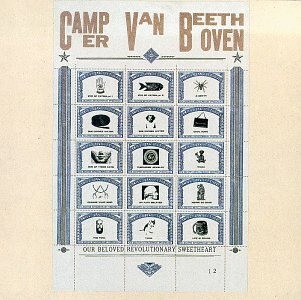
Why I Bought It: I knew of Camper Van Beethoven through David Lowery’s post-CVB group Cracker, whose bitter mid-1990s buzz bin hits “Low,” “Euro-Trash Girl” (I hate even thinking of that song), and “I Hate My Generation” were staples of 120 Minutes. Nothing had pushed me toward hearing them, however, until Floodwatchmusic listed II & III as his favorite record of 1986. Although I haven’t come across an LP copy of that record (update: yes, I have), I picked up their self-titled LP from Looney Tunes in Boston and then grabbed Our Beloved Revolutionary Sweetheart from either RRRecords or Mystery Train last fall.
Verdict: Even though this album marked the beginning of Camper Van Beethoven’s stay on Virgin, I was nevertheless surprised by the polish of Our Beloved Revolutionary Sweetheart, in both production values and performances. There are some hot guitar licks on this record! Once I accepted the major label sheen, I realized that the general aesthetic isn’t too far off from another eclectically styled 1980s group, the Mekons, especially given the fiddle. It’ll be interesting to see how much their self-titled LP differs from this album; even with their edges smoothed over, there’s still a good amount of spontaneity in a few of these songs, although none of that spontaneity could be misconstrued as ramshackle charm. (Terror Twilight it ain’t, thankfully.) It’s too bad the LP didn’t come with a lyrics sheet, since I recall hearing some choice lines in great tracks like “She Divines Water” and “Life Is Grand,” but the album as a whole was solid enough to merit another listen in the near future.
53. The Darling Buds - Shame on You - Native, 1989

Why I Bought It: I tend to pull things out of dollar bins that look like records I might be interested in, even if I’m completely unfamiliar with the band name. The Darling Buds’ Shame on You is a prime example of this tendency; I even have one of the twelve-inch singles that’s represented on this singles compilation thanks to a similar purchase. The colorful, ultra-saturated cover isn’t too far off from My Bloody Valentine’s album-art aesthetic, which makes sense given its release in the late 1980s, but there’s a more specific pop/shoegaze reference that came up once I put the needle down.
Verdict: The British Velocity Girl. The Darling Buds came first, of course, being inspired by the C86 cassette and scene, just like Velocity Girl (who took their name from Primal Scream’s contribution to the cassette), so the comparison is admittedly backwards, but from the opening strains of the title track I could think of no other point of reference. I remember buying Velocity Girl’s Simpatico from a cheap bin in high school and being overwhelmed by the chipper vocals and perky melodies. (I’m just not a power-pop fanatic.) I never got around to giving their debut, Copacetic, a chance, but I imagine it’s got fuzzier guitars and less defined hooks. As for the Darling Buds, they’re essentially a hybrid of C86-styled pop and the Go-Go’s. When the songs lean toward the former, like “That’s the Reason,” I can stomach it, but when they sound closer to latter, like “Valentine” and too many other songs, I begin to rethink my cover art policy for dollar bins.
54. Volcano Suns - All-Night Lotus Party - Homestead, 1986

Why I Bought It: Along with a previously discussed Bullet Lavolta LP, I found two Volcano Suns LPs at a Champaign record sale a few years back. I wasn’t hugely into Mission of Burma at the time, but I probably knew that their drummer, Peter Prescott, had been a member of Volcano Suns following his initial stay in Burma. No excuse for waiting this long to listen to either of the records (I also have The Bright Orange Years on my shelf), but with their recent reissues on Merge, I’ve read a considerable amount about these records in the past few months. Plus, I see Prescott whenever I stop into the Cambridge location of Looney Tunes.
Verdict: Thanks to the recent surge of reviews, I had a fairly good idea of what to expect from All-Night Lotus Party: a more straightforward, less atmospheric version of Burma’s art-punk. Considering that I have to be in a certain mood to enjoy most of Burma’s catalog (with the exception of the early singles and most of The Obliterati, which is heavier on the pop hooks), a more approachable version of the group’s sound shouldn’t be viewed as a slight. All-Night Lotus Party is filled with abrasive, hard-edged art-punk—material that could (and probably did) inspire countless early 1990s Touch and Go groups—but a number of the songs lack memorable hooks amidst their steamrolling verses and shouted choruses. According to Pitchfork, The Bright Orange Years has more of these hooks, so I should give that album a spin and see how it compares, but “Engines” and “Village Idiot” stuck out on my first spin of All-Night Lotus Party. The album doesn’t lack energy or aggression, however, especially the album’s final salvo, “Bonus Hidden Mystery Track,” which one-ups any number of contemporary hardcore bands.
55. Funkadelic - One Nation Under a Groove - Warner, 1978

Why I Bought It: My introduction to George Clinton was the Animal House redux PCU, which I inevitably got sucked into whenever it came on HBO during high school. (Part of a larger trend of me getting sucked into mediocre-to-awful movies, but I digress.) The film’s huge party scene comes courtesy of George Clinton and Parliament-Funkadelic, who were directed to Jeremy Piven’s party-to-end-all-parties by Jon Favreau’s stoned assistance. Favreau doesn’t realize exactly whom he’s helped until partway into their truncated set (damn those deans!), at which point he freaks out and goes wild. A clichéd scene, but I give the filmmakers some credit: Imagine if it had been G. Love and Special Sauce or some other mid-90s party band.
I found this worn copy of One Nation Under a Groove in a dollar bin, missing its original bonus EP (the Heavy Maggot Disk) and coming with enough surface scratches to make me think twice, but I knew that I needed to buy it in case of any future party emergencies. You can’t count on encountering Clinton’s broken down tour bus whenever you’re throwing the biggest party in campus history.
(Or when you’re enjoying a nice Sunday afternoon with the AC on.)
Verdict: Funkadelic’s One Nation Under a Groove is a great instance of fulfilled expectations. Nothing threw me for a loop on the record, but I still found myself getting into the vast majority of the songs, enough to research other good Parliament and/or Funkadelic albums and add them to my eventual want list. Only the lower energy “Groovallegiance” left me wanting, but the title track, “Into You,” “Cholly (Funk Getting Ready to Roll!!),” and “Who Says a Funk Bank Can’t Play Rock?!” could have gone on much, much longer without any complaint. As I feared, the record’s in pretty bad shape, but the raunchy cartoon liner notes are in fine condition. I'll gladly buy a second copy of this album.
|
|
This purchase marked the first time that I’d bought MP3s since I had an eMusic account for a few months in college. Those mp3s from eMusic (courtesy of a bulk-download monthly subscription) are absolutely worthless to me now—if not entirely deleted—since they were all 128 kpbs files and I’ve since upped my minimum standard to 192 kbps. While that subscription got me interested in a few bands (Swirlies, Pilot to Gunner), the actual music had to be replaced by physical copies in order to get listenable sound quality. (The scourge of over-compressed cymbals!) How do I know that’s not going to happen with the current standards? What if iPods make a huge jump in capacity, encouraging use of lossless files? Do I get to re-download my files? I doubt it. There’s no flexibility with digital downloads. Don’t get me started on my fear of a permanent hard drive crash, since I already had to pull the freezer trick to rescue files from my drive back in 2005.
I understand the benefits of having a purely digital musical collection, the foremost being the headache I’d avoid when I move out of this apartment in the next year, but I just love the physical thing too much. If this EP had been pressed to CD I would have already bought it, but stomaching the exchange of money for files caused a two-year delay. I’m mad just thinking that National Skyline’s new album is MP3-only, since I’d gladly buy a pressing with artwork, but that’s unlikely to happen.

24. National Skyline – The Last Day EP – iTunes Store, 2007 – $3
A few people told me that this National Skyline EP was back up to Garber’s old standards when it was originally released, but at the time I was still smarting from the overly L.A. output of The Joy Circuit. (“Hey you / I know you / This is not where you belong” from “They Know Where You Live” could not be a more accurate assessment.) Ever since he half-joked in a Milk Magazine interview that he’d break Castor up so he could start a band that sounds like the Offspring (only to break up Castor within the year), I suspected Garber would make a push for a major label contract. The Joy Circuit was that push. He extracted the mid-1980s U2 fetish from the National Skyline records, put Year of the Rabbit’s rhythm section to work, removed the icy electronics of the first three National Skyline releases, and dropped the depth of his past songwriting.
Garber’s always adapted to his surroundings or prevailing indie rock winds: the first Castor CD was a mix of C-Clamp and Braid with Seam-styled hushed vocals; Days in December took up Sunny Day Real Estate’s emo-core; Morning Becomes Electric was straight lo-fi indie rock; Castor’s “Miss Atlantic” brought in some of Polvo’s abrasive math-rock influence; Castor’s Tracking Sounds Alone appropriated some of Shiner’s heaviness to balance out Garber’s exploded vocal hooks; Big Bright Lights tried out a number of styles including post-rock, acoustic singer-songwriter, and post-grunge; and National Skyline primarily stuck with a U2-informed version of Antarctica’s icy electro-rock, but inexplicable aped Beck on “Identity Crisis” from the Exit Now EP. Pointing this pattern out in no way dismisses the success of those albums. Braid and C-Clamp never matched the fluidity of Castor’s “Pontiac,” Shiner never wrote a vocal hook like Castor’s “Moving Backgrounds” or “Tracking Sounds Alone,” Antarctica never channeled the emotion of “Kandles” or the effortless pop of “October.” Garber is a shape-shifter, to be sure, but there was an underlying honesty and creativity to the majority of that material, which is why I still love it and continue to listen to it. His vocals changed, his style changed, his collaborators changed, but he remained compelling. That stopped with the mush-mouthed modern rock of The Joy Circuit. He finally found a vocal style that annoyed me. He finally lost the creativity that buoyed his other work. He did not find Offspring-type success, however.
Stealing a Jimi Hendrix reference from Polvo’s Shapes, The Last Day is “National Skyline, Slight Return.” The aesthetic depth is back and Garber spit out the marbles from his cheeks, but the songwriting itself isn’t an improvement on The Joy Circuit’s EP1. The first two songs feature saccharine optimistic peaks (“How do I know where to begin? / And how do I know if it’s real?” from the title track) reminiscent of the musical cues on commercials for Grey’s Anatomy. Gross.
I downloaded this EP to compare it with this year’s Bliss & Death, a record that I initially disliked but has quickly grown on me, and when I think about how far Garber has come since The Last Day, it brings the new LP up another notch. The main problem with that LP—pacing—has nothing to do with the problems here, which is a huge cause for optimism, and not even the TV melodrama variety. If you’re going to drop money on MP3s, buy Bliss & Death.
|
|
