|
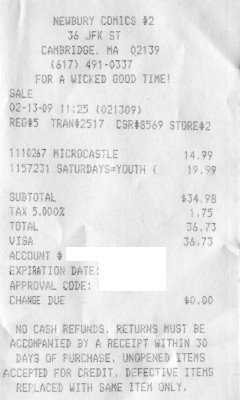
Going two weeks in between trips to Newbury Comics feels like less of an accomplishment when it’s put in writing. This purchase also included an issue of Magnet, a magazine I hadn’t purchased a stray issue of in a few years. This particular issue is their fifteenth anniversary issue, which is impressive for a glossy magazine ostensibly covering alternative/indie music, but their broad scope is large enough to interest casual scenesters on a bi-monthly basis. That scope contributes to my hesitation for subscribing to the magazine, since too many of the issues focus a Big Indie Band of the Moment or a Classic Indie Standby. The fifteenth anniversary celebration acts as a compendium of the latter artists, but it’s interesting to get a perspective on which artists they still want to talk about a decade later.
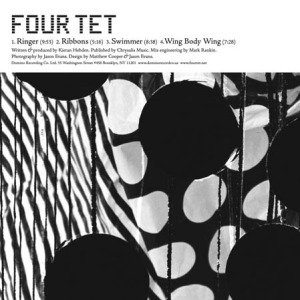
23. Four Tet – Ringer LP – Domino, 2008 – $10
Someone please explain this vinyl pressing to me. Ringer has four tracks spanning a total of 31:33, with neither half lasting longer than sixteen minutes. Yet it was pressed on two LPs with one song per side. I would have understood this decision if the sides played at 45 rpm like the audiophile-oriented vinyl pressings from Bottomless Pit (and those more expensive Metallica reissues), but instead they run at 33 rpm. Is this format what DJs prefer? That might make sense, since Ringer is more “techno” in nature than other Four Tet releases, but some of the DJ-styled twelve-inches in my collection have multiple tracks per side. The record certainly sounds great, but $10 should be the regular price, not the mark-down price for Ringer, and a single LP would justify that price.
|
The wife and I had agreed not to buy presents for each other for Valentine’s Day, but since she never buys records on her own (apparently someone in this household buys enough for two people), I figured I’d pick up one of her recent favorites (and one of mine) now that the vinyl had been released. All of her albums are filed alongside mine, meaning that Death Cab for Cutie, Iron & Wine, Jenny Lewis, and their ilk have not been segregated in a girl-friendly indie section, which makes sense since I’m in charge of finding new bands that she might enjoy and putting them on her iPod. In a way, I only have myself to blame for most artists she enjoys—except for Regina Spektor, I had nothing to do with my wife’s fondness for her most recent album—but sadly the “You’d really love the new Isis album!” doesn’t seem to work with her. Thankfully there’s enough cross-over in tastes with the non-noise tendencies of my record collection that she’ll listen to most of my new purchases.
21. M83 – Saturdays = Youth 2LP – Mute, 2008 – $20
When I first heard this album, I thought that the modernized Tears of Fears pop of “Kim & Jessie” and the electronic pulse and sheen of “Couleurs” should be a single in lieu of the unnecessary album tracks. I’m going to pull back from that statement, to a degree. Even given the strength of Dead Cities, Red Seas & Lost Ghosts, I view M83 as a singles band, since the album cuts often indulge Gonzalez’s more irritating tendencies like ultra-falsetto cooing, melodramatic voiceovers, and new age-aping schlock. Yet Gonzalez approaches each record as an album (eye roll for the critic cliché), with Saturdays = Youth his clearest concept album yet. That Tears for Fears reference earlier connects specifically to the use of “Head Over Heels” in Donnie Darko and that movie’s ’80s nostalgia as a whole. While Donnie Darko is too plot-oriented to be confused with a classic John Hughes movie, Kelly’s soundtrack included all of the songs he wished were in those movies. “Wouldn’t it be great if Echo & the Bunnymen made it into one of those films?” It’s not pure nostalgia—Kelly could never pull that off, since he’d end up meddling too much (see, or preferably don’t see, the overwrought Southland Tales)—but it’s nostalgia revived, reimagined.
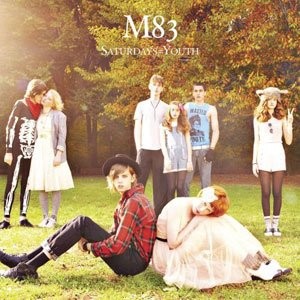
A quick look at the cover of Saturdays = Youth underscores how Gonzalez and Kelly are kindred spirits. That Molly Ringwald lookalike makes Gonzalez’s back-sleeve shout-out to the music, movies, and friends of his teenage years completely irrelevant. Could anyone mistake his intentions? Donnie Darko is the John Hughes film Richard Kelly envisioned, Saturdays = Youth is the soundtrack to the John Hughes film Anthony Gonzalez envisioned. The minimal piano arrangement of “You, Appearing,” the club focus of “Couleurs,” and the electronic sighs of “Midnight Souls Still Remain” wouldn’t make an actual John Hughes film, much like Richard Kelly’s time-travel theories, but those elements make their respective tributes interesting. If the rest of the album consisted of singles as strong as “Kim & Jessie” and “We Own the Sky” (“Up!” and “Skin of the Night” pale in comparison), it would have easily been Gonzalez’s finest, but the lesser songs rely too much on nostalgia. It makes sense as an album, but it doesn’t hold up as an album.
A key difference between Anthony Gonzalez and Richard Kelly, however, is that the former knows what makes his work compelling, and the latter, judging from the Donnie Darko director’s cut (“Being open for interpretation? No thanks, let me explain everything”) / director’s commentary (in which Kevin Smith understood the strengths of the film better than its director), Southland Tales, and the script for Domino, seemed to make an interesting film thanks in large part to his production limitations. Given that M83’s singles have gotten better as they’ve gotten bigger, I imagine the opposite is true with regard to Anthony Gonzalez’s production limitations.
 22. Deerhunter– Microcastle / Weird Era Continued LP+CD – Kranky, 2008 – $15
Dear Kranky Records,
I waited quite a while for the LP edition of Deerhunter’s excellent Microcastle to reach stores. Even after it was officially released, it took months before I found a copy at Newbury Comics, despite checking every time I ventured in a store. When I finally found a copy, I gladly snapped it up, having already read on your site that the vinyl would include a CD of Weird Era Continued. Strange, considering that Cryptograms included the Fluorescent Grey EP on vinyl, but I’ll live with it. Imagine my surprise when I find a double LP edition of the record at Sonic Boom in Seattle just a month after I buy the single LP edition. I could understand pressing the 2LP edition first, making it a limited collector’s edition, and then switching to the single LP edition, but the order of these pressings just baffles me. I look forward to a triple gatefold pressing of Stars of the Lid’s And Their Refinement of the Decline in the next year, or perhaps a quintuple LP set including their recent tour CD on two more slabs of wax.
Best, Sebastian.
P.S. That new Tim Hecker album is great. Please let me know if you’re planning anything special for the second pressing of that album.
|
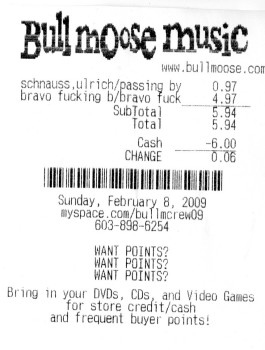
I went up to Salem, NH to buy a tax-free iPhone (please don’t tell Deval Patrick), not tax-free records. But when I noticed that there was a Bull Moose Music location along the main drag, I convinced my friends to let me browse for a few minutes. I had a brief chat with the owner as he let me look through some just-in crates. When asked what I was interested in, I responded “post-punk” (“Midwestern indie rock” might be more accurate, but I’ve learned my lesson about relating micro-genres), and he recommended going to their Portsmouth location, since it had more vinyl stock. No, I did not immediately head up to Portsmouth.
This particular Bull Moose location had a solid punk/hardcore/metal vinyl section, as evidenced by my first purchase, and some tempting mark-down records, as evidenced by my second purchase. The used vinyl was all too familiar, however, consisting primarily of overpriced classic rock wax and those just-in crates of 1970s disco and 1980s dance-pop that a Madonna fan was thrilled to donate to the store. If only she’d liked Wire…
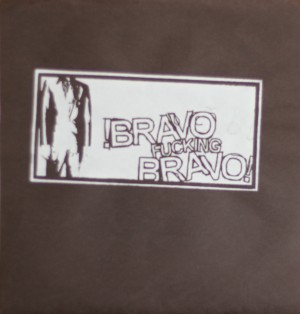
19. Bravo Fucking Bravo – Bravo Fucking Bravo LP – Friends Forever, 2003 – $5
Here’s how I knew of Bravo Fucking Bravo: my friend Charlie from This Flood Covers the Earth joined up with three of this group’s former members in Luau, but departed from that band before they played more than a few shows. Between the five-dollar price tag and the etched lyrics on the flip side, I was willing to take a rare shot at a hardcore record. I enjoyed This Flood Covers the Earth because of the prevailing Drive Like Jehu post-hardcore influence (they were from San Diego, after all), but Bravo Fucking Bravo relies less on those dynamic shifts and more on unrelenting forward propulsion. Apparently Bravo Fucking Bravo II, which came out in 2005, is the superior album, but I didn’t see that one at Bull Moose. I wish I had something more substantial to say about the music, but most hardcore (excluding some key 1980s groups like Bad Brains, Black Flag, Minor Threat) tends to blur together for me unless their prevailing outside influences are noticeable and something I’m more interested in.
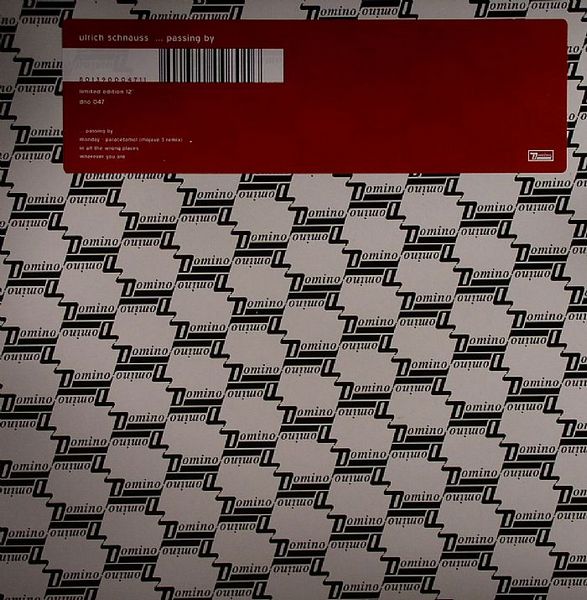
20. Ulrich Schnauss – …Passing By LP – Domino, 2006 – $1
An Ulrich Schnauss twelve-inch marked down to $0.99 involves no decision-making brainpower—I didn’t even look at which songs were included—but I’ll apply some after the fact. “…Passing By” was originally included on Schnauss’s 2001 album Far Away Trains Passing By, so it’s hardly a logical candidate to push an EP five years later. The EP includes a song from his 2003 album A Strangely Isolated Place (which I recommend checking out) and from the Morr Music Slowdive tribute, but it’s not his cover of Slowdive, it’s his song inspired by Slowdive. Newsflash, Schnaussages: all of his songs are inspired by Slowdive. To cap this off, there’s a remix of a Strangely Isolated Place track by Mojave 3, i.e. the members of Slowdive. I understand that Schnauss hadn’t released an album in a few years and probably needed to remind audiences that he still existed before his vocal-equipped shoegaze album Goodbye came out in 2007, but typically these sampler EPs (Afghan Whigs’ Historectomy, Silkworm’s New School / Old School) are promo-only. Maybe what Domino needed to do was pull a Watery, Domestic or a Fake Train and just draw all over the cover of Slowdive’s Just for a Day. I would pay more than a dollar for that EP.
|
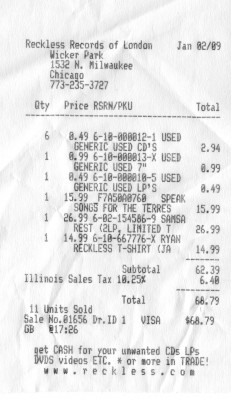
When greeted with the Milwaukee Avenue location’s prodigious cheap bins of seven-inches and CDs, I quickly reverted to typical Reckless Records form, reveling in the bulk of materials I trekked around the store. Yet the first thing I did after checking out was call Jon Mount to relay a depressing realization about my dollar bin CDs. I know people involved in all of almost all of these bands. Ambulette features Stephen Howard of Pinebender, who I’ve talked with at several shows. My friend Joe Martin did promotions for Brief Candles. The Midsummer/Coastal CD was released on Sun.Sea.Sky. by my friend and former Signal Drench collaborator Shawn Schultz. Del Cielo features Beauty Pill bassist Basla Andolsun, who was incredibly nice when I saw that band in St. Louis. And the Juno album was just a heartbreaker. Not only is that one of my favorite albums of all-time, I am making a documentary about the group. It simply doesn’t bode well when their album is lumped into “Generic Used CDs.”
Jon certainly understood my quandary about purchasing these albums, but I tried my best to put a more positive spin on this situation, even if it ignores the blunt truth that these bands are defunct, profoundly unknown, and/or unlikely to sell for full used price. First, in the case of the Juno CD, which I already own, I’m likely to pass it along to a friend who’s never heard of the group outside of my involvement in the documentary. If they enjoy it, they might buy A Future Lived in Past Tense or the split EP with the Dismemberment Plan. I’ve done this before with similar “I need to save this great album from the injustice of the dollar bin” finds and a few of their recipients have seen the band live or purchased another album. Second, if someone else is looking for any of these albums, they’re more likely to pay full price for them. Suckers. Third, if I enjoy one of these albums, I’m more likely to buy a full-price disc from one of these bands in the future, which might not have happened if not for this situation. I didn’t go into Reckless hoping to find Brief Candles or Midsummer albums, but their newfound place in my collection makes it more likely that I’ll check them out in the future. Finally, I do my best to buy releases from bands I enjoy at their shows, from their labels, or new from independent record stores. These points are all trumped by the blunt truth stated above, but that’s the harsh toke about much of the music I enjoy: most people don’t care as much as I do about it. In a perverse way, I appreciate that fact, since it allows me to make connections with people like Stephen Howard, Basla Andolsun, and the members of Juno, but it still pains me to be presented with the economic reality of their situation.
This internal debate between the morality of my music fandom and the quantity-loving impulse of my record collector urges will likely continue throughout The Haul. I remember being taken aback by the shock of Parasol Records’ promotions guy Michael Roux when I revealed that I downloaded music and purchased used CDs, since both methods circumvent artist compensation, but I’ve done my best to reconcile my positions since that conversation. Even this predominantly used purchase has one notable new release on it.
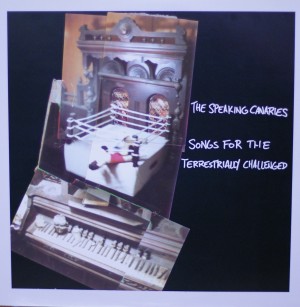
8. Thee Speaking Canaries – Songs for the Terrestrially Challenged – Mind Cure, 1994 – $16
My friend Scott had mailed me Thee Speaking Canaries’ Songs for the Terrestrially Challenged and Life-Like Homes back in September and I enjoyed the latter so much it was discussed in two unfinished posts for this site. (Yes, I have some catching-up to do.) At the time I couldn’t remember which Speaking Canaries LP I’d previously seen up at RRRecords in Lowell, so Scott asked if it was the original lo-fi pressing of Songs for the Terrestrially Challenged. “Lo-fi pressing? I’m intrigued!” I replied, but by the time I returned to RRRecords, they’d sold whichever Speaking Canaries album I’d seen. I’d since seen this version of the album on eBay once or twice, but didn’t pull the trigger. When I found it in the Reckless online catalog, I put it in the must-buy pile. I can’t pass on a limited edition alternate version of a Speaking Canaries album with a hand-made sleeve (Damon Che’s hand-written liner notes, random photos glued to the gatefold), even if I greatly prefer Life-Like Homes. I still need to pick up their most recent album, Get Out Alive, which, true to form, has both a long-form CD version and a pared-down LP version. If only Damon Che would devote more time to this project and spend less time making “Don Caballero” records without Ian Williams.
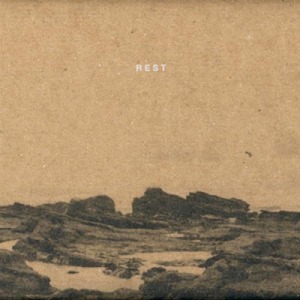
9. Gregor Samsa – Rest – Kora, 2008 – $27
I had originally hoped to buy this album from the band when they performed over by Berklee in the summer, but the vinyl wasn’t finished by then and I ended up missing the show. I put off buying it at Amoeba Records in Los Angeles, thinking I’d buy it from Parasol when I placed an order with them later in the winter (still hasn’t happened), but when I picked it up at the Broadway Reckless and realized how nice the packaging was, how much care the group and Kora put into this release, I figured that I should put it high on my list for my trip to the Milwaukee location. It’s one of most expensive new albums that I’ve purchased (not that it’s overpriced*), rivaled by Pelican’s gatefold 2LP for The Fire in Our Throats Will Beckon the Thaw, but I’ve never regretted picking up that Pelican album and I doubt I’ll regret buying Rest. I did question my LPs-whenever-possible policy for a moment, given that the CD has equally nice packaging and costs half as much, but the vinyl sounds superb. This album nearly topped my best-of-2008 list, so definitely buy one of the pressings.
*With regard to the seemingly high cost of this album, I learned a valuable lesson about micro-pressings of LPs when talking with Stephen Howard of Pinebender about their 2LP pressing of Things Are About to Get Weird (200 copies; get yours soon). Even without the custom artwork of this Gregor Samsa record, Pinebender was barely breaking even by charging $20 for their album. Granted, Gregor Samsa pressed 500 copies of Rest, so the vinyl itself likely cost slightly less, but the packaging certainly cost more. Given how often I pine for lesser-known bands to press their albums on vinyl, I feel compelled to support them when they go through with it, even if it’s pricier than the CD.
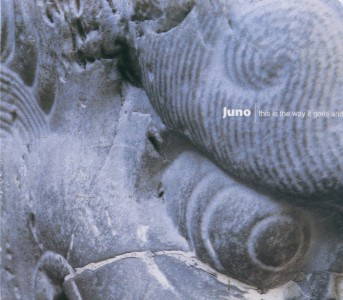
9. Juno – This Is the Way It Goes and Goes and Goes – DeSoto/Pacifico, 1999 – $0.50
Juno waited five years into their existence to record and release a full-length album. They did three U.S. tours on seven-inch singles. They weighed their options on labels, turning away quite a few major label scouts interested in mining any Seattle-area talent. They dropped early songs that didn’t meet their standards. They changed from their name indie producer (Steve Fisk) to the in-house engineer at the studio (Kip Beelman) midway through recording because the former was rarely in the studio and pressed the group to release an EP and the latter understood the intended scope of the record and had already done the bulk of the recording.
Too many bands rush into recording their debut album. This Is the Way It Goes and Goes and Goes is a prime example why bands should wait, road-test material, record singles, weigh their options, take time in the studio. The rush of instant gratification from a hastily recorded tour CD-R might sell some $5 CDs at your local gigs and help you buy a slightly better van, but will people still love your debut album a decade later? Or will it be something you sweep under the rug? Take your damn time.
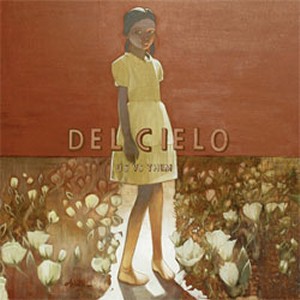
10. Del Cielo – Us Vs. Them – Lovitt, 2004 – $0.50
I was going to completely wing it on Del Cielo by mentioning how nice it was to see Beauty Pill and how I hope that Chad Clark’s doing better after his heart surgery and then going into how I wish Bald Rapunzel had recorded a second album (they shared drummer Katy Otto with Del Cielo), but I felt compelled to put the CD in my computer’s drive and actually listen to it. Not sure what I expected from Us Vs. Them, but the first few songs have been of the dynamic rockers with a bit of pop-punk creeping in on the edges and diary-styled lyrics. Andrea Lisi goes overboard on vocals a bit and doesn’t have the range of Bald Rapunzel’s singer Bonnie Schlegel, but there’s no lack of melody or energy. Faint praise perhaps, but I just felt like hearing Bald Rapunzel’s “Sun Drop” again, which is one of the better forgotten D.C. rockers.
Side note: When googling Beauty Pill to find their web site, I came across this horrible, horrible review of The Unsustainable Lifestyle at Coke Machine Glow. It's hard to imagine a reviewer missing the joke that much, but I doubt they heard Smart Went Crazy or have the slightest idea on how Chad Clark's bands do or do not fit into the D.C. scene.
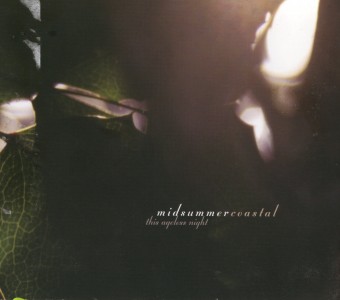
11. Midsummer/Coastal – This Ageless Night –Sun.Sea.Sky., 2002 – $0.50
I recall receiving Catch and Blur, the first Midsummer EP for review when I was doing Signal Drench and genuinely enjoying their brand of lush indie rock/shoegaze, so it didn’t shock me when Shawn Schultz signed them to Sun.Sea.Sky. for a release. I fell out of touch with Shawn after Signal Drench closed up shop, which partially explains why I never heard this split release with Coastal, but I’m interested in seeing how Midsummer progressed. I may have to track down their first full-length, Inside the Trees, which was released last year.
I’ve largely avoided returning to a few of the groups I enjoyed reviewing in the early Signal Drench days, in part because I’d usually learn of whichever bands they were ripping off a few years later and think “Oh, that’s where they got it from.” Since the majority of the promos I received were mediocre indie rock or mediocre emo, I was probably too easily impressed, but every now and then I’d find a band like Durian (Jawbox/Shudder to Think-influenced D.C. group) or Tungsten74 that I was willing to stand behind. In the case of Tungsten74, they kept getting better and better.
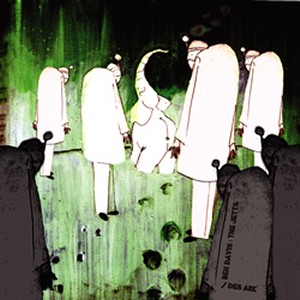
12. Des Ark / Ben Davis and the Jetts– Battle of the Beards – Lovitt, 2006 - $0.50
Jon Mount has been pushing Des Ark for quite some time, but this split CD is the only release I’ve tracked down, since I haven’t found the LP pressing of Loose Lips Sink Ships. He played this split album for me the last time I was in St. Louis, scoffing at some of Ben Davis’s contributions but heralding Des Ark’s side and involvement in the two collaborative tracks. Des Ark has the whole sassy titling thing going, which is a plus (“If by ‘Gay’ You Mean ‘Totally Freaking Awesome,’ then Yeah, I Guess It’s Pretty Gay” for one), but any reason for me to remember the sheer horror of Elton John’s “Bennie and the Jets” should be publically denounced. By necessity (no drummer), these songs swing more toward the folk side of Des Ark, losing the Faraquet-esque bite of the aforementioned Loose Lips Sink Ships (a solid record despite some overbearing lyrics) and sounding a bit more like Cat Power in the process. Not recent Cat Power, but What Would the Community Think/Moon Pix era. You know, the good stuff.
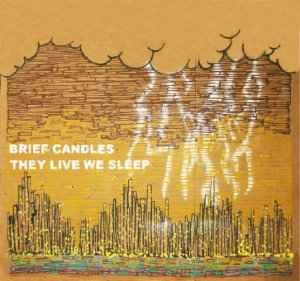
13. Brief Candles – They Live We Sleep – Latest Flame, 2006 – $0.50
Brief Candles were based out of Peoria (they’ve since moved to Milwaukee, Wisconsin) and played at least one show with personal favorites Rectangle, but I didn’t catch them during my years in Champaign. That’s a shame, since judging from the first few songs on They Live We Sleep, I would have enjoyed their blend of male/female vocals, energetic rhythms, shoegaze-inspired guitars, and occasional bursts of Sonic Youth noise. That description sounds an awful lot like what I wrote about Film School below, but Brief Candles sound far less serious than Film School, whose gravity veers close to Interpol territory. That is meant to be a compliment for Brief Candles, since they manage to keep things light despite some epic guitar crests. I’ll definitely catch them if they tour the east coast.
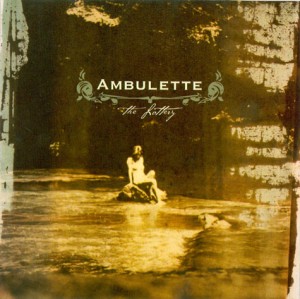
14. Ambulette – The Lottery – Astralwerks, 2006 – $0.50
Ambulette is (was?) the post-Denali project for Maura Davis, originally named Bella Lea, featuring former Pinebender guitarist Matt Clark, current Pinebender guitarist Stephen Howard, and prolific drummer Ryan Rapsys (Euphone, Heroic Doses, and Sweater Weather, who shared a Polyvinyl seven-inch with Days in December [Jeff Garber and a few members of Very Secetrary]). Stephen Howard was in Denali when I saw them, so it didn’t shock me that he was recruited to Davis’s new group. I’d heard this EP when it was released and wasn’t hugely impressed—Davis has always struck me as someone with more raw talent than songwriting chops, with a few exceptions on Denali’s The Instinct—but I figured I’d give it another shot. I’m unsure if Ambulette is even a band anymore, since Davis moved onto Glös, which featured her brother and Engine Down/Cursive drummer Cornbread Compton before briefly reuniting Denali last year. I’d be interested in hearing new music from her, but I’m certainly not waiting with baited breath.
A brief anecdote from that Pinebender/Denali show, which was the only concert I caught at the now-closed Nargile Lounge / hookah bar in Champaign: I remember getting to the show early and hanging out with the Pinebender guys, since I’d met them at their show at the Prairie House in Bloomington, and being introduced to the Denali crew. Davis quickly noticed that a Denali super-fan (“stalkerazzi”) had come to yet another show and quickly shuffled downstairs to avoid him. During their set it was impossible not to stare at this guy, since he was pounding his fist in the air with every syllable and belting out the lyrics. Since this show, I’ve been completely terrified of being that guy, but given that I have video documentation of the Juno reunion shows and do not exhibit stalkerazzi tendencies, I think I’m safe.
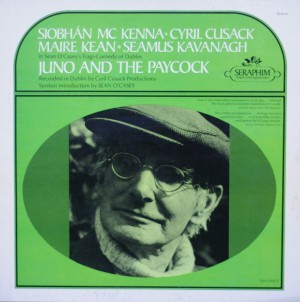
15. Cyril Cusack Productions – Juno and the Paycock 2LP – Seraphim, 1955 – $0.50
I have a small handful of literary LPs—Robert Frost reading poetry, Dylan Thomas reading poetry, Joseph Heller reading parts of Catch-22—all of which were released on Caedmon and purchased at similar prices from cheap bins. I’d gladly pick up quite a few of these albums at the right price—Camus, Pound, Faulkner, Cummings, Eliot, Auden—even though I still haven’t dropped the needle on any of the ones I already own. I learned during undergraduate that some poets are far, far better at reading their works than others and I’m not one to attend local poetry readings, but there’s a definite appeal to hearing the author recite his own work, especially when all of the authors mentioned have passed away. Caedmon is now part of HarperCollins Audio Books, but there’s a difference between hearing a sampling of work as you’ll find on an LP or hearing the entire book. I’ve never listened to an audio book in my life and, fingers crossed, never will. I’ve passed on complete performances of Shakespeare plays for that reason.
I made an exception on for this play, since it was fifty cents and I’ve put off reading any O’Casey for quite a while. I’m unsure of the official publishing date for this performance of Sean O’Casey’s play Juno and the Paycock, but the performance itself occurred in Dublin during June, 1955. It was definitely published after O’Casey’s death in 1964, since the liner notes mention it, but they fail to mention the date of release. Certainly a future candidate for Record Collection Reconciliation.
16. Jessica Bailiff – Live at VPRO Radio – Brainwashed, 2006 – $0.33
I must have seen the back of this single as I was hastily flipping through the cheap singles, since there’s no artist info on the front and Brainwashed in huge letters on the back. This acts as a positive barometer of its quality, since The Brain is usually on point in its record reviews, and gives away some vague idea of the aesthetics (Thrill Jockey/Kranky, avant-garde, possible post-[genre]). As it turns out, Bailiff now records for Kranky in a droning, somewhat post-rock-informed style of slowcore. I’m awfully proud of myself on this one, although if I’d noticed that she’d covered Flying Saucer Attack at the store I could have more accurately made those assumptions.
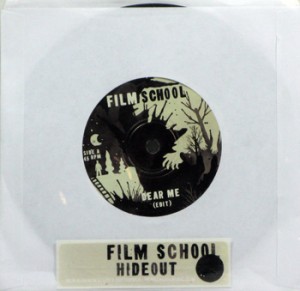
17. Film School – “Dear Me (Edit)” b/w “March Hike” – Beggars Banquet, 2007 – $0.33
Bradley’s Almanac mentions Film School on a semi-regular basis, but I’ve yet to see one of their shows or pick up one of their albums. (Sorry Brad.) I had downloaded Hideout, their 2007 album featuring “Dear Me,” but it’s one of those albums that I grabbed and skimmed a bit, enjoying said single but not making too deep into the album. Hideout apparently features a guest appearance from Colm Ó Cíosóig of My Bloody Valentine, which makes sense given the group’s mix of shoegazer tendencies and indie rock propulsion. This promotional single includes a non-album b-side and a sticker, the latter of which is headed for my big bag of stickers unlikely to ever be stuck to anything.
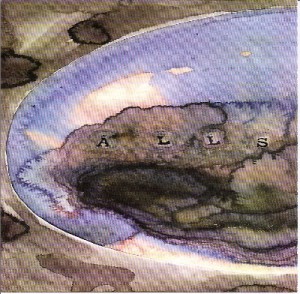
18. All Scars – “The Lineage of Time” +2 – Ace Fu, 1998 – $0.33
After seeing Ace Fu on the label, I checked out who was in All Scars in the liner notes, since I’d never heard of the group before. Guitarist James Canty comes with quite a bit of name recognition from his tenure in Nation of Ulysses, The Make-Up, Ted Leo and the Pharmacists, and French Toast and his relation to Fugazi drummer Brendan Canty (who drums for All Scars on a different release) and novelist Kevin Canty (one of Jon Mount’s favorites; I have Into the Great Wide Open sitting in the to-read queue above my desk). Brendan doesn’t appear here, but auxiliary Fugazi drummer/roadie Jerry Busher does. James Canty and Busher currently make up French Toast, who I recall seeing at the IDF in Urbana when they opened up for Q & Not U, although I can’t say I remember anything about their music.
I also bought a Reckless Records t-shirt designed by Jay Ryan. Wearing a record store t-shirt is prime evidence that you are a record-shopping degenerate, and I believe in truth in advertising.
|
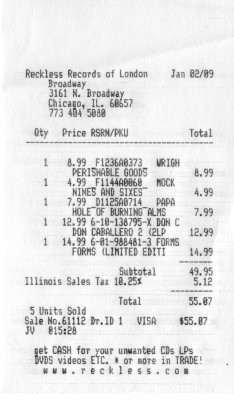
I first hit up Reckless Records in Chicago during the fall of my freshman year at the University of Illinois during a road trip up for some concert. Mogwai and Ganger? Dismemberment Plan and Turing Machine? Not sure which, but the former makes sense because of the store’s proximity to the Metro. I was still in the mode of bulk purchasing and I could not fathom more titles to look through or a larger dollar bin. The liners-only method of displaying titles was new to me and seemed absolutely brilliant. Between the dollar CDs and the .50 cent singles, I got countless titles that I’d only vaguely heard of, furthering my dollar-bin strategy developed at Rhino Records in New Paltz during high school. The difference was that Reckless hid singles by bands I genuinely enjoyed—the 12 Inch Records singles for Dis- and Love Cup, for example—in the unorganized bins beneath the LPs.
It essentially turned into buying music by the pound. I recall coming out of the Broadway location with a bag straining at the handles with something like ten CDs, seven seven-inches, and five LPs for around $80. A haul for the ages. I was so overwhelmingly proud of myself. Unfortunately, it became nearly impossible to go with anyone else because I wanted to be so thorough. When you live two and a half hours away and are without a car, it’s better to be somewhat deferential to your friends. It took me a few trips to learn this lesson.
This time around I had an afternoon to myself and the two main Chicago record stores (and the Winter Classic rink at Wrigley Field, which was already being dismantled and off limits). I’d done my research my searching the online Reckless catalog for pertinent titles, so I knew some of what awaited me. The main issue, however, was that my current record shopping strategy—buying new vinyl from active artists, used vinyl if it’s out of print, avoiding CDs whenever possible, not spending too much time in seven-inch bins—runs counter to my prior experiences with Reckless, hence this limited haul. Don’t worry; I reverted back to classic form at the Milwaukee location.
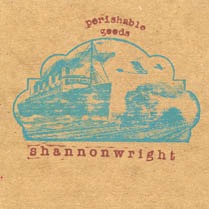
3. Shannon Wright – Perishable Goods CD – Quarterstick, 2001 – $9
Perishable Goods is an apt title for this EP. In addition to being a limited edition release in a cardboard sleeve, the musical contents are somewhat more ephemeral than Wright’s usual offerings. Highlighted by “Azalea,” a duet with Crooked Fingers/Archers of Loaf frontman Eric Bachmann, and an excellent cover of the Bee Gees’ “I Started a Joke,” it was the second-to-last Shannon Wright release I needed to track down (excluding Crowsdell), meaning that the single for “A Junior Hymn” (backed with a cover of The Smiths’ “Asleep”) is the lone straggler. I still need to hear the Low version of “I Started a Joke,” since Low and Wright were touring partners at one point, but I do have Faith No More’s cover to fall back on.
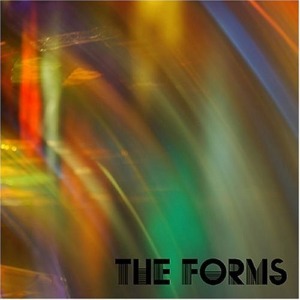
4. The Forms – The Forms LP – Threespheres, 2007 – $15
I’d checked out the Forms’ self-titled second album when it was released in 2007, in part because Built on a Weak Spot lavished such high praise on it, but my fondness for their smooth guitar melodies was tempered by Alex Tween’s penchant for repeating lines ad nauseam. Yet the album reminded me enough of Castor’s self-titled debut in both guitar tones and song structures that I kept giving it chances and ended up including the brief, elliptical “Oberlin” on my year-end mix for 2007.
I’d largely given up on getting past my block on Tween’s vocal style until two recent events changed my course. First, the group was included in a list of bands heavily indebted to Shudder to Think, which caused me to rethink their song structures and lyrics. Second, BOAWS posted a Forms cover of Billy Joel’s infamous “We Didn’t Start the Fire” from the Guilt by Association Vol. 2 compilation. Between the humming, post-punk bass line, the smart changes to vocal melodies and delivery, and the gall of the song choice, I had to give The Forms credit and another chance.
While fifteen bucks for a new single LP is a bit steep (another instance where I would’ve saved money if I’d mail-ordered it direct from Threespheres, but Somerville mail thieves have instilled me with deep-rooted caution), my decision to pick it up was validated by a listen to the album on my iPod yesterday. After getting past a few repetitive vocal phases, I finally responded to the songs like I expected when I first read BOAWS’s recommendation. Plus, a vinyl-only bonus track!
5. Don Caballero – Don Caballero 2 2LP – Touch & Go, 1995 – $13
A brief history lesson: Don Caballero started out on 1993’s For Respect with muscular, drum-centric math-rock and pushed that blueprint to its limits on 1995’s Don Caballero 2, making one of the most unrelenting, challenging documents of the genre. 1998’s What Burns Never Returns managed to be both more listenable and weirder, finding new ways to wrangle chord changes out of guitars. Ian Williams then eliminated most of the distortion and jarring guitar angles on the largely clean American Don. There’s an arc to these four records,* one that I’m grossly paraphrasing, but each record contributed something new to the group’s approach. Some of this progression is owed to member turnover, especially Williams’ transition from second guitarist to primary guitarist, but I credit Don Caballero with pushing the genre forward in that eight-year span, perhaps even bringing it to its logical conclusion.
Grabbing Don Caballero 2 was long overdue, but I hadn’t seen it on vinyl before. Beyond that, I was happy listening to my CD copy of What Burns Never Returns, since I think it strikes the best balance among the four main Don Caballero albums and their singles compilation. But 2 might be the finest document of instrumental math-rock’s extreme limits. There have been plenty of great math-rock records, but it’s essentially a genre of technical precision and balls-out aggression, both of which are pushed to the brink here.
*Yes, Damon Che “reformed” Don Caballero and released two albums with the new line-up, but neither of those albums deserves to tarnish the arc of Don Caballero MK. 1.
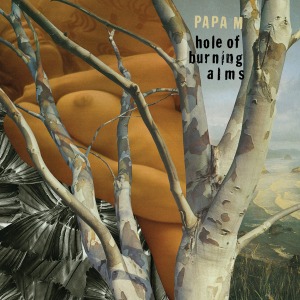
6. Papa M – Hole of the Burning Alms 2LP – Drag City, 2004 – $8
Between the two Reckless locations I had some options for a David Pajo vinyl fix, including the out-of-print LP of Aerial M and the 2LP of Live from a Shark Cage. While the former ($13) hit my collector scum nerve and “I Am Not Lonely with Cricket” from the latter ($13 used, $16 new) is a pleasant fifteen minutes of low-key guitar musings, I opted for value with the money with the 2LP singles compilationHole of Burning Alms. Of course it includes the M Is… single, which I already own, but there’s enough other material here to keep me busy and mildly interested for more than an hour. I’d stopped buying as many mellow post-rock records because I wasn’t finding enough time to listen to them for their desired purpose—background material for reading—but hopefully this album will accompany that activity in the near future.
Side note: I’d almost forgotten about Pajo’s time in Billy Corgan’s Zwan project, in which he accompanied Chavez guitarist Matt Sweeney for what I imagine was a nice paycheck. According to the group’s Wikipedia page, the group’s fallout seems far more interesting than their actual music (watered-down Smashing Pumpkins), since Corgan calls the other members “dirty, filthy people who have no self-respect or class” (presumably excepting drummer Jimmy Chamberlain) and holds particular spite for Pajo, who was presumably shacking up with bassist Paz Lenchantin during their tours. He also says that Zwan will never, ever reform, which breaks the hearts of millions of fans across the globe.
7. Mock Orange – Nines & Sixes LP – Boiled Music, 1998 – $5
Nines & Sixes is Mock Orange’s “debut” album, i.e. the first album they’d like you to associate with their career. It’s actually their third album, after 1995’s Open Sunday and 1997’s self-titled release, but they claim that those albums were just practice. While I scoff at such revisionist history, I have to wonder how many bands in the MySpace era will be just as embarrassed by their early releases, considering the negligible cost of home recording and CD-R or MP3 distribution.
Despite owning a dollar bin CD copy (which I’d completely forgotten about), I can only vaguely recall having heard a few songs from Nines & Sixes, which sticks to poppy emo-punk of their earlier work. Those looking for the quirky, Modest Mouse/Superchunk influence from the excellent First EP and Mind Is Not Brain should start with The Record Play.
|
|
While I still need to finish writing my 2008 wrap-up and cover the music I've bought this year, I'll take a minute to cover the first few 2009 releases of note.
 Last Days - The Safety of the North: Continuing to mine the areas between ambient, post-rock, and electronic music, Graham Richardson has quietly built an impressive discography as Last Days. Both 2006’s Sea and 2007’s These Places Are Now Ruins are quietly compelling listens and The Safety of the North expands upon the success of those records. Richardson mentioned that this record is more cinematic in approach, which is quite evident from the fifteen tracks spanning sixty-six minutes and the addition of both spoken word excerpts and female vocals on a few tracks. I keep repeating “Life Support,” which reminds me of an ambient take on the interlocked melodies of Steve Reich’s Music for 18 Musicians. While I certainly wouldn’t mind if “Life Support” mirrored the album-long length of the Reich piece, I can’t wait to spend more time with the rest of the album, since other tracks like “The City Failed” and “Onwards” are also stand-outs.
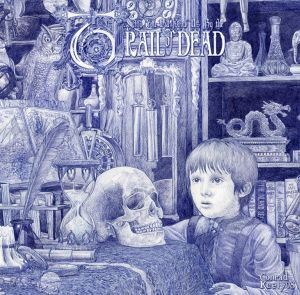 …And You Will Know Us by the Trail of Dead - The Century of the Self: The Festival Thyme teaser EP was just good enough to convince me to check out The Century of the Self, which I’d hoped would remind me of Source Tags & Codes but instead recalls the expansive prog-rock of Worlds Apart. Whereas Worlds Apart and So Divided seemed thrilled to deviate from expectations, The Century of the Self is lyrically consumed with returning to what was lost—cough, their direction, cough—but it’s often unsuccessful in mirroring that theme musically, falling prey to the same overblown prog-rock impulses. There are sections of this album that remind me of 1970s Genesis albums—having two piano-based “Insatiable” tracks, for example—which is an awfully strange tactic for any band to take. There has been some progress since So Divided, however. The first half of the album has a strong stretch from the energetic “Far Pavilions” to “Isis Unveiled” (recalling the Worlds Apart highlight “Will You Smile Again”), through the affecting bridge of “Halcyon Days,” but the album dips during the Festival Thyme rehashes “Bells of Creation” and “Inland Sea.” I’m a sucker for the maudlin surges of “Pictures of an Only Child” and the cathartic sing-a-long of “I’m the monster and I exist / And on this summit I am lost” on “Insatiable (Two),” but the canned strings of “An August Theme” are a laugh riot. The best thing about Trail of Dead is how they’re even compelling when they fail, which is more than I can say about a lot of groups.
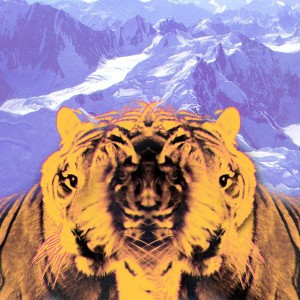
National Skyline - Bliss & Death: I approached this release with trepidation, since Jeff Garber’s recent track record has been less than stellar. It’s been eight years since National Skyline’s This=Everything, during which time Garber moved out to Los Angeles and Jeff Dimpsey retired from the project to take a remarkably similar approach with Adam Fein of Absinthe Blind in Gazelle. Year of the Rabbit was Ken Andrews’ baby, but Garber and Tim Dow’s talents were wasted in that watered-down version of Failure. The Joy Circuit was a mush-mouthed step toward U2-derived rock, which Garber already flirted with on a number of National Skyline songs. Garber released the three-song The Last Day EP to iTunes in 2007 under the National Skyline banner, which was an improvement on The Joy Circuit but more alt-rock than the old National Skyline. Bliss & Death received a similar electronic release in February. (No physical pressing is planned.) Bliss & Death isn’t quite a Garber solo record: Micropsia mentions that “Garber had the bulk of the album finished by May 2008, but felt as if some extra input were needed to give the record more texture. ‘I began to feel like this record was closer to my first band, Castor, and one of the most important things about Castor was Derek Niedringhaus’s bass playing.’” Mixed signals to be sure—who adds bass lines at the end of a record—but the Castor mention piqued my interest. I thought he’d forgotten about that group entirely.
You can safely disregard the Castor reference, since there’s little here that remotely emo; this album is all about guitar textures. Garber seems to be in love with an acoustic-guitar-addled shoegaze approach, which unfortunately lends itself to some languid songwriting when the pace drops. It took me a few tries to make it past the titular instrumental, the tired “Edge of the World,” and the inexplicable single “Revenge,” but the rest of the album picks up the pace. “Bloom” does just that with a thousand guitar overdubs, “Glimmer” recalls the Edge-aping energy of those older National Skyline albums, “Driving Down” features both shimmering guitars and vocal hooks, “Kingdom” pays off its gradual build-up with an ascendant rush, and “I’m a Ghost II” is an excellent closing instrumental with a solid Niedringhaus bass line. While I’m impressed by Garber’s guitar work on many of these tracks, too many of his vocal lines drift aimlessly above the mist, lacking the solid hooks of Castor and National Skyline. After a few listens, Bliss & Death is certainly an improvement upon the last few releases from Garber and I hope it keeps growing on me, but next time he should bring collaborators on board at the beginning of the process. Hopefully that won’t be in 2017.
|
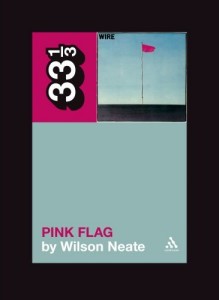
I first noticed that Continuum had chosen an author for a 33 1/3 book on a Wire album when I was checking out who else on Last.FM was obsessively listening to early Colin Newman solo records. Lo and behold, one of my fellow devotees had been slotted to write the book about Pink Flag. This moment occurred shortly after I’d narrowed down the records that I could conceivably write 33 1/3 books about—barring all of my preferred options that would never be accepted (Juno, Shiner, Hum, Castor, Jawbox, Silkworm, Shudder to Think)—to Wire and Slint albums, with the possible addition of Girls Against Boys’ Venus Luxure #1 Baby, so reading his announcement was bittersweet, just like it’ll be when someone is chosen to write about Spiderland.
I can understand why Continuum chose Pink Flag, since it probably has the largest cross-over appeal of the three early Wire records, even though I would have opted for either the post-punk perfection of Chairs Missing or the unrelenting progress of 154. Whereas those two albums are firmly in the post-punk camp, Pink Flag occupies a liminal space between punk and post-punk, a concept that Wilson Neate investigates during the first half of the book. While no one explicitly stated this viewpoint in the book, I’m sure there are punk-rockers out there who love Pink Flag but have no time for either Chairs Missing or the willfully difficult 154. Those punk rockers and their post-punk peers will be well served by Neate’s book.
Neate’s Pink Flag is divided in two rough halves: the first five chapters are devoted to biographical, historical, and contextual coverage and the massive sixth chapter provides commentary on each song. Considering that Kevin Eden’s Everybody Loves a History speeds through much of this period in order to give equal space to the group’s post-Wire output and post-reformation material, Neate’s thorough exploration of Wire’s early years is quite welcome. Eden’s book glosses over George Gill’s tenure in the group, but Neate emphasizes how Gill’s clichéd rock ‘n’ roll approach gave the other four members something to model their minimalist approach against. The Clash provided a similar model, which led to some cold interactions between the groups. Wire? Cold? Never!
Doing the song-by-song approach works for some 33 1/3 books (Double Nickels on the Dime in particular) and it could have easily been the bulk of this book, given that Pink Flag has 21 tracks and the chapter spans 60 pages. Neate notes how several correspondents had difficulty extracting favorites from this string of songs, viewing it more as one complete document, which I can understand to some extent. Certain songs—“Reuters,” “Ex-Lion Tamer,” “Pink Flag,” “Mannequin,” “12XU”—stick out to me, but there’s a string of others, especially on side B, that flow together. Reading about them as separate songs shortly after I’d listened to the record was quite interesting, but I still had a hard time remembering a few of the songs’ melodies.
The post-script is relatively limited, jumping from just after Pink Flag to Elastica’s appropriation of “Three Girl Rhumba,” to that song’s use in a British H&M ad, and finally to Bruce Gilbert’s self-removal in 2004. It’s a transition focused on the financial side of the band, in which Colin Newman redid the writing credits for Pink Flag to give himself more royalties (he’d written the majority of the guitar parts, but Bruce Gilbert played most of them on the recording). Neate makes the point that the rock side won out over the art side, which is quite clear to anyone who’s read Object 47, Wire’s first post-Gilbert LP. Bits of Wire’s post-Pink Flag history are sprinkled throughout the book, but don’t expect any emphasis on “Outdoor Miner” or “The 15th.”
My biggest critiques are editorial in nature. At 150 pages, Pink Flag is on the long side of 33 1/3 books, surpassed in my stack by only the tomes on Bee Thousand and Exile on Main Street. The length would be fine if not for thematic repetition in the first half of the book, in which various points (Wire’s minimalism in particular) are reinforced several times over by multiple quotations. Graham Coxon provides an undue amount of these quotations, which baffles me in the presence of Albini, MacKaye, Prescott, Rollins, Watt, etc. Ultimately, Pink Flag the book would have benefitted from some of Pink Flag the album’s signature economy.
Despite these minor caveats, Neate does an excellent job bringing a Wire album to the 33 1/3 canon, finding a similar level of success to Bob Gendron’s Gentlemen. I doubt that most fans have tracked down Everybody Loves a History, but Pink Flag is a more succinct, more focused option for those who do not care to read about the genesis of The Ideal Copy. I’m holding out hope that Wire is granted one or two more entries in the 33 1/3 series, since Chairs Missing and 154 deserve equal treatment, but barring a major shift in Continuum’s approach, that’s not going to happen, so go pick up Pink Flag.
|
|
My 2008 year-end list is up, with links for at least one song per album linked to either an mp3 or a YouTube video. I promise that I’ll only utilize horizontal scrolling for special occasions.
Quite a few albums could have easily found themselves in the 20 to 15 range. Matthew Robert Cooper’s Miniatures is pleasant, but too many of the songs sound like sketches instead of finished compositions. Sharks and Sailors’ Builds Brand New has a solid front half, but loses steam near the end. GZA’s Pro Tools has some excellent cuts, but the lack of energy is disappointing. The Constants/Caspian split single might have made it if I’d counted seven-inches, but I’m sure Constants’ forthcoming 2009 release will rectify their absence this year. Fuck Buttons’ Street Horrrsing was aesthetically intriguing, especially “Colours Move” and “Sweet Love for Planet Earth,” but a few of the songs did nothing for me. Lights Out Asia’s Eyes Like Brontide is an improvement over their last album, but doesn’t quite reach the heights of Garmonia. Wire’s Object 47 needed more tracks like “One of Us” and “All Fours.” I simply didn’t spend enough time with Secret Chiefs 3’s Xaphan: The Book of Angels, Vol. 9 to give it proper consideration, but there is always a few albums that slip past me until the following year.
Next up: my two-disc year-end mix and my list of the best non-2008 records that I first heard during this calendar year.
|
|
To prove that I’m documenting every physical piece of music acquired in 2009, here’s what I bought at the Hum / Life and Times / Dianogah show.
1. The Life and Times – Suburban Hymns LP – Hawthorne Street, 2007 – $12 new
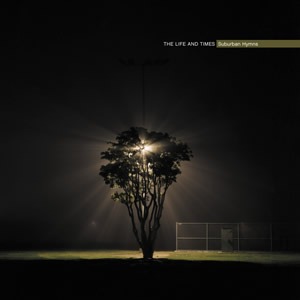
I can understand how some Shiner fans might have lost interest with the second incarnation of The Life and Times during the group’s transition to a shoegaze/math-rock hybrid, but Suburban Hymns is my third-favorite Epley album behind Lula Divinia and The Egg. I enjoyed The Flat End of the Earth EP, especially “Raisin in the Sun,” but I can’t fathom Epley releasing album after album of relatively dry, restrained indie rock. “Houdini” is essentially a shoegaze song stripped of its aesthetic, so the progression to the shoegaze-inflected Suburban Hymns made sense.
With the exception of the overly similar “Running Red Lights” and “Charlotte Street,” the variation from song to song keeps Suburban Hymns fresh. “Coat of Arms” revives War-era U2 drum fills, “Mea Culpa” is a pulsing, dynamic rocker reminiscent of Shiner’s epic “The Simple Truth,” “Muscle Cars” is a chiming, melancholic lament, “Skateland” lurks with seething menace, and “A Chorus of Crickets” somehow makes the apocalypse a rousing event. While there are moments of levity, like the rare Epley love song “Shift Your Gaze,” I tend to be drawn to the songs lingering between resigned pessimism and detached malaise, just like Shiner’s best single, “Sleep It Off” b/w “Half-Empty.”
If you haven’t picked the album up, Hawthorne Street’s clear vinyl pressing is a fine option. (The Magician is pressed on translucent yellow vinyl.) It would have been nice to have a gatefold sleeve with more artwork like the point-on cover, but considering that only one Shiner album (Splay) was pressed on LP, I won’t complain about the lack of frills. Not every group can be Pelican, after all.
2. The Life and Times – The Magician LP – Hawthorne Street, 2008 – $10

Unlike Suburban Hymns, The Magician takes a full step toward shoegaze, particularly on the first two tracks, “I Know You Are” and “Hush.” There’s too much low end to lump them in with most “nu-gaze” groups—Jon always complains about how Loveless needed a proper drum recording—but Epley’s effects-laden vocals and drifting guitar lines are a long way from Shiner’s “Brooks” and “Released.”
While I enjoy those shoegaze tracks and the up-tempo “Ave Maria,” “The Sound of the Ground” stands above the other songs on this EP. The melodies are clearer and more memorable than those on the other songs (“Ave Maria” is closest). The primary guitar line, drenched in delay, is completely absorbing. Just as important, you can actually understand Allen Epley’s vocals. My biggest issue with the shoegaze version of The Life and Times is how it detracts from Epley’s lyrics, since Shiner songs like “Fetch a Switch,” “The Situationist,” “Cake,” and “The Egg” are so compelling because of the combination of the lyrics and those mammoth, churning riffs. I can live without the weight of those riffs—begrudgingly—since there’s something filling the void, but placeholder lyrics are a disappointment.
It’s funny that my first two purchases of the new year are double dips—I own CD copies of both of these releases—since that’s something I’ve been trying to avoid doing. In this case, I try to support The Life and Times whenever possible, and I hadn’t seen them since the vinyl had been pressed.
|
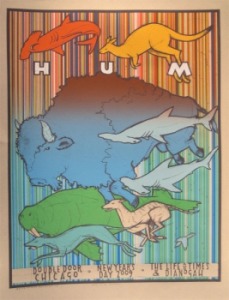
Considering that the only bands I see nowadays—seemingly, at least—are groups that I loved in high school (Polvo, Shudder to Think) that have reformed out of some combination of nostalgia and profit, adding Hum to that list shouldn’t be a huge surprise. Hum’s been doing these semi-reunions every two to three years since they officially went on hiatus with a New Year’s Eve show 12/31/1999. They played Furnacefest in 2003 (with a warm-up show in Champaign) and Rockfest in Champaign in 2005, so the two shows at the Double Door were right on schedule. The surprise, however, is that I was scheduled to be in Chicago for these performances. I had assumed that Hum would only play shows when I was firmly planted in the east coast, whether visiting family or moving there for graduate school. I was initially afraid that I’d missed my opportunity by waffling on the $65 New Year’s Eve show until it had sold out, but the addition of more manageable New Year’s Day show for $20 made my prior hesitation easier. I was going to see Hum for the first time in almost eleven years.
The only other time I saw Hum was at Irving Plaza in New York City in February of 1998 as a seventeen-year-old junior in high school. As we drove to the Double Door, my wife asked me what I thought of that show and I laughed, because it’s impossible to look back at that show with any semblance of a critical mindset. Getting to see my favorite band at seventeen was all shock and awe. Heroic Doses and Swervedriver opened up for Hum and I remember absolutely nothing about their sets. What I remember is the push of the billowing mosh pit, the thrill of hearing those songs live, the ringing in my ears from not wearing earplugs, and seeing Bush’s Gavin Rossdale and No Doubt’s Gwen Stefani as we waited outside of the club to meet the band. Tim Lash’s guitar tone? Matt Talbott’s live vocals? Bryan St. Pere’s fills? Beats me.
While I still count them as one of my favorite groups, it’s been years since I’ve listened to Hum almost exclusively. I’ll save the details of my full-blown Hum obsession and its passing for a pending article on You’d Prefer an Astronaut, but the short version is that I still listen to their last three albums from time to time, but not on a daily basis like I did in high school. (Sorry Fillet Show.) As frustrated as I was with the eleven-year wait, it did help my recharge my potential enthusiasm and/or nostalgia for the concert.
The openers for both shows were quite familiar for any Hum fan who kept track of their touring partners. Dianogah’s opening set displayed their progress since 1997’s As Seen From Above. Still channeling largely instrumental double-bass math-rock, Dianogah added some flair with female vocals on a few songs, accompanying guitar or keyboard on others, and a few aggressive songs that presumably were from their newest LP, the nigh-unpronounceable Qhnnnl. I’m tempted to pick that one up to bolster my copies of Battle Champions and the Team Dianogah 2 Swedish single, but I opted to pick up the Bird Machine posters for both evenings from poster guru and Dianogah bassist Jay Ryan.
As excited as I was for seeing Hum, I would have been just as psyched for a Shiner reunion (a group I saw eleven times in six cities, or, in other words, the anti-Hum), but catching Allen Epley’s The Life and Times again was a fine alternative. Their shoegaze-meets-math-rock aesthetic loses some detail in the live setting, but the songs from their forthcoming Tragic Boogie LP (coming out on Arena Rock Records in April) came across well. I missed hearing a few of my favorite songs from Suburban Hymns like “Mea Culpa,” “A Chorus of Crickets,” and “Muscle Cars” this time, but at least they played the excellent “The Sound of the Ground” from the Magician EP. Look for them on tour in the spring when their album comes out.
With a seemingly endless string of Rush songs between sets, I began to wonder if Hum was playing an elaborate joke on the audience. But once the smoke machine started up and the house lights dimmed down to a blue glow, Hum came out to enthusiastic applause and launched into “Isle of the Cheetah.” It didn’t take long for the first coordination hiccup to hit, but once the song’s intro passed and it hit overdrive, they were back on track. Tim Lash’s leads were spot-on in this song and throughout, and he even added some flourishes. Immediately I was struck by how metal the guitar tones sounded, especially Lash’s guitar, but that influence was always present during his tenure in the band. Everything else was as I remembered it: Talbott’s nerdy vocals bursting out with emotion on “The Pod,” Dimpsey’s solid bass lines, and Bryan St. Pere’s forceful drumming. I don’t remember Talbott being quite so funny at the Irving Plaza show, but the numerous Centaur shows I caught during college were as memorable for his stand-up bits as the actual songs.
The set represented their final three albums equally, with “Iron Clad Lou,” “Pewter,” “Shovel,” and “Winder” from Electra 2000, “The Pod,” “Stars,” “Suicide Machine,” “I’d Like Your Hair Long,” and “I Hate It Too” from YPAA, and “Isle of the Cheetah,” “Comin’ Home,” “Ms. Lazarus,” “Afternoon with the Axolotls,” and “Green to Me” from Downward Is Heavenward, plus the unreleased rocker “Inklings.” I was a bit surprised to hear the throat-scraping screams of “Pewter” and “Shovel” in concert, but the encore of “Winder” was an absolute thrill. I could gripe about “Little Dipper,” “Dreamboat,” “Pinch & Roll,” and “Diffuse” being absent from the set list, but the arc of the night worked well, with the main set ending with the extended outro jam on “I Hate It Too” (marred slightly by Bryan St. Pere losing his place for a few bars) and the encore ending with a rock-solid rendition of “I’d Like Your Hair Long.”
The best part of the evening was remembering just how great those songs are, whether it was the thunderous drum salvo that launches “Iron Clad Lou” into gear, the churning bass line of “Winder,” the guitar coloring for the mid-tempo “Suicide Machine,” the quiet intro of “I Hate It Too,” or the Cadillac-selling riff of “Stars.” Talbott’s lyrics are still wonderful, especially on the You’d Prefer an Astronaut, and it’s easy to overlook a few musical missteps along the way with that set list. Unlike some of the other reunited bands that I’ve seen, Hum never went away for long enough to forget the muscle memory of how to perform those songs or to lose the passion for playing them, so they’re essentially the same band put into cryogenic freezing.
It’s still somewhat astonishing that I finally made it to one of these shows. While I’d be thrilled if Hum released new music or at least recorded a studio version of “Inklings” and put it out as a single, the odds of either of those things happening are nil, so I’m glad that I could add something to my lingering super-fandom. I’ll just have to remember to be in Illinois in 2011.
|
|