I'm starting a new feature called The Haul in 2009 in which I document all of the music I purchase during the year. It should help me keep Record Collection Reconciliation alive with my already existing records, which was the original intent, and help me keep track of just how much music I purchase in a calendar year. (Must block access of this meme from my wife.) While the following records won’t count for the 2009 tally, I’d feel amiss if I visited Amoeba Records in Los Angeles (which I did two weeks ago) and didn’t recap my finds. Even though I’d tempered my expectations for visiting Amoeba, it was hard not to be excited to enter such a huge record store and then feel a bit disappointed when I encountered the picked-over stock. Nearly every artist I looked for had their own plastic divider but no LPs to earn it. Granted, I didn’t have the necessary time—a half day, perhaps—to fully go through all of their seven-inches and their dollar-bins, but my educated guess is that their employees and patrons don’t let too many great finds slip through the cracks for long. I still need to go to the more heralded Amoeba locations in San Francisco with a weekend to kill, but that’ll have to wait for another cross-country flight.
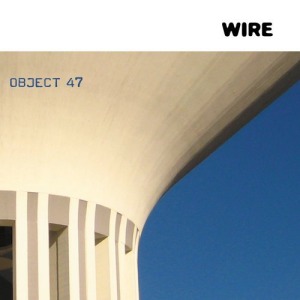
Wire - Object 47 2LP: While this album was a slight let-down after the excellent Read & Burn 3 EP, my Wire fandom compelled me to buy this 2LP package that contains both releases. If the entire album was as good as its bookends—the overwhelmingly catchy “One of Us” and the thrashing “All Fours”—I’d sing a different story, perhaps one about how revitalized they are after the departure of Bruce Gilbert, but the blunt truth is that Object 47 is somewhat more listenable than Send, but far less challenging.
Matthew Robert Cooper - Miniatures LP: My copy of the Eluvium box set should arrive shortly into the new year, but it does not contain a copy of Cooper’s “solo” debut from this year, which I’d put off mail-ordering direct from Gaarden Records. I assume that it was grossly overpriced at $20, but I opted to buy it anyway since I’d never seen it in a store. Amoeba was exceptionally good at having recent releases in stock, even if they were a buck or two more expensive than I expected.
…And You Will Know Us by the Trail of Dead - …And You Will Know Us by the Trail of Dead LP: After trying out the Festival Thyme EP, I found myself revisiting some of Trail of Dead’s earlier songs. I realized just how good the lengthy, drifting Jason Reese songs like “Novena Without Faith” and “When We Begin to Steal” from their self-titled debut were. Even though it was released on the now-defunct Trance Syndicate imprint, it doesn’t look like this LP is particularly hard to come by, but I was still excited to see it. I’d rather pick up old Trail of Dead albums than new ones.
Mekons – I Love Mekons LP: It’s frustrating when the main Mekons LP that I see (Mekons Rock ‘n’ Roll) is one that I purchased on eBay earlier in this year, but I was fortunate to also find I Love Mekons at Amoeba for $7.99. I haven’t listened to it yet, but I’m willing to trust most albums that they put out between 1985 and 1995, unless it’s Mekons Teen Pop or Hitler Loves Mekons. (I lie; I’d buy those if they existed.)
M83 – Run Into Flowers LP: Despite their presence on year-end album lists, M83 works best as a singles band and “Run Into Flowers” was their first great single. The three remixes on this LP are all excellent, taking different approaches (glitch-pop, cresting shoegaze, vaguely hip-hop) to reworking the song. If only they’d put the three or four good songs from Saturdays = Youth on a 12”.
What I Left Behind: I mainly passed on new LPs that I thought I could find at Newbury Comics or order from Parasol, like Gregor Samsa’s pricey 2LP for Rest and the reissue of Low’s Songs for a Dead Pilot EP, but I think there were a few other notable declines. Rapeman’s album and EP were both there, although neither is particularly hard to track down, and an EP for the Mekons’ “Empire of the Senseless” was there, although a bit too expensive for my tastes. I was surprised to see a copy of the Comsat Angels’ Sleep No More on LP for $4.99, but I already bought mine from Mystery Train earlier this year.
Next up are visits to two Reckless Records locations in Chicago later this week. I am foaming at the mouth in anticipation.
|
|
2008 has been a disappointment musically, something I’ve noticed as I’ve struggled to cull together twenty solid candidates for my usual year-end list. I’ve tried my best to stay on top of things, as documented by this list of some of the albums I’ve checked out recently, but it’s hard to say whether many of these will make the final list.

…And You Will Know Us by the Trail of Dead - Festival Thyme EP: To say that the Trail of Dead had lost the plot since 2002’s excellent Source Tags & Codes would be a vast understatement. I remember listening to Worlds Apart and thinking “This has to click at some point, right?” before recognizing that it had three good songs, tops, and suffered from an overblown rock opera fetish. (Is there any other kind of rock opera fetish?) I don’t think I’ve ever heard So Divided in its entirety; simply nothing that I’ve heard from that record appealed to me in the slightest, not even the cred-grab of the Guided by Voices cover. Yet I checked out the ill-titled Festival Thyme EP out of morbid curiosity and was marginally encouraged by the results. They’re still appropriating too much 1970s prog-rock without the requisite spirit of adventure or the sense of danger of their own early material, but at least these songs have melodies and some forward momentum. “Bells of Creation” backed with “Inland Sea” would make a good single, although the four-song picture disc ten-inch is a reasonable alternative if you’re fond of Warcraft. It’s no surprise that the nasal whine of Conrad Keely has wholly supplanted the evil Bono pipes of Jason Reece and the faux-British sneer of former bassist Neil Busch, but I still long for those other voices. Festival Thyme is a minor step in the right direction, but I don’t know if they’ll ever equal the combination of melodic indie rock and barely controlled abandon from their self-titled debut, Madonna, and Source Tags & Codes.
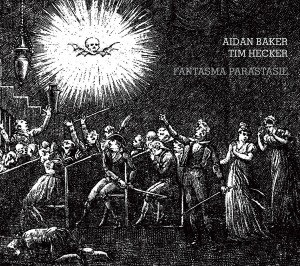
Aidan Baker & Tim Hecker - Fantasma Parastasie: Nadja’s Radiance of Shadows made my top twenty list for 2007, but none of their 2008 releases (that I’ve heard, at least) has equaled the scope or depth of that release. It’s not for lack of trying, with eight releases coming out during this calendar year (including two following their strange penchant for re-recording their old albums), but Radiance of Shadows’ doom-metal Codeine approach still lingers with me. As if those eight releases weren’t enough, Nadja guitarist Aidan Baker also collaborated with fellow Canadian Tim Hecker for Fantasma Parastasie, which combines the electronic drones of Hecker’s excellent 2006 album Harmony in Ultraviolet with Baker’s guitar feedback to great effect. There are hints of Nadja’s signature menace on “Skeletal Dane,” but the crushing waves of distortion that highlight Thaumogenesis and Radiance of Shadows are nowhere to be found. The balance between Baker and Hecker is remarkable; some beautiful moments peak out from the haze of Baker’s guitar during “Dream of the Nightmare” and “Auditory Spirits.” It’s a solid listen, but whether it measures up to the evocative thunder of Radiance of Shadows has yet to be determined.
Benoît Pioulard - Temper: I fully expected this album to be one of my favorites of the year, given my ongoing fondness for his 2006 album Précis, but I keep coming away from it feeling underwhelmed. Sure, “Brown Bess” and “The Loom Pedal” equal the previous album’s highlights (“Triggering Back,” “Sous La Plage” and “Ash into the Sky”), but the novelty of his formula—bedroom singer/songwriter material treated with IDM textures alternating with sound collages—isn’t delivering the same punch this time around, despite more fleshed-out structures for the “real” songs. It’s still plausible that I’ll put it on and it’ll hit me differently, but I’m beginning to doubt the likelihood of that happening. Don’t let this stop you from picking up the 2LP set of Précis and Temper, which invalidated my begrudging CD purchase of the former upon its release.
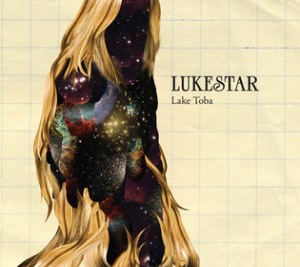
Lukestar - Lake Toba: I heard “White Shade” on the Flameshovel site and then tracked down their web site since I couldn’t determine if it was a male vocalist or not from my brief, verse-only spin. After finding their astonishing promotional photo (there’s a dead ringer for Jim Carrey in this band, for starters) and confirming my suspicion of “high-pitched male vocalist,” I watched the video for “White Shade” on YouTube and tracked down the Norwegian group's newest album. I can’t say that I understand the post-rock tag that’s floating around in reviews and press clippings, since they’re basically doing catchy, slightly off-kilter indie rock with falsetto vocals—i.e., something that fits in perfectly on Flameshovel, their American label. Closer “Peregrin” and the aforementioned “White Shade” are highlights, but the falsetto wears thin on some of the poppier tracks.
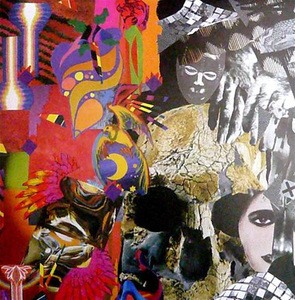
Pocahaunted - Chains: I keep wavering on whether I enjoy the droning, pseudo-Sioux psych-chants of Pocahaunted or whether I simply lose focus after fifteen minutes (approximately a song and a half) of Chains and tune it out. Maybe that has to do with my preference of “The Weight” and “No More Women” over the final two songs on the album, but the intensity of the former and the drifting swells of the latter are compelling enough. The title track is a vague cover of Fleetwood Mac’s “The Chain,” and while I prefer the Silkworm’s gang-vocals version, I’m impressed that I could recognize the original song—its bass line, at least—underneath all the gauze. I don’t have enough of a penchant for psych-rock to explore Pocahaunted’s growing discography or the recreational drug habit to fully appreciate it, but Chains is a good sampler for anyone who can stomach the idea of listening to “The Olsen twins of drone.”

Marnie Stern - This Is It and I Am It…: I view making it through almost all of this record without itching to stop it—after several failed attempts—as a monumental achievement, one I’m unlikely to repeat. This Is It… is nowhere near as spazzy or Deerhoof-derived as her debut, which is a huge step in the right direction, but Stern’s still a highly idiosyncratic artist and too many of those idiosyncrasies irk the hell out of me. She’s made significant progress with her vocal melodies, but it’s easy to overdose on chirpy exuberance. Similar to my dreams of In Advance of the Broken Arm magically reappearing as a four-song EP, I’ll condense This Is It… to “Ruler,” “Transformer,” “The Crippled Jazzer,” “The Package Is Wrapped,” and the verses of “The Devil Is in the Details.” I can’t bring myself to say that I’d prefer an album of comparably more straightforward songs like “Every Single Line Means Something,” since I can appreciate what Stern’s doing in the songs I didn’t mention, but it’s a clear case of appreciation trumping enjoyment. And since I’m not getting paid to review records, I’ll stick with enjoyment and the pared-down LPs.
|

Although I’d prefer news of a follow-up to their outstanding 2006 album Working Nine to Wolf, two members of Pinebender have solo projects coming to fruition, neither of which channel their musical day job’s penchant for slow, epic noise-rock. (Think Dinosaur Jr. 45s played at 33rpm.) Guitarist/vocalist Chris Hansen is moonlighting as Paletazo, with four songs up on his MySpace page and a show on November 10th at Schuba’s in Chicago. Paletazo confirms my suspicion about Pinebender’s songs: Chris Hansen’s songwriting is solid enough to stand up even without the threat of guitar bluster. (See the thoroughly quiet “Peterson Home” from their 2003 album The High Price of Living Too Long with a Single Dream for concrete evidence.) “Nothing Wrong with Love” in particular is worth a few spins. No word of any pending record release.
Meanwhile, guitarist Stephen Howard steps into the frontman role for Quieting Syrup, best described as slowed-down bedroom-pop for the bedridden. Considering that he started out as Pinebender’s drummer and took over the role of baritone guitarist after Matt Clark left for Iowa, this change in roles isn’t surprising. His debut, Songs About a Sick Boy, will be released soon on Lovitt Records. It’s listed on Lovitt’s site, but I don’t think it’s available to preorder yet.
As if his solo debut wasn’t enough to keep him busy, Howard is also now a member of Tight Phantomz, a 70s-hard-rock–informed group fronted by former Lustre King guitarist Mike Lust and supported by former Hurl, Taking Pictures, Milemarker, Thee Speaking Canaries (etc.) drummer Noah Leger. They haven’t released anything since a 2005 EP, but I’ll probably check out their next album if Howard’s on board.
While I’m all for Hansen and Howard spreading their musical wings, I hope this trend doesn’t slow the already glacial Pinebender release schedule beyond the typical three-to-four year period.
|
I’ve done a good job sticking to my wait-for-the-vinyl policy since I adopted it a few years ago, but one artist that constantly tempted me to break ranks and buy CDs is Eluvium. I kept hearing rumblings about a possible vinyl box set from Temporary Residence Limited, but his catalog—especially the layered brilliance of 2005’s Talk Amongst the Trees, the solo piano of 2004’s An Accidental Memory in the Case of Death, and the symphonic leanings of 2007’s Copia—is so consistently great that I felt guilty for only owning his split LP with Jesu, nearly caving to pick up those releases. (I still haven’t picked up Miniatures, Matthew Robert Cooper’s first release under his actual name, but I’ll order it from Gaarden Records sooner or later.)
Thankfully TRL came through with that proposed vinyl box set, setting up pre-orders at the beginning of the month for a seven LP book that should be delivered before Christmas. Dropping $120 on the vast majority of Eluvium’s catalog (minus that split LP with Jesu, since it already appeared on vinyl, and Miniatures) made my stomach turn as I processed my pre-order, but at least I won’t feel guilty when I see CD copies of Talk Amongst the Trees at Newbury Comics. Given that this is a limited edition of 1000 and TRL followers hoard vinyl like gemstones (I’ve seen the 2LP of Tarentel’s From Bone to Satellite near $100 on eBay), I anticipate it selling out before long. Here are the details of the pressing:
Each record is packaged in its own full-color jacket, featuring exquisite new artwork from Jeannie Lynn Paske, drawn exclusively for this set. The seven jackets are then bound into a beautiful dark green hardbound, linen-cover book, with metallic gold foil stamping and embossed text on the spine, and a beautiful full-color print embossed into the front cover. The inside front cover includes a removable old-fashioned library card, complete with personalized signatures from the artists and designers involved in the creation of this package. The final name on the library card will belong to the purchaser, hand-written and dated when purchased. The inside back cover includes a mind-blowing 12x36" foldout double-sided full-color poster insert, featuring more artwork from Ms. Paske.
Other notes gleaned from the TRL forum thread on the release: the individual albums will not get separate vinyl pressings in the future; each record will be 140 grams, since 180 gram LPs would rip through the packaging; “Behind Your Trouble,” the song from Eluvium’s Travels in Constants EP, was too long to fit on a side of vinyl and was not included; and TRL has a miniscule profit margin on this release. I wish more bands and labels rewarded fans’ patience this well.
|
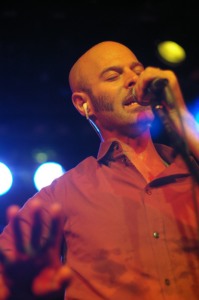
The only time I’d seen Shudder to Think or, more specifically, a member of Shudder to Think was at a Girls Against Boys show at the Mercury Lounge in early 1999. I saw Craig Wedren at the bar while on my way to the merch table and stopped for a second in a “Should I talk to you or leave you alone?” moment of panic. Being an awe-struck eighteen-year-old at the time of show, I opted for the latter option. I’ve occasionally regretted that decision, knowing that whatever I would’ve said—“Pony Express Record is one of my favorite records of all time! Could you make a sequel to it?”—would be an embarrassing admission from my inner fanboy, but other times I’m happy that I left Wedren in some higher rock star altitude.
The idea of a Shudder to Think reunion was never outrageous—Wedren and Larson are still touring musicians, the break-up wasn’t acrimonious, their best music isn’t dated—but my excitement was dependent upon the reunion’s focus. I admittedly lost some interest with 50,000 B.C., which I haven’t pulled out in years, and only dabbled in their soundtrack work. Their post-STT work is similarly disappointing—only a few songs from Wedren’s tepid Lapland and half of Larson’s Hot One debut have grabbed my attention. Clearly, their musical focus has changed since the epochal Pony Express Record, so which Shudder to Think would I get?
The opening band helped answer this question. I hadn’t previously heard Pattern Is Movement, but add them to this Spin article tracing the influence of Shudder to Think in modern and/or independent rock. (Deftones? I thought Chino pulled all of his effeminate vocal styles from Smiths records.) The Dead Science’s broken glam/goth-rock is the closest relative on that list to PIM’s marriage of operatic vocals, vintage organs, choir samples, and powerhouse drumming, but how exactly they seem influenced by STT differs. Whereas The Dead Science—the one time I saw them, at least—extracts Craig Wedren’s vocal register and some of their guitar dramatics, PIM pulls from the most outré moments on Pony Express Record, like the seemingly shapeless middle section of “Trackstar.” Even with busy, forceful drumming, the vocals floated above the arrangements in frequently incomprehensible operatic phrases. It’s hardly a surprise, then, that the genial members couldn’t quite induce a convincing sing-along on a cover of Radiohead’s “Everything in Its Right Place” or their own set closer. I respect the originality of Pattern Is Movement’s music (and their pro neck-beards), but like The Dead Science before them, it’s another instance of pulling the stranger elements from Shudder to Think and leaving the hooks behind.
Stealing a peak at Shudder to Think’s set list for the evening eased most of my fears—it would not be an evening of songs from High Art. Only one soundtrack song (“The Ballad of Maxwell Demon”) and two from 50,000 B.C. (“Call of the Playground” and “The Man Who Rolls,” which was cut), but six from Pony Express Record (“Hit Liquor,” “Gang of $,” “9 Fingers on You,” “Earthquakes Come Home,” “X-French Tee Shirt,” and “No Rm. 9, Kentucky”), four from Get Your Goat (“Love Catastrophe,” “Shake Your Halo Down,” “Pebbles,” and “She Wears He-Harem”), four from Funeral at the Movies (“Chocolate,” “Day Ditty,” “Lies about the Sky,” and “Red House”), and three from Ten Spot (“Rag,” “Jade-Dust Eyes,” and “About Three Dreams”). I typically don’t stress too much about set lists, but aside from wanting to hear the rest of Pony Express Record—I would’ve paid another $25 to hear “Chakka,” “Kissi Penny,” “Sweet Year Old,” and “Trackstar” as a second encore—their ability to recognize the best songs from their back catalog is impressive. I yelled for “Chakka,” but as I learned at the Juno reunion shows, if they didn’t rehearse a song, they’re almost certainly not going to play it, especially with new members in tow.
The Boston show marked the end of this “version” of the reunited Shudder to Think, with 50,000 B.C. drummer Kevin March giving way to Pony Express’s Adam Wade for their upcoming west Coast swing. Original bassist Stuart Hill opted out of the reunion, so Jesse Krakow was recruited as a replacement along with guitarist Mark Watrous. I understand the reticence involving bands reuniting with replacement members, but I’m happy with Wedren, Larson, and either March or Wade (although I would’ve preferred Wade, since he wrote the drum parts for Pony Express Record). While there were some telltale signs that this was, in fact, a reunion concert—Craig Wedren’s earpiece for the first half of their set, Wedren only playing guitar on every other song, Nathan Larson’s difficulties with his amp, the rhythm section getting a bit disjointed near the end of “X-French Tee Shirt,” those two guys onstage that I’d never seen before—Wedren’s stage presence and Larson’s guitar more than made up for any hiccups.
Whenever he wasn’t tethered to a guitar, Wedren hopped around the stage with surprising energy. He didn’t appear to have aged a day from the “X-French” video shoot. Larson, looking less like a glam-rock star and more like a communist insurgent, soldiered through those technical difficulties and sounded fantastic on the strafing lead guitar of “Gang of $.” Most of the stage banter was light, with Wedren trying to recall which girls inspired his earlier songs or joking that McCain was behind Larson’s amp difficulties. (Even with this approachable banter, I still left the club without haranguing Wedren with my decade-old anecdote. I’d rather maintain some of that awe, I suppose.) Wedren commented before “No Rm. 9, Kentucky” that the set felt very “punk rock,” an accurate statement that the dynamic “Kentucky” briefly refuted, but the low-key encore finished off the change, closing the night with the blissed-out “Day Ditty.”
The overall performance sat closer to the rejuvenated Polvo concert from this summer than the going-through-the-motions Pixies concert I attended back in 2004, but unlike Polvo, Shudder to Think didn’t revise their old songs or play new ones. They played their best songs and played them well, which was enough for the obsessive fans in the audience, but not enough for me to get my hopes up about a permanent reunion with new material (which Pattern Is Movement seemed to imply might happen, but Shudder to Think themselves did not mention).
It’s unfortunate, given the strength of the performance, that the Paradise didn’t look remotely full until Shudder to Think went on, and even then it did not appear to be a sellout. I could chalk some of this issue up to evening’s competition, since Les Savy Fav were playing over at the Middle East downstairs, the New Year was at the Middle East upstairs, the Feelies’ reunion show at the Roxy, and the Red Sox playoff game on television, but the truth might just be that Shudder to Think’s core fanbase hasn’t expanded like other reunited bands’ fanbases (Slint, Mission of Burma) have. Was this reunion too early? Did 50,000 B.C. turn off too many fans? Do Pony Express Record and their Dischord LPs not carry the proper cachet in today’s hipster enclaves? I overheard enough stories of people driving from nearby states or flying (from Scotland!) to know that the true devotees still care, but I’d hoped that more people had developed my awe of Shudder to Think since their initial demise. Even with that Spin article tracing their influence, I can’t think of any recent bands that have pulled off Shudder to Think’s blend of pop instincts and avant-garde tendencies in such an approachable package.
|
Ghost Wars, Arlie Carstens' post-Juno project with Eric Fisher of Damien Jurado's band, added two more songs to its MySpace page, bringing the grand total to six. The newest entries are "Divide and Conquer," a Hüsker Dü cover that “we slowed it down till it sounds like a Nick Drake song,” and "The Conductor," a lingering piano ballad. To those scoring at home, two more songs recallling the spacious feel of Juno's "The Trail of Your Blood in the Snow" and Talk Talk's Laughing Stock, like previous Ghost Wars songs "Virginia Long Exhale" and "Lay Down Your Weapons." If you're hoping for a Juno-esque guitar epic, have patience: I understand that more guitar-centric tracks wait in the wings.
If this glacial release of music seems cruel, here's a brief recap of why there isn't a tangible copy of Ghost Wars music in my (or your) hands right now: Carstens and Fisher had recorded the album on Fisher's laptop, which was stolen from him at a Jurado show in Toronto. The back-up external hard drive had data corruption issues, leaving them with raw, unorganized data. (Whether I would buy an album of such sounds is debatable.) Given that the project involves a wide variety of collaborators in a number of locales, the process of re-recoding this material has been arduous, but Carstens and company have been back in the studio several times since the hard drive disaster.
I'm still holding out a spot on my year-end list—whichever year it may be—for the (hopefully) inevitable Ghost Wars LP, given the strength of the available tracks, but I do wonder how much longer I'll have to wait.
|
|
From the three weeks of a temporary TextPattern design, you’ve probably guessed that my host transfer wasn’t entirely successful. Short version: be very, very thorough extracting your database before changing hosts. The new site design is now up—hopefully it’s an improvement—but much of the work has yet to be done. Over the next week or two I’ll be tweaking the new design, adding functionality (RSS feed), fixing the site’s infrastructure by setting clear sections and categories, adding images (album covers, book covers, etc.) to existing posts, and streamlining the site’s navigation. Once I resume posting, I’ll introduce a number of new memes that I’ve been working on. I’m excited about moving forward with what will essentially be New Artillery 2.0.
Please excuse any hiccups you may encounter during this process. I’d put up an animated gif of a construction worker, but it would go against my overall goal of modernizing this site.
|
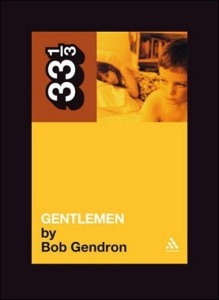
In the growing stack of 33 1/3 books sitting on my desk hutch, five of the albums covered made my Record Per Year list (the Rolling Stones’ Exile on Main Street and David Bowie’s Low might’ve joined this list if I had been born a decade earlier). Yet the Afghan Whigs’ Gentlemen sticks out as the album I was most excited to read a book about, owing to a combination of the Whigs’ comparatively relative fame (or perhaps, more appropriately, infamy), the deep-rooted emotional attachment I have for the record, and the strange circumstances involving my acquisition of a copy. I was a freshman in high school when I heard “Debonair” and “Gentlemen” on WDST, Radio Woodstock, but it took one of my friends mistakenly getting a copy of Gentlemen from BMG Music Club and then trading it to me for five bucks and an extra Obi-Wan Kenobi action figure for the album to make it into my hands. Trading a youthful artifact for Greg Dulli’s seedy, adult world and unrelenting self-flagellation seems like the devil’s own recipe for adolescent disaster, but even without a trace of the album’s sex and drugs, I was able to transfix my high school alienation to Gentlemen’s post-graduate despair.
I knew that Bob Gendron—a writer for the Chicago Tribune and editor of The Absolute Sound and Playback—was tabbed to write a 33 1/3 volume on Gentlemen, but its appearance in the Harvard Book Store took me by surprise. Unlike the lengthy delay for Mike McGonigal’s Loveless (which hardly lived up to the wait), Gentlemen snuck up on me and did not disappoint. Like the other volumes in the series that I’d recommend without hesitation—Michael T. Fournier’s Double Nickels on the Dime and Hugo Wilcken’s Low—I tore through the 114 page volume in a single sitting and immediately pulled out the album for a dedicated listen.
Gentlemen falls in line with more traditional 33 1/3 entries, covering the band’s back story, the album’s creation, the critical response, and the enduring legacy in lieu of a central conceit like Joe Pernice’s coming-of-age novella Meat Is Murder or Kate Schatz’s presumably catharsis-driven Rid of Me: A Story, but Dulli’s relationship trauma and coke binges hardly require fictional ballast. Solid coverage is given to the group’s early days on Sub Pop, but Gentlemen wouldn’t exist without the conscious decision to separate themselves from their flannel-clad peers and the lingering stain of the “soul grunge” label. Yet the core of the book comes with the investigation of Dulli’s relationship with Kris, which prompted the album’s conceptual focus, and the subsequent substance abuse. One night during the recording session in Memphis, a local stripper that Dulli brought back to the studio witnessed the coke-addled singer rip through final takes of five of the album’s songs. While the titillation of Dulli’s infidelities and drug usage reminds me of how entertaining the Replacements and Butthole Surfers chapters of Michael Azerrard’s Our Band Could Be Your Life were in comparison to chapters on preferred acts like Dinosaur Jr. and Mission of Burma, Gendron’s discussion of the group’s soul influences and fallout with Elektra Records is just as memorable. I had no idea that Terry Tolkin, the A&R man at Elektra, was partially behind the infamous Fat Greg Dulli fanzine, but this post at A Deeper Shade of Soul helps elucidate that particular topic with further comments from Dulli’s close friend, actor Donal Logue. (I remember the two of them hosting 120 Minutes and reenacting scenes from their favorite movies—I could only wonder if dudes got much cooler than them.)
My quibbles are minor. The opening of the book suffers from an awkward transition from Dulli’s near-death experience following an attack in an Austin night club in 1998 to a description of Dulli’s gallivanting playboy ways, but I prefer the former event being covered at the start of the book as opposed to the end. Gendron’s occasional dismissals of recent music trends might date the book, like a mention of the Juno soundtrack as an example of the lingering prudishness of indie/alternative rock, but I can’t harbor resentment about Gendron’s longing for the days of LP artwork in favor of iTunes thumbnails given my overwhelming preference for vinyl. The dismissal of Black Love in two short paragraphs as a bloated album choosing instrumental glut over clear melodies underscores Gendron’s clear preference for its predecessor, but I have little doubt that Black Love is the second-best Whigs album. My biggest complaint is actually a compliment in disguise: I simply wanted more.
Reading that Gentlemen sold only 160,000 copies and never cracked the Billboard Top 200 made me feel lucky to own a book on such a personal favorite. He also mentioned that few publications put the album in their top 10 lists for 1993 and Pitchfork’s Top 100 of the 1990s lacks even a mention of the group, but those critical blind spots made me proud to mention that Gentlemen was #33 in the Signal Drench 100 of the 1990s. (It would rank even higher in my personal list.) The Afghan Whigs have been a love-’em-or-hate-’em proposition, but those in the former camp would be wise to track down Gendron’s Gentlemen.
|
46. Herbie Hancock – “Autodrive” b/w “Chameleon” - CBS, 1983
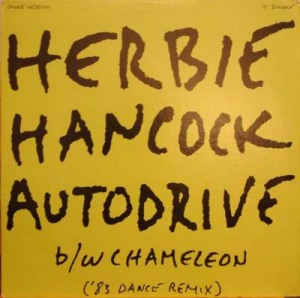
Why I Bought It: I’m primarily familiar with Herbie Hancock’s early 1970s albums Head Hunters and Thrust, which are eminently regarded, highly enjoyable jazz fusion albums with completely amazing album covers. This 12-inch single features one song from Hancock’s 1983 electro-jazz album Future Shock and a remix of “Chameleon” from Head Hunters, bridging the gap between these two eras. I’m wary of the concept of electro-jazz, especially given my discussion of dated 1980s production techniques in my last post about the Art of Noise, but it’s entirely possible that Hancock could avoid those stumbles.
Verdict: Herbie Hancock is not kidding with this electro-jazz concept. Between the sampled shouts, the constant laser gun blasts, and the tinny electronic drum kit, he’s loaded “Autodrive” with enough 1980s production clichés to make Wang Chung jealous. Sure, a grand piano makes an appearance to remind listeners of Hancock’s roots, but I can understand why “Rockit” from Future Shock was an MTV success; this song sounds like early 1980s MTV new wave. Hancock clearly has fun with these tropes, so even though the individual sounds have aged poorly, the song still has a playful, light air that almost encourages such aging. As for the flip side, I’ll have to consult the Head Hunters version to confirm this suspicion, but the remix of “Chameleon” doesn’t seem drastically different. The comparative subtlety of this track works well, since adding sampled shouts to bring an older piece up to date would have been comical instead of inspired, but it’s ultimately unlikely to steer me away from Head Hunters and toward Future Shock.
47. Unwound - New Plastic Ideas - Kill Rock Stars, 1994
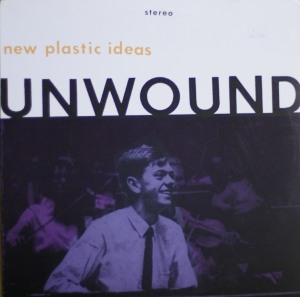
Why I Bought It: I first encountered Unwound’s brand of Sonic Youth–informed punk rock with either “Dragnalus” on the soundtrack to Half-Cocked or their 1996 LP Repetition, but I’ve primarily stuck with Repetition and the relative bookends of their output (barring their self-titled debut), 1993’s abrasive Fake Train and their 2001 swansong double album Leaves Turn Inside You. Unwound’s signature aggressive detachment, honed to a cool perfection on “Corpse Pose,” pulls me in and keeps me at bay. With few exceptions—the lovely “Lady Elect,” the aching “October All Over”—my relationship with Unwound is one of respect, not affection. But including their 1998 LP Challenge for a Civilized Society in a round of iPod Chicanery underscored their almost clinical level of effectiveness when they’re on, which in the case of Challenge is about fifty percent, which opened me up to grabbing one of their other albums.
Verdict: New Plastic Ideas strikes a welcome balance between the unhinged Fake Train and the machine-like efficiency of Repetition. Although the album lacks the polish of Repetition and the explorative nerve of Leaves Turn Inside You, there’s a refreshing consistency to these nine songs their later records sacrificed in the favor of ruthless experimentation. The restrained aggression of the lengthy instrumental “Abstraktions,” the mock-yearning of “Envelope,” and the dynamic peaks of “Arboretum” stand out, but each of the songs merits a mention. I need to listen to Leaves Turn Inside You again, but it’s entirely possible that New Plastic Ideals vaulted to the position of my favorite Unwound release with one listen.
48. Mekons - So Good It Hurts - Cooking Vinyl, 1988

Why I Bought It: When I purchased So Good It Hurts a year ago I only had vague notions of the Mekons’ alt-country, informed primarily by Touch & Go Records catalogs. After checking out the esteemed Fear & Whiskey and Mekons Rock ‘n’ Roll in my continuing efforts to expand my base of 1980s independent rock, it’s time to stop putting off listening to this album.
Verdict: My decision to hold off on listening to So Good It Hurts until I’d heard more typical Mekons records looks smart in retrospect. So Good It Hurts starts off auspiciously with the reggae-inflected “I’m Not Here (1967)” and incorporates more reggae, Cajun, and Celtic influences than expected. While it’s still a relatively solid album, such quasi-imperialist exploration deemphasizes the songwriting, leaving a few of the tracks to survive on egalitarian slogans. The title-citing “Fantastic Voyage” and the Sally Timms– sung “Dora” and “Heart of Stone” are the primary highlights, with the latter song sounding like a revitalized standard. So Good It Hurts could be a grower, but for now I’d like to focus on the Mekons’ alt-country efforts.
49. Count Basie - Basie Land - Verve, 1963

Why I Bought It: It’s a jazz record from the early 1960s released by Verve, I figured my wife, whose jazz preferences usually run closer to Oscar Peterson and Milt Jackson, would enjoy it, and it cost me all of $1.05. Naturally, I choose to listen to it when my wife is out of town.
Verdict: As someone who’s primarily delved into bop and fusion, Count Basie’s enthusiastic brand of swing jazz is a significant change of pace. The title track opens the LP with a big band–¬level of energy and “a cookin’ solo by tenorman Frank Foster,” but I prefer the slower pacing of the three tracks that follow it. “Instant Blues” is an apt title for the final song on side A. Most of side B returns to the pace of “Basie Land.” Basie Land is a nice diversion, but I doubt that big band/swing jazz is likely to gain a formidable presence in my record collection.
50. Gang of Four - Songs of the Free - Warner, 1982

Why I Bought It: When I finally bought Gang of Four’s classic Entertainment! I also picked up their next two albums, Solid Gold and Songs of the Free, not anticipating that their debut would refuse to budge from my turntable. From “Ether” to “Anthrax,” Entertainment!’s combination of minimal, razor-wire guitar phrases, funk- and dub-inspired bass lines, and Jon King’s remarkably catchy Marxist critique of British culture qualifies it with Wire’s Chairs Missing and Mission of Burma’s Vs. for my favorite post-punk LPs. (Entertainment! also dismantled my appreciation for recent groups like Q and Not U and Bloc Party that completely ape its dance-punk edicts.) As a cohesive distillation of their aims and sound, Entertainment! almost discourages a follow-up. Although a great record on its own accord, Solid Gold understandably can’t match its predecessor, suffering from an overly monochromatic palette. “What We All Want,” “Cheeseburger,” and “Outside the Trains Don’t Run on Time” are near equals of classics like “Return the Gift” and “5.45,” but the album lacks sustained brilliance. The prospect of Gang of Four’s slow descent into dance-punk with the emphasis heavy on the dance on Songs of the Free and Hard concerns me, but I’ve let the blurred screen capture on the cover of their third LP stare at me long enough.
Verdict: With original bassist Dave Allen departing for Shriekback, Gang of Four loses some of its rhythmic ingenuity. Replacement Sara Lee is capable, but lacks the signature touches that Allen brought to the first two LPs. Her background vocals are a bigger concern—their presence on “Call Me Up” and the single “I Love a Man in Uniform” may increase the group’s commercial appeal, but take away from the bite of King’s vocals and start the LP on a weak note. Thankfully, “We Live as We Dream, Alone,” “It’s Not Enough,” and “Life! It’s a Shame” close side A with a better combination of this new appeal and their old edge and “I Will Be a Good Boy” and “The History of the World” follow suit on side B. Yet the final two songs, “Muscle for Brains” and the near ballad “Of the Instant,” can’t keep up. (Typing out all of the album’s song titles is an amusing primer for their black-humored Marxism.)
Gang of Four’s nadir arrived with Hard—an album I won’t allow myself to purchase, even as my morbid curiosity grows—when drummer Hugo Burnham left and was replaced by a drum machine. Yet Songs of the Free sows the seeds for Hard’s treason. “I Love a Man in Uniform” is too sarcastic to be a pure sell-out single—“The girls they love to see you shoot”—but its pre-banning success encouraged the group to follow that blueprint, not the reenergized post-punk of “We Live as We Dream, Alone.” Songs of the Free takes one important step forward by losing the dry production of Solid Gold, but takes two steps backwards with its pop tropes and weaker bass lines.
|
41. The Art of Noise - (Who’s Afraid of?) The Art of Noise! - Island, 1984
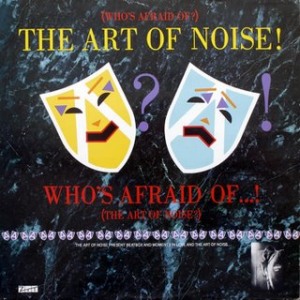
Why I Bought It: I came across the Art of Noise’s first two full-lengths in the dollar bin and, barring any particular knowledge of their catalog, opted to buy both of them rather than purchase only the lesser album. Typically I can pull enough information from the album sleeves to determine which album to grab, but the Art of Noise tries their damnedest to dodge specifics. My only prior knowledge about the band was that Anne Dudley collaborated with Killing Joke singer Jaz Coleman on the 1990 world music album Songs from the Victorious City, but despite my Killing Joke fandom, I do not own that release.
Verdict: With one prominent exception, (Who’s Afraid of?) The Art of Noise! suffers from the technological stamp of its era. Whereas early hip-hop can overcome reliance on rudimentary sampler techniques on the strength of the rapping, central placement of samplers and sequencers only highlights the Art of Noise’s compositional and melodic limitations. Not that AON is alone in this quandary—early Pop Will Eat Itself sounds just as dated, for example—but songs like “Beat Box (Diversion One)” and “Close (to the Edit)” depend on their production techniques sounding innovative to qualify as avant-garde experimentation. (At the very least, they do not feature Max Headroom.) “Close (to the Edit)” features an infuriatingly familiar sample that kept just out of memory until consulting Wikipedia; its stabbing sample was pulled from Yes’s “Owner of a Lonely Heart,” which AON member Trevor Horn produced. Anne Dudley’s fragmented vocals were later sampled for the Prodigy’s “Firestarter,” furthering this bizarre lineage. The samples featured on the other songs are harder to identify, but sound just as worn out twenty-four years later.
“Moments of Love” is the prominent exception to this rule. Presaging the late night grooves of DJ Shadow’s Endtroducing, the ten-minute highlight of the album tones down the jittery samples and trite melodies and focuses on supplementing its solid beat with tasteful keyboards and piano samples. Whereas a future generation of electronic artists could conceivably be inspired by songs like “Beat Box (Diversion One)” and “Close (to the Edit)” without actually sounding like them, the comparative restraint of “Moments of Love” allows it to act as both a structural guide and a sonic template for its progeny. The overall constitution of (Who’s Afraid of?) The Art of Noise! hardly encourages me to fast-track In Visible Silence in the RCR queue, but “Moments of Love” justify the two dollar expenditure on the albums.
42. Various Artists - Magic Eye Singles: Blue - Magic Eye, 1996
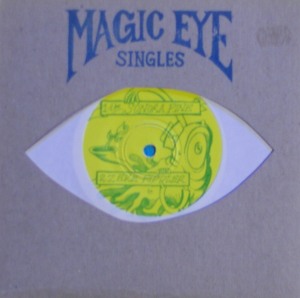
Why I Bought It: I have one other entry in the Magic Eye singles series, the aptly titled Gold (the titles are based on the vinyl color of the first pressing), which features Sonora Pine violinist Samara Lubelski, Team Xiaoping (Soo Young Park and William Shin of Seam), and Yesteryear. I bought that one a long, long time ago and can’t remember a damn thing about any of the tracks. This volume features the Sonora Pine, Zeke Fiddler, New Radiant Storm King, and Nord Express, so I grabbed it to hear the Sonora Pine song and to be able to say that I own something by New Radiant Storm King. The first single, which sadly I do not have, includes an exclusive June of 44 song named “1000 Paper Cranes.”
An added bonus, this single includes a photocopied postcard from David Berman of the Silver Jews. Responding to Magic Eye’s inquiry of his band’s availability for the series, Berman writes, “Thanks for asking but I think we’re monogamous with Drag City. Sure, we look at other labels on the street, every guy does, but we don’t sleep around. Good luck getting started.”
Verdict: Magic Eye states that their goal for the series was to “present unreleased songs that are different from those a band usually creates.” I read this tagline after listening to the Sonora Pine’s contribution, which features only Tara Jane O’Neil and Sean Meadows on guitar and the NYFD on sirens. This short bit of formless guitar squalor sounds nothing like either of the Sonora Pine’s albums, so they succeeded with the approach even if they failed to create an enjoyable song. The remaining three tracks are low-key attempts at stripped-down indie rock, with New Radiant Storm King taking an acoustic approach that saps their music of its energy. In a split-single context, I usually expect to gain a sense of what a band actually sounds like, so these four subpar tracks hardly justify subverting that proven approach.
43. Flying Nuns – “Disco Dancing Queen” b/w “Carousel of Freaks” - Summerville, 1992
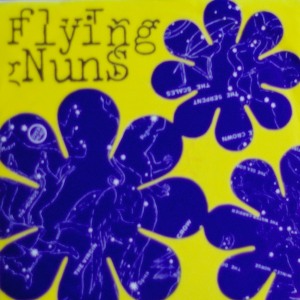
Why I Bought It: In a surprising coincidence, I listened to the Flying Nuns’ Pilot EP on my way up to Mystery Train Records in Gloucester today only to discover one of their early singles in a bin of mid-1990s indie rock seven-inches. I’d even thought about how little I’d listened to “Carousel of Freaks” (120 Minutes where are you?) since it falls on the less-played side B of the excellent Pilot EP, Flying Nuns’ only Matador release (they were dropped after the infusion of support from Capitol Records), and voila, it’s the flipside of this single. I’d never seen another non-Pilot release from the Flying Nuns before, although I should track down their 1998 self-titled EP and their 2002 full-length Everything’s Impossible Now These Days given my fondness for their catchy and meaty post-punk.
Verdict: These two songs feature a poppier side of Flying Nuns, with higher register vocals and less force from the rhythm section. “Disco Dancing Queen” has a predictable lightness given its title and the Galaxie 500-citing “Carousel of Freaks” fits with this mood better than the urgent “Submarine” or “Frank” would have. Now I just need to track down their later releases.
44. To Rococo Rot + D - “Smaller Listening” b/w “Numbers in Love” – Soul Static Sound, 2000
Why I Bought It: The graceful melody of “Die Dinge des Lebens” from To Rococo Rot’s 1999 full-length The Amateur View skips through my head every few months, sometimes inspired by its usage as the background for Björk’s “It’s in Our Hands” single. Yet I’ve never picked up any of their other material, despite seeing their collaboration with I-Sound (Music Is a Hungry Ghost) in used CD bins across the country.
Verdict: Whoops. Credit with Soul Static Sound abstract electronic artist D with the direction (or lack thereof) for these two songs, since these whirring, anti-melodic tracks couldn’t sound less like The Amateur View. Typically I’m embarrassed when I can’t tell the proper speed for a single, but these songs gave me no instrumental clues and aren’t interesting enough to merit concern. After flipping between 33 rpm and 45 rpm on both songs, I settled on the former speed since it annoyed me less. “Numbers in Love” is slightly better than “Smaller Listening,” but I can’t imagine pulling this one out of my singles box any time soon.
45. The C. S. Angels - Chasing Shadows - Island, 1986
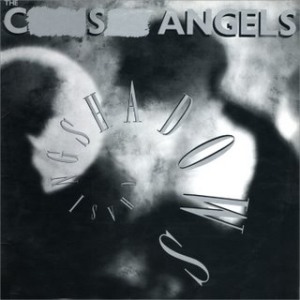
Why I Bought It: Silkworm’s cover of “Our Secret” led to my purchase of It’s History, a semi-legal reissue box set of the Comsat Angels’ Waiting for a Miracle, Sleep No More, and Fiction. Those three albums should be your starting point for the group, particularly the haunting post-punk of Sleep No More (which I finally tracked down on LP a few months ago), but former Silkworm member Joel R. L. Phelps’ cover of “Lost Continent” on Blackbird made me wonder about the group’s mid ’80s synth-pop phase. Phelps’ utmost sincerity and musical stoicism help his version of “Lost Continent” transcend its potentially cheesy lyrical content (“I’m looking for the same thing as you / The lost continent of love”), but tracking down the original on Audiogalaxy years ago only served to increase my appreciation of the cover. I couldn’t find the rest of Chasing Shadows online and stopped looking years ago after a picture disc for “Will You Stay Tonight” from 1983’s Land tempered my enthusiasm. Finding Chasing Shadows in the understock of Record Exchange in Salem, MA renewed my curiosity, so I snapped it up. After all, I own Killing Joke’s synth-driven albums—even the almost universally loathed Outside the Gate—so taking a chance on Chasing Shadows didn’t seem too preposterous.
Verdict: As it turns out, the Comsat Angels’ would-be sell-out synth-pop album is 1985’s 7 Day Weekend, given the inclusion of “I’m Falling” on the soundtrack to the Val Kilmer popcorn epic Real Genius. Chasing Shadows followed that record with a number of key changes—the group was forced to shorten their name in the United States to the C. S. Angels by a lawsuit from the Communications Satellite Corporation, dropped from Jive Records following a disappointing push to pop stardom with Land and 7 Day Weekend, and snapped up by Island Records at the behest of fan and snappy dresser Robert Palmer.
Yes, that Robert Palmer. He’s the album’s “executive producer” and contributes backing vocals for “You’ll Never Know.” Game over, right?
Not quite. Chasing Shadows lacks urgency and energy, but its dour moodiness does recall the pallor of their early post-punk records. The keyboards are minimal—hell, almost everything is minimal—and Robert Palmer’s guest vocal is barely noticeable. Whereas “Lost Continent” sounded out of place with regard to their earlier work, its teetering optimism is downright necessary on this album. Stephen Fellows seems worn down from the group’s troubles, singing “It’s a slave with a whip and it will beat you / Chasing shadows, running ragged, going round and round” on the title track, “I can’t wait for pennies from above” on “You’ll Never Know,” and “When every word fans the flames / All you can do is pray for rain” on “Pray for Rain.” Most of the eight songs linger past the five-minute mark and this nearly relentless melancholy grows tiresome by album’s end. Without the nervous twitches of early singles like “Independence Day” (although this is the Land version) or “Eye of the Lens” or the abbreviated hooks of their foray into synth-pop to vary the pace, the Comsat Angels get too bogged down in their atmosphere for their own good.
Chasing Shadows may not qualify as a true return to form, but it’s intriguing enough to justify the purchase. “The Thought that Counts,” “Lost Continent,” “Flying Dreams,” and “Pray for Rain” are individually solid blends of post-punk and moody new wave, but the band’s troubles fundamentally altered their constitution. The cover of the US version of Chasing Shadows has the “om” and the “at” in the band name scratched away, which seems apt given the missing elements of their sound.
|
|

