36. Prefab Sprout - Two Wheels Good - Epic, 1985
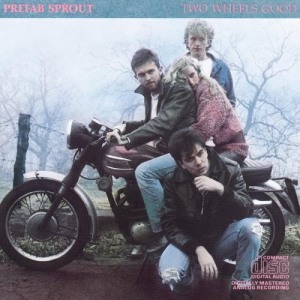
Why I Bought It: I saw Two Wheels Good (more widely known by its British name, Steve McQueen) in the dollar bin at Stereo Jack’s Records in Cambridge and vaguely recalled the band name, but I wasn’t buying enough to hit their $10 minimum purchase level for credit cards and only had enough cash to buy the soundtrack to This Is Spinal Tap and Rex’s self-titled debut. When I later learned that it’s a highly acclaimed recipient of a recent 2CD reissue, I made a mental note to venture back over there with a dollar and change in hand to pick it up. (Naturally, I ended up finding the Cocteau Twins’ Blue Bell Knoll and had to charge the purchase.)
Verdict: Due largely to Thomas Dolby’s mid-’80s production values, Two Wheels Good sounds more adult-contemporary pop than anticipated. The songs themselves, particularly closer “When the Angels,” occasionally transcend this sheen, but I found myself losing focus on what singer/songwriter Paddy McAloon is crooning about. Glancing over the lyrics on a Prefab Sprout fan site makes me want to give it another shot, but ironically—given the vinyl fetishism inherent to this project—it also makes me want to hear the acoustic bonus disc from the CD reissue.
37. Roxy Music - Stranded - ATCO, 1974
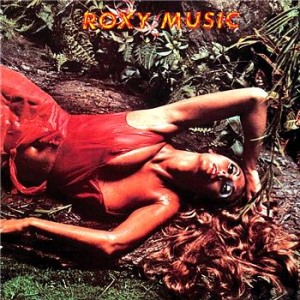
Why I Bought It: With all apologies to Stranded’s Playboy Playmate cover model Marilyn Cole, Brian Eno’s early solo work acted as my gateway to his previous band’s catalog, not Brian Ferry’s then-girlfriend. I included For Your Pleasure and Roxy Music in the last round of iPod Chicanery and the strength of those LPs prompted me to pick up Stranded at Mystery Train in Gloucester a few months back.
Verdict: Stranded was the first post-Eno Roxy Music LP, but it’s not lacking inspiration. The up-tempo single “Street Life,” the dramatic, multilingual “A Song for Europe,” and the dynamic “Mother of Pearl” are the clear highlights, but side B is consistently great. There’s a bit of drag on side A after “Street Life”—none of the other songs on that side match its energy—but I imagine that my pacing concerns will evaporate with a few more listens. Bryan Ferry’s croon carries a few of these songs, especially “A Song for Europe,” which whets my appetite for his 1985 solo LP Boys and Girls which awaits in the queue.
38. Stars of the Lid - Avec Laudenum - Kranky, 1999
Why I Bought It: After jumping in headfirst with last year’s excellent And Their Refinement of the Decline, I’ve been working my way backwards through Stars of the Lid’s catalog of ambient classical compositions. 2001’s 3LP epic The Tired Sounds of Stars of the Lid has lingered near my turntable since their astounding performance at the Museum of Fine Arts back in May, but I’ve had my eyes on the vinyl pressing of Avec Laudenum since Record Store Day. The closing of Newbury Comics’ Government Center location prompted a 50% off coupon for vinyl, which I was all too happy to use on Avec Laudenum. (There will soon be a new location in Quincy Market, one that hopefully rivals the Harvard Square and Newbury Street stores in focus and stock.) It will take longer for me to track down SOTL’s earlier LPs, since they’re no longer in print and fetching a premium on eBay, but nothing I’ve heard so far has discouraged me from the pursuit.
Verdict: Avec Laudenum sounds stripped-down in comparison to the two triple LPs that followed it, relying on arcing drones and drifting guitar chords in lieu of strings and brass. Yet this simplicity never seems lacking. Wiltzie and McBride utilize this sonic palette with the utmost subtlety on “Dust Breeding (1.316)+” and “I Will Surround You,” making it nearly impossible to extract particular elements from the flowing warmth of their drone symphonies. In the three-part “The Atomium,” the increasing presence of the guitars signals the concluding swell of the third section and then quickly vanishes, as if the ascent never occurred. When focusing on Stars of the Lid’s reverse artistic progression, it’s tempting to view Avec Laudenum’s soothing minimalism as an appetizer for grander ambience of Tired Sound of Stars of the Lid and And Their Refinement of the Decline. But Avec Laudenum, a five-song LP that comes across as two distinct, ponderous movements, deserves a better fate than to be considered a warm-up lap.
39. Pat Metheny - 80/81 - ECM, 1981
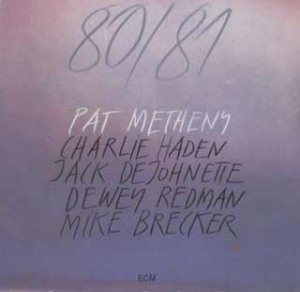
Why I Bought It: Pat Metheny’s involvement in Steve Reich’s Electric Counterpoint and Ornette Coleman’s Song X prodded me to pick up a dollar copy of 80/81, although I left behind a good percentage of his late 1970s and early 1980s releases. While I can sign off on a Metheny album with prominent involvement from Charlie Haden and Jack DeJohnette, my hesitation over his folk-jazz fusion compositions won’t go away until I actually hear one of his records, not a collaboration with a respected peer. 80/81 doesn’t quite qualify as that record, but at least most of these are his compositions.
Verdict: The first minute of “Two Folk Songs” was rather unnerving, as Metheny’s acoustic guitar drives a mid-tempo folk-jazz hybrid into disturbingly light terrain. As the song progressed, however, Jack DeJohnette pummeled away my doubts. His forceful drumming keeps side A from losing focus and pushes Metheny’s acoustic guitar to the background, at least until Metheny gains enough steam to compete. Sides B and C switch to more traditional, less folk-influenced post-bop, including a version of Ornette Coleman’s “Turnaround” from his 1959 LP Tomorrow Is the Question. Tenor saxophonists Dewey Redman and Mike Brecker steal Metheny’s thunder on the lengthy “Open,” spiraling their dueling leads upward in a cacophonous riot as Metheny’s ascending notes only serve as a distraction. Side D returns to the folk-jazz blend of side A, but DeJohnette isn’t nearly as thunderous on these comparatively laid-back tracks. “Every Day (I Thank You)” and “Goin’ Ahead” give Metheny’s layered guitar tracks center stage, but lack the energy of the previous three sides.
80/81 essentially succeeds in spite of Metheny, since the contributing players give far more spirited performances. It’s not difficult to see his approach for this record—bring in acclaimed jazz musicians, do one LP of folk-jazz fusion to demonstrate his particular take on the genre, do one LP of post-bop to lure in the purists and prove his mettle in a more traditional context. Yet 80/81 doesn’t sell me on Metheny’s own compositions when they’re highlighted in the mix (side D), so an album I largely enjoy ultimately does nothing to encourage me to check out Metheny’s personal discography.
40. Bullet Lavolta - The Gift - Taang!, 1989
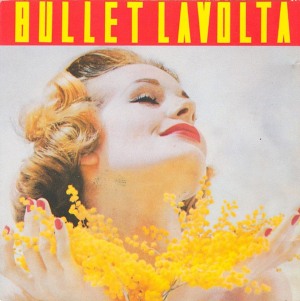
Why I Bought It: Future Chavez guitarist and Joy Ride screenwriter Clay Tarver started out in the Boston-based Bullet Lavolta, so I was more than willing to grab their debut LP for a dollar. Grabbing it, sure; listening to it, no. The Gift has been lurking in my record collection since I grabbed it (along with a few Volcano Suns LPs and a few less noteworthy albums) at a record fair in Champaign.
Verdict: Whereas Chavez’s riff-driven indie rock had hints of traditional hard rock but never succumbed to the genre’s vices, Bullet Lavolta are neck deep in hard rock bluster. Whether it’s because this material hasn’t aged well, it lacks the visceral jolt of the live setting, or my taste for throttling hard rock doesn’t meet the dosage, The Gift simply doesn’t hit squarely. Tarver and Ken Chambers attempt to find the midpoint between the breakneck pace of 1980s hardcore and the righteous shredding of early Van Halen on tracks like “X Fire,” “Sneer,” “The Gift,” and “Trapdoor,” but never sound as inspired as their source material. Vocalist Yukki Gipe wails and sneers on most tracks, but on “Birth of Death” tries to appropriate the guttural incantations of death metal with curious results, not exactly the intended effect. A reviewer on Amazon writes that if Bullet Lavolta existed in 1994 instead of 1989, they would have been a huge act in the midst of the alternative revolution, but I’ll take that prompt a different way. If Bullet Lavolta existed in 1994 instead of 1989, the weaker tendencies in their sound—the hard rock bluster, in short—would have been antithetical to the times and they likely would have been a more appealing band. Thankfully, Chavez’s mid 1990s existence saves me from worrying too much about Clay Tarver’s squandered potential.
|
|
If I learned anything from my most recent list-making exercise, it’s that my knowledge of 1980s music lacks depth, despite my attempts to expand beyond staples like R.E.M., The Smiths, Pixies, and U2. I spent the decade playing with Legos, not buying indie LPs, so I’ll excuse my deficiencies. Muxtape #2: “Making the Body Search” is comprised entirely of songs from that decade, a few of which I’ve only recently stumbled upon. I’m keeping artists to one appearance on this Muxtape series, so no Colin Newman or Wipers, although Newman’s “Ahead” from Wire’s The Ideal Copy provides the subtitle.
1. Cocteau Twins – “The Spangle Maker”: Considering that I can rarely make it through a whole Cocteau Twins album in one sitting, I’ve been listening to them an awful lot lately. Every release seems to have a handful of gems that plead with me to keep listening, keep checking out more Cocteau Twins LPs, and I have complied.
2. For Against – “Shine”: If you had asked me to guess where For Against originated, I would have answered, “Some industrial town in England.” I would not have guessed Lincoln, Nebraska.
3. The Feelies: “Slipping into Something”: This song is the highlight of their 1986 album The Good Earth, which I covered in Record Recollection Reconciliation. It starts off slowly enough, but when the guitars pick up it nearly runs off the rails.
4. Mekons – “Empire of the Senseless”: I never knew what to make of the Mekons when reading through Touch & Go / Quarterstick catalogs back in high school so I stayed away from their expanding hoard of releases. But after including the enticing Fear and Whiskey in the last round of iPod Chicanery, I gave The Mekons Rock ‘n’ Roll a listen and was even more impressed. Tracking down their multitude of LPs could keep me busy for a while.
5. Elvis Costello and the Attractions – “New Lace Sleeves”: I purchased Trust on LP back in high school when Mark / Western Homes heralded its greatness, but I’ve kept to edgier efforts like My Aim Is True, This Year’s Model, and Blood & Chocolate in spite of Trust’s lingering presence in my collection. The soul-inflected “New Lace Sleeves” caught my attention, however, so I’ll have to pull out that dusty LP soon.
6. Brian Eno & Harold Budd – “Not Yet Remembered”: From their acclaimed collaboration, Ambient II: Soporific Boogaloo.
7. Killing Joke – “Unspeakable”: Most fans prefer their 1980 self-titled debut, but What’s THIS For...! took their tribal drums, razor-wire guitar, and bellowed vocals to stranger, more apocalyptic places.
8. Comsat Angels – “Eye of the Lens”: Sleep No More is a great slab of post-punk, but it’s even better appended with post-album singles “Eye of the Lens” and “(Do the) Empty House.”
9. The Dead Milkmen – “Big Lizard”: I can only assume that my selection of Big Lizard in My Backyard for 1985 was the most curious choice on my recent list (“better” records from Hüsker Dü, The Meat Puppets, Mekons, The Pogues, The Replacements, and Tom Waits simply don’t have the necessary playtime for me to choose them), but I have nothing but fond memories of dubbing Dead Milkmen cassettes with friends in middle school. Even with a line like “And you should see the way it shits,” “Big Lizard” isn’t as juvenile as the rest of the album. It comes rather to melancholy for a song about the military blowing up a kid’s pet lizard.
10. Minutemen – “West Germany”: I owe my breakthrough on this record to Michael T. Fournier’s book on Double Nickels on the Dime in the 33 1/3 series. Go buy it!
11. Ultramagnetic MC’s – “Kool Keith Housing Things”: I almost forgot to include any ’80s hip-hop, but Kool Keith’s original group makes the cut. He stresses the second-to-last beat of most lines on Critical Beatdown, but he certainly kicked the habit by his mid-1990s records as Dr. Octagon, Dr. Dooom, and Black Elvis.
12. Hüsker Dü – “You Can Live at Home”: The final song on their final record is a Grant Hart mega-jam.
|
|
One of my biggest concert-going regrets is passing up a Silkworm concert in Chicago back in November of 2004, less than a year before drummer Michael Dahlquist’s death from vehicular manslaughter the following July. While that tragedy could not have been anticipated, my fondness for Silkworm’s tremendously consistent catalog has grown by leaps and bounds since then, amplifying the ache of a missed opportunity. I’d also passed on my first chance to see Andy Cohen and Tim Midgett’s new group, Bottomless Pit, when I brushed off their opening performance for Magnolia Electric Company until the show had sold out. Had I known that their debut LP, Hammer of the Gods, would be such a revelation, I would’ve bought tickets long in advance. This time I took no chances; those tickets had been sitting above my laptop for months.
Former Codeine drummer and Come guitarist Chris Brokaw opened the show with a mix of acoustic and electric songs. I always enjoyed his vocal contributions to the latter outfit, especially “Shoot Me First” from Near Life Experience and “Recidivist” from Gently Down the Stream, so my attention was understandably piqued by a few of his more straightforward songs. Considering how frequently he’s played in town, especially at the nearby P.A.’s Lounge, I don’t have an excuse for waiting this long to see him perform. Next time I’ll yell out for one of those Come songs and pick up that limited vinyl pressing of his 2005 album Incredible Love.
My trip to the ATM down the block caused me to miss Brokaw sitting in with his fellow New Year members the Kadane Brothers, but the rest of the duo’s set was impressive enough without him. Despite owning Bedhead’s Transaction de Novo and having seen The New Year (with Silkworm/Bottomless Pit guitarist Andy Cohen) play a show with Crooked Fingers in Champaign, their music has never quite clicked, but I think this show finally won me over to their brand of melancholic minimalism. I credit a chair at the back of the Middle East Upstairs for allowing me to appreciate their subtle melodies and songwriting craft. I’m now planning on grabbing The New Year’s self-titled third LP when it’s released this fall.
During the Kadane Brothers’ final song, the members of Bottomless Pit (photos here) gradually ambled on stage and joined the melody of that song before seamlessly segueing to the excellent “Leave the Light On” as the Kadanes left the stage. Even without piano punctuation from its recorded version, “Leave the Light On” was a powerful opener, swelling with Midgett’s baritone guitar leads and Cohen’s nervous Telecaster twitches. Cohen’s “Dogtag” followed with its emotional “We saw our connection there / On the way down” chorus. The dynamic between Midgett and Cohen came to the forefront during the material from their new Congress EP. While each member usually takes the melodic leads on their own songs, Midgett’s exquisite “Red Pen” peaked with a dueling solo and Cohen’s “Fish Eyes” features similar interplay between the high-end of Midgett’s baritone guitar and Cohen’s Telecaster.
Even with a one-song encore, Bottomless Pit’s set seemed all too short. I needed more moments like Cohen’s raised voice on “Greenery,” Midgett’s enthusiastic delivery of “Sometimes you gotta take control” in “Reposession,” and Cohen’s pick-less guitar in “Dead Man’s Blues.” The consolation prize for such tantalizing economy was a copy of the Congress EP, which certainly merits its own post.
|
|
When I saw that Floodwatchmusic had posted a list of his favorite records from each year of his existence, I thought “Wait a second, hadn’t I thought of doing that and never followed up on an initial list?” Naturally I only thought about completing such a list, since I pushed the idea back until I was comfortable enough with 1980s records to make a list that didn’t seem embarrassing. It may be a few more years before that happens, but for now I’ll make due with what I enjoy. For the record, 1987, 1991, 1994, 1995, and 1999 were tough calls, but you’ll have to guess what the competing options were. 1985 and 1986 were the stragglers that delayed this list a few days. There are a few 1985 albums that I feel I should enjoy more than the one I picked, but I’ll stick with honesty until one of those other albums takes its place.
1980 Talking Heads – Remain in Light
1981 Killing Joke – What’s THIS For…!
1982 Colin Newman – Not To
1983 R.E.M. – Murmur
1984 Minutemen – Double Nickels on the Dime
1985 The Dead Milkmen – Big Lizard in My Backyard
1986 The Smiths – The Queen Is Dead
1987 The Smiths – Strangeways Here We Come
1988 Dinosaur Jr. - Bug
1989 Pixies – Doolittle
1990 Fugazi – Repeater
1991 My Bloody Valentine – Loveless
1992 Faith No More – Angel Dust
1993 The Afghan Whigs – Gentlemen
1994 Shudder to Think – Pony Express Record
1995 Hum – You’d Prefer an Astronaut
1996 Dr. Octagon – Dr. Octagonecologyst
1997 Built to Spill – Perfect From Now On
1998 Dirty Three – Ocean Songs
1999 Juno – This Is the Way It Goes & Goes & Goes
2000 Arab Strap – Elephant Shoe
2001 Juno – A Future Lived in Past Tense
2002 Do Make Say Think – & Yet & Yet
2003 Folksongs for the Afterlife – Put Danger Back in Your Life
2004 Isis – Panopticon
2005 Eluvium – Talk Amongst the Trees
2006 Tungsten74 – Binaurally Yours
2007 The Narrator – All That to the Wall
In addition to FWM’s list, there are a few other examples of such lists, most notably Maura Johnston’s list on Idolator that inspired his post and the countless lists posted in the comments section of that entry and the list that inspired hers, which shares a few of my picks from the 1980s. Rate Your Music is another good resource in case you’re trying to remember good records released in a given year.
|
|
Along with Pavement, Seam, Rodan, and Archers of Loaf, Polvo pushed me further and deeper into indie rock obsession during high school. Naturally, all of them broke up before I moved off to college, thereby preventing me from the hit-or-miss experience of a vintage Polvo show, but their current reunion / reformation finally rectified that situation. There’s something about their music that seems particularly tantalizing in a reunion context, since they were too fidgety and strange as a band to trot out the greatest hits and leave it at that (see: Pixies). Not that they don’t have greatest hits—“Feather of Forgiveness,” “Vibracobra,” “Can I Ride,” “Every Holy Shroud,” “Gemini Cusp,” “Tilebreaker” and a number of others immediately come to mind—but I had no idea what they’d actually play and even less of an idea of how they’d play it.
New Radiant Storm King (photos here) seemed like an appropriate opening act, since I mainly know of them courtesy of a split single they did with Polvo back in 1994. This show was the first time I’d actually heard them, however. Their genial banter was a good fit for their 1990s-styled indie rock, although in a strange twist the songs from their next record sounded better than their older material. I’ll check out that record whenever it comes out and catch them again the next time they play Boston.
Birds of Avalon blended drifting psych-rock and cocksure 1970s hard rock with promising results as the middle act. Some of the psychedelic aspects felt too aimless, like they simply ran out of meaty riffs to fill the songs, but I can see them putting together a cohesive show and/or album in the future.
In an interview about Polvo’s upcoming shows, bassist Steve Popson calls it a “reformation” rather than a reunion. I hadn’t seen this comment before the show at the Middle East, but damn if it doesn’t make a ton of sense in retrospect. I’ve listened to Polvo’s albums—well, maybe not Shapes*—enough to sleepwalk through every note with ease, but Polvo (photos here) threw obstacles in my path at every turn. Switching drummers to Brian Quast brought more heft to the songs, but also forced the rest of the band to relearn and, in many cases, rewrite the old songs. Some songs, like the encores of “Tragic Carpet Ride” and “Fast Canoe,” stayed relatively true to the originals, but “Fractured (Like Chandeliers)” and “Every Holy Shroud” took pleasure in casting aside their old structures. (Note: the linked clips are to various reunion performances; I only took pictures of the Boston show.)
Each guitarist sang one new song, with Dave Brylawski’s contribution sounding like a restrained version of one of his Shapes tracks and Ash Bowie’s recalling more of the Exploded Drawing era, and I think there might’ve been a new instrumental track. Given the proliferation of new material within the old songs, like an alien bridge section of “Every Holy Shroud,” it’s hard to tell where truly new material started and where improvisation of old material ended. The set list also included “D.D.S.R.,” “Bombs That Fall from Her Eyes,” “Thermal Treasure,” “Title Track,” and “Feather of Forgiveness,” but nothing from Cor Crane Secret.
It’s unclear whether they’ll record a new album this year, but this reformation should certainly be filed alongside Mission of Burma and Dinosaur Jr. in the worthwhile category. I’m rarely as afraid of my peers that a reunion will soil a band’s legacy, since I’m not all that concerned about critical legacies affecting my personal enjoyment of a group, but I was surprised that seeing Polvo reformed made me appreciate them more.
* Side note: After I took a picture of a distant set list so I could zoom in and read the titles more easily before they started playing, the guy behind me asked if I could read the list. After I started relaying song titles, he decided he didn’t want to know, so I said, “Oh, they’re actually just playing all of Shapes.” He said, “I wouldn’t mind that.” This is why I don’t make friends at rock concerts.
|
|
I’ve primarily been listening to Cocteau Twins, GZA, Frank Black, Polvo, and Archers of Loaf lately, which partially explains the relative quiet around these parts, but I have checked out a few more recent releases. Another RCR post should be coming up soon; I certainly haven’t stopped buying cheap vinyl.
Four Tet - Ringer: Some have criticized Four Tet for switching to from layered, jazz-inspired grooves to simplistic, minimal techno on Ringer, but that’s a reactionary response to a mini-album that seems more like a temporary diversion from the norm than a permanent shift in approach. While it isn’t as idiosyncratically appealing as Rounds, Ringer works well as a whole, pulsing through its four tracks with both subtle shifts in background elements and noticeable changes in foreground components, like the incorporation of a live drum kit near the end of the title track. It’ll be interesting to see if his next proper full-length utilizes some of this more straightforward approach or if it makes a full return to Kieran Hebden’s typical organic approach. This appears to be an unofficial video for "Swimmer," but it's worth hearing at the very least.
Wire - Object 47: I’m currently only up to object 13 in my Wire collection, but their newest album should find a place somewhere between The Ideal Copy and last year’s Read & Burn 03 EP when it’s released on July 7. While nothing matches the strength of opening track and lead single “One of Us,” Object 47 shows that Colin Newman, Graham Lewis, and Robert Gotobed are still capable of producing catchy, propulsive post-punk, even if it’s a bit less post- nowadays. If I hold Wire to the “always push forward” ideals of their first three albums, Object 47 comes up as a retread in ways that the less enjoyable Send was not, but I’m a sucker for Colin Newman singing mid- and up-tempo rock songs and his voice has smoothed well with age.
Black Taj - Beyonder: I noticed two Black Taj CDs at Polvo’s merch table at their reunion show, but I was too concerned with grabbing a t-shirt and a vinyl copy of Exploded Drawing to pick them up. I’ve since checked out their 2008 release Beyonder and found the classic rock direction of Polvo’s Shapes was not a passing fad for guitarist/vocalist Dave Brylawski and bassist Steve Popson. Shapes is my least favorite Polvo album by a fair margin, but Beyonder sounds less like an attempt to shoehorn classic rock tropes into an existing aesthetic blueprint and more like an attempt to build those elements into the foundation. I’ll take the solid opener “Move Me,” the aching “Damascus,” and the heavy “L.A. Shift,” but I’d be lying if I said I’m more excited about this record than the possibility of a new Polvo album.
Maps and Atlases - You Me and the Mountain EP: After Maps and Atlases’ 2005 EP Trees, Swallows, Houses gradually won me over to their Minus-the-Bear-in-graduate-school approach to poppy math-rock, I’ve kept an eye out for its follow-up. You Me and the Mountain ups the hooks and cuts down on the trickery for trickery’s sake, which is precisely what I hoped would happen. The finger-tapping and percussive hits are still present, but the mix favors the songs over the techniques. “Witch” sounds like a hybrid of their earlier work and Mock Orange’s recent Captain Love, bouncing along without the tension of “Big Bopper Anthems” or “Songs for Ghosts to Haunt To.” Most of the EP follows suit, staying closer to complexly arranged pop than catchy math-rock. It’s hard to make a judgment on the EP right now considering how long it took for Trees, Swallows, Houses to hit me, but right now I can’t help but think “Be careful what you wish for,” since I miss some of the rock of their previous release.
Gregor Samsa - Rest: It’s hard to imagine a more apt title for an album based almost entirely on the appeal of hushed female vocals. Rest fleshes out its reserved brand of slow-core with an ample amount of twinkling pianos, echoing vibes, muted horns, funereal drums, whirring organs, graceful strings, and even some male vocals, but I primarily find myself coming back to hear Nikki King’s vocals on “The Adolescent” and “Jeroen Van Aken” (which is accompanied by a beautiful video). Those expecting crescendo-oriented post-rock only have a brief segment of “First Mile, Last Mile” to reference, but I’m a convert to their gentler approach. They’re playing Café 939 by Berklee in Boston on July 8; I hope to make it out for the show.
Errors - It’s Not Something But It Is Like Whatever: Errors’ ridiculously titled full-length has already been released, but I missed the advanced leak and haven’t seen the import-only CD or LP (available in the US from Tonevendor) in stores. Considering that Errors’ previous discography consisted of two singles and a short, five-song EP, a ten-song, 44-minute LP is a lot to digest. Early highlights include “Cutlery Drawer,” which features hip vocals from spoken word artist George Pringle that glitch in and out of the keyboard-heavy mix, the melancholic, guitar-centric “Still Game,” and graceful closer “A Lot of the Things You Don’t Isn’t,” but past single “Salut! France” and the Battles-ish current single “Toes” are also worth mentioning. I still find it strange that I’m more excited about Errors’ first LP than Rock Action Records impresarios Mogwai’s forthcoming The Hawk Is Howling, but I think that says more about Errors’ intriguing mix of elements than a fall from grace for Mogwai.
|
|
Just looking at that number range makes me cringe, but I’ve recognized several things that have kept me from updating consistently during this round. First, including only unfamiliar material was a mistake. I thought that if every song was a candidate for an entry, I’d end up writing more often, but the opposite occurred. Whereas in previous iterations I was able to contextualize the new material within the bounds of my regular listening pile, the endless unfamiliarity of this round never gives me a chance to collect my thoughts. After one song ends, I’m immediately considering the next.
Second, some of the included albums didn’t catch on as much as I hoped, which I’ll elaborate upon in a minute. Assuming that I’ll enjoy an album based on a text description or critical response often works, but it also leads to records that I should enjoy but for whatever reason just don’t click. The Pop Group, I am looking at you.
Finally, not listening to my iPod consistently has prevented any particular artist from having a huge impact. In addition to my previously mentioned battles with the cassette adapter for my car, I’ve also been driving significantly less. Without a daily commute to rely on, I’ve gone up to two weeks in between listening sessions. I also only had one long drive during this period and that suffered from the ol’ cassette adapter barely playing the left channel of audio. Considering that I will not have a commute in the foreseeable future because of telecommuting, I’m going to forgo the remaining 379 songs and focus on my Record Collection Reconciliation project.
While closing up shop on this round makes it seem like this attempt was a complete failure, my record collection disagrees. It looks like I’ve grabbed albums from Boys Life, Brian Eno & David Byrne, Charles Mingus, Eric Dolphy, Iggy Pop, Keith Jarrett, Panel Donor, Pere Ubu, Raekwon, Roxy Music, The Velvet Underground, and XTC that were either on this list or inspired by inclusions, and that doesn’t include artists like the Cocteau Twins, Colin Newman, and Kraftwerk, in which cases I expanded an already existing artist collection with an album that wasn’t on this list. I hopefully made that as convoluted as possible, but the moral is that this project introduced me to new records and I tracked some of them down for a closer look.
To close out this project, I’m going to keep the following albums on my iPod for non-forced random listening, perhaps even to hear in their entirety.
Mekons - Fear and Whiskey: While I own a still-unplayed copy of Mekons’ 1988 release So Good It Hurts (RCR awaits), I wanted to include the Mekons album most sources cite as their best. I’ve heard eight of the ten tracks so far, but British take on the American Southwest in “Trouble Down South” is just too good to remove.
Last Days - Sea: While I enjoyed Last Days’ 2007 album These Places Are Now Ruins enough to include “Swimming Pools at Night” on my year-end mix, its 2006 predecessor is simply a stronger album. Longer tracks like “Your Birds,” “The Norwegian Sea,” and “Fear” pull closer to post-rock than the ambient approach found on many of the shorter tracks, but it’s the balance between these two elements that strikes me. The soundtrack to late night summer reading, I’m sure.
Raekwon - Only Built 4 Cuban Linx: I recently picked up the 12" single of “Ice Cream” and “Incarcerated Subjects,” neither of which had come up yet in the randomized playlist, but I’m more interested in hearing those songs within the context of the album than jumping on that single. Considering my ever-growing fondness for GZA’s Liquid Swords, I’m kicking myself for not checking both of these records out at least five years ago when I asked Merrye Curry to pass along rap recommendations.
Charles Mingus - Mingus Mingus Mingus Mingus Mingus: I’ve enjoyed whenever Mingus, Davis, Monk, Coltrane, Hancock, and Dolphy have come up during the course of iPod Chicanery, but actually putting on one of their albums has been difficult. I picked up Mingus Ah Um from RRRecords a few months back, but I should give his other album from this round a little more time to sink in.
The Saints - Eternally Yours: After being floored by the Rocket from the Crypt-like blast of “Know Your Product,” I kept an eye out for any additional Saints songs that came up. While only the similarly titled “No, Your Product” equals the introductory salvo, I’ve definitely enjoyed having the energy of this Australian punk band to counteract some of the more trying moments of this round.
Edit: I decided to also keep Mouse on Mars' Autoditacker, Boys Life's Departures and Landfalls, The Pupils' self-titled LP, Eric Dolphy's Out to Lunch, Colin Newman's A-Z and Not To, Bark Psychosis's Hex, Nas's Illmatic, and Public Enemy's Fear of a Black Planet on my iPod.
|
|
I have created a New Artillery Muxtape, which I’ll try to update every month or so with different songs. I’ve written about half of these bands a considerable amount in the last few months, so hopefully your interest is piqued. Many of the other selections are precursors for future posts. Muxtape #1 is subtitled “Now come days of begging, days of theft,” which is the first line of the second chapter of Cormac McCarthy’s Blood Meridian. The novel has little to do with 1980s post-punk, American indie rock, or melodic electronic music and most of the songs lack insights into the American West in the middle of the nineteenth century.
1. Four Tet – “Hands”: I picked up Four Tet’s Rounds from the dollar bin of Reckless Records in Chicago a few years back. Although I was both surprised and delighted to find a recent, critically approved release in said bin, I put off actually listening to the album until “Hands” and “My Angel Rocks Back and Forth” came up on shuffle in my iTunes. Since then, Rounds has been in heavy rotation on my laptop and in my car stereo. The gentle pulse of “Hands” is still my favorite part of Rounds, which outdoes most of the organically inclined entries into the IDM wing of electronic music.
2. Colin Newman – “& Jury”: I’ve already written about my fondness for Colin Newman’s solo work, especially 1980’s A–Z and 1982’s Not To, which come closest to Wire’s art-punk. If you enjoy Wire’s first three albums or late ’70s and early ’80s post-punk and haven’t heard these records, track them down as soon as possible.
3. Frank Black – “Places Named After Numbers”: I remember seeing videos for Frank Black’s “Los Angeles” and “Men in Black” on 120 Minutes and taping the songs onto an audio cassette, but I never followed up on either record. Hell, I hadn’t gotten into the Pixies at that point. By the time I felt compelled to check out Frank Black’s solo albums, he already had far too many of them and I tossed off the whole enterprise. Whoops. Frank Black and Teenager of the Year have been making the rounds in iTunes lately and while both records could use some editing, gems like “Places Named After Numbers” make considerable sense in a post-Trompe le Monde context.
4. Accelera Deck – “Guided”: I first learned of Accelera Deck’s Narcotic Beats through Epitonic.com a year or so after its official release in 1998. At the time there were few, if any acts combining electronic beats and shoegaze guitar this effectively, so it’s a bit ironic that Chris Jeely abandoned this sound before its true emergence with M83, Ulrich Schnauss, Guitar, and similar new-gaze artists. Narcotic Beats may sound a bit dated nowadays since it’s not as polished as the aforementioned acts, but it’s hard to top the lilting melodies of “Guided,” “Greentone,” or “Drifting Out.” A career recap of Jeely’s output is long overdue, but if you ever come across Narcotic Beats or Exhalera Deck’s “Exhale” / “Inhale” LP, buy them and thank me later.
5. Smog – “Say Valley Maker”: I was officially chided by a friend of mine for not including A River Ain’t Too Much to Love on my best of 2005 list. My only excuse was that I was still digesting Smog’s Doctor Came at Dawn, Red Apple Falls, and Knock Knock and wanted to pace myself on Bill Callahan for a while. River now threatens Knock Knock for my favorite Smog LP and “Say Valley Maker” competes with “River Guard,” “I Break Horses (Peel Session),” and “All Your Women Things” for my favorite Smog song. I could quote every line from the song, but “And there is no love / In the unerring,” weighted with its extra syllable and fully breaking the rhyme of the verse, surpasses my other potential examples.
6. Wye Oak – “I Don’t Feel Young”: Wye Oak’s If Children comes together so strongly that it was hard to extract a single song to sample. While the guitar rush of “Warning” and the melancholic ache of “Family Glue” make solid cases for inclusion, the rising melody of “I Don’t Feel Young” grabbed me on the car ride back from New York this weekend.
7. C-Clamp – “Land Meets Sea”: Whenever I miss driving down I-57 to or from Chicago and passing a golden haze of nearly unbroken cornfields—yes, I actually enjoyed this drive—I think of C-Clamp’s guitar distortion and how perfectly it fits that mental image. “Land Meets Sea” adds an underbelly of acoustic guitar and an array of electric arpeggios to that distortion before pairing its closing feedback with descending harmonic chimes. It’s a multi-tracking extravaganza, but it’s handled with a remarkable amount of subtlety. I wish C-Clamp had recorded a third album, but Meander + Return and Longer Waves combine for a strong, if underappreciated legacy.
8. Silkworm – “Cannibal Cannibal”: Firewater will get its own post in the near future, but it took all of my strength not to put on one of Andy Cohen’s cathartic, solo-laden epics (“Slow Hands,” “Tarnished Angel,” “Don’t Make Plans This Friday”) in the interest of this mix’s pacing. Tim Midgett’s “Cannibal Cannibal” is much closer to the up-tempo classic rock of Lifestyle, but there’s certainly enough of Firewater’s relentless gravity in the pre-chorus couplet “It takes a lot of nerve / To get up in the morning.”
9. Wipers – “When It’s Over”: “When It’s Over” is a fine example of Greg Sage’s guitar pyrotechnics on Youth of America, an album I’ve covered several times.
10. Stars of the Lid – “Articulate Silences Part 2”: I wish they played Boston every month.
11. Lungfish – “Creation Story”: I have a larger post in the works on the rise in vintage vinyl prices, but Lungfish’s early records are a particularly curious example of inflation on eBay. The band has staunch devotees whose desire for early Lungfish records like Rainbows from Atoms and Pass & Stow has pushed me out of the market for the time being. Sixty bucks? I’ll wait and see if I see them in a used bin, thanks. Dischord did remaster and reissue the former record last year, tempting me to break my “If it’s on vinyl, buy it on vinyl policy,” but I’ve held out in the hopes that my search will bear LP fruit. “Creation Story” limits Lungfish’s trademark meditative repetition to the music, since Daniel Higgs opts for a gloriously rambling alternate take on creation/evolution: “…as a fish realized it held a monkey inside of itself / And expelled it on the beach in a larval, salamander form.” It almost acts as a template for the bizarre world Lungfish inhabits on their later records, particularly Indivisible, The Unanimous Hour, and Necrophones.
12. Deerhunter – “Spring Hall Convert”: Microcastle, Deerhunter’s follow-up to last year’s Cryptograms, magically appeared on the internet far in advance of its release date, but I’m still enjoying its predecessor. I finally grabbed the vinyl pressing of Cryptograms and Fluorescent Grey at Newbury Comics (20% off coupons are the devil on my shoulder) and splitting the album into three sides makes absolute sense.
|
31. Slayer - Reign in Blood - Def Jam, 1986
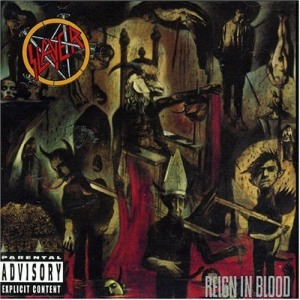
Why I Bought It: Finding a copy of Reign in Blood with the shrink wrap intact (originally $8.29 at Good Vibrations; I paid less) forced me to finally confront one of metal’s classics. I say confront because I turned away from metal videos when they came on MTV during my sheltered youth in the 1980s. Being fond of Phil Collins-era Genesis and Men at Work made even hair metal sound like the product of Jordan, Minnesota. By the time any of my close friends got into metal it was high school and the band was Metallica, so the impact was doubly limited. I’d already gotten into indie rock and hearing James Hetfield’s thin wail on Kill ’em All in Chris Williams’ Chevy Cavalier was more likely to make me laugh than to turn me to the dark side.
Verdict: Slayer does not fuck around. The first line of the record is “Auschwitz, the meaning of pain.” The music is equally unrelenting, a brutal combination of heavy riffs, lightning-fast solos, pummeling bass drums, and Tom Araya’s remarkably clear vocals—no guttural emanations here. If you’re going to sing about topics that will offend Tipper Gore, why not have her understand what you’re singing about, right? The band’s secret weapon is the half-speed breakdown, which makes the forthcoming solos in “Necrophobic” seem even faster. These ten songs are remarkably lean, infusing the technical precision of speed metal with the economy of American hardcore.
The lyrical content is extreme to say the least—“Angel of Death” is about concentration camps and Nazi physician Josef Mengele—meaning that I’m unlikely to ever memorize the lyrics to “Raining Blood” and shout along in the car. Yet it’s hard not to think of Silkworm’s “There’s a Party in Warsaw Tonight,” a decidedly un-metal song in which Andy Cohen sneers “There will be peace / On mounds of teeth / I’m no fool I’m gonna slave all the people to me.” While Slayer’s Reign in Blood may be one of the few pure metal records in my collection (I can’t in good conscience count Isis and Nadja LPs, since those initially appealed to me for their non-metal [read: post-rock] characteristics), it’s not comprised of completely unfamiliar elements, a point that should finally overturn any lingering hesitance towards approaching the genre.
32. Dis- / Panel Donor - Split Single - Lombardi, 1995
Why I Bought It: While the past few years of canon-exploring has diminished its place in my active listening pile, mid-’90s Midwestern indie rock still holds prime real estate in my tastes. Hum was my gateway drug to Castor, Love Cup, Shiner, Zoom, Dis-, and a handful of other key groups that utilized the heavy guitars of grunge in tricky, non-grunge fashions. Dis- transitioned nicely from the distorted weight of their early records (The Small Fry Sessions 1 & 2 and M 386.D57 1994, with its library catalog–inspired title that screws up my record collection spreadsheet, are worth grabbing if you ever see them) to the solid combination of dark humor and math-rock on their 1996 swan song The Historically Troubled Third Album. While I was able to track down Dis-’s CDs and single in Champaign since they were released on Poster Children’s 12 Inch Records imprint, Panel Donor eluded my grasp until late in my Midwestern stay, at which point finding their self-titled debut seemed more exciting as a trophy of my tastes than an actual album to obsess over. I’ve finally listened to most of it in the current incarnation of iPod Chicanery and it’s been a comfort food in the midst of a considerable amount of unfamiliar cuisine.
All of this leads me to how I actually found the Dis- / Panel Donor split single. I finally made it up to Mystery Train in Gloucester, MA on Memorial Day and I was astonished to find a good amount of Midwestern indie rock vinyl during my mad dash through their inventory. In addition to this single, I grabbed Table’s first seven-inch (a math-rock trio whose bassist Warren Fischer [whose hilarious entry on Wikipedia deserves a mention] now resides in the electro-clash outfit Fischerspooner), a Boys Life / Giants Chair split single, Boys Life’s first LP, and Panel Donor’s Surprise Bath LP among some other non-Midwestern sundries. Upon seeing that Sonic Bubblegum, the label for that Panel Donor album and Dis-’s Historically Troubled CD, was based in Brighton, MA, I realized a possible origin for these seemingly displaced records. I’ll have to return to Mystery Train with more time and money on hand and fully scour both vinyl and CD bins for similar Midwestern oddities.
Verdict: Dis- contributes an early version of “Suddenly Everyone Is a Smoker,” the first song of theirs I heard after its inclusion on a My Pal God / Actionboy / Ohio Gold sampler CD featuring C-Clamp, Hurl, and Dianogah among others. It’s fairly similar to the version on The Historically Troubled Third Album, pushing the drums and distorted guitar up in Steve Albini’s mix. Dis- records featured a rotating cast of drummers (Matt Morgan, Peter Pollack, Chris Cosgrove respectively), so seeing Chris Manfrin credited for this performance wasn’t too much of a surprise. Manfrin also appears on Seam’s final two records and Dis- offshoot Sixto’s self-titled disc, and currently in the post-Silkworm group Bottomless Pit.
Panel Donor’s “L.T. Weightman” features former Zoom guitarist Jeremy Sidener, who joined up after that self-titled debut I mentioned earlier. After a shouted, aggressive verse, the guitars and distorted bass move through some downbeat, melodic passages before returning full force for a powerful ending. It’s easy to remember why I love this stuff. When I either get a USB turntable or a stereo input for my laptop, I’ll rip this single for your listening pleasure, but until then, keep digging through those dusty seven-inch bins.
33. Hüsker Dü - Warehouse: Songs and Stories - Warner, 1987
Why I Bought It: Considering my fondness for most of Sugar’s catalog and selections from Bob Mould’s solo work, checking out Hüsker Dü was long overdue. After finally listening to Zen Arcade and New Day Rising, I nearly bought the former on Record Store Day, but figured I’d have plenty of shots to grab that record since SST vinyl has been plentiful at Newbury Comics. Finding a used copy of Warehouse at Record Exchange in Salem, MA, resulted in a slight impulse buy. Should Warehouse be the first Hüsker Dü LP in my collection? I doubt it. But coming from the pop end of the Bob Mould spectrum suggests that Hüsker Dü’s finale might appeal more to me than the group’s die-hard fans.
Verdict: Warehouse is a double LP, but the reminders of Zen Arcade don’t extend to this album’s concept or diversity. The routine of switching between Bob Mould songs and Grant Hart songs can’t keep Warehouse from dragging. Virtually all of the record’s twenty tracks are competent entries into 1980s college rock; some hint at their past shredding, some slow down to let Mould’s guitar jangle ring out, but it’s hard to consider those songs curveballs. Well, I was surprised by the cheesy leads on Hart’s “Too Much Spice”; perhaps Mould included them out of spite.
While I’m disappointed by the whole of the record, the highlights redeem the purchase. I typically prefer Mould’s compositions to Hart’s, but the latter’s “You Can Live at Home” closes out the record on a high note. “I can be fine, I can be free / I can be beautiful without you torturing me / Walk, walk away, keep on walking away / Go / You can live at home now / You can live at home now” is a scathing way to conclude their final record and the extended exit is accompanied by Mould’s most inspired guitar squall. Mould’s “These Important Years,” “Ice Cold Ice,” and “Could You Be the One?” nearly match “You Can Live at Home” with their strong melodies and forward propulsion. If the album was cut down to a single LP, I’d sing its praises and lament how long it took for me to track down a great entry into Bob Mould’s history of melodic guitar rock. But unfortunately Mould and Hart (I’m leaving Greg Norton and his awesome mustache out of this one) chose bulk over quality control.
34. Panel Donor - Surprise Bath - Sonic Bubblegum, 1997
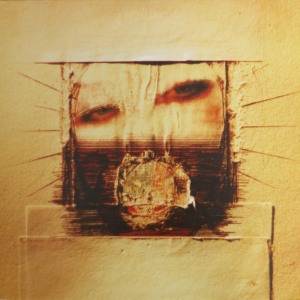
Why I Bought It: As I previously mentioned, finding a horde of Midwestern indie rock at Mystery Train Records in Gloucester, MA, was too good to pass up. I was fortunate to see the back of this LP, since the front doesn’t include the band name and I was unaware that this album (or 1996’s Lobedom and Global) even existed. I should clearly pay more attention to Built on a Weak Spot for his thorough posts on Panel Donor and other Midwestern favorites—his mp3s are still up if you’d like to sample any of Panel Donor’s three albums. On a side note, the album cover looks like a manipulation of a still frame of Matthew Barney’s Cremaster Cycle. Weird.
Verdict: The addition of Zoom guitarist Jeremy Sidener helps Panel Donor sound, well, more like Zoom, which isn’t a bad thing in my book. Nothing here rocks quite as hard as their song from the split single with Dis-; instead, the best songs linger in mid-tempos, exchanging woozy guitar riffs and melancholic vocals with the aplomb of the best low-key Polvo and Zoom songs. “Surprise Bath” and “Kid Throws in for Pillowing” pull this trick off marvelously, making their dynamic shifts seem almost invisible. Surprise Bath lacks some of the vocal hooks that push Zoom and Castor above many of their Midwestern brethren, but there’s a depth to this record that begs for more listens.
35. Nick Lowe - Pure Pop for Now People - Columbia, 1978
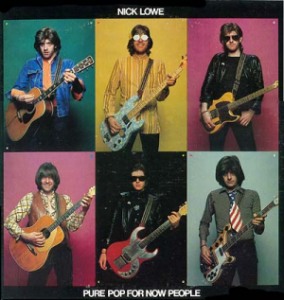
Why I Bought It: Friend and occasional collaborator Mark T. R. Donohue / Western Homes mentioned seeing a Nick Lowe concert in a recent LiveJournal post, explaining that Lowe is “one of the chief inspirations of all my ambitions as a songwriter… if Western Homes music is Christianity, then Nick Lowe is the father, Elvis Costello is the son, and Alex Chilton is the Holy Spirit.” While I’ll never equal his fondness for Elvis Costello (believe me, few can), I’m more than willing to check out Lowe based on Mark’s recommendation. This record was originally called Jesus of Cool in the UK and featured a different album cover; the title change is understandable, but why they removed the photo of Lowe with a dual-necked bass/guitar is beyond me.
Verdict: Situating Lowe between Elvis Costello and Big Star makes a considerable amount of sense—aside from the scathing “Music for Money,” he sticks closer to power pop than the edgy new wave found on Costello’s early records, perhaps separating his own music from his role as the in-house producer for Stiff Records’ early punk and new wave records. Lowe instead chooses to reference ’50s rock, ’60s pop, and ’70s disco in his power pop/pub rock crossovers. Since Lowe had already issued an EP called Bowi in response to the 1977 release of Low, “(I Love the Sound of) Breaking Glass” is a likely reference to that album’s “Breaking Glass,” stealing a bit of its Berlin shiver for a righteously melodic single. “No Reason” and the tongue-in-cheek (Bay City) “Rollers Show” also stand out as inspired examples of Lowe’s songwriting, but the tidy running time of Pure Pop for Now People doesn’t allow for any filler. He may show a bit of discomfort in the various rock guises featured on the cover, but the biggest strength of Pure Pop is Lowe’s ability to incorporate those guises with subtlety and wit instead of making the album sound like a mix tape of his tastes.
|
26. Orchestral Manoeuvres in the Dark - Dazzle Ships - Virgin, 1983

Why I Bought It: Pure whim. I knew OMD played synth-pop but couldn’t remember if I’d actually heard any of it (in retrospect I’m familiar with “If You Leave” from the Pretty in Pink soundtrack, but that song would be more likely to discourage me from checking out their other work), so my main reason for buying Dazzle Ships is Factory Records’ house designer Peter Saville’s name on the inner liner. The sleeve is vaguely similar to New Order’s Power, Corruption & Lies in its use of die-cut circles, but the slanting blocks of color remind me more of the cover for Wire’s 154. As an added bonus, there is a record inside the sleeve.
Verdict: In his All Music Guide review of Dazzle Ships, Ned Raggett calls the album “a Kid A of its time that never received a comparative level of contemporary attention and appreciation.” I did not see this one coming, so excuse the Radiohead aside to follow. While my fondness for Radiohead pales in comparison with that of the vast majority of critics and many of my peers—I tend to respect rather than enjoy their work—I understand what they tried to accomplish with Kid A. By appropriating the songwriting techniques of electronic artists, Radiohead aimed to write new forms of rock songs from the ground up, thereby avoiding the tired genre conventions of their peers. While those songs differ both structurally and sonically from their guitar-rock past (and present), the group’s unrelenting thematic emphasis on alienation in the modern condition brings continuity to their catalog (at the sake of greater emotional resonance in my view, but I’ll leave that alone for now). The album succeeds as both a statement record and a courageous step out into the abyss for a popular act, so I hardly take comparisons to its aims lightly.
Hearing Dazzle Ships for the first time with those expectations in mind was a curious experience, since I’m not familiar enough with their previous work to sense a huge shift in approach. There are three types of songs on this album: sound experiments, traditional synth-pop, and attempts to splice elements from the former into the latter. I’ll deal with the sound experiments first, since those are the most explicit attempts to push OMD’s aesthetic forward. “Radio Prague” is a sampled fanfare and an effective introduction for “Genetic Engineering,” but it’s not memorable in its own regard. “Dazzle Ships (Parts II, III & IV)” veers from industrial lurching to gothic bursts, but ultimately exists more of a moody bookend or a jarring introduction for “The Romance of the Telescope” than an actual song. “Time Zones” layers recorded time announcements from various languages, but for what purpose? These songs add atmosphere to the record, but so did the radio clips on Kraftwerk’s Radio-Active, so it’s hardly a novel approach for the genre.
“Genetic Engineering” does an excellent job of internalizing the found sound—more specifically, found technological sound—of “Radio Prague” for a more traditional synth-pop song, something neither “ABC Auto-Industry” nor “This Is Helena” can quite accomplish. Those songs try to replace OMD’s typically dramatic vocals with robotic recitations, reminding Raggett of “Fitter Happier” from OK Computer, but neither song finds the proper balance between organic emotion and technological precision. The beginning of “Radio Waves” suggests another sound experiment, but its upbeat chorus and hand claps completely reverse these expectations.
Andy McCluskey’s vocals tend to pull me out of the album’s more traditional songs, particularly the wildly emotive “International,” tampering with the atmosphere created by the more experimental tracks Yet “Of All the Things We’ve Made” closes the album on a high note, accompanying its reserved, reticent vocals with a muted guitar jangle and echoing piano notes. Whereas much of Dazzle Ships relies on surface-oriented advances to amaze the listener, the subtlety of “Of All the Things We’ve Made” suggests that it’s not the aesthetic surroundings of OMD’s music that needed tweaking, but some of their most fundamental components. Dazzle Ships certainly tries hard to invigorate their synth-pop approach with an experimental edge, but too often I hear the constituent parts instead of a wholly synthesized product of these urges. Raggett’s comparison may be somewhat accurate in terms of intent, but it’s a disservice to OMD when it comes to the final product.
27. Meat Puppets - Out My Way EP - SST, 1986

Why I Bought It: I remember taping their 1990s buzz bin entry “Backwater” from the radio for the bus ride to school, but something tells me that I would’ve been put off at the time by the cow punk of their earlier SST albums. After seeing a few Meat Puppets LPs on Pitchfork’s Best of the ’80s list, I decided to finally check them out, picking up used copies of Meat Puppets, Up on the Sun, and Out My Way.
Verdict: Out My Way is a solid stopgap EP, but not an essential release like its predecessor Up on the Sun. Side A has three fleshed-out rock songs with scaled-down country influences and amped-up fretwork, making some sense out of Mark Prindle’s consistent comparison of the Meat Puppets to ZZ Top. Side B, however, doesn’t fare quite as well. After the par-for-the-course “Not Swimming Ground,” “Mountain Line” is saved only by an intriguing instrumental outro and the high-energy cover of “Good Golly Miss Molly” couldn’t end fast enough. It’s worth grabbing for a few bucks, but none of the melodies have stuck in my head like the title track to Up on the Sun.
As an added bonus, Out My Way came with a 1986 SST catalog. Ever since Touch & Go sold me on Slint with “So far ahead of their time they’re standing behind you,” I’ve held a special affinity for record label and mail order catalogs. Unfortunately, SST avoids both band comparisons and witty descriptions, opting instead for song titles, release year, and underground standing as their go-to hooks. I am rather impressed by the presence of a custom Black Flag skateboard—$40 for the deck only, $100 fully equipped.
28. Pat Metheny / Ornette Coleman - Song X -Geffen, 1986

Why I Bought It: While distantly removed from Song X’s release in 1986, Ornette Coleman’s The Shape of Jazz to Come and This Is Our Music are two of my favorite jazz records, so I’m willing to check out most LPs adorned with Coleman’s name. As for Pat Metheny, I enjoy his performance on Steve Reich’s Electric Counterpoint, but I haven’t yet listened to any of his original performances, something that this project will reconcile with the double LP 80/81.
Verdict: I expected Song X to sound considerably more alien, given its oblique title, release in the mid-1980s, and prominent involvement from Pat Metheny, but those expectations were clearly way, way off the mark. While the collaboration between free-jazz pioneer Coleman and crossover guitarist Metheny may have been intended to bring Coleman into mainstream 1980s music, the actual content avoids making any radical departures. The other contributors—Charlie Haden on bass, Jack DeJohnette on drums, and Denardo Coleman on drums/percussion—help ground the proceedings in the vein of The Shape of Jazz to Come and Free Jazz. Metheny takes a backseat role to Coleman, who takes most of the songwriting credits and resides in the prime real estate of the mix. That isn’t to say that its release in the mid ’80s doesn’t color the sound, since Denardo Coleman’s electronic drum treatments and Metheny’s guitar synths do make appearances, but it’s remarkable how little those elements stick out as dated.
I do wonder how a true 50/50 collaboration might have worked out, since Metheny is clearly deferring to one of his inspirations. “Song X Duo” brings some space to the Coleman/Metheny dynamic and possesses a rare moment of a warmly ringing guitar chord. Whether this moment is merely an improvised resolve or a tantalizing suggestion of what might have been is debatable, but Song X shouldn’t be seen as a failed experiment because of Metheny’s deference. It’s a solid album that chooses cohesion over fresh earth, the subtle incorporation of a new player over a war for territory.
29. Faith No More - Introduce Yourself - Slash, 1987

Why I Bought It: While I love Angel Dust and, to a lesser extent, King for a Day… Fool for a Lifetime, non-“Epic” tracks from The Real Thing tend to set off my cheese metal alarm. So aside from “We Care a Lot,” I’ve steadfastly avoided the Chuck Mosely era of Faith No More. Finding an LP of Introduce Yourself for less than five bucks finally convinced me to take a shot at their pre-Patton catalog.
Verdict: Introduce Yourself exceeds my admittedly low expectations by a fairly wide margin. Both sides are frontloaded with their best songs, leaving the clunkers (“Death March,” “Blood,” “Spirit”) to bring up the rear. Side A starts off with four solid tracks—album highlight “Faster Disco,” the melodic “Anne’s Song,” the energetic “Introduce Yourself,” and the rap metal prototype “Chinese Arithmetic”—before losing steam with the aimless banter preceding “Death March.” Similarly, side B is anchored by “We Care a Lot,” “R n’ R,” and “The Crab Song” before fading off. Jim Martin’s chunky riffs and Mike Bordin’s muscular drumming hold the record together, but it’s ultimately Chuck Mosely’s vocals that determine a given song’s worth. When Mosely tries to sing (see aforementioned clunkers), the solid instrumental mix beneath is wasted, but when he alternates between semi-rapped verses and shouted slogan choruses, his inability to carry a tune is irrelevant. Perhaps I should cut Mosely some slack in this situation, since Mike Patton’s stay in Faith No More exhibits a similar dichotomy (nasal whine vs. every other vocal strategy attempted), but even Patton’s nasal crooning doesn’t ruin songs quite like Mosely’s tuneless voice can. Still, with seven worthy songs, Introduce Yourself handily defeated my lingering reservations.
30. XTC - Mummer - Virgin, 1983

Why I Bought It: After J. Robbins compared Burning Airlines’s Mission: Control! to the antsy pop of early XTC, I picked up their singles collection Upsy Daisy Assortment and made little progress beyond “Making Plans for Nigel.” Hearing Drums and Wires and Black Sea—the guitar-centric albums to which Robbins likely referred—helped contextualize the cheery power pop of the singles collection. I would have preferred grabbing the highly praised English Settlement or Skylarking (although the latter has since been rectified), but dropping a dollar on an unheard XTC record in a beat-up sleeve seemed like a smart idea.
Verdict: Mummer lacks much of the exuberance that sold me on the power pop complements to their post-punk edge of Drums and Wires and Black Sea. The near-scat vocals in the Middle Eastern-aping “Beating of Hearts” start the album off with a bang and the energetic, scathing “Funk Pop a Roll” closes Mummer with that endlessly entertaining trick of writing a great pop song about the dangers of pop music (see also: Elvis Costello’s “Radio, Radio,” Pavement’s “Cut Your Hair,” Archers of Loaf’s “The Lowest Part Is Free,” Juno’s Rodeo Programmers”), but aside from the gloriously melodic “Love on a Farmboy’s Wages,” the lack of energy between these bookends is underwhelming. “Ladybird” is certainly pastoral, but I wouldn’t call it memorable. Several of the songs are nearly saved by great moments—the orchestral cacophony concluding “Great Fire,” the subdued melodies in the outro of “In Loving Memory of a Name,” the dark lyrical bent of “Human Alchemy”—but they still lack the internal consistency of XTC’s best tracks. It’s easy to understand why the songwriting on Mummer is muddled—it was the band’s first album after Andy Partridge’s nervous breakdown and consequent retirement from touring, drummer Terry Chambers left midway through the recording session—but I’m dismayed that two of its three best tracks already reside on Upsy Daisy Assortment.
|
|