|
Considering that I’d only attended one show this calendar year prior to May—Junius at Great Scott back in March—seeing four shows in eight days was a minor miracle. I would’ve seen five if I’d ponied up for Wye Oak at Great Scott, but after buying tickets for Polvo in June and Bottomless Pit in July, I felt like a night watching the San Jose Sharks’ hapless playoff plight might be a welcome respite for my wallet.
Stars of the Lid and Christopher Willits performed at the Museum of Fine Arts in Boston, kicking off my week of concert-going. Aside from the middle-aged woman who sat next to me and chided me for taking non-flash photos of Willits’ set, it’s hard to imagine a better setting for both acts. I was unfamiliar with Christopher Willits’ work, but his heavily processed guitar work reminded me of the melodic micro-glitch of Accelera Deck’s Pop Polling. These detailed soundscapes coincided perfectly with Willits’ projected videos, particularly one focusing on weeds coming out of sidewalk cracks. The videos from his 2006 album Surf Boundaries emphasize a push into the processed shoegaze of Guitar’s Sunkissed and M83’s Dead Cities, Red Seas, & Lost Ghosts, but Willits didn’t utilize anything beyond his guitar and laptop for this set.
Stars of the Lid came out with three string players and accompanying video projections from Luke Savisky. Much like their recorded material, it’s hard for me to relate what made Stars of the Lid’s live performance so awe-inspiring. On record, I’m astonished by how much emotional resonance they can create with such a reserved sonic footprint, but live this footprint was expanded significantly by the string trio, who interacted with and often surpassed the subtle drones created by Adam Wiltzie and Brian McBride. Willits joined them for the set closer, which may or may not have been “Even If You’re Never Awake (Deuxieme),” and although his contributions were remarkably subtle, the song still swelled to a previously unforeseen breaking point. The video projection raced at a breakneck pace to mirror this fever pitch, but soon everything returned to calm. Stars of the Lid certainly deserved an encore, but clapping furiously for one seemed downright strange after the nature of their set. The band caved, playing my personal favorite from last year’s And Their Refinement of the Decline, “Tippy’s Demise,” a song tailor-made for their live line-up. I’m admittedly curious about how Stars of the Lid would have sounded at the Staerkel Planetarium back in Champaign, IL, but this performance gave little reason for jealousy.
The following Tuesday I caught Foals and The Ruby Suns at the Middle East Downstairs, narrowly missing local opener Pray for Polanski’s set. I hadn’t heard anything about The Ruby Suns, but watching them set up made me nervous; three people manning a stage full of instruments, including the ever-foreboding flute. The end result was a sunnier, less interesting version of the Berg Sans Nipple’s rhythmic pop. Whereas the Berg Sans Nipple derives from a Nebraska/France axis, the Ruby Suns claim both New Zealand and California as home. Despite all of the instrument-switching, most songs ended up sounding like they were comprised of vocals, a bass line, a heavily flanged keyboard or guitar part, and either faux-tribal drumming or electronic club beats. I wasn’t surprised to learn that Pitchfork loves this stuff, since it seems close enough to Animal Collective to merit their affections, but I don’t anticipate checking out their recorded material for comparison’s sake.
I had high hopes for Foals’ set after seeing a few live clips on YouTube and they did not disappoint. Playing most of their Sub Pop debut Antidotes (minus album closer and personal favorite “Tron”) and their pre-album singles “Hummer” and “Mathletics,” Foals did an excellent job mixing up the arrangements of these songs by adding extended intros and making up for missing production magic with more brute force. Prominently coifed singer/guitarist Yannis Philippakis had considerably more stage presence than anticipated, although some stage chatter veered toward Boston-oriented pandering. While I didn’t come away from the performance finally grasping why they’re routinely called a math-rock band—tricky high-end fretwork may be a prominent signifier, but there’s simply no math involved in their 4/4 signatures—it’s hard to deny that they’re certainly good at what they actually do: cosmopolitan dance-punk.
Local indie pop/rock group You Can Be a Wesley opened up The Acorn’s first Boston show the following night at Great Scott. I hadn’t heard of the band prior to seeing the bill, but their set showed promise, if not a fully realized whole. After the fashionably empty set from the Ruby Suns the night before, I was glad to hear something genuine. Vocalist Saara reminded Acorn bassist/guitarist Jeff DeButte of Joanna Newsom, a comparison I can only assume is accurate given my steadfast avoidance of that harpsichord-wielding singer/songwriter. The music itself would benefit from a bit of road-testing, since many of the songs were flush with extraneous parts and could use some paring down, but the vocal melodies were strong. Joanna Newsom fronting a Chapel Hill indie-pop band, maybe? Worth keeping an eye out.
I’d been looking forward to seeing The Acorn since I first heard that a Boston date was in the works for their spring tour. Glory Hope Mountain was one of last year’s best surprises and has remained close to my listening pile since its release. Unfortunately, The Acorn were out of the 2LP pressing of the album, so I’ll have to suck it up and order the vinyl from Paper Bag. As for their performance, the six members did an excellent job of fleshing out the details of their recorded work while bringing more “rock” elements to fundamentally folk songs. The highlight was “Flood Pt. 1,” as its choral exuberance and pounding rhythms were a perfect fit for the end of their main set. The up-tempo rock of “Spring Thaw” from their Tin Fist EP (which I got on my trip up to Montreal last winter) closed out the evening, just before the band were treated to tour-ending shots from the Great Scott. Unless you live in the Ottawa area, you’ll probably have to wait a while before the Acorn makes it to your town, but in the meantime heed my latest recommendation to check out Glory Hope Mountain.
The Night Marchers and the Dynamiters closed out my week of shows at the Middle East Upstairs. Montreal aggro-punks CPC Gangbangs were supposed to be on the bill, but they apparently had some problems getting into the country (I’d imagine there are very strict tariffs on importing gangbangs), so The Dynamiters were moved up the bill. I hadn’t realized that they featured members of the Selby Tigers, a band I was not particularly impressed by when they opened up for Sean Na Na in Chicago, but thankfully those members have found a better gig. The Dynamiters slightly recalled the more straightforward rock moments of John Reis’s previous work in Rocket from the Crypt, but their alternating vocal turns and garage rock riffs kept me from lingering on that comparison. Their relatively short set left me wanting more, particularly after a set close that ended after less than a minute.
I’ve listened to The Night Marchers’ debut LP See You in Magic a few times, but so far it hasn’t clicked on the level of past Reis efforts like Rocket from the Crypt, Hot Snakes, or Drive Like Jehu. Yet having seen RFTC and Hot Snakes, I figured that Speedo’s status as a consummate showman would surpass any of the weaker material, an assumption that didn’t quite come to fruition. “In Dead Sleep (I Snore Zzzz),” “Bad Bloods,” and “Jump in the Fire” throttled as well as Reis’s past bands, but passing on album highlight “I Keep Holding On” in favor of some of the 1950s-flavored mid-tempo numbers was downright curious. Reis’s stage presence was in classic form, but there just isn’t enough greatness on See You in Magic to stretch over a headliner’s set. Unless you’re a diehard Reis devotee, you may want to wait until the band releases a follow-up to help expand their set list.
|
|
Here are my photos for the four recent shows I attended. Reviews of these shows will be up shortly.
Stars of the Lid at the Museum of Fine Arts, Boston, MA, May 1, 2008.
Foals at the Middle East Downstairs, Cambridge, MA, May 6, 2008.
The Acorn at Great Scott, Allston, MA, May 7, 2008.
The Night Marchers at the Middle East Upstairs, Cambridge, MA, May 8, 2008.
|
|
1. Guy Fieri: I usually enjoy watching the Stanley Cup Playoffs on Versus, but certain things—the random intrusion of the Bruins’ color commentator Andy Brickley, Mike Emrick’s beady eyes, Brian Engblom’s roadkill haircut—certainly detract from the experience. Yet those quibbles pale in comparison to the routine airings of a T.G.I. Friday’s advertisement starring Food Network star Guy Fieri. If shoving his over-tanned skin and shocked-blonde hair into my face isn’t bad enough, he immediately tells me what I am going to eat at T.G.I. Friday’s. No, Guy Fieri, I will not eat that shoe-sole piece of sirloin steak. Sorry, Guy Fieri, I do not intend on buying drinks for the townie skanks at the next table. I will leave that one to you, pal. Do you want to know the next thing I’ll eat at T.G.I. Friday’s? Fucking crow, that’s what.
2. My Bloody Valentine Tour Dates: My finances will not allow me to attend what basically amounts to my dream festival this September, at which My Bloody Valentine will beckon the apocalypse by performing live and proving their existence, Built to Spill will perform the entirety of Perfect from Now On with the necessary thirty guitarists on stage for overdubs (I’m probably lying about this), Tortoise will trot out Millions Now Living Will Never Die in hopes of making me forget their post-TNT output, and Mogwai, Shellac, Polvo, Dinosaur Jr, Low, Thurston Moore, Lilys, and the Meat Puppets will combine in to form a Voltron of past and present indie credibility with the sole purpose of melting my soul. No, I will not be able to attend said event unless I drain the blood from my body and sell it to vampires. So finding out that My Bloody Valentine did not include a Boston date on their announced U.S. tour dates angers me just a tad. I need to experience the inside of a jet turbine, Kevin Shields, and I will hold all of your chinchillas hostage until that happens.
3. Missing The Narrator’s Last Show: For reasons similar to those behind item two, I will not be able to make it to The Narrator’s last show in New York City this Saturday. I imagine the following things will happen: they will perform “Son of Son of the Kiss of Death,” “This Party’s Over,” “Ergot Blues,” and “Now Is the Time for All Good Men” (none of which were performed at their last Boston show); Jesse Woghin’s guitar will spin around as if it were in a ZZ Top video; the band will spontaneously combust while performing “Roughhousing”; and finally, their ashes will sing an affecting cover of “All the Tired Horses” as a final encore. If any Boston gas stations would like to hold a Turn Back the Clock sale and charge $0.99 a gallon, I could make the show, but, as is, I’ll just have to read the police report.
4. Ongoing Democratic Primary: I can no longer pay attention to the national news because of the unrelenting teeth-gnashing on the part of both sides. Do you know what that leaves me? Human interest stories on local news. Please, a candidate, defeat the your opponent, behead them with a victory guillotine, and drink their blood during Deal or No Deal to show John McCain who’s really ready to take office.
Or, you know, convince the populace that you are a better fit to lead the nation.
5. Tautologies as Profound Insight: The next person, whether friend, sports analyst, or renowned blogger, who says any variation of “Well, you know, it is what it is” deserves to have any held degrees revoked. Oh, you graduated high school and think such clichéd sayings deserve mantra-like status for those accepting of certain conditions? Sorry, you’d better re-enroll. Don’t forget to stock up on school supplies.
|
21. Bruce Springsteen - Born to Run - CBS, 1975
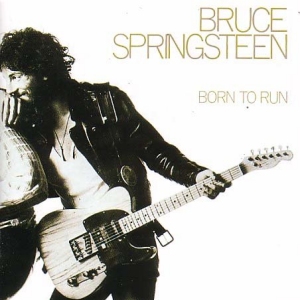
Why I Bought It: Whenever I flip through dollar bins, there are almost always records like Born to Run that pop up: critically acclaimed, audience-beloved staples of American culture and classic rock radio. While I’ve never sat down and listened to Born to Run—or any other non-Nebraska Springsteen LP—it’s essentially already part of my musical fabric, so I don’t feel the need to include it in my collection. I usually flip by such records, noting their existence but preferring to grab something less familiar, but occasionally I’ll cave to whatever populist impulses exist deep within my being and pick up one of them.
Verdict: Only three songs were instantly recognizable—“Thunder Road,”
Tenth Avenue Freeze-Out,” and “Born to Run”—but the remaining five are so endowed with the Boss’s signature sound that they could have all been massive radio hits. Each song is essentially a journey between known points, whether it’s the building fire (“Thunder Road”), the heart-tugging climax (“Born to Run”), the quiet eye of the storm (“She’s the One”), or the saxophone-enabled glory of introducing caution to the wind (“Jungleland”). It’s easy to forget that at one time these various points weren’t immediately familiar, that their effect was not a cycle of remembrance but of connection.
Unlike a number of LPs I’ve listened to in the last week, I never strained to appreciate when Springsteen and his band were doing, never questioned whether a given song fit within the whole, never wondered what other people saw in the album. Born to Run is a great record, but I already knew that. But just like I approached it, I don’t feel the sudden need to hear it or Springsteen’s other classic albums again in the near future. I’m certain I’ll listen to them at some point, maybe even building a fondness for Springsteen’s small-town-goes-big storytelling down the line, but right now I’m more concerned with records that may not be certified classics.
22. Depeche Mode - Black Celebration - Sire, 1986
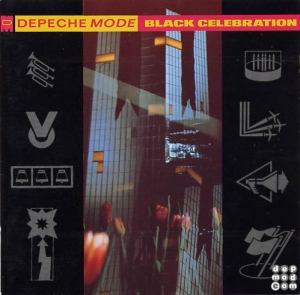
Why I Bought It: “Enjoy the Silence” and “Policy of Truth” may be on Violator (which I pulled, sans-case, from the free bin at Rhino Records in high school), but they’re good enough to merit grabbing a cheap copy of Black Celebration.
Black Celebration, particularly side A, is weighed down by a number of less-than-impressive tracks. When Dave Gahan croons over melodic synth lines on “Black Celebration,” “A Question of Time,” and “Stripped,” it’s hard to argue with the band’s formula. The same cannot be said about “Sometimes” or “A Question of Lust,” which cut back on the synthesizers and end up sounding more like a lecherous version of 1950s pop. Thanks, but no thanks. The stripped-down production of those songs also takes away from the power struggle between the dour nihilism of their gothic tendencies (“Black Celebration” starts “Let’s have a black celebration / Black celebration / Tonight / To celebrate the fact / That we’ve seen the back / Of another black day”; sigh) and their leering sexual proclivities, embodied so well in Gahan’s rich voice. While I like parts of Black Celebration enough to check out their other non-Violator albums if I see cheap copies, I get the feeling that Depeche Mode will always be a singles/highlights band to me.
23. Hz Roundtable - Birdbath EP - Intonated, 1997
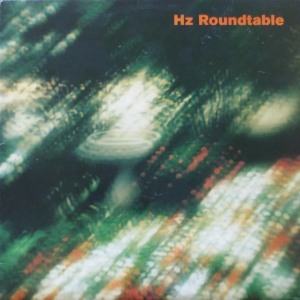
Why I Bought It: Either the Parasol catalog or the Reckless database informed me that Hz Roundtable had a connection to Midwestern indie rockers Zoom, so I snapped it up. Zoom/Hz Roundtable singer/guitarist Mark Henning is now in The National Trust, whose soul/funk hybrid reminds far more of Prince than, say, Panel Donor, but I’m willing to bet that Hz Roundtable is closer in spirit to his earlier work.
Verdict: …and I would theoretically collect on that bet. Hz Roundtable’s quirky indie rock seems like a logical offshoot of Zoom, albeit stripped of that band’s urgency and heft. With ten contributors across the six songs, Hz Roundtable is more of a collective than a highly structured band. The resulting combination of relaxed songwriting and stray instrumentation rarely helps Birdbath, however, since the songs have a tendency to drift without strong hooks to buoy them. Henning sings on the even tracks, but his voice lacks the gravity present on Zoom’s Helium Octipede. Similarly, Zoom’s distinctive guitar leads—“Balboa’s Cannon” was a mix tape staple for years—only come up on the closing track, “The Jersey Lily,” which features just Henning and Liz Bustamante. I’m disappointed that this EP doesn’t compare to Zoom’s self-titled debut or Helium Octipede, but at this point I’ve largely given up blind-buying questionable offshoots like this one.
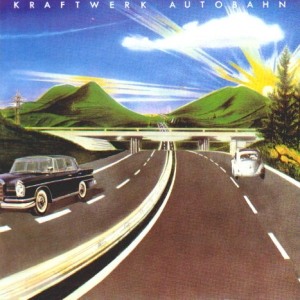
24. Kraftwerk - Autobahn - Vertigo, 1974
Why I Bought It: I downloaded Trans-Europe Express for an earlier iteration of iPod Chicanery and, as typically happens, I wasn’t able to find a cheap copy of that record but instead two of their earlier albums, Autobahn and Radio-Activity, and one post-Express album, The Man-Machine. I blame my late-comer status on Kraftwerk/Neu!/Tangerine Dream on the fact that my high school German textbooks only used Falco and Die Toten Hosen as examples of the country’s music. I wonder if American-penned German textbooks herald Richard Marx and Bryan Adams as the primary delegates of our cultural output.
Verdict: While this listening experience—sitting in my living room and flipping between Stuck on You and The Hunt for Red October on mute—doesn’t quite compare to hearing “Europe Endless” for the first time on an Italian train last summer, Autobahn certainly expands my idea of Kraftwerk’s range. Whereas Trans-Europe Express is defined by its cold, machine-like precision, Autobahn, like its cheery cover, is far less stoic, branching out in several unexpected directions. The title track blends the gleeful (well, as gleeful as German electronic pioneers are going to get) refrain of “Wir fahr’n fahr’n fahr’n auf der Autobahn” with a shifting melodic and rhythmic backing for a 23-minute voyage. “Kometenmelodie 1” and “Mitternacht” pull away from the sunny demeanor of “Autobahn” for some atmospheric wanderings closer to Tangerine Dream’s quiet moments. “Kometenmelodie 2” counters this drama with brighter, more insistent melodies and “Morgenspaziergang” closes the album on a particularly whimsical note. Whereas I appreciate Trans-Europe Express for its singular focus (and appropriateness for the robo-boogie), the range of Autobahn is equally appealing.
25. Cocteau Twins - Tiny Dynamite / Echoes in a Shallow Bay - 4AD, 1985
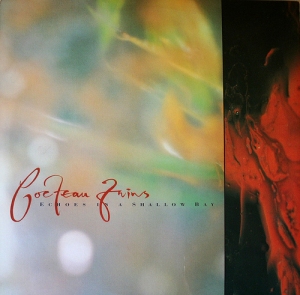
Why I Bought It: When I first listened to My Bloody Valentine’s Loveless after buying it blind around the age of seventeen, I thought, “This is the most rocking new age music I’ve ever heard!” Considering my record collection at the time consisted of indie rock, alternative rock, and the pop end of industrial, the glistening shoegaze of Loveless seemed overwhelmingly alien. I gradually checked out My Bloody Valentine’s contemporaries (Ride and Slowdive) and followers (M83, early Lassie Foundation, Ulrich Schnauss), but it wasn’t until the second round of iPod Chicanery that I finally heard one of MBV’s biggest influences. Perhaps some of the delay could due to my overall reticence in delving into 1980s indie, a reticence based largely on the presumably dated sonics and the era’s reliance on drum machines, but I have to wonder if the new age comment lingered in my memory banks. The direct lineage of Elizabeth Fraser’s glossolalic yodels to My Bloody Valentine’s blurred syllables almost prescribed a similar reaction the first time I heard Cocteau Twins. “I didn’t know Enya was in a proto-shoegaze dream pop band!”
All of this set-up takes away from my actual feelings on Cocteau Twins, based upon Treasure and Heaven or Las Vegas. Some songs (“Lorelei,” “Heaven or Las Vegas,” “I Wear Your Ring”) congeal the gossamer arrangements and Fraser’s cooing, nearly wordless* vocals with astonishing effect. Yet I rarely listen to more than five Cocteau Twins songs in a row before losing attention and moving on to something else. While I would have preferred finding either Treasure or Heaven or Las Vegas on vinyl, I’m admittedly excited about hearing their other work.
* It’s hard to explain how much amusement I get out of reading Cocteau Twins’ lyrics on SongMeanings and trying to match up the words with Fraser’s voice.
Verdict: According to Wikipedia, these two EPs were originally recorded together to test a new studio arrangement, not for popular consumption. The band decided that the material was good enough for release, so they dropped Tiny Dynamite and Echoes in a Shallow Bay just two weeks apart in November of 1984. Naturally, I get them paired together, so I essentially hear Tiny Dynamite and Echoes in a Shallow Bay as a single-album follow-up to Treasure, precisely what they wanted to avoid. Sorry, Cocteau Twins.
I can understand the band’s hesitance over designating this material as a full-length; while most of the songs are fine enough, few, if any, reach the heights of the finest material on Treasure. “Pink Orange Red” and “Pale Clouded White” are the most memorable tracks, pulling away from the drama of Treasure for a more relaxed style. The instrumental “Ribbed and Veined” seems particularly influential with regard to Slowdive, but going without Fraser’s vocals prevents me from remembering a note of the music. I’ll give the band credit for knowing exactly where this material stands: it’s certainly good enough for background or mood music, but it’s not making any statements about the band’s development. An interesting note: all of the song titles (and lyrics?) deal with Lepidoptera (the order of butterflies and moths), so if Vladimir Nabokov had still been alive in 1984, he probably would have appreciated the nod to his favorite hobby.
|
|
L'altra's Different Days is one of my favorite records of the decade, fulfilling the drifting, dream-like promise of their early records with a remarkably assured, IDM-informed disc of affecting, layered slow-burners. Given Lindsay Anderson and Joseph Costa's tenuous relationship—they broke up while recording Music of a Sinking Occasion, but kept the news quiet until the album was completed—it's hardly a surprise that L'altra has gone on an extended hiatus since Different Days came out in 2005. Anderson's solo debut If came out last year, but her gorgeous voice alone couldn't hold my interest in the midst of less evocative lyrics and more straightforward arrangements. Joseph Costa's upcoming debut as Costa Music, however, sounds remarkably like Different Days-era L'altra, retaining its exquisite sense of layering in a compelling blend of folk and electro-pop. Marc Hellner (Pulseprogramming), Joshua Eustis (Telefon Tel Aviv) and Kevin Duneman (The Race) help flesh out the disc, but it's the occasional contributions of guest vocalist Aleksandra Tomaszweska that hit the closest to L'altra. Whereas L'altra's vocals were always about balance, giving foreground and background duties to both Costa and Anderson, Costa Music blends the male and female vocals to great effect. Aleksandra Tomaszweska isn't afforded the same level of personality that Anderson's vocals brought, but it's important to remember that this is a solo record, not a L'altra follow-up.
"Snows" isn't single material, but its dynamic range impresses, beginning with intricate percussion and lingering piano chords, building up the mix with background vocals, strings, acoustic guitar, and electronic effects, and ending with only Costa's voice over reverb-heavy piano. Lighter Subjects has already made the sidebar list of worthy 2008 releases, so be on the lookout for it when it's released on May 1.
|
16. The Durutti Column with Debi Diamond - The City of Our Lady - Factory, 1987
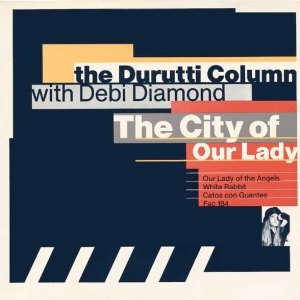
Why I Bought It: I recognized the band name and saw that it was released on Factory, so I figured it was worth a shot.
Verdict: After I put the record on, I realized that it was a three-song EP and likely ran at 45 rpm, but I let the first song, “Our Lady of the Angels,” play out at 33 rpm anyway. It came off as a moody, almost Joy Division-esque instrumental. Their cover of Jefferson Airplane’s “White Rabbit” was not nearly as forgiving, since guest vocalist Debi Diamond* sounded like an extra dour Peter Murphy. The flipside of the LP is a lengthy Spanish-tinged instrumental called “Catos con Guartes,” which features intricate acoustic guitar patterns rather than chorus-heavy chords. This EP comes off as a complete hodge-podge with three disparate styles present, but each song—even the cover of “White Rabbit,” which I anticipated grimacing through—has some redeeming value.
* In the process of trying to determine who Debi Diamond’s identity, I learned that she is not the adult film star Debi Diamond but rather the former singer of the Januaries known by the name Debbie Diamond. After solving this mystery, I found out that former Durutti Column guitarist Dave Rowbotham was killed by an axe murderer in 1991. To confuse matters even further, a different Dave Rowbotham has an entry in my beloved HockeyDB as a former member of the Ottawa 67s and the Binghamton Whalers.
17. Portastatic - Slow Note from a Sinking Ship - Merge, 1995
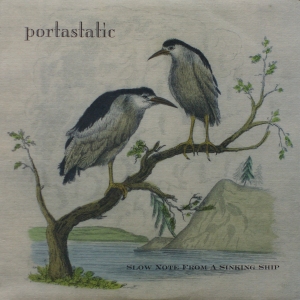
Why I Bought It: I primarily enjoy Superchunk’s Foolish-and-forward discography, so a more low-key affair from Mac McCaughlin would seem to hit the spot. If I were being really sassy, I’d say that I’m a Seam completist. If memory serves, I picked this up as a used LP during one of my trips up to Reckless in Chicago.
Verdict: Slow Note from a Sinking Ship certainly starts off like I expected, with “Your Own Cloud” moving along with only acoustic guitar, Casiotone, and Mac’s signature yelp, but many of the songs are full-fledged indie rock jams. “San Andreas,” “You Can’t Win,” “A Cunning Latch,” and “The Great Escape” may not compete with “Driveway to Driveway,” “Slack Motherfucker,” and “Hyper Enough” in the pantheon of McCaughlin, but they’re solid rockers nonetheless. The best song is “Pastime,” which blends the space of the quieter songs with the pulse of the rockers. Slow Note from a Sinking Ship was a pleasant surprise, sounding less like a bedroom solo record and more like a relaxed take on Superchunk’s mid-period sound.
18. Genesis - The Lamb Lies Down on Broadway - ATCO, 1974
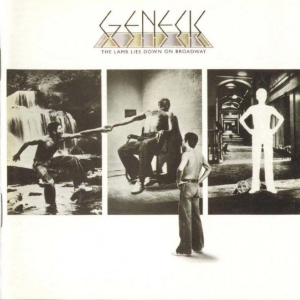
Why I Bought It: I grew up on post-Gabriel Genesis and post-Genesis Peter Gabriel. Yet their 1970s prog-rock efforts always seemed too “out there” for me as a fourth grader, so I stuck to Genesis, Invisible Touch, and Security. I’ve never been particularly embarrassed by my fondness for Genesis’s super-cheese era, even writing a column on it in the Signal Drench days, but I’ve also never made a genuine attempt to check out their early work. After picking up Gabriel’s swansong The Lamb Lies Down on Broadway and its 1976 follow-up, A Trick of the Tail, for a slightly higher price than the dubbed cassettes I’d make of my uncle’s Genesis CDs growing up, I’ll finally confront those confusing demons standing in the way of Genesis’s critically acclaimed pop albums. Wait, you mean the prog-rock albums are the good ones?
Verdict: I’ve tried my best to understand the vague story of The Lamb Lies Down on Broadway: there’s a half-Puerto Rican hooligan named Rael who’s struggling on the streets of New York who gets sucked into an unfamiliar underworld, cocooned in a subterranean cave/cocoon, encounters his brother John, escapes the cave, visits a consumerist people factory, finds his way back up to bizarre NYC, remembers his first sexual encounter, reaches a room with 32 doors (but only one exit!), makes his way through that room with the help of a blind woman, meets Death, makes his way to a pool with three snake women who die after tasting his blood, he then consumes the bodies of these snake women and turns into a Slipperman (covered with stumps and exterior genitalia), meets a colony of Slippermen including his brother John who have all encountered the same fate, makes a visit to Doktor Dyper who can castrate their problems, has his “tube” stolen by a black raven, chases after this raven, watches both the tube and his brother fall into roaring rapids, decides to mount up the courage to save his brother, dives into the rapids, and realizes that his brother is only part of himself.
Can you believe that Peter Gabriel pulled many of these ideas from his dreams? It’s more of a surprise that lines like “No time for romantic escape / When your fluffy heart is ready for rape. No!” (“Back in N.Y.C.”) and “Erogenous zones I love you / Without you, what would a poor boy do?” (“Counting Out Time”) make relative sense within this context. Recapping the story in the long-winded liner notes also helps, but there are certainly moments that slip away from the immediate storyline.
Despite the lyrical oddities, it’s hard not to be awed by the scope of The Lamb Lies Down on Broadway, which perhaps signifies achievement as a double LP of progressive rock. It may not maintain my attention throughout—the second LP is littered with aimless instrumental passages—but “Back in N.Y.C.,” “Fly on a Windshield,” “The Carpet Crawlers,” and the title track are sonically diverse high points. Still, I can’t make a judgment on such a sprawling affair after only one listen, especially without being privy to Gabriel’s live theatrics. It’s certainly more serious than Genesis or Abacab, but it’s nowhere near as approachable.
19. Stiff Little Fingers - Go for It - Chrysalis, 1981
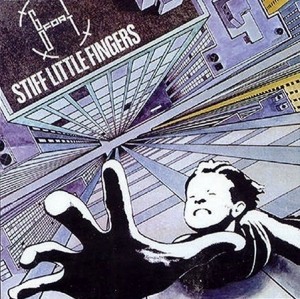
Why I Bought It: After thinking about the band name for a minute or two, I remembered the scene in High Fidelity when Dick, the shy record clerk, impresses a chick by talking about Green Day’s two primary influences: The Clash and Stiff Little Fingers. While influencing Green Day is hardly an accomplishment that will sway a dollar bin decision, being associated with The Clash and releasing a record in 1981 will.
Verdict: While Green Day might’ve been influenced by both The Clash and Stiff Little Fingers, they were essentially influenced twice by The Clash, since Stiff Little Fingers’ mix of punk, reggae, and rock owes a considerable debt to Strummer, Jones, and company. While some songs stick out from the fray—“Gate 49” is a sunny escape, “The Only One” rumbles along with dub precision, “Safe as Houses” has solid hooks—most fall in line with London Calling-inspired punk with power pop underpinnings. It’s a bit strange that Gordon Ogilvie, the band’s manager, co-wrote most of the tracks, but he was a consistent participant in their early records. Perhaps I would have been better off with their 1979 debut, Inflammable Material, which was inspired by the Troubles in Northern Ireland. Go for It is certainly competent and largely enjoyable, but I’d prefer more passionate, more immediate material.
20. Tangerine Dream - Cyclone - Virgin, 1978
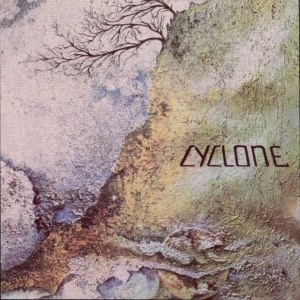
Why I Bought It: Not sure. I’m familiar with their unfortunate name, but little else about Tangerine Dream. Did I like the album cover and take a chance? Who knows.
Verdict: Apparently Cyclone alienated Tangerine Dream’s fan base by including vocals and lyrics for the first time. I completely understand this reaction, since the vocals on side A distract from what otherwise would be an interesting mix of electronic pulses, keyboards, brass, guitars, and drums. The vague stories and processed shouting of “Bent Cold Sidewalk” and “Rising Runner Missed by Endless Sender” seem like a dedicated push into the progressive rock domain, but the group isn’t capable of maintaining instrumental focus while incorporating vocals. The background music gets considerably less interesting whenever vocals arrive, simplifying the layers in order to give the vocals space. It also doesn’t help that the vocals are so high in the mix, leaving the drums muffled in the distance.
The flip side, however, is an entirely different story. The thankfully instrumental “Madrigal Meridian” extends for more than twenty minutes, the bulk of which is dominated by a Neu!-esque backbone of electronic bass arpeggios and propulsive drumming. The band members take turns playing melodic runs with a wide variety of instruments (the number of instruments credited on this record is astounding), with only a few electronic piano runs sticking out as ineffective. Once the rhythm fades away, the song relaxes with several fake fade-outs of calming brass and synthesized string sections. Certain segments reminded me of the electronic/industrial scores of 1980s action moves (Terminator comes to mind), which makes sense since Tangerine Dream scored half the films released in the decade.
One consistent comment in these entries is that I bought the wrong record for a given artist, but despite the vocal flaws (number one: having them) on side A, I don’t regret picking up Cyclone. “Madrigal Meridian” takes influence from progressive rock but doesn’t try too hard to mimic it, thereby highlighting the band’s most interesting electronic elements.
|
|
After seeing that Zen and the Art of Face Punching posted Rodan's Rusty, How the Winter Was Passed single, and unreleased Peel session, I remembered that my period of blinding Rodan obsession helped me find a solid bootleg of a 1993 show in Athens, GA, Aviary, their demo tape, and a live version of "Big Things Little Things" and an alternate version of "Shiner". Considering that "Tron" (from the Half-Cocked soundtrack) and "Darjeeling" (from Simple Machines: The Machines 1990-1993) are both on Aviary, you'd only be missing their pre-Rodan rap material, their fake-Rodan song as Truckstop in Half-Cocked, and far, far too many side-projects and off-shoots. I'll save those for another day.
|
|
While I purchased more than five items between two Newbury Comics locations on Record Store Day, I'll focus on the free stuff for this post. I've previously mentioned my fondness for the Wipers LP, but it merits being mentioned again as the representative of the paid-for pile.
11. Wipers - Youth of America - Jackpot, 1981/2007
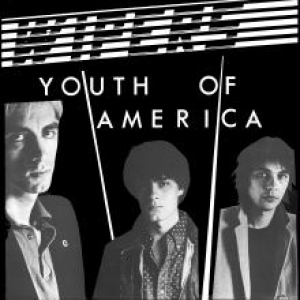
Why I Bought It: After downloading the Wipers’ first three albums (1980’s Is This Real?, 1981’s Youth of America, and 1983’s Over the Edge) a month ago, Record Store Day justified my purchase of Jackpot/Zeno’s 2007 reissue of Youth of America. The reissue LP may be pricey, ranging from $15 (plus shipping) direct from Greg Sage to $20 at most retailers, but the quality is indisputable. In addition to being remastered and pressed onto a thick slab of black vinyl, Youth of America features the thickest sleeve in my collection, putting the paper-thin sleeve of Colin Newman’s Not To to shame.
Verdict: This marks the first time I’ve heard Youth of America in its proper running order*; the 2001 Wipers Box Set puts side B (“No Fair,” “Youth of America”) before side A (“Taking Too Long,” “Can This Be,” “Pushing the Extreme,” “When It’s Over”). Fixing the track listing addressed a prior criticism of the album—that the shorter songs pale in comparison to their epic counterparts—by presenting the album as an accelerating descent into a fever dream. Sage recalls, “The song [‘Youth of America’] itself is out of a dream I had about the future. A time where people ‘over breed’ themselves to the point that even the most simple thing had become the highest level of competition. The dream had such a sense of realism and intensity to it that I went overboard with the recording to symbolize it.” The title track does the best job of encapsulating this sentiment, but the end of “Pushing the Extreme” performs the crucial transition from the relatively straightforward first three songs to the structurally experimental second half. As Sage intones, “Now it’s one against the other / What’s this price we gotta pay?” over backward cymbals—the first noticeably showy production technique on the album—the atmosphere starts mounting, leading to the cataclysmic ascending guitar riffs of “When It’s Over.” More than three minutes of increasing instrumental tension pass before Sage speaks a word in “When It’s Over,” even letting the backing piano chords take precedence over his raging guitar. At the end of the song, Sage yells “We’ll be laughing / When it’s over,” closing side A on a most foreboding note. This track order makes those first three songs a necessary precursor to the snowballing intensity of what’s to come.
“No Fair” starts off in a half-speed haze, with Sage’s spoken vocals barely making it through the woozy guitar. But once Sage yells, “It’s not fair,” a rare bass solo pushes the song into high gear and the guitar overdubs start swelling. While Sage’s vocals and lyrics are solid throughout the album, Youth of America’s primary appeal is its layered guitar tracks, featuring nimble chord changes, swells of feedback, and memorable leads. All of these styles are on display in the title track’s chaotic, nearly freeform middle section. I’ll certainly gravitate toward the ten-and-a-half-minute epic on a given record, but the sprawling range of “Youth of America” defines the record’s reactionary brilliance. Unrelenting, mesmerizing, and yet still approachable, Youth of America is a terrific slab of wax.
*With regard to the album’s running order, all of the LP pressings have the stated order, the Wipers Box Set has side B before side A, and Sage’s own site has “Taking Too Long,” “When It’s Over,” “Can This Be,” “No Fair,” “Pushing the Extreme,” and “Youth of America” listed.
12. Destroyer/Wye Oak - Record Store Day Promotional Single - Merge, 2008
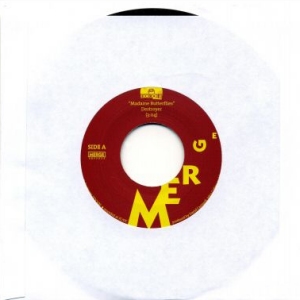
Why I Bought It: Free in a Record Store Day goodie bag.
Verdict: Both songs are exclusive to the single, which is more than I can say for a lot of the other giveaways I grabbed. I’ve tried and failed to get into both Destroyer and Dan Bejar’s other gig, the New Pornographers, and “Madame Butterflies” won’t change things too much. It reminds me of an unhinged Shins song, opting for a bit of guitar feedback instead of a rhythm section, but Bejar’s slightly faux-British vocal styling gets on my nerve. You can hear this song over at So Much Silence. As for Wye Oak, I’m happy to have an exclusive track, but the skeletal arrangement of “Prodigy” has b-side written all over it. Jenn Wasner’s voice is compelling, especially when it’s multi-tracked later in the song, but I miss the layers of If Children. I can’t argue with free, but I wonder if Wye Oak would have been better served by including “Warning” or “Family Glue” on the single.
13. Kaki King – “Pull Me Out Alive” b/w “Zeitgeist” - Velour, 2008
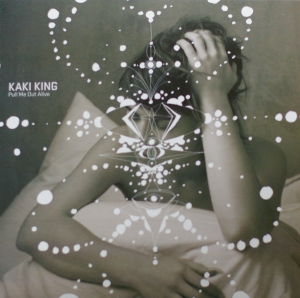
Why I Bought It: It was a giveaway at Record Store Day.
Verdict: I’ve heard a bit of Kaki King’s early guitar virtuoso recordings, but “Pull Me Out Alive,” taken from her 2008 album Dreaming of Revenge, shares little in common with that material. Alternating between a tense, staccato verse and an open, airy chorus, Kaki King’s voice is capable enough, but the guitars do little underneath. I can understand wanting to transition into an indie rock sound, especially if the Foo Fighters are willing to bring you on tour, but “Pull Me Out Alive” sounds like far, far too many other bands. The flip side is a lengthy instrumental (not a cover of the Smashing Pumpkins’ most recent effort) reminding of lite post-rock bands. Snooze.
14. Eels – “Climbing to the Moon (Jon Brion Mix)” b/w “I Want to Protect You” - Geffen, 2008
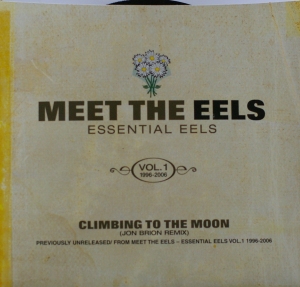
Why I Bought It: Giveaway at Record Store Day.
Verdict: This single takes a song apiece from the Eels’ recent greatest hits compilation, Meet the Eels: Essential Eels Vol. 1 1996–2006, and their recent rarities compilation, Useless Trinkets: B-Sides, Soundtracks, Rarities, and Unreleased 1996–2006. Aside from radio singles and soundtrack entries, I’ve only heard Beautiful Freak, which had their hit single “Novocaine for the Soul” on it. Both of these songs fall in line with my estimation of post-Beautiful Freak Eels; “Climbing to the Moon,” taken from 1998’s downer supreme Electro-Shock Blues, is a low-key, yet not entirely somber song about someone being ready to die (and not in the glorious Andrew W.K. way), while “I Want to Protect You” is a comparatively upbeat love song. Both songs could certainly hit home given the proper circumstances, but merely seemed “nice” on this listen. Considering that those two compilations span three CDs and two DVDs, I’m not exactly chomping at the bit to hear that much Eels, no matter how “nice” they may be.
15. Various Artists - Choice Cuts: 2008 Record Store Day Sampler - Universal, 2008
Why I Bought It: Free in a Record Store Day goodie bag.
Verdict: I initially wrote a detailed track-by-track recap of this compilation, which features a side of modern rock and a side of (alt-)country, but in lieu of retyping all of my hard work (unfortunately eaten by some nasty spyware), I’ll give the highlights.
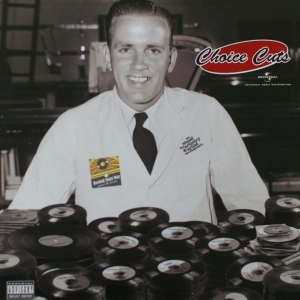
While the country side of the LP featured some nearly unlistenable entries into pop country, namely One Flew South, Hayes Carll, and The SteelDrivers, it also featured the compilation’s only salvageable tracks. Tift Merritt and Shelby Lynne are both passably low-key female alt-country vocalists whose songs’ comparative subtlety was a blessing. I knew of Whiskeytown, but I hadn’t heard any of their music and didn’t remember than it was Ryan Adams’ formative project. It shouldn’t be a surprise that the best song from a promotional compilation is from a decade-old album newly reissued, but “10 Seconds” pulled off a rocking bit of alt-country. I had to wonder if the inclusion of pop country songs was a ruse—“Well, I don’t think they’ll listen to an album entirely of pop country, but if we throw some songs in along with some alt-country, they’ll have to listen to it!”—but I’m hardly itching to hear any of those songs again.
The flip side showed just how dire rejects from modern rock radio can be. Black Tide and Switches have both opened for the Bravery, hardly an arbiter of critical success, but they’re each somehow worse than that factoid might suggest. PlayRadioPlay! has a simple horrible band name and owes some serious royalties to the Postal Service, but what else should I expect from a kid who got a major label deal as a senior in high school based on MySpace popularity. Ludo is a St. Louis-based pop-punk band whose song reminds vaguely of the Get-Up Kids, but their rock opera tendencies do not wear well. They have a five album deal from Island. Five albums!
The compilation’s low-point is undoubtedly Yoav’s “Club Thing.” If the mix of acoustic guitar, low-key club beats, and falsetto come-ons had the slightest bit of humor, it might be mistaken for a Flight of the Conchords b-side, but don’t let that be mistaken for a compliment. “Club Thing” tries to be both a cautionary tale and a direct route to his audience’s panties, but lines like “He knows he can’t afford / What it pays to enslave her / He’s got a hunger / For the sweetest of favors” only serve to give me the creeps.
|
|
Today (Saturday, April 19th) is Record Store Day. Don't let Bruce Springsteen single-handedly support the record industry.
In all honesty, I do my best to advocate buying new music. While I download a good amount of music and make certain songs available on this site, I feel compelled to buy worthy records whenever they're released and pick up vinyl reissues of old favorites. I understand the appeal of iTunes for a generation that didn't grow up needing the physical product in order to hear the music contained therein, but I still cherish acquiring the actual thing, preferably in LP format. I also love spending hours flipping through bins of records, which is why I try to support stores I enjoy in addition to purchasing music directly from the artists or their labels.
I'll be hitting up the Newbury Comics in Harvard Square bright and early for their 25% off vinyl sale, but here are some of my other favorite stores, past and present:
Parasol Records, Champaign, IL: I relied on Parasol Mail Order to acquire Midwestern indie rock in high school, but being able to visit the brick and mortar location when I moved to Champaign for college was far, far superior. Being able to banter with Roy, Jim, Angie, Bill, Jeff, and the other staffers made afternoons disappear. Their no-longer-new location seems less like a mail order basement and more like an actual store, so if you're in central Illinois, make the trip.
Reckless Records, Chicago, IL: I was simply floored by the amount of stock both the Broadway Ave. and Milwaukee Ave. locations possess. The first few times I hit them up I seemingly purchased CDs, LPs, and seven-inches by the pound, scouring dollar CD bins and $0.33 single bins for countless treasures. Receiving an enormous box of music in the mail simply can't compare with exiting the store with a plastic bag straining by the handles.
Vintage Vinyl, Granite City, IL: I'm not sure if this location is still in business, but I preferred shopping here to the Vintage Vinyl in the St. Louis loop. I credit the day when they had all of their seven-inches on sale for a buck apiece and I bought no fewer than 25 of them, but I've also heard enough stories from Jon Mount about when he worked there to hold a certain appreciation for its charms. I may have shopped there near the end of its peak as a store, but I still enjoyed the experience and have more than enough trophies to prove it.
Sonic Boom, Seattle, WA: I visited several Sonic Boom locations when I was in Seattle two Decembers ago and recommend both of them. The vinyl annex of the Ballard location was particularly fruitful, netting me the only used Lungfish LPs I've seen. Everyday Music in Capitol Hill was also a noteworthy store, producing an LP of Chavez's glorious Ride the Fader.
RRRecords, Lowell, MA: RRRecords isn't the easiest store to frequent—you have to call ahead to ensure that it's open during stated business hours, and even that is no guarantee—but the walls of reasonably priced new and used LPs are worth the effort. RRRecords is also a noted noise label, so if you're fond of that genre, it's a must-visit.
Rhino Records, New Paltz, NY: I drove out to New Paltz on my last visit home to my parents' house and was disappointed to learn that Rhino has moved to a smaller location, changed their focus to "collectable" vinyl (i.e., charging $20 for everything), and eliminating any worthwhile cheap bins. This comes in stark contrast to what I came to expect from the once-various Rhino locations (Poughkeepsie, Hyde Park [I think]): a constant rotation of realistically priced new and used CDs and some epic dollar bins. It's a shame that I've written off revisiting Rhino, at least until I'm swimming in extra dough.
Other noteworthy stores include Record Exchange in Salem, MA, which I visited for the first time last weekend and Other Music and Kim's Video in New York City. I still need to make a trip out to the Amoeba locations out in LA and San Francisco, but it's hard to book vacations around record shopping.
Remember that the Boss needs your help. Happy shopping.
|
6. Minor Threat - Out of Step - Dischord, 1983
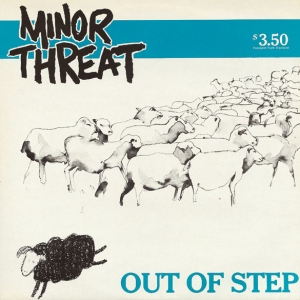
Why I Bought It: I needed to know exactly what I’ve been doing wrong. Wait, I needed to know what other people have been doing wrong. No, I needed to learn my lesson, that’s it.
Har har, those Minor Threat guys will sure have a laugh over that paragraph. As I’ve admitted about a thousand times before, I never went through a punk phase in my teens, so I’ve been catching up on most of the seminal acts in the last few years. After all, married guys in their mid twenties comprise hardcore’s key demographic. To further the delay, Fugazi was one of the last key DC bands that I got into, in large part because Jawbox, Shudder to Think, and Girls Against Boys (technically a New York City band, but…) had videos on 120 Minutes and that was how I found out about bands when I was fifteen. If I’d found out about Fugazi first (i.e. if any of my friends had remotely similar taste to mine and could actually introduce me to bands outside of Metallica and the Dead Milkmen), I likely would have used my completist vigor to track down Rites of Spring and Minor Threat instead of New Wet Kojak and Edsel.
Verdict: I’ve heard a few Minor Threat songs before, but mostly I’m familiar with them from Michael Azerrad’s Our Band Could Be Your Life. I didn’t put a whole lot of effort into checking them out the first time I read the book, since the didactic lyrical approach wasn’t too tempting. Having just re-read that chapter, however, I found myself far more intrigued by the musical side of the band. I’ve seen enough hardcore bands—mostly at the Prairie House in Bloomington, Illinois—to know a good one, and Minor Threat tempers their furious forward momentum with enough catch-your-breath breakdowns, solid riffs, and spoken/sung sections to counter the blur of shouting over breakneck tempos. While Out of Step only lasts for nine songs, I didn’t find myself losing focus on the music. The true highlights of the LP, however, come when Ian MacKaye brings some much-needed humor into the equation, like ending “Sob Story” with “Boo fucking hoo” or the majority of the scathing “Cashing In” (“Then we’ll make a million when we go on tour”). The title track, however, tries too hard to distance the rest of the band from Ian’s straightedge philosophy: “Listen, this is no set of rules / I’m not tellin’ you what to do.” How ironic it is that I’m less deterred by capitalized lines and finger-pointing at a fill-in-the-blank “you” than by a meager attempt to cushion the blow of such staunch edicts. Thankfully, Azerrard’s book helped me anticipate the lyrical content—both the finger-pointing and finger-retracting—so I was still able to enjoy the music on its own accord.
7. Neil Young - Trans - Geffen, 1982
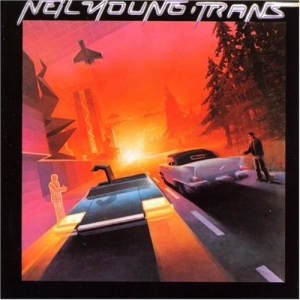
Why I Bought It: Its reputation as Neil Young’s nadir made the dollar price tag a mere pittance. Neil Young and vocoder? Sign me up!
Verdict: I expected an LP full of Kraftwerk rip-offs, so hearing the tepid, but opening track “Little Thing Called Love” threw me for a loop. Turns out that a third of Trans is comprised of songs I’d consider “stock Neil Young”—“Little Thing Called Love,” Hold on to Your Love,” and “Like an Inca.” They’re inoffensive enough, but I’d rather listen to Zuma or On the Beach. As for the rest of the LP, my perception that fans and critics alike loathe it was a bit off, since many of the Amazon reviews are remarkably positive, Mark Prindle gave it an eight out of ten, and Rolling Stone gave it four stars, citing the struggle between the electronic and traditional songs. Furthermore, the vocoder tracks were inspired by Young’s attempts to talk with his son, who has cerebral palsy. Oh hell. I buy a dollar record expecting to enjoy its pitiful attempt to appropriate a burgeoning musical trend and look what happens: it’s about Neil Young’s suffering child. I’ll remove my empathy from the situation, since it would be far too easy to confuse good intentions with a good product.
The electronic songs on Trans simply aren’t effective. Even when there’s a heavily vocoded line that carries some weight beyond its novelty (“I need you / To let me know that there’s a heartbeat”), the impossibility of understanding its message without the lyric sheet removes its emotional impact. Whereas Kraftwerk emphasizes matching the lyrical content to the cold, repetitive beats (“Trans… Europe… Express…”), Young’s attempt to recreate the sound but remove the connection between form and function falls decidedly flat. Why appropriate sound designed for trance-like European robo-discos if your intent is to connect emotionally with your audience? Having traditional songs to counter the forays into synthesizers and vocoders comes off as a poor attempt to pacify the audience’s demand for more of the same, not as a key to understanding those electronic songs. I would be far more interested in this LP exemplifying this divide within the songs. I can understand Young’s rationale behind every decision on this album, but it simply doesn’t work as a whole. The actual product is conflicted enough to have supporters, but I’m not one of them.
8. Wire - Snakedrill EP - Enigma, 1986
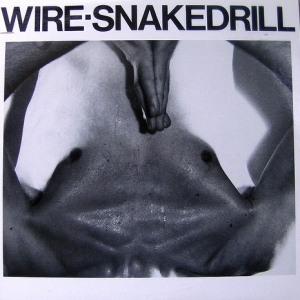
Why I Bought It:The first Wire release that I picked up was The Drill EP as a used CD at one of the Rhino Records locations in the Hudson Valley. This was a critical mistake. An entire CD of remixes? For my first purchase from a seminal band? Remixes of a fairly annoying song? I messed up. It took me far, far too long to check out the group’s early, superior output, perhaps in fear that they’d chant “Dugga dugga dugga” over every song. (They don’t.) As such, I’d put off buying the Snakedrill EP, despite its appearance in the Wire LP section of nearly every record store I’ve frequented in the last two years (along with the “live” album It’s Beginning to and Back Again). I finally caved today, picked up a sealed, cut-out bin copy from In Your Ear on Commonwealth Avenue in Boston for three bucks. Four bucks? No thank you. Three bucks? Well, I suppose.
Verdict: I wonder how I would have responded to Snakedrill if I’d been a big fan of their first three LPs and eagerly anticipating their reunion. It’s a tough call. Wire’s transition into electronic-backed new wave would have made sense in 1986, since even the fiery Killing Joke utilized that aesthetic for Brighter than a Thousand Suns. Yet Snakedrill departs from what makes me love early Wire: their unflinching forward progress. Despite attempts to rationalize their new wave output by explaining their “beat combo” approach, Wire’s mid-to-late 1980s output, regardless of its songwriting quality, is too content to mirror what surrounds it. “A Serious of Snakes,” “Advantage in Height,” and even “Drill” are fine songs for the era (“Up to the Sun” is more Graham Lewis drama, snooze), matching the highlights of The Ideal Copy and A Bell Is a Cup… Until It Is Struck, but they lack the spirit of Chairs Missing and 154. Would I have accepted this logic in 1986 or would I have been happy to hear three good new Wire songs? If my fondness for 2007’s solid-but-unspectacular Read & Burn 03 EP weighs in on the matter, I’d probably just be happy to hear three good new Wire songs.
9. The Incredible Jimmy Smith - Organ Grinder Swing - Verve, 1965
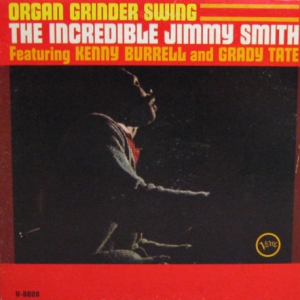
Why I Bought It: First paragraph of the liner notes, penned by Holmes Daddy-O Daylie of WAAF in Chicago: “O.K., since you’re reading these notes, you are either an ‘Old Aware One,’ hip to Jimmy Smith, or a neophyte-come-lately trying to get acquainted; if so, congratulations!” I am a neophyte-come-lately who’ll check out almost any jazz record on Verve when costs me a dollar to do so.
Verdict: Organ Grinder Swing doesn’t have any competition in my collection for organ-led jazz, so it’s hard to contrast it to any other albums. I enjoyed the short, energetic title track and his rendition of “Greensleeves,” but by the end of the album I had a savage headache from the tone of the organ. It’s an interesting sidestep in my crash course in jazz, but I doubt that I’ll go searching for more organ-led jazz in the near future unless it comes highly recommended.
10. Rifle Sport - Voice of Reason - Reflex, 1983
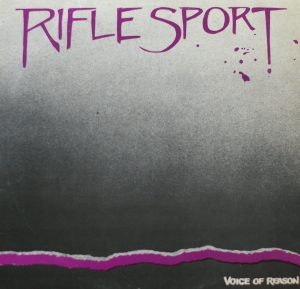
Why I Bought It: I recognized the band name as a former project of current Shellac drummer Todd Trainer, although Jimmy Petroski drums on this particular LP. When I flipped the sleeve over and saw that it was on Reflex Records, Hüsker Dü’s early 1980s label, I figured I was on the right track and snapped it up.
Verdict: Rifle Sport is more indebted to British post-punk than I anticipated, reminding me of a high-speed Gang of Four in spots. Gerard Boissy switches between Andy Gill–informed strafing and straight-ahead riffs, avoiding the razor-wire tone of early of Hüsker Dü. Bassist Pete Flower Conway steals the show, however, letting his busy but effective lines pop up through the mix. While the music is up to the task, the vocals often veer toward tuneless hollering and the lyrics aren’t much to write home about. Voice of Reason is Rifle Sport’s debut album, so this lack of cohesion isn’t surprising, but there are some truly effective moments like “Words of Reason,” “Danger Street,” and “Hollow Men,” which is a reworking/cover of the T. S. Eliot poem. (I eagerly await a doom-metal cover of “The Waste Land.”) According to Trouser Press their later material is better, so I’ll keep a look out for their other LPs.
|
|
